





Rosewood Drum Table
A rosewood drum table is a circular centrepiece combining a deep timber top with revolving drawers, prized for both practical storage and classical proportions.

Rosewood Drum Table
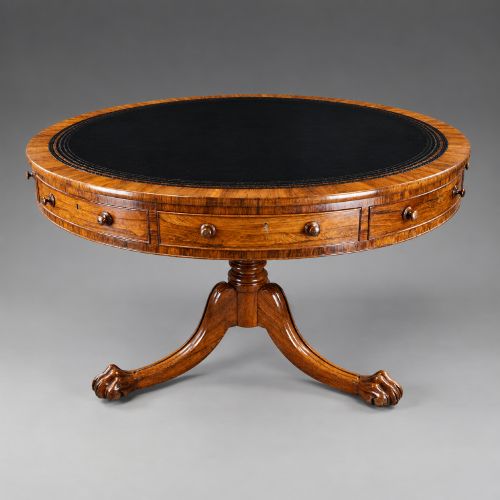
A rosewood drum table is defined by its substantial circular top, which often houses an arrangement of frieze drawers around the circumference. The majority of pieces encountered on this page belong to the Regency period and the nineteenth century, reflecting the primary era of production.
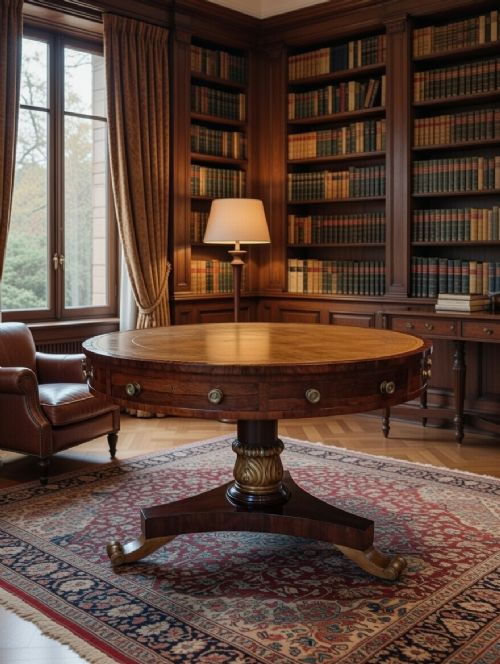
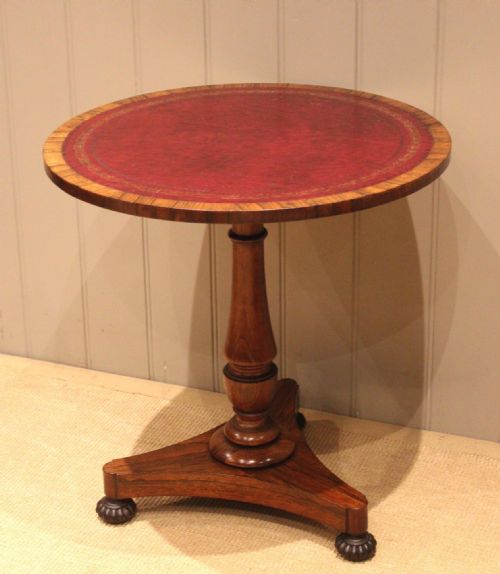
Most examples stand on a central pillar supported by a tripod base or a platform plinth, housing concealed or working drawers that rotate around the central axis. Variants include library tables, side tables, and occasional tables, alongside the occasional drum head mantel clock.
Origins trace predominantly through Regency, nineteenth century, William IV, and Edwardian periods, with styles encompassing Regency classicism and later Art Deco interpretations using birds eye maple and rosewood.
Assessing quality and craftsmanship
Quality in a rosewood drum table is determined by the crispness of the timber selection, the integration of the revolving mechanism, and the subtlety of any inlay work. Finer examples display carefully matched grain patterns across the circular top and smooth operation of the radiating drawers.
Proportion dictates visual success, separating robustly balanced pedestal tables from heavier, less graceful interpretations. The integration of brass mounts, leather inserts, and internal drawer linings further distinguishes standard production from superior cabinet work.
Rosewood Drum Table Retail Price Guide 2026
Typical asking prices for rosewood drum table among the pieces listed under this phrase on Sellingantiques today, from the lower quarter to the upper quarter. They describe what is for sale here now, not the wider market.
Materials across the inventory combine rosewood with brass hardware, leather inserts, boxwood, and birds eye maple.
The Rosewood Drum Table Glossary
- Drum table
- A circular library or centre table with a deep top containing drawers around the entire circumference. It earned its name from its silhouette, resembling the shape of a drum.
- Crossbanding
- A border of veneer laid around the perimeter of a tabletop so the grain runs perpendicular to the main surface. This technique creates a neat framing effect common in Regency cabinet work.
- Rosewood
- A heavy, durable timber prized for its dark grain and rich colour variations. It was widely utilised during the Regency and nineteenth century for high-status furniture.
- Fusee
- A conical pulley used in clock movements to maintain even tension on the mainspring as it unwinds. This mechanism appears in drum head mantel clocks from the period.
- Plinth
- A heavy flat base supporting the central column of a table. It provides stability for the weighted pedestal design.
Rosewood Drum Table: Frequently Asked Questions
What is a drum table used for?
A drum table served traditionally as a library or centre table where books, papers, and writing implements could be stored within reach. The revolving drawers allowed multiple users to access contents from different seating positions around the room.
Today, these pieces function effectively as large occasional tables in living spaces or libraries, offering discreet surface storage while anchoring the centre of a room.
How do I date a rosewood drum table?
Dating relies on stylistic markers such as pedestal designs, base configurations, and timber selection. Regency and early nineteenth-century examples often feature brass inlay, bold pedestal bases, and mahogany-lined drawers.
Later Victorian and Edwardian interpretations introduce subtler proportions or alternative secondary woods, while Art Deco pieces combine rosewood with birds eye maple for a distinct twentieth-century aesthetic.
Do the drawers go all the way around?
Many traditional drum tables feature a combination of working drawers and dummy drawers spaced evenly around the circular perimeter. This arrangement preserves the symmetrical appearance of the drum while providing functional storage.
Some examples contain four, six, or eight actual drawers depending on the diameter of the top and the specific design intentions of the cabinetmaker.
How do I care for a rosewood surface?
Rosewood benefits from minimal interference, requiring only a soft, dry cloth for dusting and occasional treatment with appropriate traditional wax. Direct sunlight should be avoided to prevent fading of the natural grain and colour.
Leather writing panels inset into the top need gentle cleaning without harsh solvents to preserve the gold tooling and leather suppleness.