
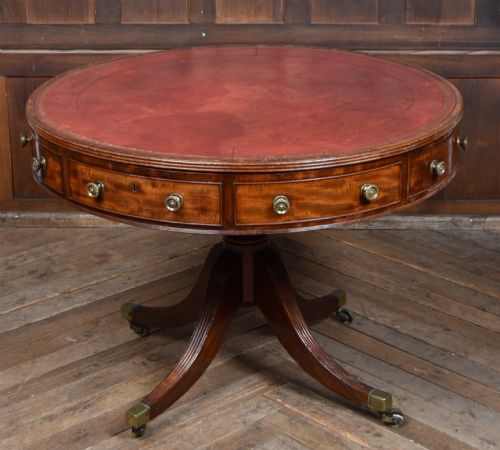
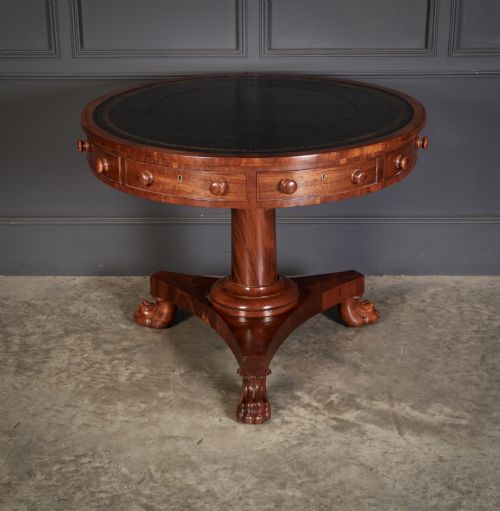

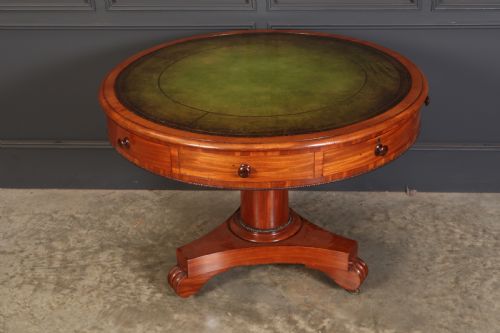


Mahogany Rent Table
These mahogany rent tables are substantial library and office pieces built for keeping estate records, prized for their revolving tops and concealed drawer systems.

What a mahogany rent table is
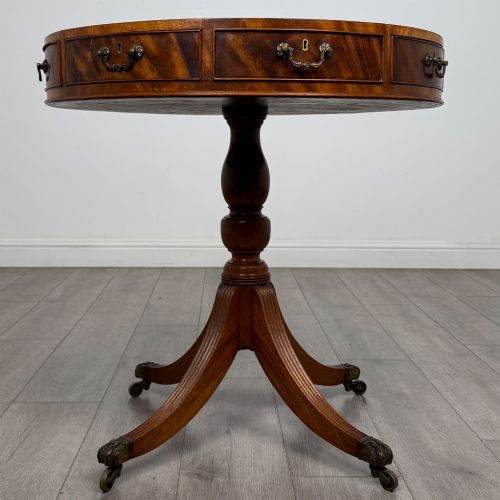
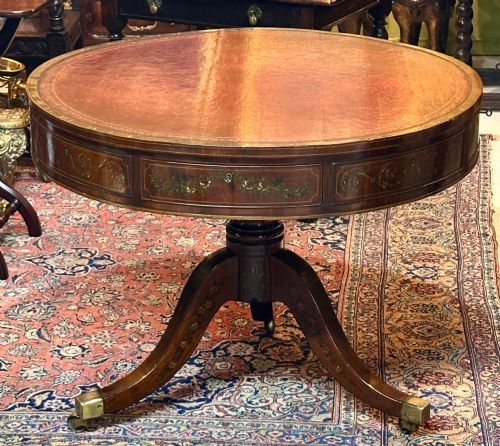
A mahogany rent table takes the form of a large circular drum table supported on a central pedestal, designed primarily for estate management and accounting. When searching this phrase, a buyer encounters significant library furniture originating across the Georgian, Regency, Victorian, and Edwardian periods.
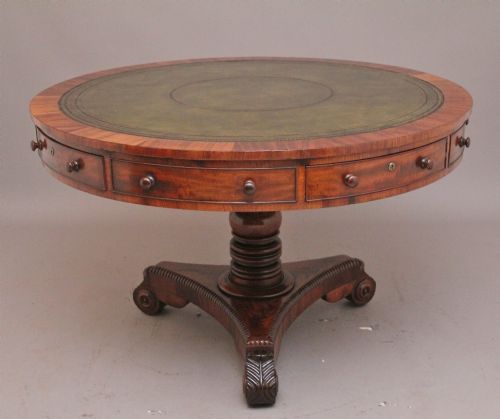
The most common version on this page is the full-scale revolving drum table featuring a leather inset writing surface and a tier of partitioned drawers. These pieces served estate agents and landowners who required a secure repository for collection records and cash.
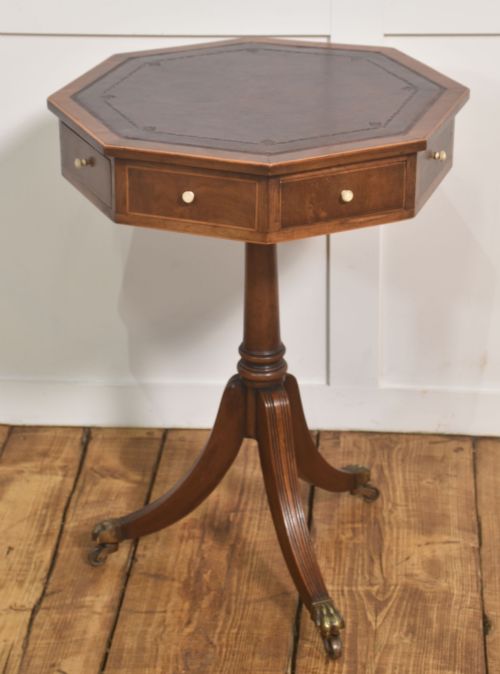
Variants include smaller apprentice pieces and miniature tables alongside grander library models reflecting George III, George IV, and William IV design traditions. Each piece combines functional storage with a commanding centre table presence.
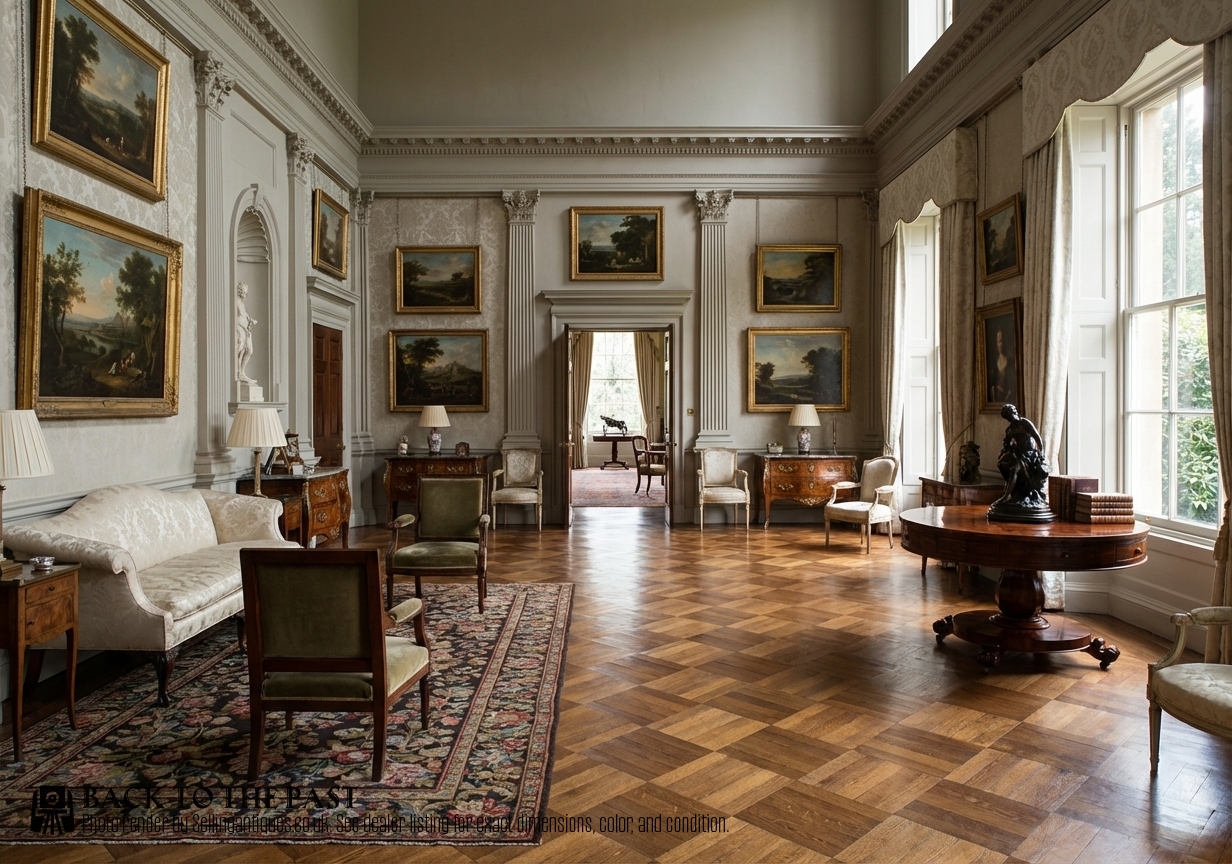
Materials and construction
Working surfaces incorporate tooled leather inserts set directly into the mahogany timber borders. The revolving mechanism relies on complex internal joinery that allows the drum housing to turn smoothly on its central pillar.
Retail Price Guide 2026
Typical UK retail prices for mahogany rent table, calculated from the Sellingantiques database of over a million retail prices indexed since 2003. This retail price guide relies exclusively on Sellingantiques data; no external sources or auction records are used, so the figures do not describe the wider market.
Miniature apprentice tables offer a delightful desktop scale version of the grand library rent table.
Distinctions in quality
Quality rests on the selection of timber, distinguishing simple solid mahogany from highly figured flame veneer that demands advanced cabinet-making skill. The execution of the internal drawer compartments and the smoothness of the revolving mechanism further separate standard workshop production from finer pieces.
Proportion and architectural detailing dictate the visual hierarchy among these tables. Refined pedestals, crisp brass mounts, and well-preserved original leather tops elevate a piece far above utilitarian examples.
Goodall Burton on Trent
The Mahogany Rent Table Glossary
- Rent table
- A large circular library table fitted with multiple wedge-shaped drawers labeled alphabetically or numerically. These compartments held collected rents and estate accounts.
- Drum table
- A round table with a deep cabinet-like top resembling a drum, housing a ring of drawers around the central pillar.
- Flame mahogany
- A veneer cut from the fork of a mahogany tree where the grain twists to create a distinctive flickering flame pattern. Cabinet makers used this figure on prominent surfaces.
- Apprentice piece
- A small-scale model built by a trainee craftsman to demonstrate mastery of joinery techniques before joining a guild. These miniature tables mirror full-sized designs.
- Pedestal base
- A central column support rising from a heavy plinth or splayed legs, providing stability for large revolving tables.
Frequently Asked Questions
What is a mahogany rent table used for?
These tables served estate agents and landowners for collecting and sorting rents, using the segmented drawers to keep individual tenant accounts secure.
Today, buyers utilise them as striking centre tables or executive desks in studies and libraries where concealed storage remains useful.
How do you date a mahogany rent table?
Dating relies on observing the changing styles of the pedestal base and the quality of the mahogany timber. Georgian and Regency examples display refined proportions and brass mounts, while Victorian and Edwardian pieces often incorporate heavier proportions.
Evidence of construction methods, such as hand-cut dovetails within the drawers, provides further indication of the period.
Why do some rent tables revolve?
The revolving mechanism allowed an estate manager sitting in one chair to access every partitioned drawer simply by spinning the drum top. This practical design kept all tenant records within reach during busy accounting sessions.
Engineering this feature required robust central pivot hardware concealed beneath the mahogany top.