

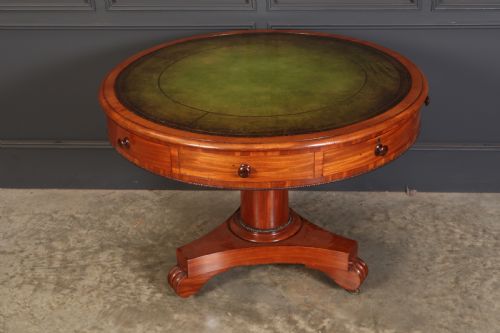


Circular Pedestal Desk
A circular pedestal desk, often appearing as a drum table, offers a revolving surface designed for standing or seated writing.
Circular Pedestal Desk
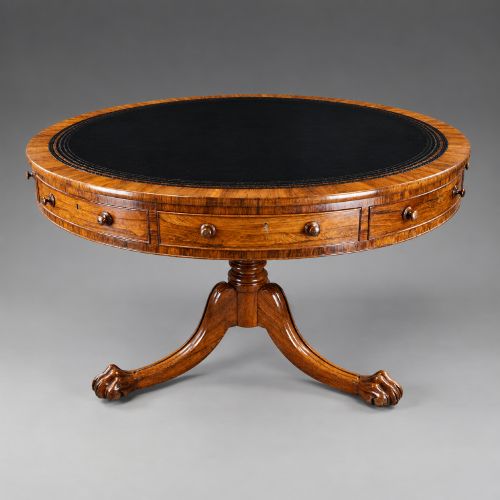
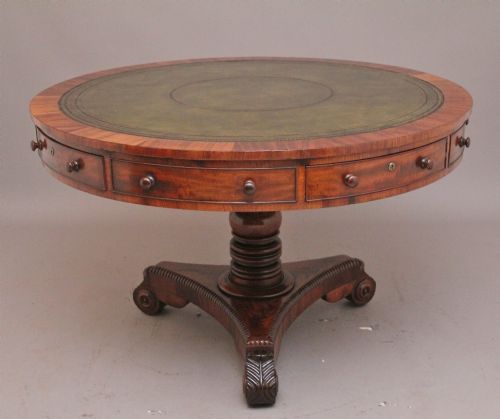
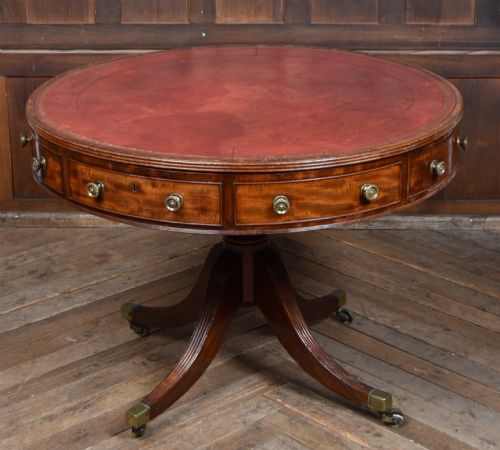
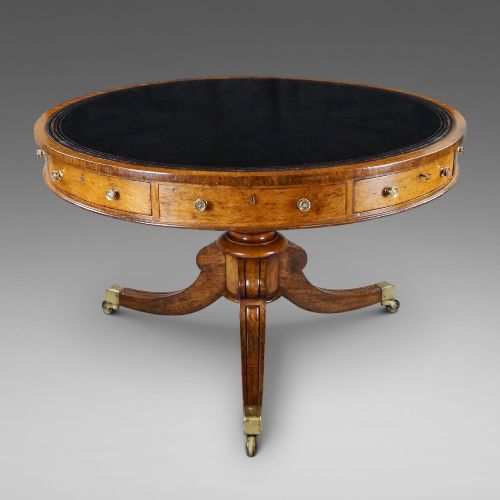
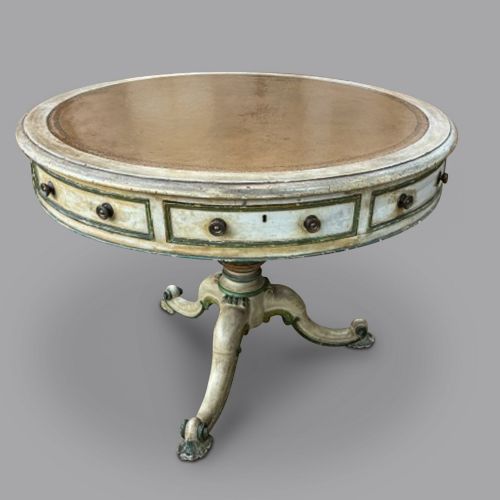
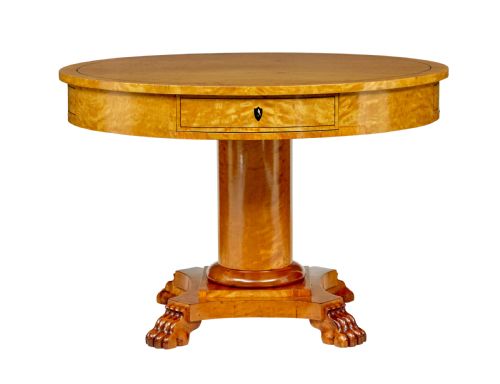
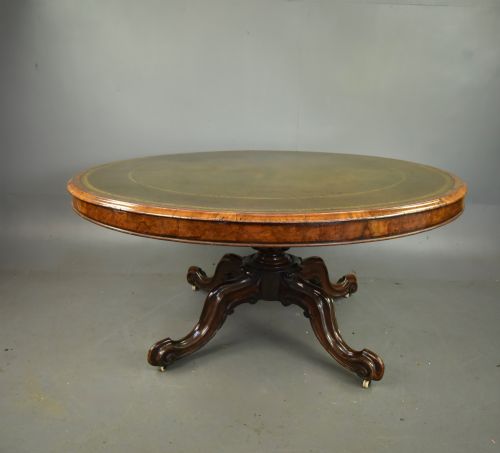
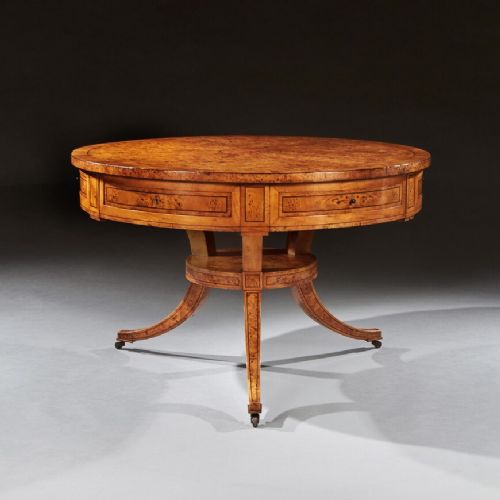
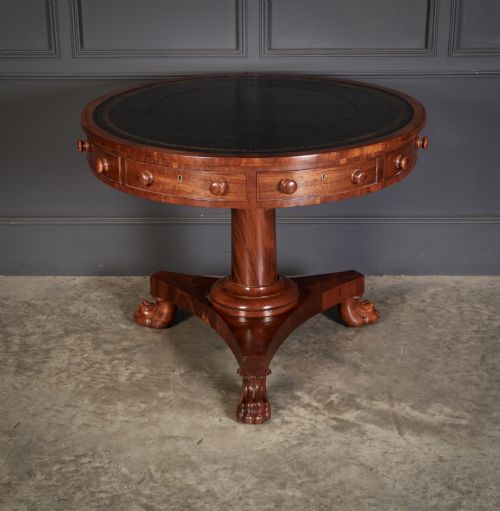
When searching for a circular pedestal desk, buyers encounter revolving drum tables and centre tables originating from the Georgian, Regency, and Victorian eras. These pieces rest on a central column above a plinth or tripod base, featuring a top surrounded by numerous drawers.
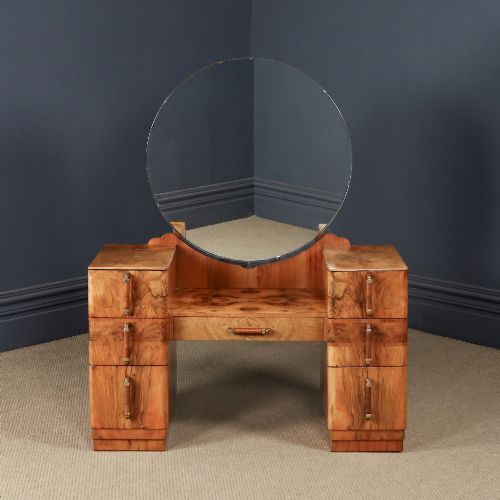
The selection predominantly showcases mahogany and rosewood examples from the Regency and Georgian periods alongside later Victorian walnut versions. Art Deco walnut dressing tables from nineteen thirty also appear, demonstrating the enduring appeal of round writing furniture.
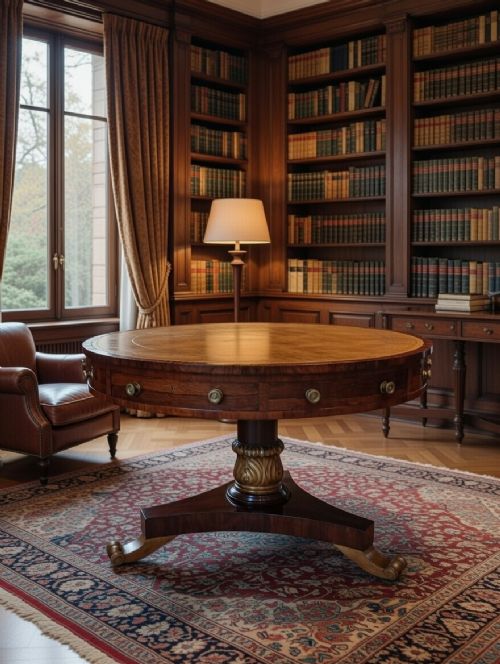
Most entries function as library tables or drum tables, providing a stable central workspace with inset leather writing surfaces. Their compact proportions allow them to occupy the middle of a room rather than hugging a wall.
Construction and Materials
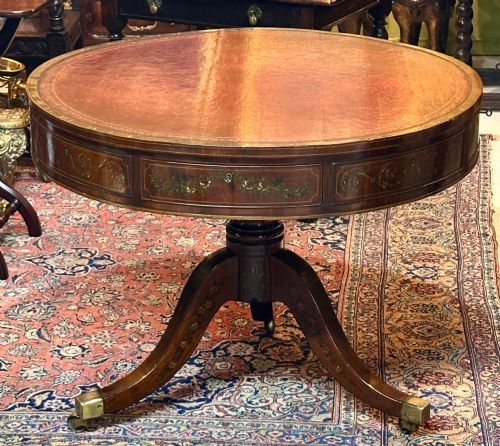
Cabinetmakers constructed these circular pedestal desks using dense timbers such as mahogany, rosewood, and walnut, often selecting flame mahogany or burr veneers for the top surface. Brass inlays and leather inserts frequently accent the writing areas.
The central pillar supports a pivoting mechanism that allows the entire top to rotate for easy access to the drawers below. Turned wooden columns meet substantial plinths or splayed legs finished with brass terminals.
Several tables manage to spin like giant wooden coins while secretly holding your spare keys inside.
Evaluating Construction and Timber
Quality rests upon the choice of timber figurations, such as flame mahogany or burr walnut, and the precision of the rotating mechanism beneath the top. Superior examples maintain smooth movement across the revolving pivot without wobble.
The integration of brass inlay and the execution of graduated drawer linings indicate the skill of the original workshop. Finer pieces retain original tooled leather inserts and well-matched veneer panels across the circular top.
Betty Joel
The Circular Pedestal Desk Glossary
- Drum table
- A circular library table with a deep top containing multiple drawers, mounted on a central pedestal. This form dates predominantly from the Georgian and Regency periods.
- Flame mahogany
- A veneer cut from the fork of the mahogany tree, producing a distinctive fire-like ripple pattern. Makers utilised this timber on prominent surfaces.
- Inlay
- The technique of embedding contrasting materials, such as brass, into the wooden surface for decoration. Regency pieces frequently employ this method.
Circular Pedestal Desk: Frequently Asked Questions
Where do I place a circular pedestal desk?
These tables suit the middle of a study or library because their finished backs and rotating drawers allow access from any angle. They function effectively as freestanding writing surfaces.
Ensure adequate clearance around the perimeter so the drawers can open fully and chairs fit comfortably beneath the top.
How do I care for the leather top?
Maintain the leather insert by dusting gently and applying a specialist wax or leather dressing periodically to prevent cracking. Avoid placing hot cups directly on the surface.
Keep the wood polished with traditional beeswax to protect the mahogany, rosewood, or walnut grain from direct sunlight.
How do I identify a Regency period desk?
Regency pieces often display rich flame mahogany or rosewood veneers complemented by fine brass inlay and sabre legs with brass paws. The proportions remain elegant and restrained.
Check the drawer construction for hand-cut dovetails and oak linings which indicate traditional early nineteenth-century cabinetmaking methods.