



Revolving Drum Desk
A revolving drum desk offers a circular surface atop a rotating mechanism, combining library practicality with stately elegance.
Revolving Drum Desk
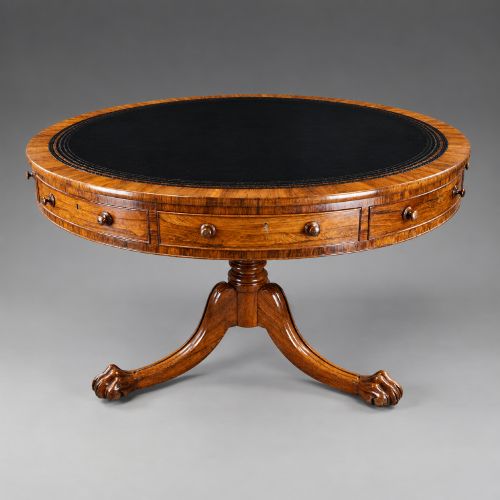
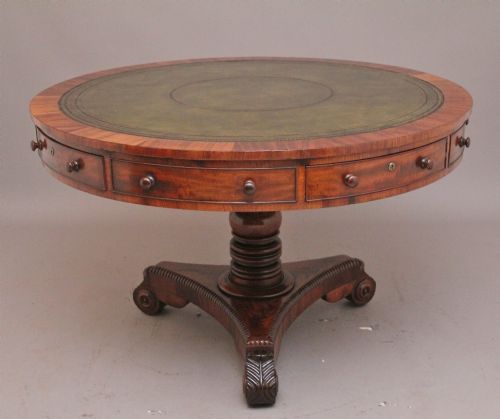
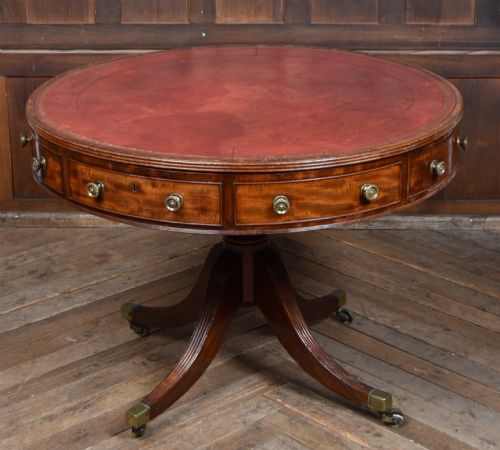
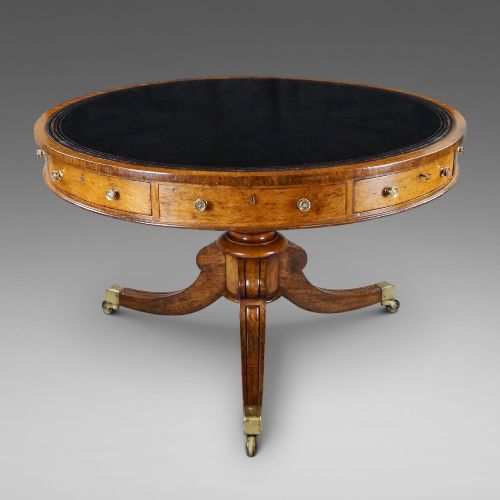
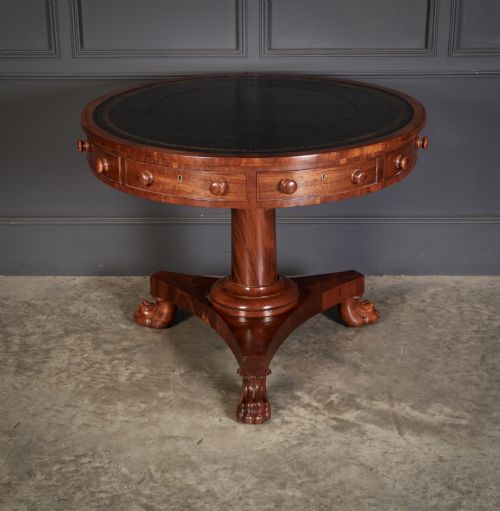
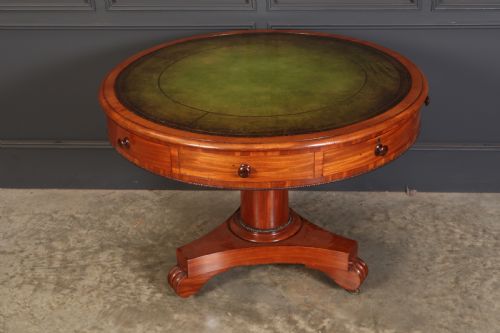
A revolving drum desk, also known as a drum table or library table, is a circular writing or reading piece designed to rotate on a central pedestal base. When buyers search for a revolving drum desk, they encounter circular tables featuring multiple drawers set into the frieze.
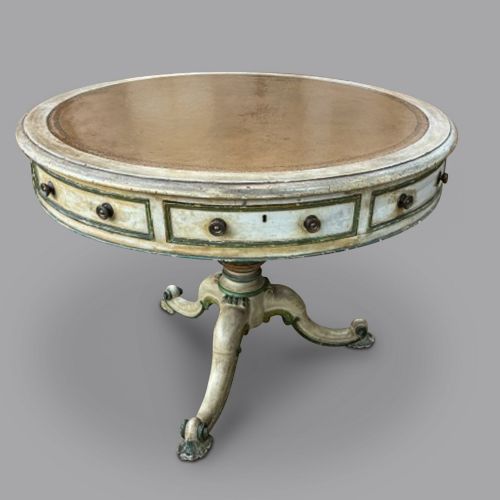
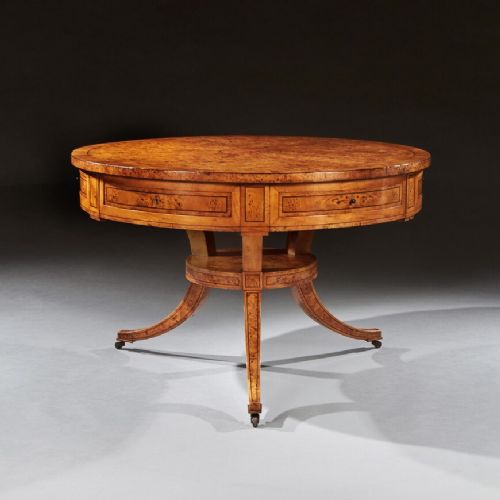
The pieces listed on this page span the Georgian, Regency, Victorian, and Edwardian periods, with nineteenth-century examples appearing most frequently. Mahogany and rosewood dominate the forms, alongside occasional oak, painted wood, and burr maple.
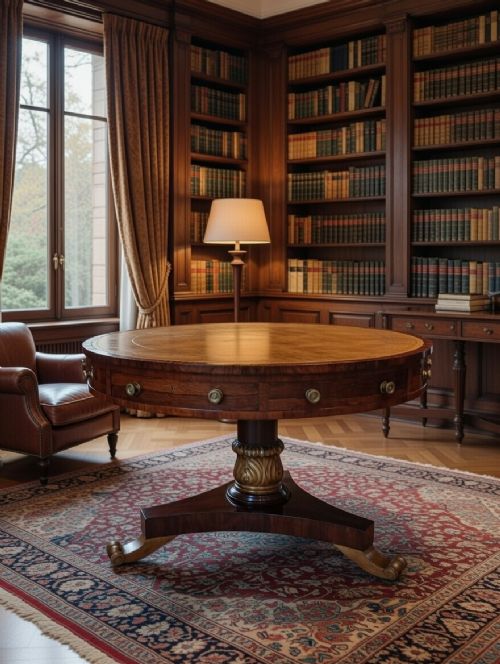
Makers and designers from the Georgian and Regency eras established the classic proportions of these tables, which often served as centre tables in libraries or studies. Variations range from standard round formats to oval shapes and smaller proportions.
Materials and construction
Cabinet makers utilised dense timber stocks, notably mahogany and rosewood, to construct the circular frames and pedestals of these tables. Flame mahogany veneers provide distinct grain patterns across the frieze and drawer fronts.
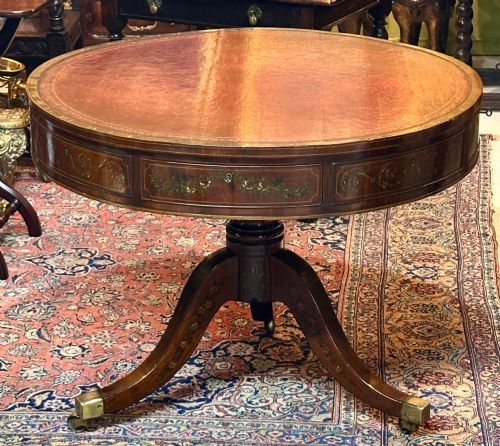
Inlaid brass details and inset leather writing surfaces frequently accent the tops of these pieces. The internal rotating mechanism relies on sturdy wooden or metal pivots that allow the heavy circular body to turn smoothly.
Solid timber pedestal bases often branch into tripod or quadruped legs fitted with brass castors to support the weight of the rotating drum.
Revolving Drum Desk Retail Price Guide 2026
Typical asking prices for revolving drum desk among the pieces listed under this phrase on Sellingantiques today, from the lower quarter to the upper quarter. They describe what is for sale here now, not the wider market.
Secret compartments occasionally hide behind dummy drawer fronts on these spinning tables, built to outwit curious guests.
Assessing quality in a revolving drum desk
The sophistication of the timber figure and the crispness of the brass inlay distinguish standard examples from finer works. Flame mahogany veneers matched symmetrically across the revolving drum indicate careful selection by the cabinet maker.
The smoothness of the rotation mechanism and the snug fit of the frieze drawers demonstrate the standard of original construction. Elaborate pedestals, secondary woods of high grade, and unusual timbers such as burr maple elevate certain pieces above typical production.
The Revolving Drum Desk Glossary
- Drum table
- A circular library table with drawers set into the deep frieze, designed to rotate on a central pillar.
- Frieze
- The horizontal band beneath the top of the table that houses the revolving drawers.
- Flame mahogany
- A veneer cut from the branch junction of a mahogany tree, producing a distinctive flickering flame pattern.
- Centre table
- A freestanding piece designed to be viewed from all sides, placed in the middle of a room rather than against a wall.
- Pedestal
- The central vertical support pillar that connects the table top to the foot or base.
Revolving Drum Desk: Frequently Asked Questions
What is a revolving drum desk?
A revolving drum desk is a circular library table featuring a deep frieze fitted with drawers, mounted on a central rotating mechanism.
These pieces allow a reader or writer to access different compartments simply by spinning the top surface.
Where were drum desks used?
These tables typically stood in the centre of libraries, studies, or large drawing rooms during the Georgian and Victorian periods.
Their circular design made them practical for multiple users seated around the room.
How do I date a drum table?
Dating relies on stylistic clues such as the Regency brass inlay, Georgian proportions, or Victorian secondary timbers.
Construction methods and the specific grain of the mahogany or rosewood also help determine the period.
Are all drum tables desks?
Many examples function as library tables or centre tables rather than dedicated writing desks.
Some feature inset leather tops intended for writing, while others provide plain timber surfaces suited for displaying books.