


Georgian Rent Table
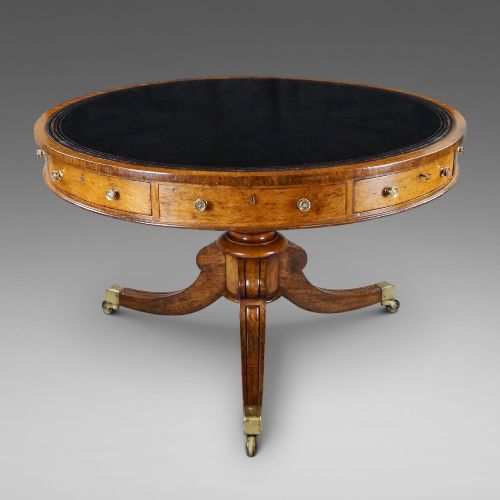
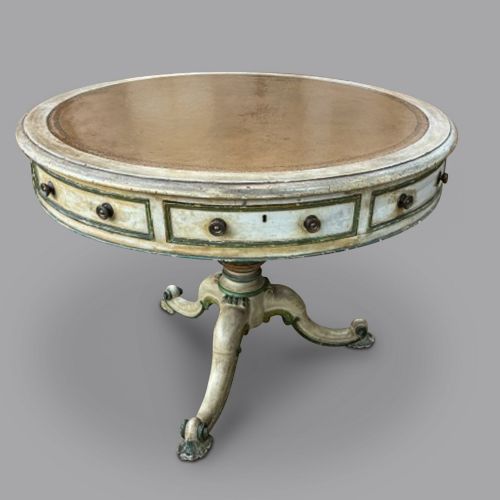
A georgian rent table is a revolving circular writing desk designed for collecting estate dues, combining practical storage with a grand aesthetic.
Georgian Rent Table
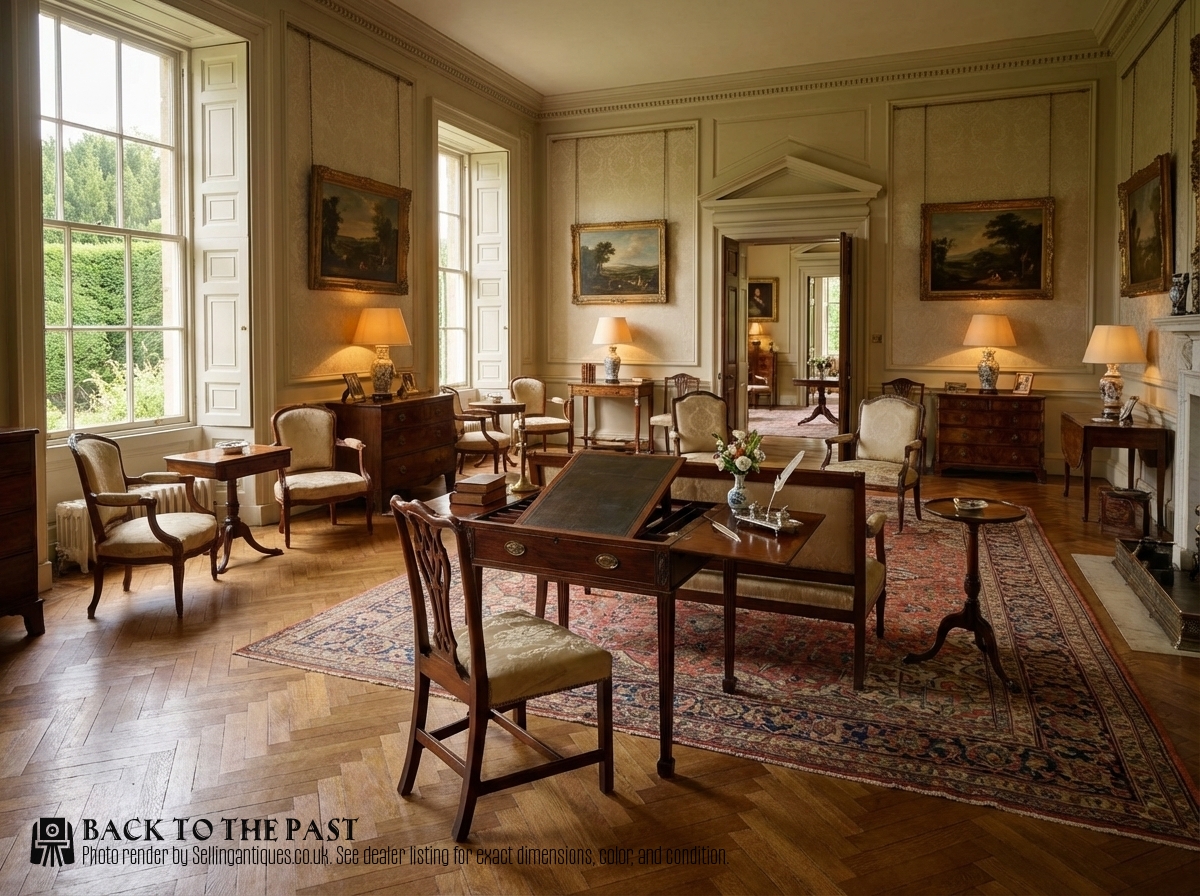
When you search for a georgian rent table, you encounter large circular furniture forms designed for estate management and library use. Most pieces seen here belong to the Georgian and Regency periods, alongside later revivals from the nineteenth and twentieth centuries.
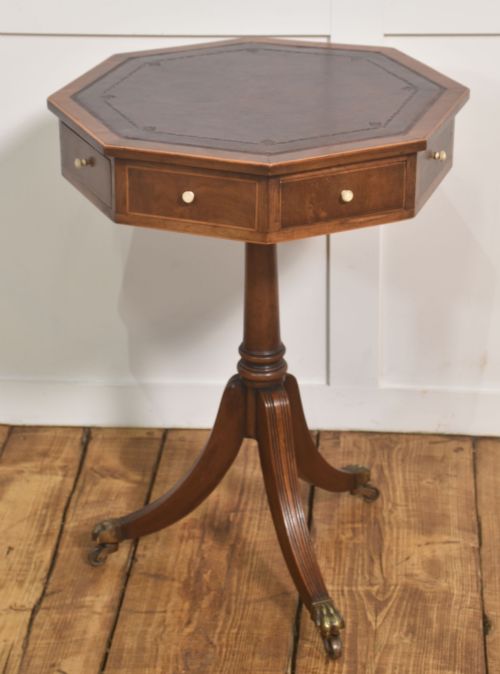
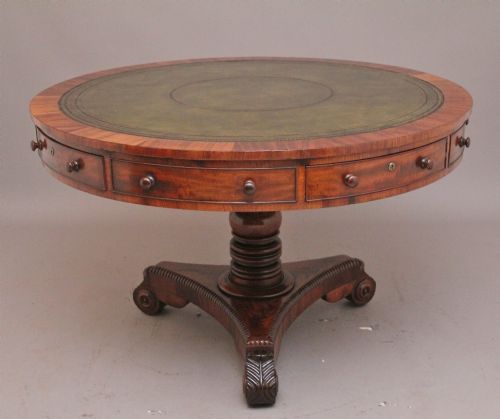
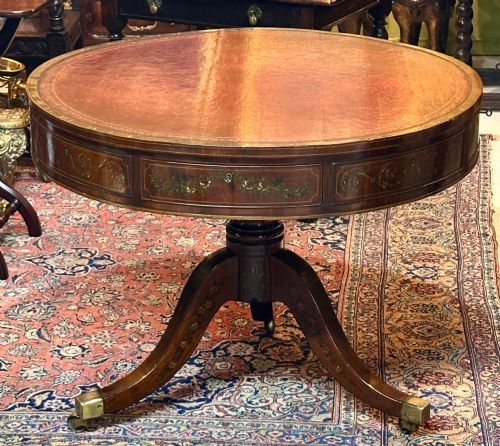
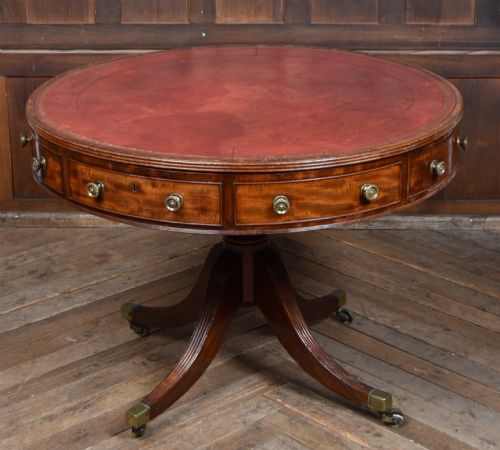
The standard form is a drum-topped table resting on a central pillar and tripod base, featuring rotating tops and fitted drawers for documents. Variations include mahogany, flame mahogany veneer, and rosewood constructions, often inset with leather writing surfaces and brass drawer pulls.
How they were made
Cabinet makers utilised solid timbers alongside figured veneers, applying mahogany, flame mahogany veneer, and rosewood over sturdy internal carcases. Brass details appear frequently as inlay, cast mounts, and hardware on the rotating drawers.
Leather inserts form the writing surface of the top, typically finished with gilt tooling around the perimeter. The revolving mechanism relies on internal pivots and bearing structures that allow the heavy circular top to turn smoothly.
Georgian Rent Table Retail Price Guide 2026
Typical asking prices for georgian rent table among the pieces listed under this phrase on Sellingantiques today, from the lower quarter to the upper quarter. They describe what is for sale here now, not the wider market.
Some drawers hide secret compartments once used to stash hidden ledgers from curious tenants.
What varies in quality
The choice of timber and veneer figure dictates much of the visual impact, with select flame mahogany and rosewood examples sitting at the upper end of the scale. Cabinet-making finesse shows in the precision of the revolving mechanism and the neatness of the drawer joinery.
Proportions and secondary woods also define the standard of execution, where smaller or unusual dimensions demand greater skill from the maker. The quality of the original leather insert and the crispness of any brass inlay complete the distinction between ordinary and superior pieces.
The Georgian Rent Table Glossary
- Drum table
- A circular library or writing table with a deep top resembling a drum, usually fitted with multiple drawers around the circumference. They often feature revolving mechanisms to allow access to all compartments from a single seated position.
- Rent table
- A specialised circular table with labelled drawers historically used by estate agents or landowners to collect rents and manage accounts. The rotating top allowed the steward to reach documents without moving around the room.
- Flame mahogany veneer
- A decorative wood veneer sliced from mahogany logs where the grain creates a distinctive undulating, flame-like pattern. It was widely utilised on prominent furniture surfaces during the Georgian and Regency eras.
- Tripod base
- A support structure consisting of three legs radiating from a central column, commonly used on tables of this scale. This configuration provided stability while allowing space for the user's knees beneath the revolving top.
- Regency
- An English design period spanning the early nineteenth century, characterised by classical influences and refined proportions. Furniture from this era often incorporates bold timbers, brass inlay, and architectural elements.
Georgian Rent Table: Frequently Asked Questions
What is a rent table used for?
A rent table served as a functional desk for estate managers and landowners during the eighteenth and nineteenth centuries. The revolving top and multiple drawers allowed tenants' payments and estate documents to be organised and retrieved efficiently.
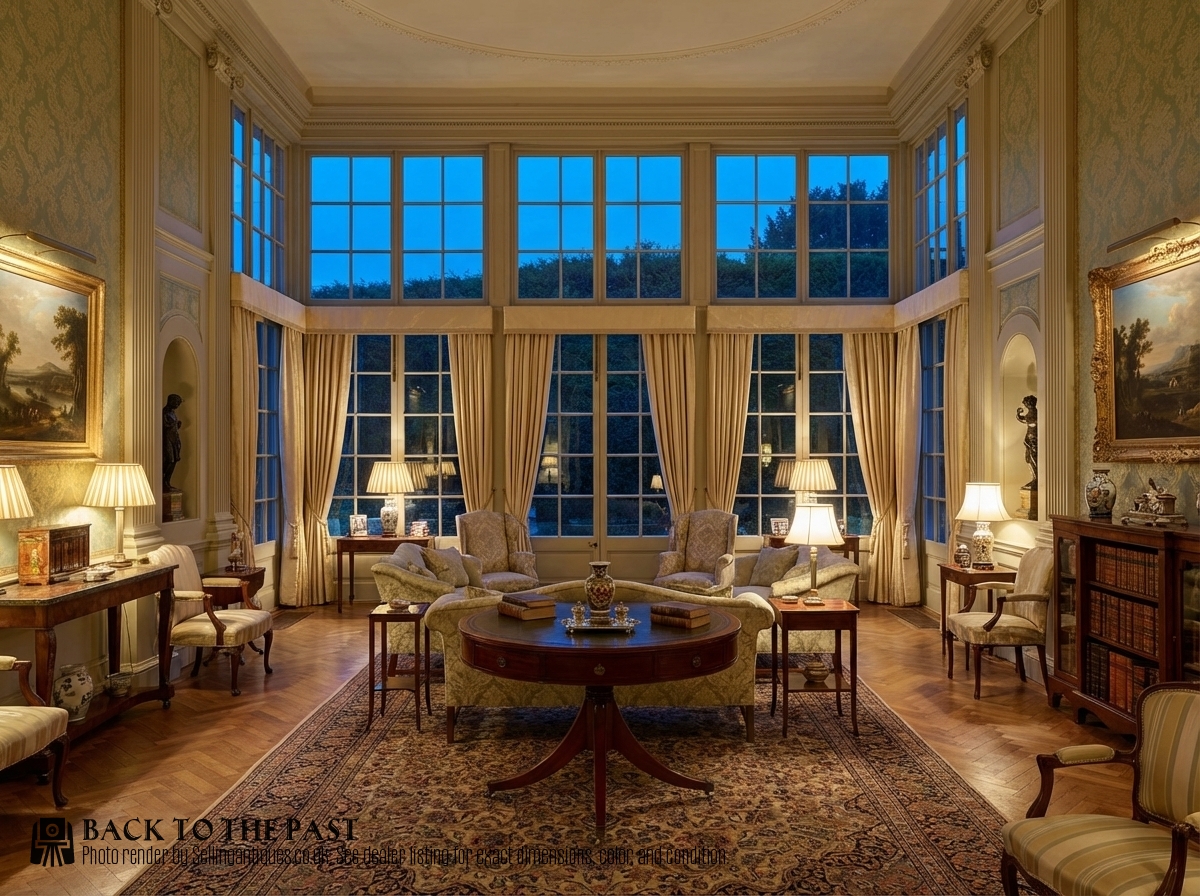
Today, these tables function effectively as grand centre tables, library desks, or occasional tables in large rooms. Their numerous drawers offer practical storage for household items while maintaining a formal period appearance.
How do I identify a Georgian rent table?
Authentic Georgian examples typically feature solid mahogany or flame mahogany veneer, classical proportions, and period brass hardware. The presence of lettered or numbered drawers often indicates the original rent-collecting function.
Later pieces from the nineteenth and twentieth centuries often follow these exact forms under revival styles. Examining the secondary woods, dovetail construction, and internal pivot mechanism helps determine the precise age of the piece.
Do all rent tables rotate?
Most traditional rent and drum tables incorporate a revolving mechanism built into the pillar and top structure. This allowed the user to sit in one place and access every drawer around the circumference of the table.
Some smaller or altered examples may have fixed tops, so checking the movement is essential when examining the form. The internal pivot must bear the weight of the heavy wooden top and loaded drawers smoothly.