


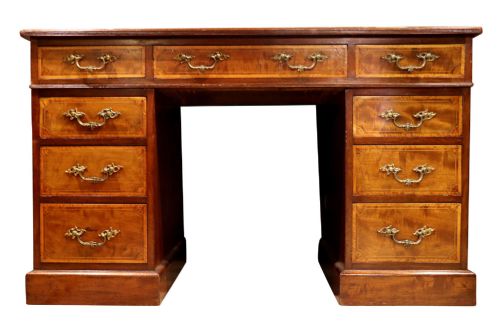
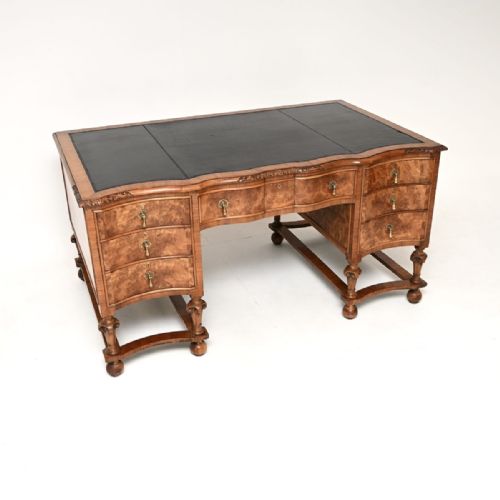
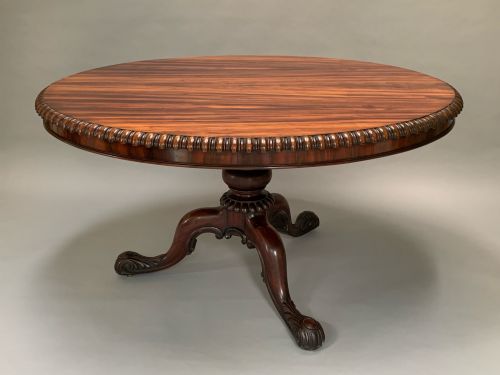
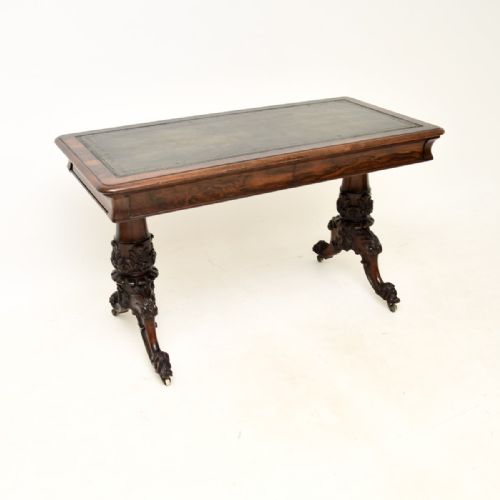
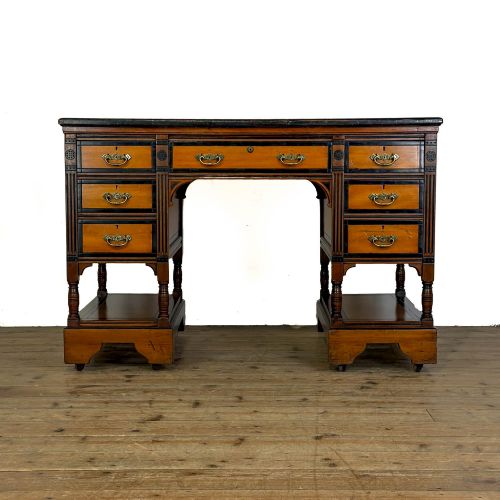
Pedestal Library Table
A pedestal library table serves as the heavy workhorse of a study, offering deep timber surfaces and substantial drawers for serious writing.
Pedestal Library Table
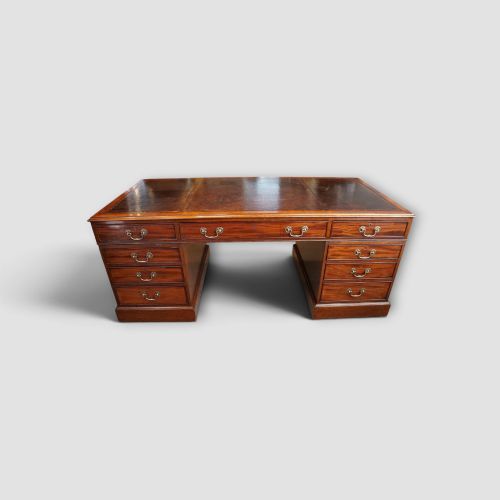
A pedestal library table provides a large, stable writing surface supported by robust central pillars, pedestals, or twin banks of drawers. These pieces emerge predominantly from the Georgian, Regency, and Victorian eras, carrying the substantial proportions typical of nineteenth-century studies.
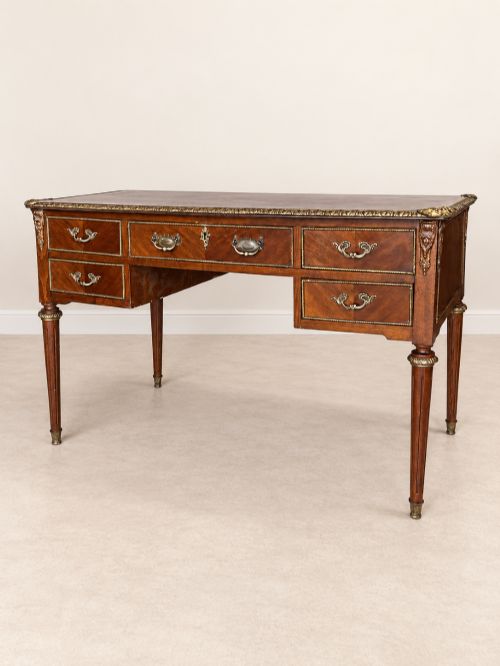
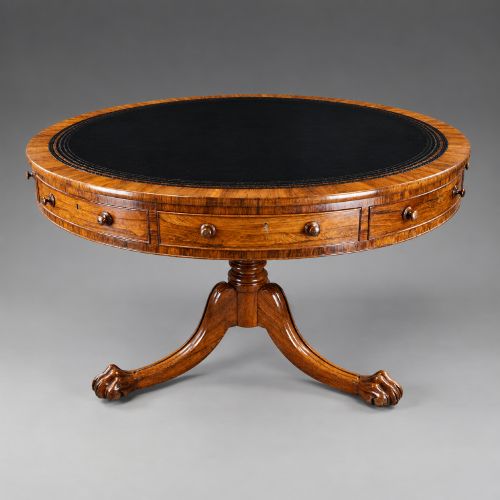
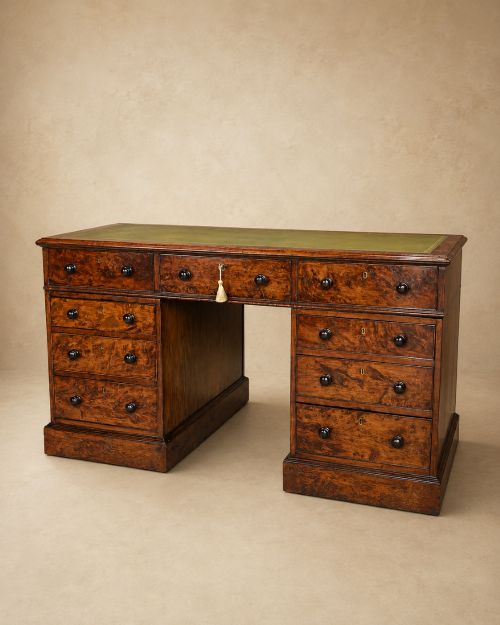
The version most commonly encountered on this page is the mahogany or rosewood pedestal desk, often fitted with a leather writing surface. Alongside these sit drum tables, partners desks, and writing tables spanning the eighteenth to the late nineteenth centuries.
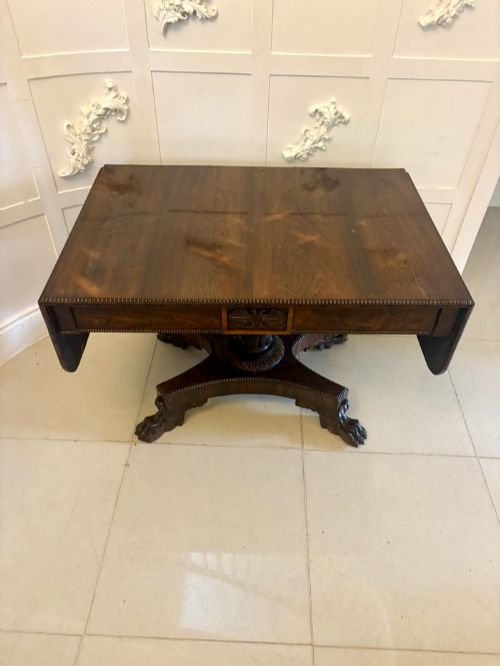
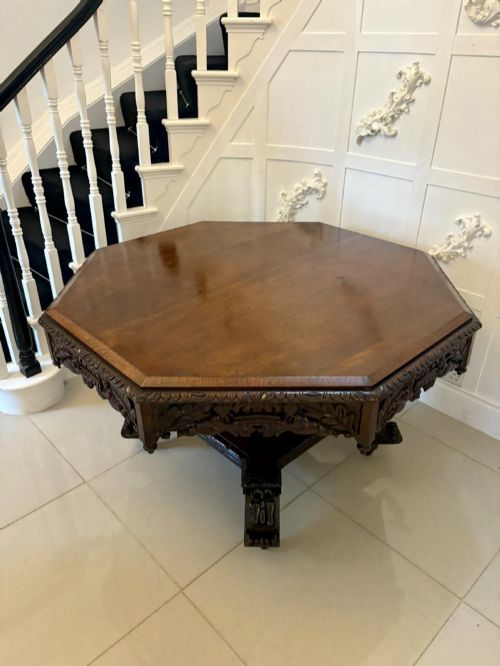
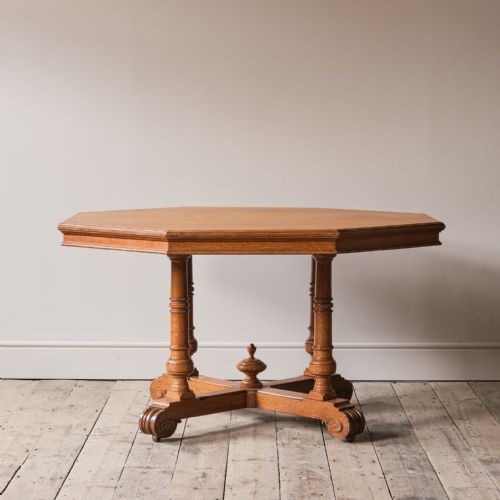
The selection ranges from George III mahogany library tables to heavily carved Victorian oak examples and William IV rosewood pieces. Each form reflects the changing domestic requirements of libraries and offices over successive periods.
Materials and Construction
Makers built these tables primarily using dense timbers such as mahogany, rosewood, oak, and burr walnut, frequently selecting Cuban or solid varieties for their weight and grain. Secondary woods like pine provide internal framing for drawers and carcases.
Surfaces often feature inset tooled leather writing panels bordered by blind tooling, while bases incorporate brass castors and handles. Carved details, ebonised accents, and inlaid veneers appear across specific Victorian and Regency interpretations.
Listings feature pedestal library tables spanning from the eighteenth-century George III period through the Regency, William IV, and Victorian eras.
Assessing Quality and Execution
The hierarchy of quality rests on the selection of timber figures, such as matching burr walnut veneers or dense Cuban mahogany grains. Superior examples display precise cabinetmaking in the dovetailing of drawers and the integration of secondary woods.
Original hardware, including brass handles, locks, and castors, elevates a piece, as does the retention of an authentic aged leather writing surface. The sharpness of carved details and the structural integrity of the pedestals further distinguish finer workshop output.
Trollope and Sons·Edwards and Roberts·Maple and Co·Gillows·Charles Andrea Nosotti·Mein of Kelso
The Pedestal Library Table Glossary
- Partners desk
- A large double-sided pedestal desk designed with drawers and cupboards on both faces so two people could work opposite each other. These frequently feature wide kneeholes and leather tops.
- Drum table
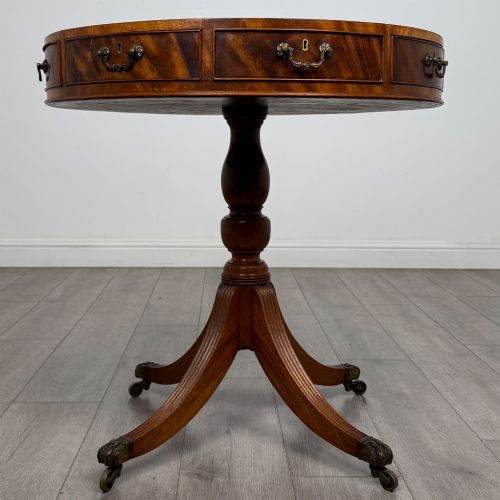
- A circular library table containing a revolving or stationary top surrounded by an apron of alternating real and dummy drawers. They often stand upon a single central pillar and tripod base.
- Sofa table
- A rectangular drop-leaf table traditionally placed in front of sofas, equipped with end supports or pedestals. They often include small drawers beneath the top.
- Kneehole desk
- A compact desk featuring a recessed central space for the user's legs, flanked by pedestals of drawers. Georgian versions frequently incorporate a small central cupboard or drawer above the opening.
- Gueridon
- A small circular occasional table supported by a single central column or pedestal. These appear in various timber and painted finishes.
Pedestal Library Table: Frequently Asked Questions
What is a pedestal library table?
A pedestal library table is a heavy freestanding desk or table supported by columns, cabinets, or pedestals, designed for writing and storing books in a study.
These pieces typically incorporate large timber tops, often lined with leather, and deep drawers for paperwork.
What wood was used for library tables?
Cabinetmakers utilised dense hardwoods such as mahogany, rosewood, oak, and walnut, often employing burr veneers for decorative surfaces.
Secondary woods like pine or oak appear internally within drawer linings and carcase backs.
How do I care for a leather top?
Leather writing surfaces require gentle dusting and occasional treatment with appropriate leather dressings to prevent drying and cracking.
Avoid placing damp items or direct heat sources on the leather to preserve the original tooling and colour.