
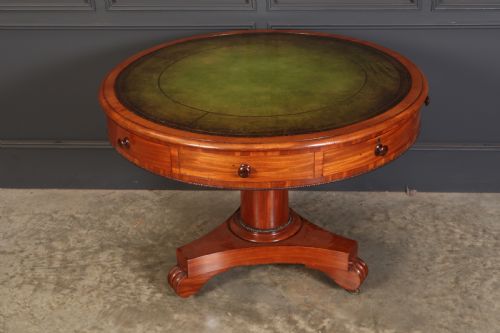


Antique Round Desk
An antique round desk provides a practical workspace while anchoring a room with a continuous circular form.
Antique Round Desk
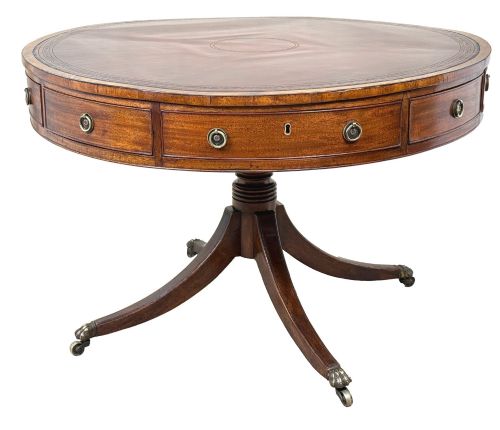
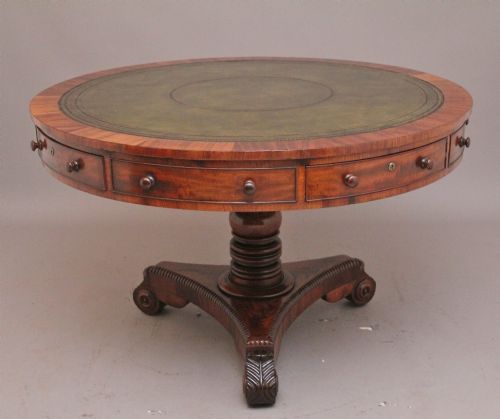
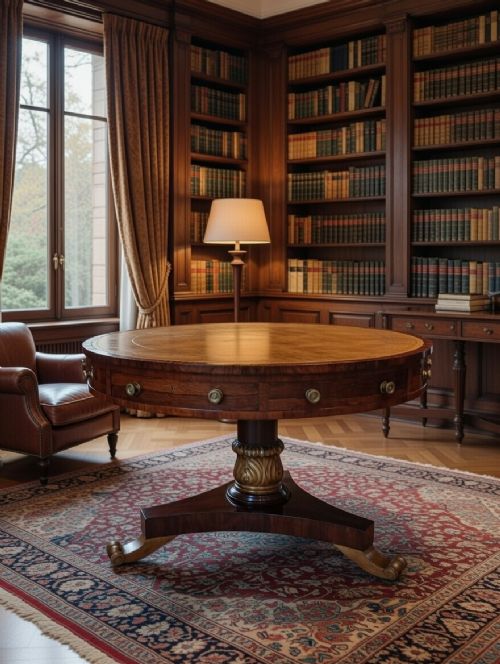
When searching for an antique round desk, buyers encounter circular writing furniture most commonly represented by drum tables and library tables from the nineteenth century. These pieces offer a revolving or stationary circular top, frequently fitted with inset leather surfaces and multiple peripheral drawers.
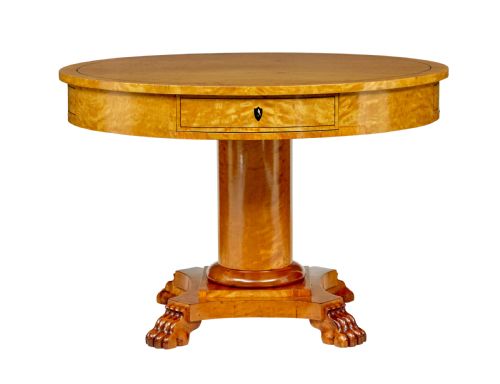
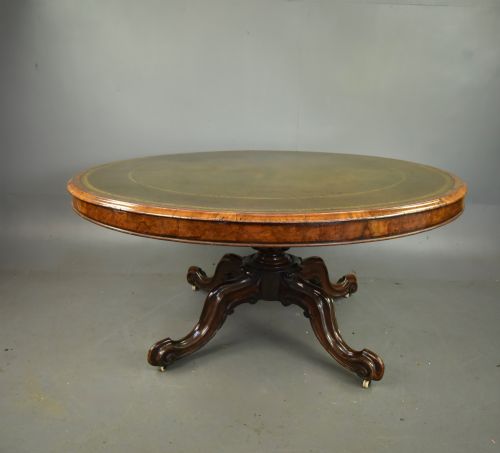
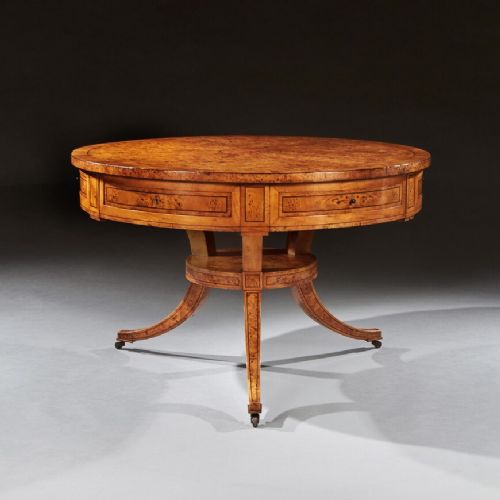
The selection ranges from compact Regency mahogany examples to larger Victorian walnut versions and Scandinavian burr root maple pieces. Alongside dedicated writing formats, the category encompasses centre tables and pedestal desks with rounded profiles designed to stand freestanding within a room.
Construction and materials
Cabinetmakers utilised dense hardwoods such as mahogany, rosewood, walnut, and birch, often selecting flame veneers or burr root maple to cover the circular tops. These timber surfaces were frequently complemented by inset tooled leather writing panels.
Structural support typically relies on central pedestals branching into tripod or quadrapod legs, sometimes terminating in brass castors to allow mobility for these heavy pieces.
Some nineteenth-century drum tables feature secret rotating compartments hidden behind dummy drawer fronts for confidential papers.
Assessing quality
Quality reveals itself in the selection of timber veneers and the precision of the joinery around the curved drawer carcases. Superior examples maintain smooth drawer operation within the circular frame and display well-figured grain across the entire top.
Finer pieces incorporate thoughtful secondary details such as original brass hardware, finely tooled leather inserts, and stable, robust central pillar supports that prevent wobble.
S&H Jewell
The Antique Round Desk Glossary
- Drum table
- A circular library table containing a deep top fitted with alternating real and dummy drawers around the circumference. This form became particularly popular during the Regency and Victorian periods.
- Centre table
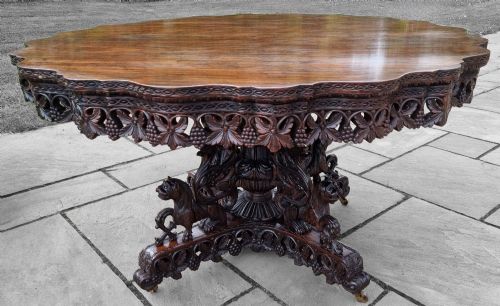
- A freestanding table finished on all sides, intended to stand in the middle of a room rather than against a wall. Many circular examples function as writing or display surfaces.
- Flame mahogany
- A veneer cut from the fork of the mahogany tree, producing a distinctive flame-like pattern across the wood. Makers prized this figure for prominent table tops.
- Burr root maple
- A knotted growth on a maple tree that yields a highly figured, swirling grain pattern when sliced into veneer. Scandinavian pieces frequently employ this material for decorative impact.
- Pedestal
- A central vertical support rising from a base to hold the weight of the table top. In circular desks, this pillar often splits into multi-footed legs with castors.
Antique Round Desk: Frequently Asked Questions
What is a drum table?
A drum table is a circular piece of furniture featuring a deep top with a ring of drawers around the perimeter. They were designed for libraries and studies to hold books and writing equipment.
Most rest on a single central pedestal with branching legs. The top often rotates or remains stationary depending on the specific model.
How do I use a round desk?
These pieces work well freestanding in the middle of a room or study rather than pushed against a wall. The circular shape allows easy access to paperwork from multiple angles.
Drawers set into the circumference provide storage for everyday stationery. Many feature leather inserts that offer a suitable writing surface.
How do I date an antique round desk?
Dating relies on observing the timber species, secondary woods, and leg styles characteristic of periods like Regency or Victorian. Regency examples often show clean mahogany lines, while Victorian versions may feature heavier walnut.
Construction methods inside the drawers and the presence of original brass castors also help establish the approximate decade of manufacture.
Are all round tables desks?
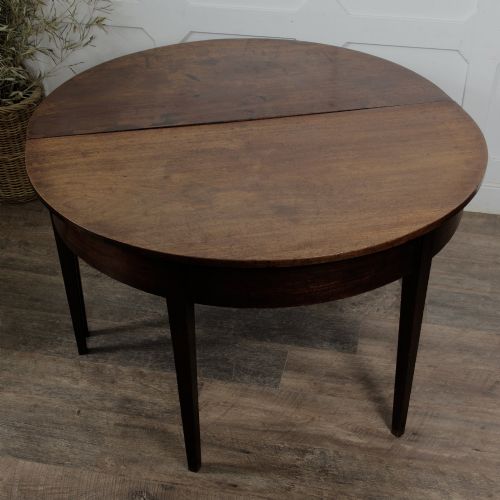
Not all circular antique tables are desks, as many serve as centre tables or library tables without storage drawers. True writing versions incorporate drawers and frequently leather writing surfaces.
Examining the frieze beneath the top reveals whether drawers are present. Tables without drawers functioned as display or centre pieces.