


Oak Centre Table
An oak centre table anchors a room with timber grain and presence, offering a versatile freestanding surface for books, lamps, or dining.
What an oak centre table is
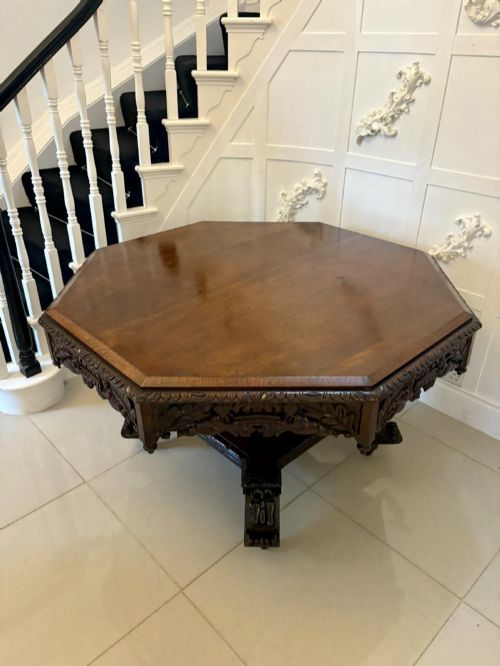
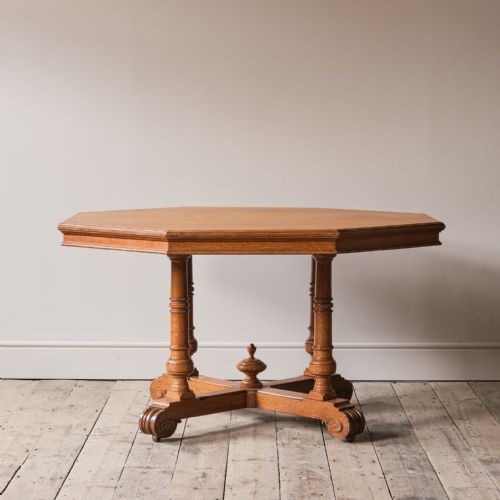
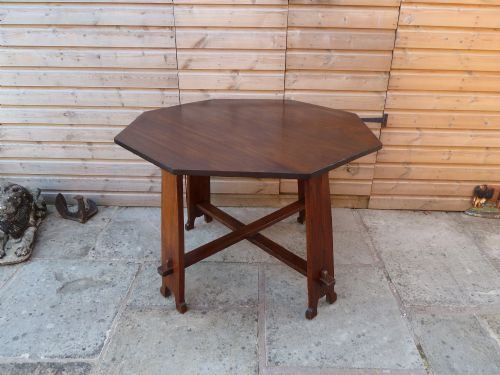
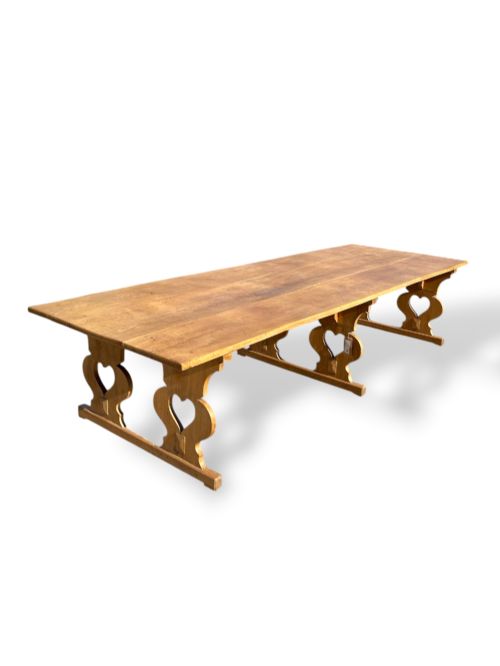
An oak centre table stands free in a room rather than against a wall, designed to be seen from all four sides. When you search for oak centre table, you encounter forms ranging from heavy Gothic library pieces to lighter occasional and dining tables.
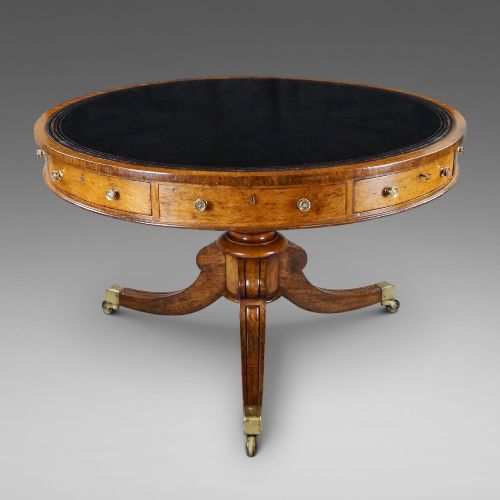
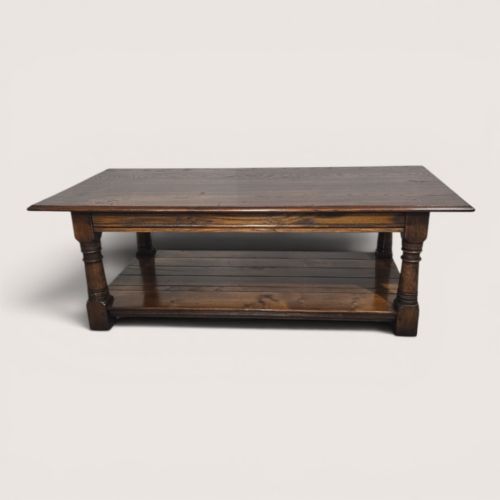
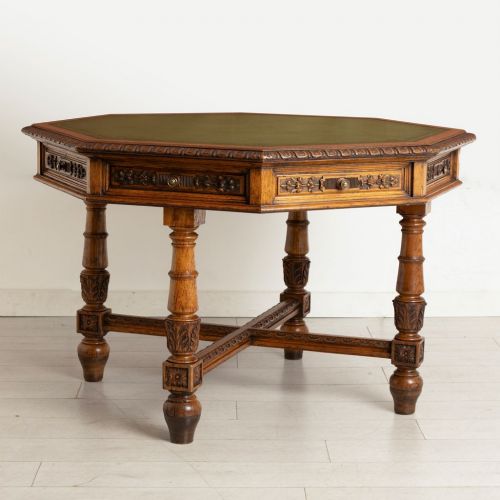
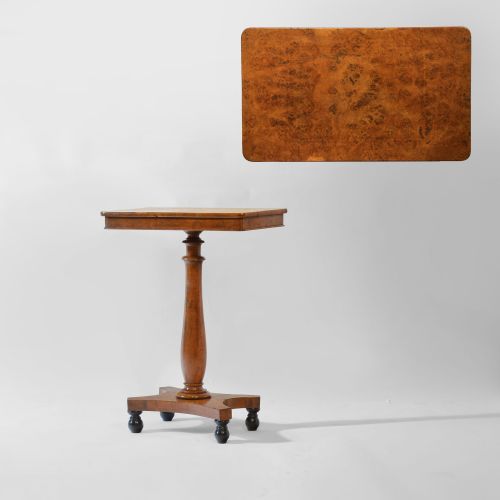
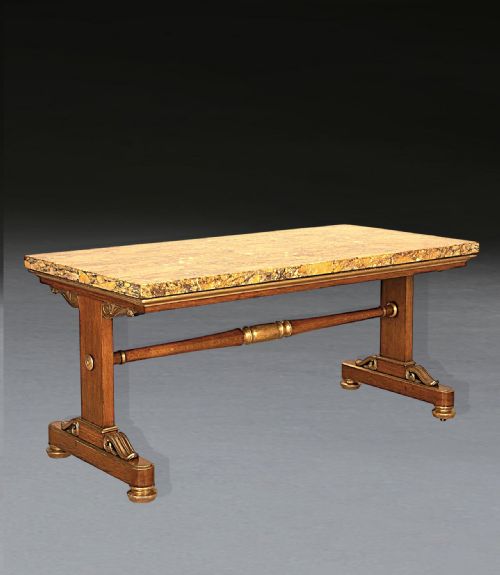
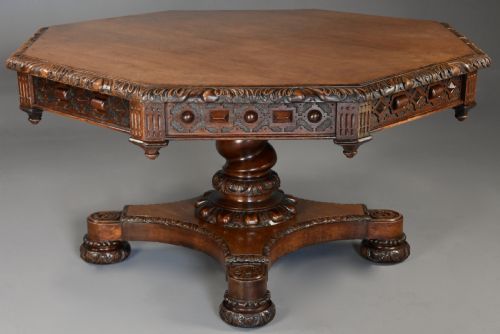
The pieces appearing here span the eighteenth and nineteenth centuries, taking rectangular, octagonal, round, and oval shapes. Many incorporate support columns, end supports, or heavy pedestals rather than simple four-leg frames.
Makers and workshops from various regions produced these tables in oak, sometimes pairing the timber with ebony, brass, iron, or leather inserts. They function equally well as library desks, hall furniture, or central dining surfaces.
Materials and construction
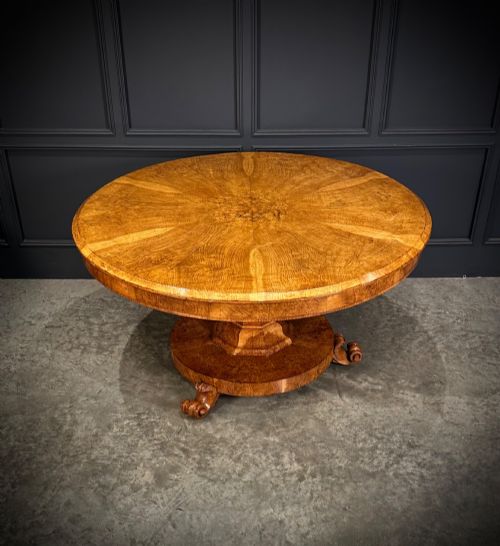
Makers utilised solid oak alongside figured variations like pollard and burr oak to create rich grain patterns across large tabletops. Metal elements such as brass, iron, and wrought iron appear in mounts, stretchers, and hardware.
Some examples incorporate secondary timbers like walnut, alongside leather writing surfaces and ebony stringing details. Carved ornamentation, fretwork columns, and parquet work demonstrate intensive hand-tool techniques across the periods.
Retail Price Guide 2026
Typical UK retail prices for oak centre table, calculated from the Sellingantiques database of over a million retail prices indexed since 2003. This retail price guide relies exclusively on Sellingantiques data; no external sources or auction records are used, so the figures do not describe the wider market.
Recorded forms cover dining, library, occasional, hall, and console tables in rectangular, octagonal, oval, and round shapes.
What separates the best examples
The selection of timber dictates much of the visual weight, with highly figured burr, pollard, or tiger oak elevating the surface far beyond plain planking. Crispness of hand-carved detail, particularly on heavy supports like dolphins or Gothic tracery, marks superior cabinet work.
Integration of secondary materials such as contrasting ebony parquet, fine brass mounts, and inset leather surfaces reveals the ambition of the original workshop. Structural proportions that balance a heavy timber top over a stable pedestal or column dictate lasting utility.
Gillow and Co·W Williamson and Sons·E Gomme for Heals
The Oak Centre Table Glossary
- Centre table
- A freestanding table finished on all sides so it can sit in the middle of a room rather than against a wall. These pieces often double as library desks or dining surfaces.
- Pollard oak
- Timber taken from trees that were pollunted or cut back to encourage a dense, gnarled branch growth that produces highly figured, speckled grain patterns when sliced.
- Parquet
- Geometric wood mosaic work assembled from small blocks to form decorative patterns on tabletops. This technique creates durable surfaces with varied tonal contrasts.
- Drum table
- A round library table with a deep frieze fitted with drawers, usually supported on a central pillar with tripod or platform feet. They offer a stable circular writing surface.
Frequently Asked Questions
Where should I put an oak centre table?
Place an oak centre table in the middle of a spacious room, a grand hallway, or a home library where it can be accessed from all sides.
Because these pieces are finished on every side, they look correct floating in open space rather than pushed against plaster.
Can I use an oak centre table for dining?
Many historical centre tables were built with dining or breakfast use in mind, featuring sturdy legs and substantial tops.
Check the height and knee clearance beneath the frieze or drawers before setting chairs around it for meals.
What is tiger oak?
Tiger oak refers to quartersawn timber that displays dramatic flecked medullary rays resembling animal stripes.
This cut exposes distinctive grain patterns that catch the light across nineteenth-century surfaces.