
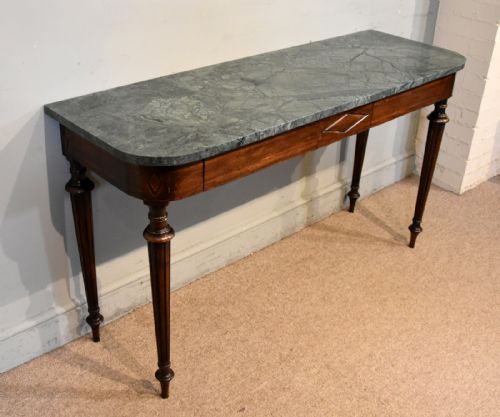
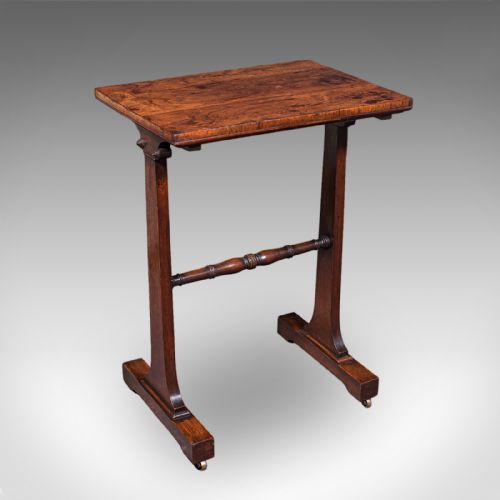

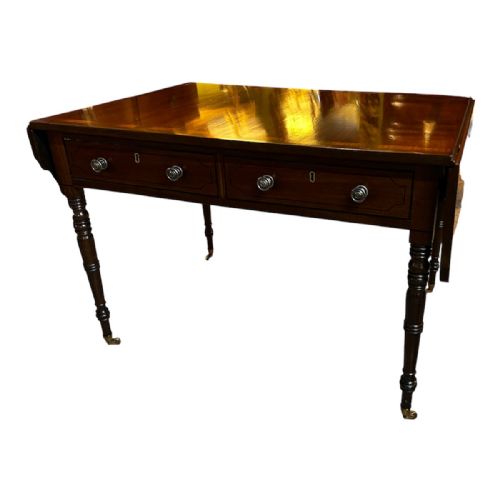


Georgian Rosewood Sofa Table
These georgian rosewood sofa table examples bring distinct Regency elegance and rich timber tones into a room, offering both beauty and utility.
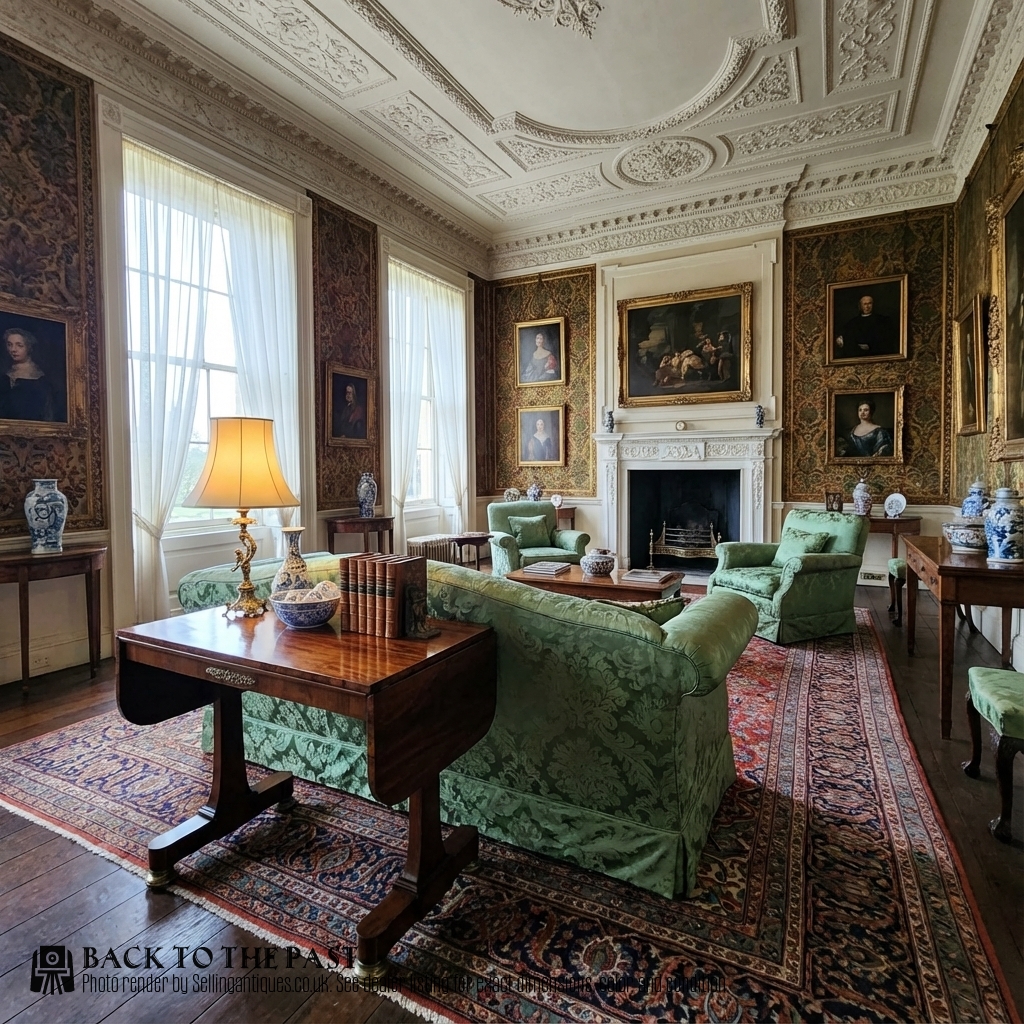
What They Are
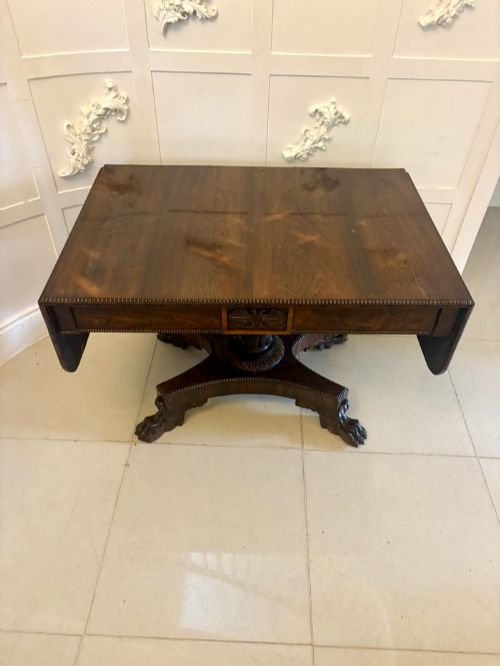
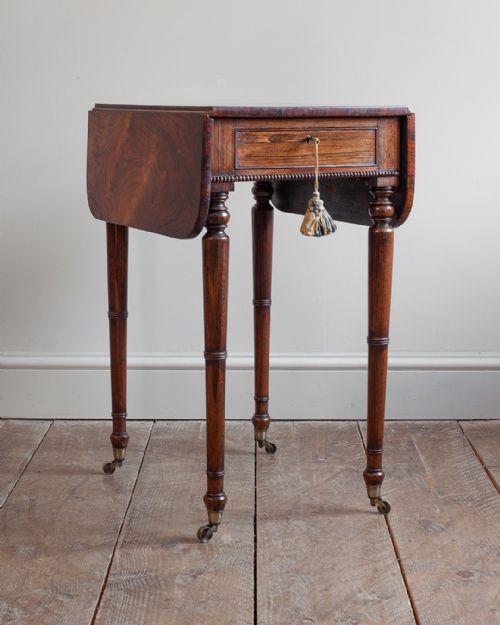
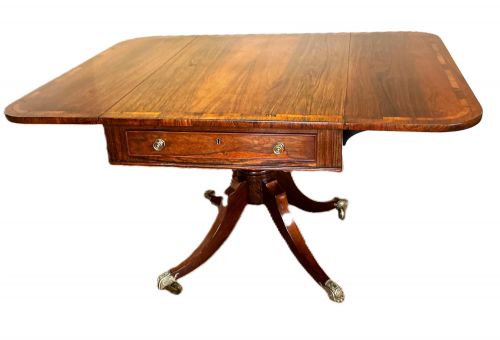
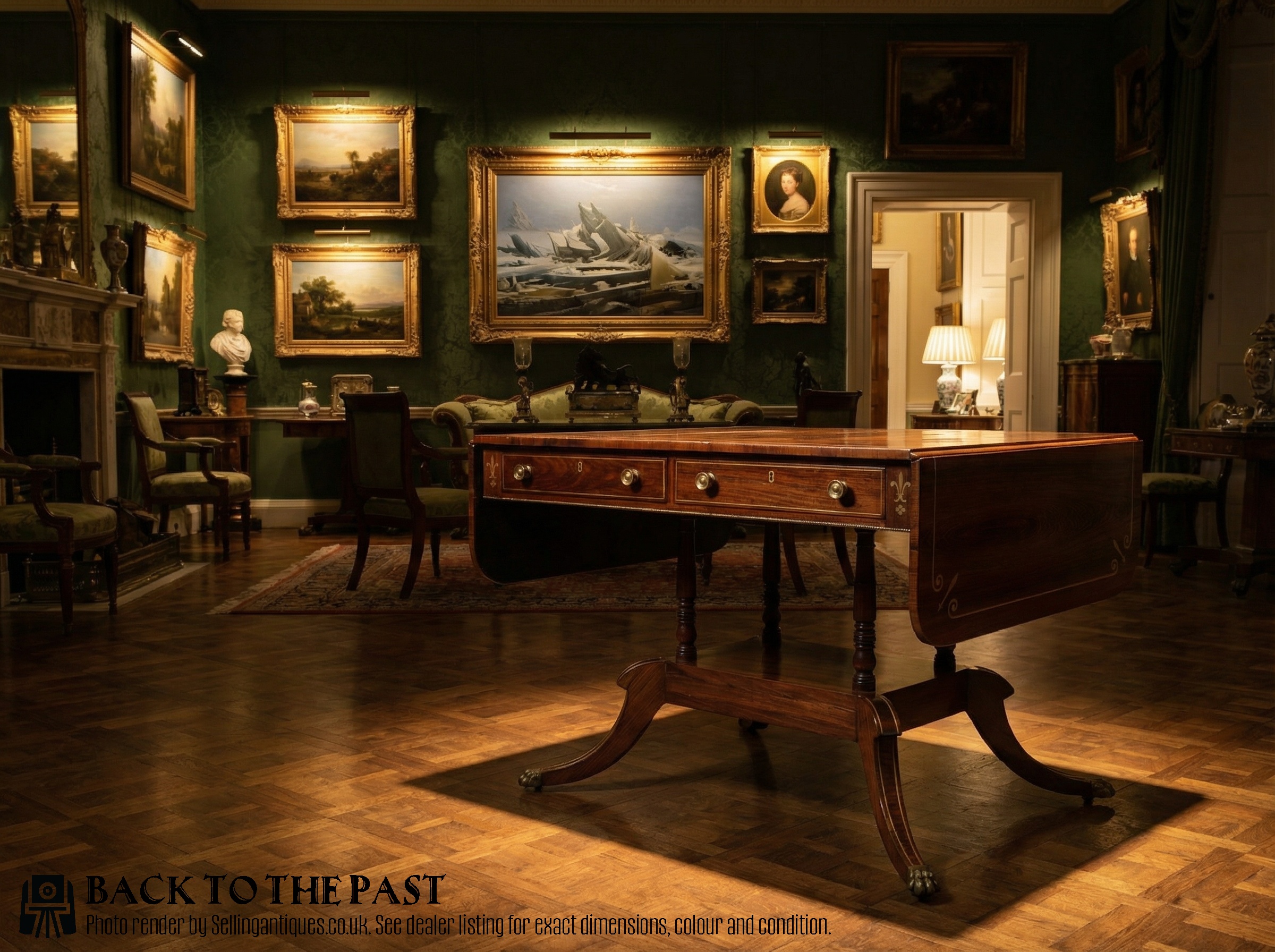
A georgian rosewood sofa table is a distinctive piece of furniture designed during the Regency and early nineteenth-century periods, often standing freestanding in a principal room. These tables characteristically feature drop leaves on either side and flat timber surfaces intended for domestic use.
The versions most commonly met on this page belong to the Regency period and the wider nineteenth century, spanning various forms produced around eighteen-ten to eighteen-thirty. Cabinet makers built these items to sit comfortably behind a sofa or serve as occasional centre tables.
Evidence from past sales shows related forms such as card games tables, hall tables and lamp tables sharing the same architectural vocabulary. The core definition remains a versatile occasional table fashioned in figured rosewood.
How They Were Made
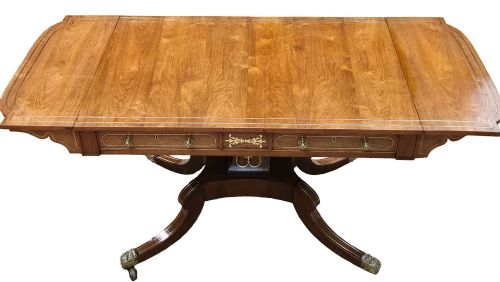
Maker construction relies heavily upon selected rosewood timbers, prized for their deep colour and striking grain patterns. Artisans also integrated brass components into the design, utilising metal inlay to accentuate the top surfaces and structural lines.
Joinery techniques from the period involved precise hand-cut joints and stable carcases designed to support drop leaves and pedestal bases. Turned elements appear in some nineteenth-century examples, showing varied turning work on the lower supports.
Retail Price Guide 2026
Typical UK retail prices for georgian rosewood sofa table, calculated from the Sellingantiques database of over a million retail prices indexed since 2003. This retail price guide relies exclusively on Sellingantiques data; no external sources or auction records are used, so the figures do not describe the wider market.
Listings feature pieces spanning the Regency period and the wider nineteenth century, utilising rosewood and brass materials.
What Varies in Quality
Superior examples display meticulous attention to brass inlay detail and exceptional figure within the rosewood timber itself. The crispness of carved or turned supports separates standard output from pieces executed to a higher standard of design.
Proportion and structural integrity define the upper tier of these tables, where the balance between the drop leaves and the central base remains harmonious. Finer workmanship shows in the careful alignment of decorative brass work and the selection of richly grained veneers.
Gillows
The Georgian Rosewood Sofa Table Glossary
- Rosewood
- A dense, heavily figured tropical timber known for its dark reddish-brown colour and contrasting black grain lines. It was the material of choice for fine Regency cabinet work.
- Regency
- An English design period spanning the early nineteenth century, characterised by classical restraint, architectural lines, and refined proportions. Pieces from this era often draw inspiration from Greek and Roman antiquities.
- Drop leaf
- A hinged flap on either side of a table top that can be raised to extend the surface area or lowered when space is required. This mechanism defines the traditional sofa table form.
- Brass inlaid
- A decorative technique where thin strips of brass are set flush into channels cut into the timber surface. This creates geometric patterns or contrasting borders across the top.
- Freestanding
- Finished on all sides so the piece can sit in the middle of a room rather than against a wall. This quality reflects the careful craftsmanship applied to the back as well as the front.
Frequently Asked Questions
What is a sofa table used for?
These pieces were originally designed to stand behind a sofa for holding lamps, books, or writing materials.
Today they function flexibly as console tables, desk surfaces, or occasional tables in living spaces.
How do I identify a Regency period table?
Look for classical proportions, rosewood timber, and characteristic architectural details such as turned supports or brass inlay.
Most examples date from the early nineteenth century and reflect the distinctive aesthetic of the Regency era.
Are the leaves always hinged?
Yes, traditional sofa tables feature drop leaves supported by hinged wooden brackets or pivoting arms beneath the top.
This allows the overall width of the table to be adjusted according to domestic needs.
Where should I place a freestanding table?
Because these tables are finished on all sides, they look best positioned where all angles can be appreciated.
Common placements include the centre of a room, behind a central sofa, or in a wide hallway.