
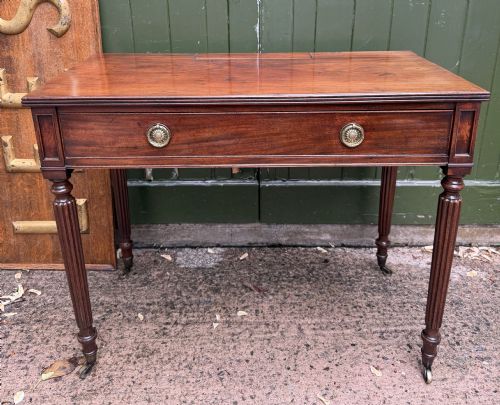


Regency Period Writing Table
A regency period writing table brings early nineteenth-century craftsmanship into a modern study, offering timber grain and brass details built for daily correspondence.
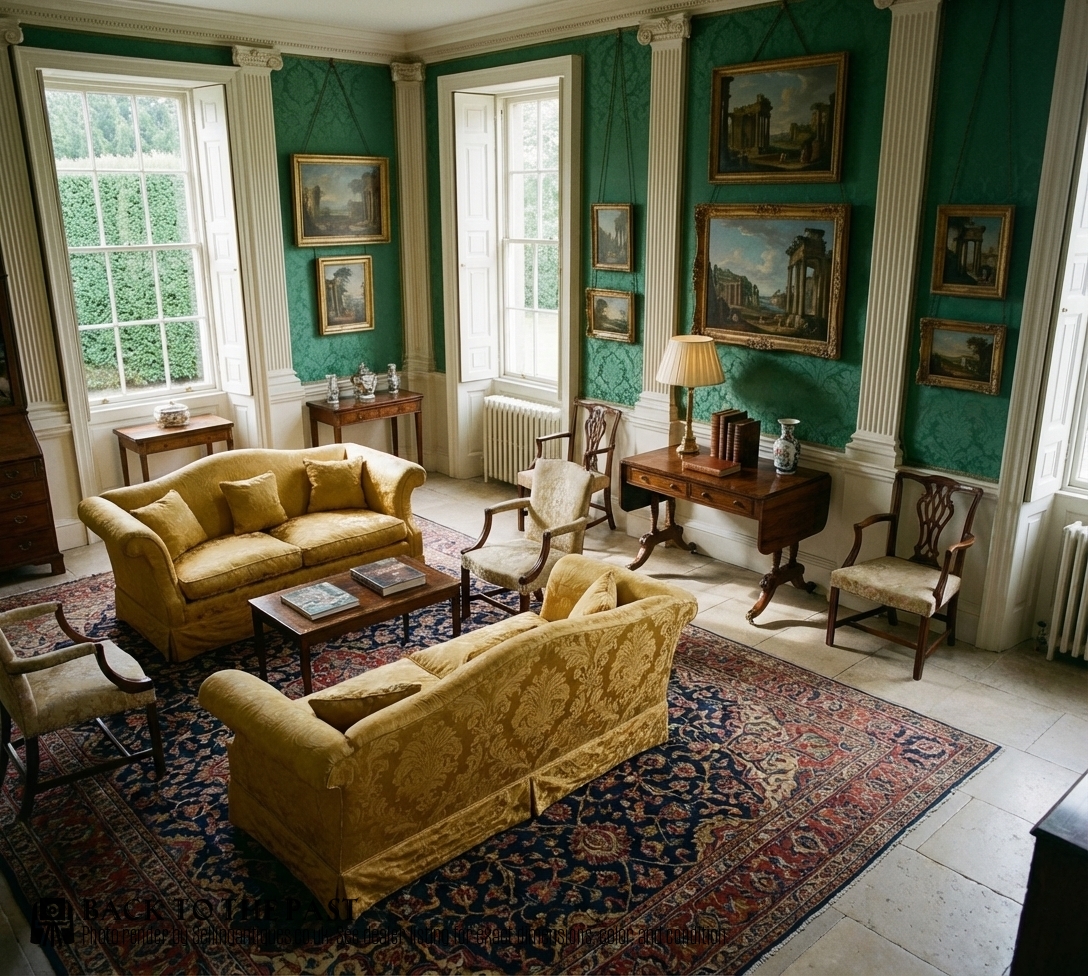
Forms and Origins
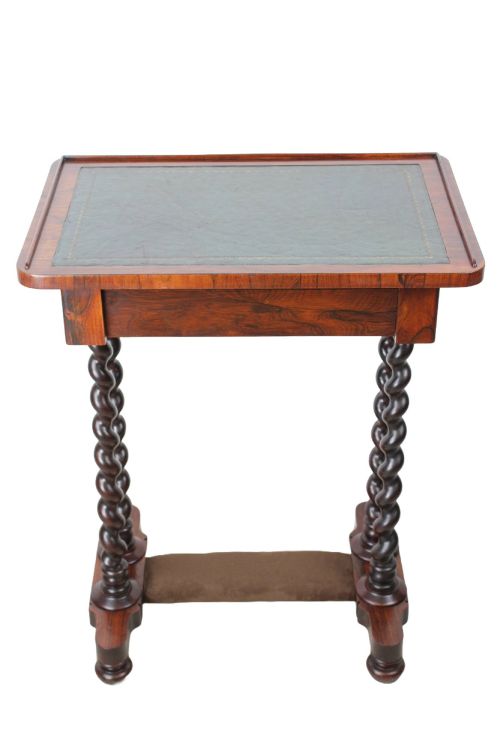
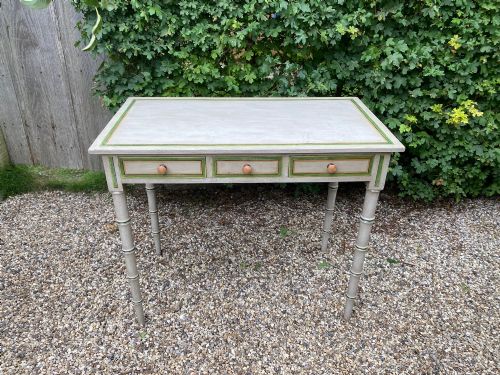
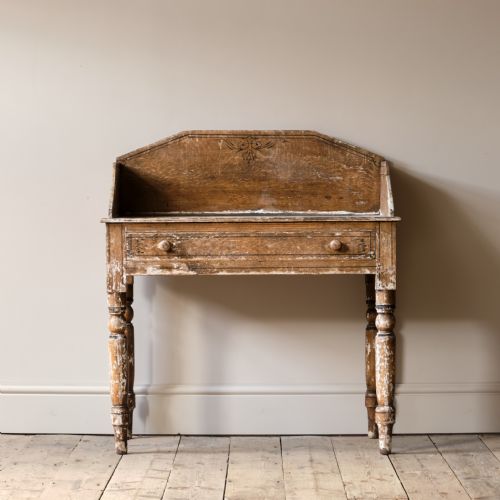
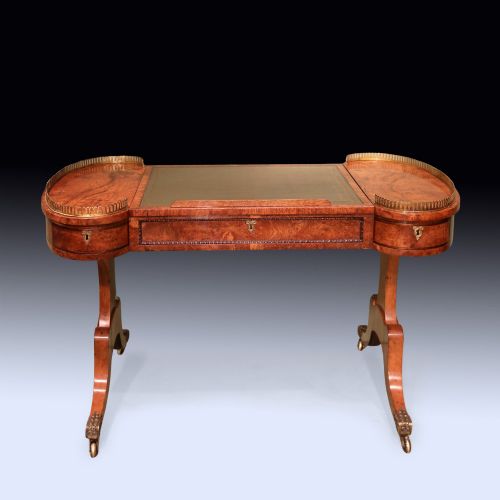
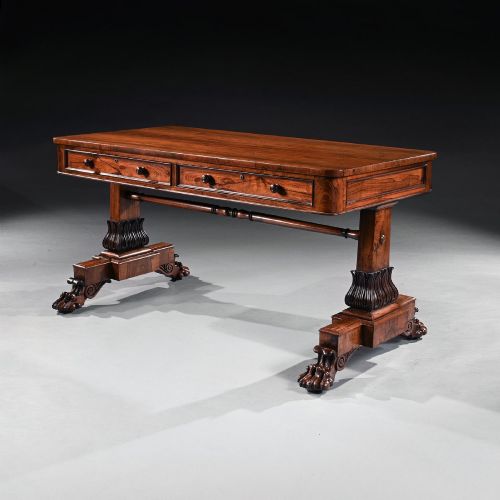
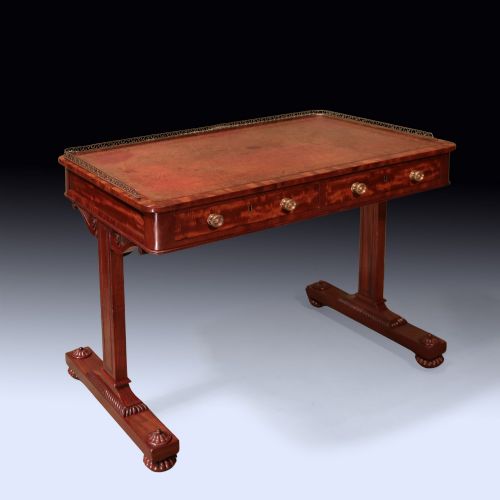
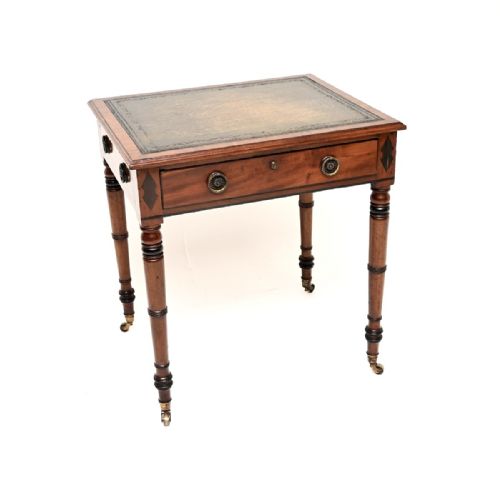
A regency period writing table encompasses library desks, sofa tables, and compact side pieces designed during the early nineteenth century. The examples found here span the Regency and William IV eras, capturing forms from simple chamber tables to metamorphic architect desks.
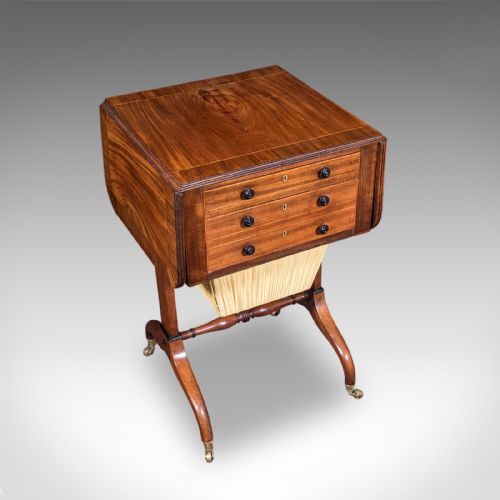
Most pieces seen on this page arrive in mahogany or rosewood, sometimes utilising exotic timbers such as goncalo alves. Formats vary from drop-leaf Pembroke tables and Davenport desks to wide kidney-shaped library tables and multi-drawer partners desks.
Makers of the period employed architectural lines and end supports, often incorporating leather writing surfaces. Buyers frequently encounter smaller side tables alongside larger freestanding pieces meant for the centre of a room.
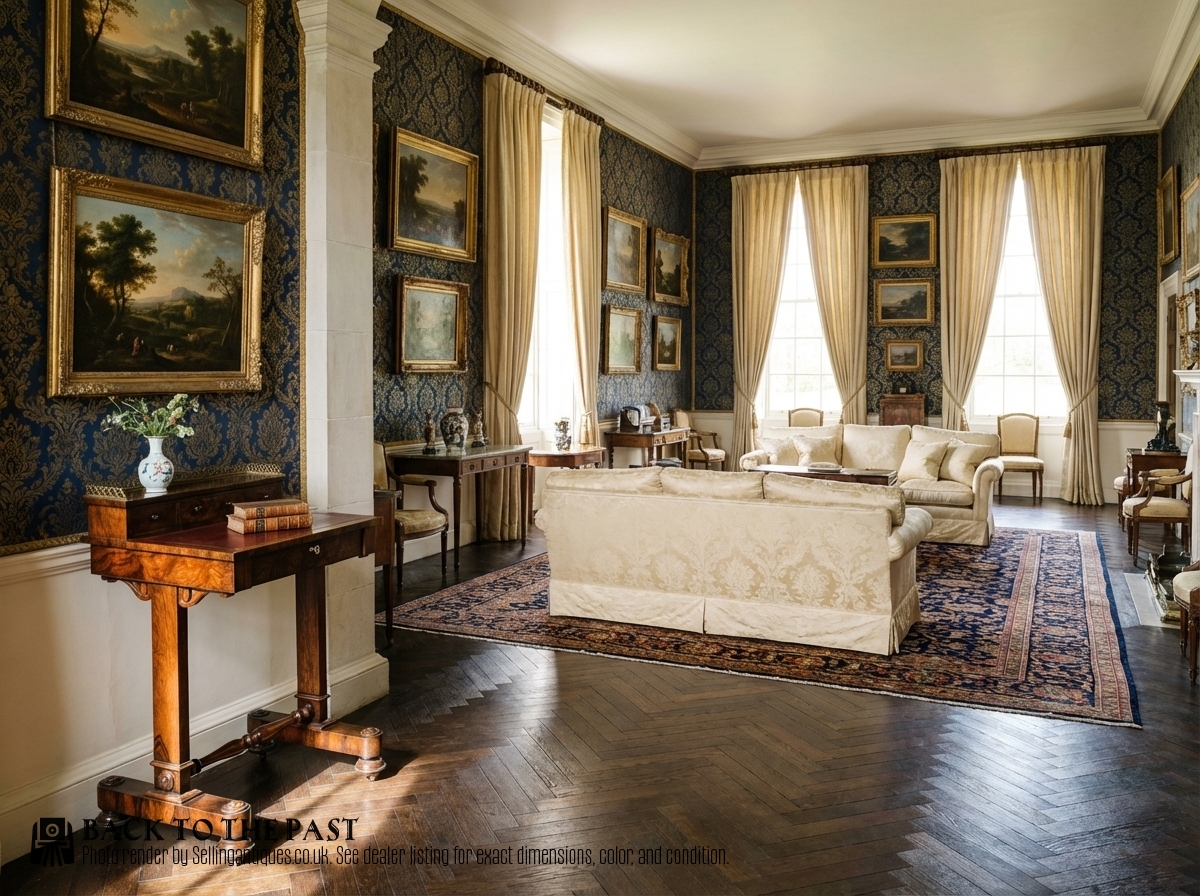
Materials and Technique
Construction relies heavily on solid timbers and rich veneers of mahogany and rosewood laid over secondary woods. Cabinetmakers shaped structural elements with precise joinery, housing oak-lined drawers and fitted compartments inside sliding tops.
Decorative detailing incorporates brass mounts, stringing, and inset leather writing panels. Drop-leaf actions and metamorphic rises utilise concealed hinges and wooden mechanisms designed for smooth operation.
Retail Price Guide 2026
Typical UK retail prices for regency period writing table, calculated from the Sellingantiques database of over a million retail prices indexed since 2003. This retail price guide relies exclusively on Sellingantiques data; no external sources or auction records are used, so the figures do not describe the wider market.
Cartographers and architects of the era relied on clever rising desks to draft maps while standing.
Judging the Work
Differentiation across the range rests on timber selection and the integration of secondary woods like oak within drawer linings. Fine pieces exhibit book-matched veneers and subtle brass inlay rather than plain surfaces.
Structural integrity of sliding mechanisms, writing surfaces, and end supports distinguishes workshop output. Pieces attributed to notable makers display superior precision in turning and joinery compared to standard utility furniture.
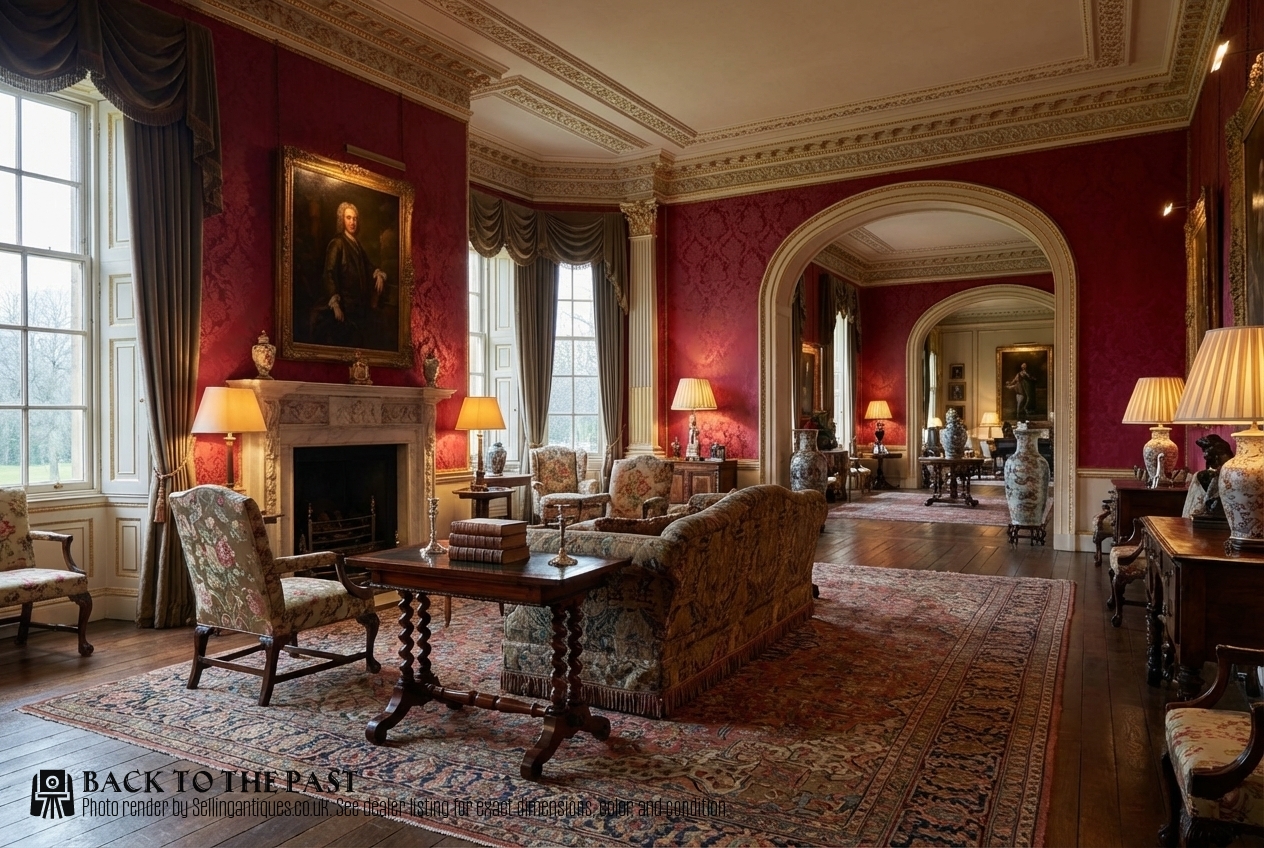
Gillows·Wilson of Gt Queen St London
The Regency Period Writing Table Glossary
- Davenport
- A compact desk featuring a sloping, leather-lined writing lid above a pedestal of drawers. This form provides storage while occupying minimal floor space.
- Goncalo Alves
- A dense, highly figured tropical hardwood utilised for its striking decorative grain. Cabinetmakers chose this material for high-status furniture during the nineteenth century.
- Metamorphic
- Furniture designed to transform its function through mechanical parts, such as rising desks or adjustable surfaces. These pieces hide compartments and writing apparatus within standard forms.
- Sofa Table
- A freestanding table designed to stand in front of or beside a sofa, featuring drop leaves on either end. They often incorporate two drawers and double end supports.
- Partners Table
- A large desk constructed with drawers on both long sides to accommodate two users simultaneously. These library pieces sit in the middle of a room.
Frequently Asked Questions
Where did these tables sit?
These tables stood in libraries, drawing rooms, and studies as functional furniture for correspondence and reading. Freestanding library and sofa tables were placed in the centre of rooms rather than against walls.
Smaller side tables and chamber desks occupied smaller corners or bedrooms, serving private writing tasks.
How do I spot Gillows work?
Attribution often relies on signature construction methods, specific secondary woods, and documented proportions typical of the Lancaster workshop. Cabinetmakers in this tradition maintained high standards of timber selection and drawer lining.
Stamped drawer pulls or inscribed signatures occasionally confirm the maker directly on the wood.
What is a metamorphic desk?
A metamorphic desk incorporates hidden mechanisms that allow the piece to alter its shape and purpose. Users could raise reading stands or extend surfaces using clever internal construction.
These clever designs catered to architects, cartographers, and writers who required multiple working configurations.
Are these desks suitable for laptops?
Many of these tables provide adequate surface area and sturdy construction for modern writing equipment. Compact Davenport desks and wider library tables offer stable platforms for daily work.
Care should be taken to protect historic leather and polished timber surfaces from excessive heat or scratches.