


Splayed Leg Sofa Table
A splayed leg sofa table delivers a balanced, elegant footprint suited to period and traditional interiors.

Splayed Leg Sofa Table
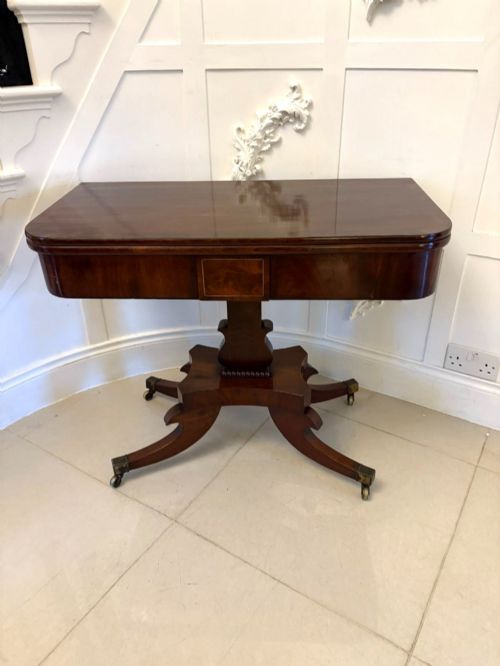
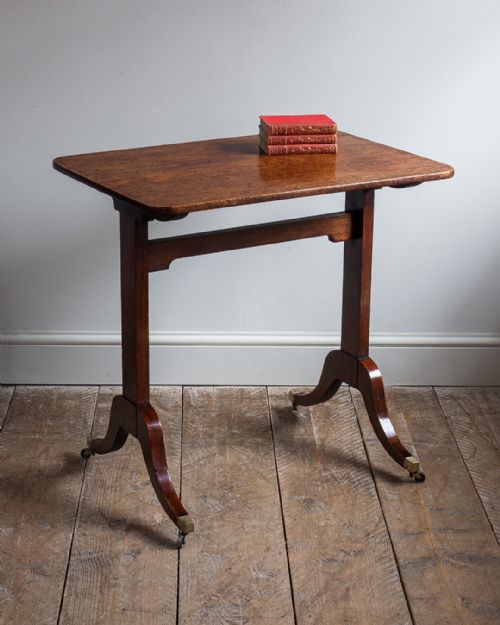
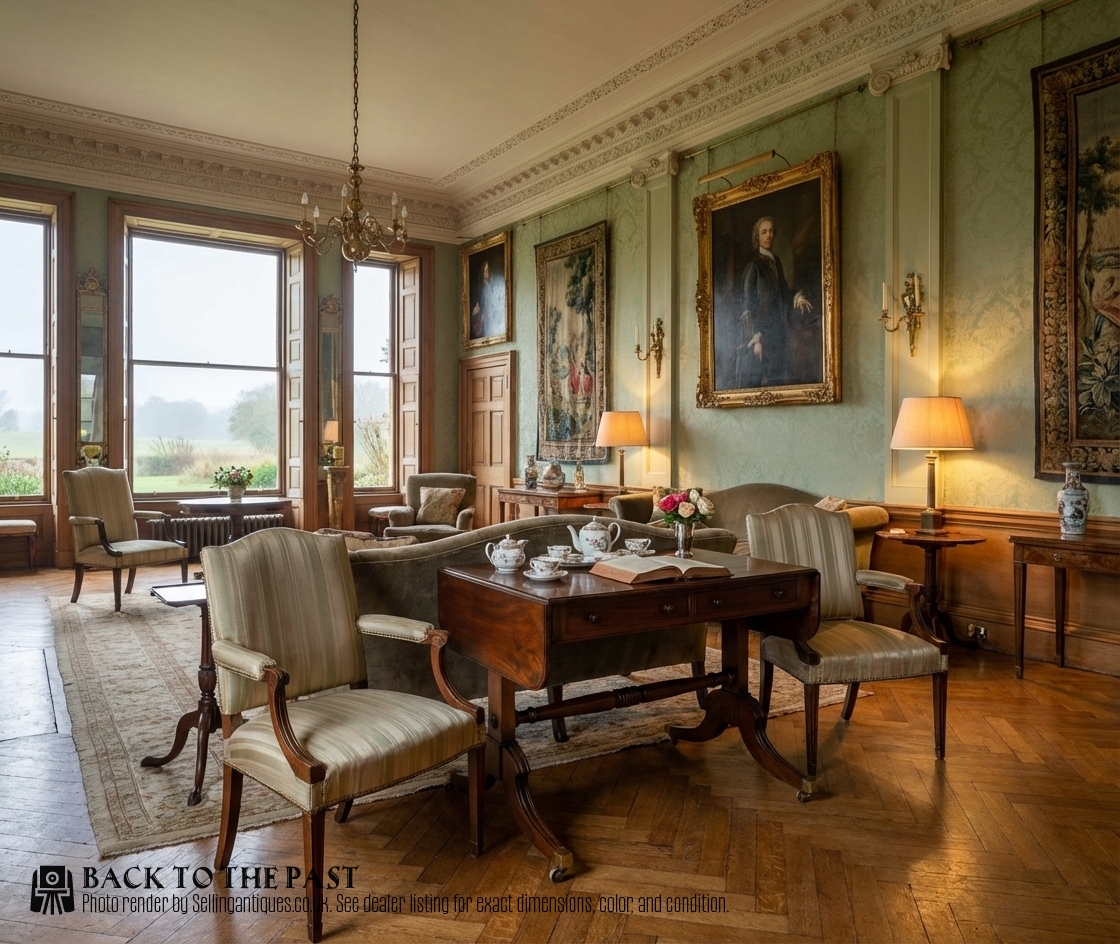
A splayed leg sofa table provides a versatile surface originally designed to stand comfortably in front of a sofa or free in the centre of a room. The examples found here span the 18th century, the Regency period, and later revivals, displaying forms such as console, games, and Pembroke tables.
Mahogany and rosewood dominate the selection, often enriched with satinwood inlay, ebony stringing, or brass mounts. These pieces maintain a horizontal plane supported by characteristic outward-slanting pedestals or legs.
How they were made
Cabinet makers utilised dense hardwoods such as mahogany and rosewood, applying figured veneers to table tops to create visual depth and decorative contrast. Brass inlay, cast mounts, and delicate satinwood stringing were meticulously integrated into the timber surfaces.
Structural stability was achieved through clever joinery and stretcher arrangements, ensuring the splayed leg configuration could support the weight of the top without compromising the slender silhouette.
Splayed Leg Sofa Table Retail Price Guide 2026
Typical asking prices for splayed leg sofa table among the pieces listed under this phrase on Sellingantiques today, from the lower quarter to the upper quarter. They describe what is for sale here now, not the wider market.
Listings feature woods such as mahogany, rosewood, satinwood, ebony, and birch veneer across Georgian and Regency periods.
What varies in quality
The sophistication of the timber selection dictates much of the visual merit, with heavily figured mahogany and rich rosewood marking the higher tiers of production. Finer pieces display precise, complex inlay work and crisply cast brass mounts rather than simpler painted decoration.
Proportion and execution of the splayed leg base separate standard workshop output from exceptional examples attributed to skilled makers.
Gillington of Dublin
The Splayed Leg Sofa Table Glossary
- Sofa table
- A rectangular occasional table traditionally designed to stand behind a sofa, featuring drop leaves at either end. They often incorporate two small drawers.
- Pembroke table
- A small drop-leaf table with hinged flaps on both sides, developed in the 18th century for versatility and ease of movement.
- Regency
- A British design period spanning the early 19th century, characterised by classical motifs, dark exotic woods, and brass ornamentation.
- Biedermeier
- A Central European style from the first half of the 19th century focusing on utilitarian comfort and clean lines utilising domestic timbers.
- Stringing
- A narrow inlay of contrasting wood or light-coloured material used to outline the edges of table tops and drawer fronts.
Splayed Leg Sofa Table: Frequently Asked Questions
Where do I put a sofa table?
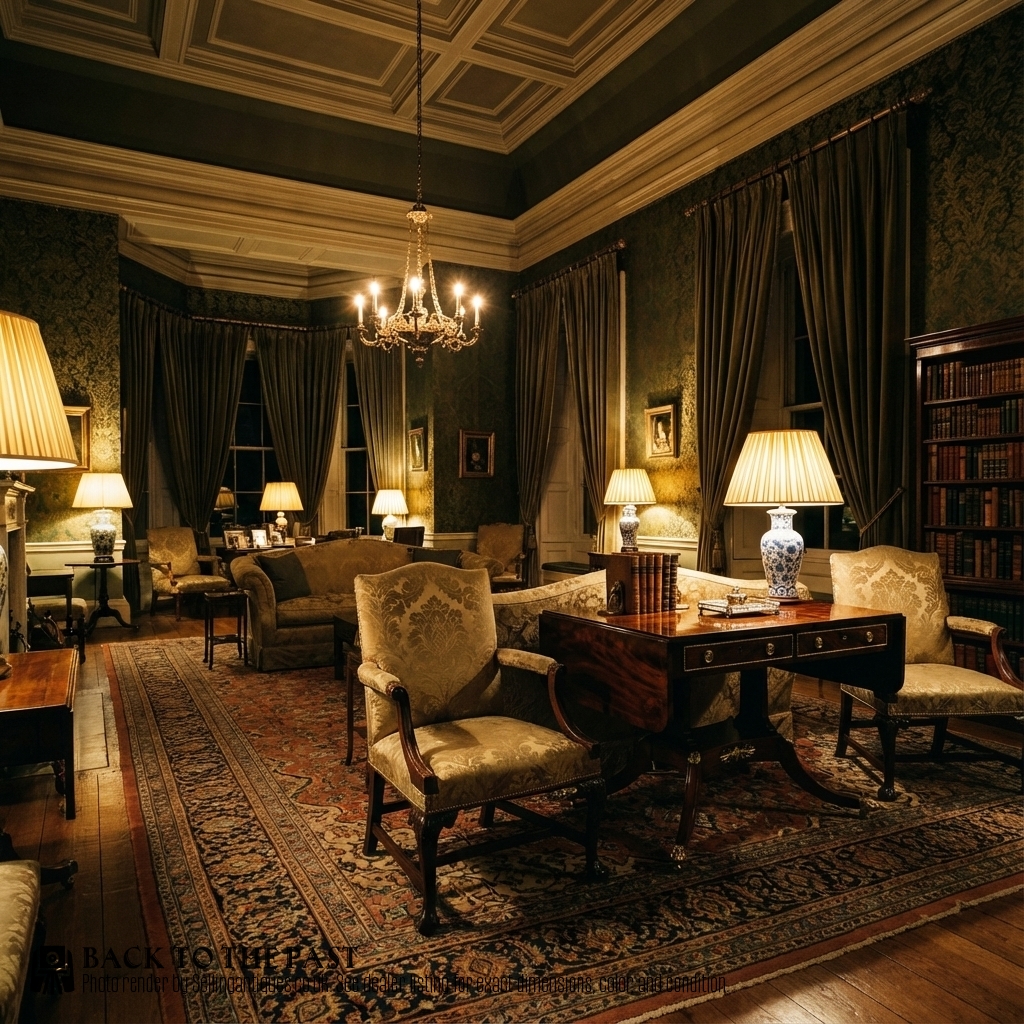
A sofa table sits naturally behind a sofa, against a plain wall, or freestanding in the middle of a room as a centre table.
Its finished back and slender proportions allow it to occupy narrow spaces like hallways without crowding the floor plan.
How do I care for mahogany surfaces?
Keep wooden surfaces away from direct heat sources and strong sunlight to prevent the timber and veneers from drying out.
Apply a traditional beeswax polish periodically and buff gently with a soft cloth to maintain the natural lustre of the grain.
Can I use a sofa table for dining?
Certain larger versions with drop leaves or pull-out extensions serve adequately for intimate meals or tea.
Ensure you protect the antique polish with appropriate placemats and coasters to avoid marking the delicate wood.
How do I identify a Regency period table?
Look for architectural lines, classical brass mounts, and dark woods like rosewood paired with contrasting satinwood or ebony inlay.
Construction details and leg configurations help distinguish genuine early examples from later 20th-century revivals.