





George III Sofa Table
A george iii sofa table combines drop leaves with slender proportions, designed originally to stand before a fire in a Georgian drawing room.
George III Sofa Table
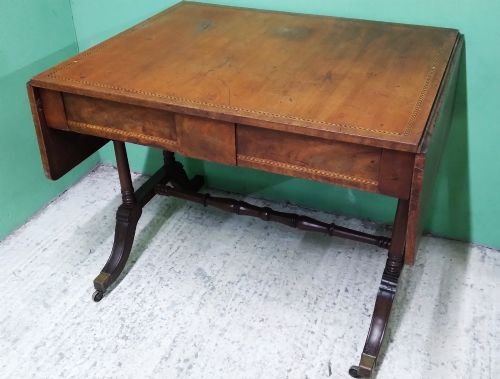
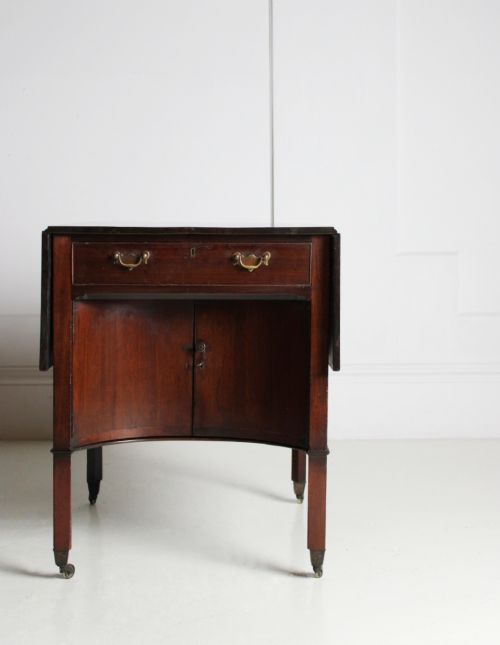
When you examine a george iii sofa table, you look at a versatile piece fashioned with hinged flaps on either side and typically fitted with drawers. These tables originate primarily from the Georgian period and the late eighteenth century, though variants stretch into the nineteenth century.
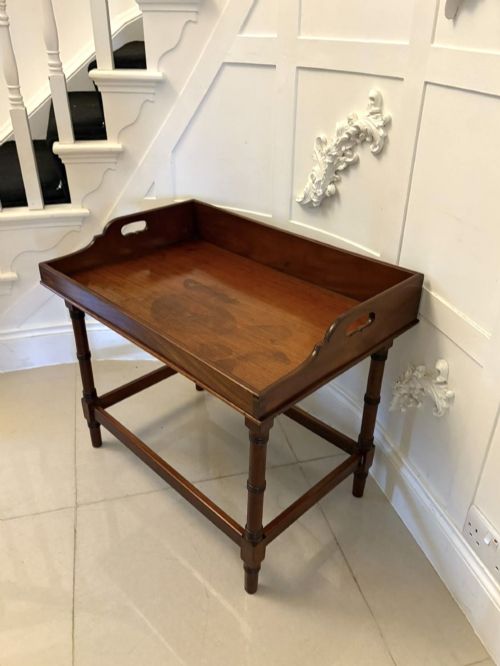
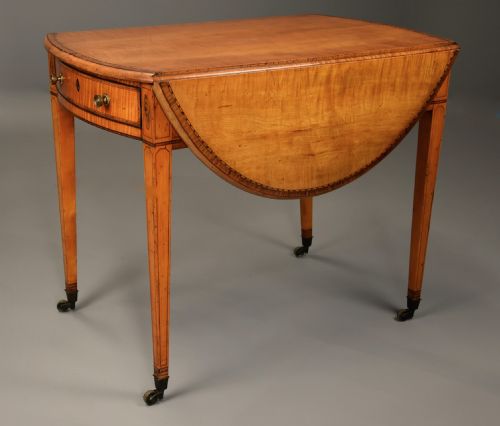
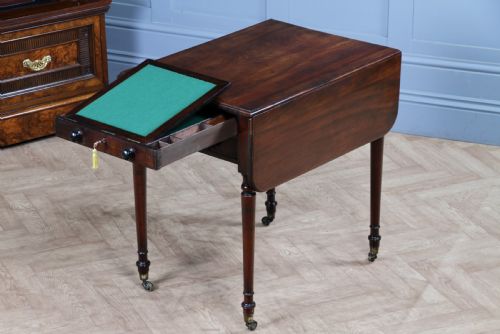
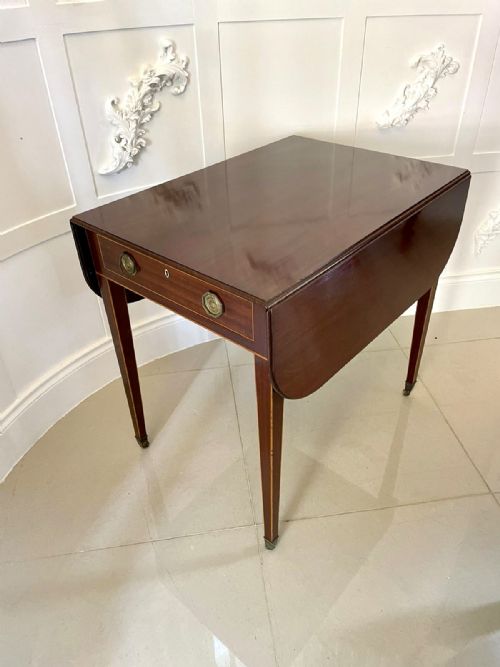
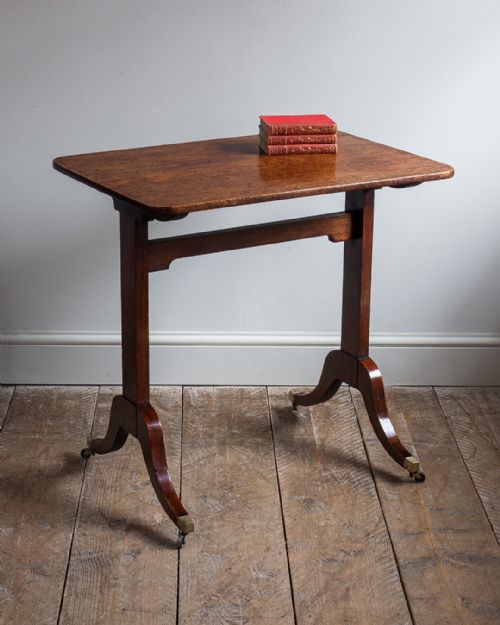
The version most commonly encountered on this page is constructed from mahogany, often enhanced with contrasting timber bandings, standing on trestle ends or pillar supports. Alongside dedicated sofa tables, related forms like pembroke and console tables appear in the records.
How they were made
Cabinetmakers constructed these tables using solid timber and veneers, frequently selecting figured mahogany, satinwood, and rosewood for their surfaces. Artisans incorporated intricate wood inlay, boxwood and tulipwood bandings, and contrasting stringing to define the borders and tabletops.
Structural integrity relied on pegged joints and fine turnings, while brass castors allowed the furniture to move easily across carpets. Drawers were lined with secondary timbers like oak and fitted with working locks and turned wooden knobs.
George III Sofa Table Retail Price Guide 2026
Typical asking prices for george iii sofa table among the pieces listed under this phrase on Sellingantiques today, from the lower quarter to the upper quarter. They describe what is for sale here now, not the wider market.
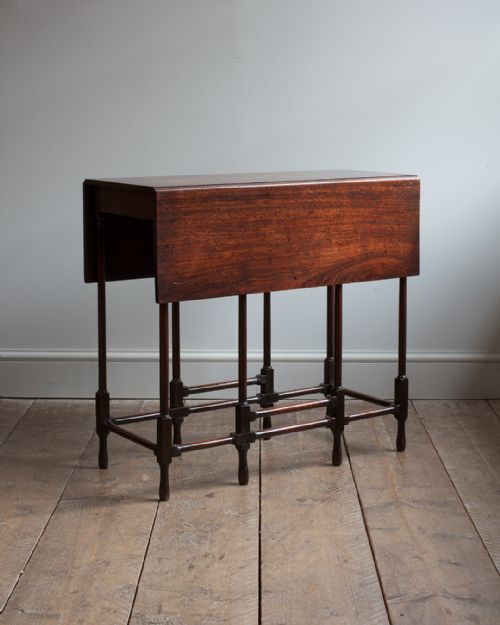
Spider leg tables hide remarkably sturdy frames beneath limbs thin enough to make a spider envious.
What varies in quality
The standard of a george iii sofa table rests upon the selection of timber figures and the crispness of the inlaid decoration. Pieces featuring highly figured plum pudding mahogany or finely grained satinwood display a superior grade of raw material chosen by the maker.
Proportion and the execution of structural details dictate the hierarchy of these tables. Freestanding examples with finished backs demonstrate the same attention to detail on all sides, whereas ordinary pieces reserve their finer work solely for the front.
The George III Sofa Table Glossary
- Sofa table
- A rectangular occasional table with drop leaves on opposite sides, originally designed to sit immediately in front of a sofa. These tables generally feature two small drawers.
- Bandings
- Thin strips of contrasting wood veneer applied around the perimeter of tabletops or drawer fronts to create a decorative border. This technique highlights the geometric form of the furniture.
- Pembroke table
- A small occasional table featuring two hinged flaps and a single drawer, sharing a similar lineage with the sofa table. They often rest upon slender legs with stretchers.
- Crossbanded
- A method of applying veneer where the grain runs perpendicular to the main surface of the timber. It provides a neat, framed visual edge to tabletops.
- Fiddleback
- A type of wood grain possessing undulating ripples that resemble the back of a violin. This figure appears in sycamore and mahogany variants.
George III Sofa Table: Frequently Asked Questions
What is a sofa table?
A sofa table is a small, drop-leaf table designed during the Georgian era to be placed against the rear of a sofa or used independently as an occasional piece.
They typically contain two drawers and feature trestle supports equipped with brass castors for mobility around a drawing room.
How do I date a sofa table?
Dating relies on examining the construction methods, timber choices, and stylistic traits recorded across the Georgian and Regency periods. Pieces from the eighteenth century frequently employ solid mahogany and subtle inlay.
Later Victorian interpretations often adopt heavier proportions or different secondary woods. Hardware types and drawer linings offer further clues to the decade of manufacture.
Where did they place them?
In period interiors, these tables stood directly in front of settees or functioned as writing and work desks near hearths. Their dual drop leaves allowed them to expand when needed for correspondence or needlework.
Freestanding versions were positioned in the centre of rooms because their rear panels were finished with the same care as the front.
What woods were used?
Cabinetmakers utilised dense hardwoods including mahogany, rosewood, and satinwood as primary surfaces for these tables. Inlays incorporated lighter woods such as boxwood, sycamore, and tulipwood to form contrasting stringing and geometric patterns.
Secondary timbers like oak frequently formed the interior structures of the drawers.