
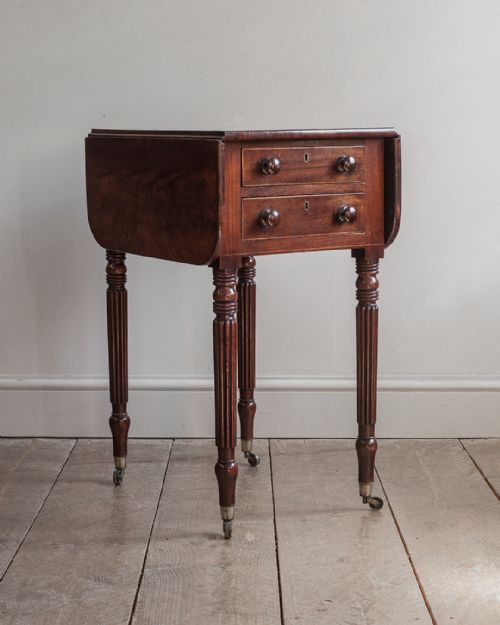


Reeded Leg Sofa Table
A reeded leg sofa table offers slender elegance and twin drop leaves, built to sit neatly behind a sofa or serve as a centre table.
Reeded Leg Sofa Table
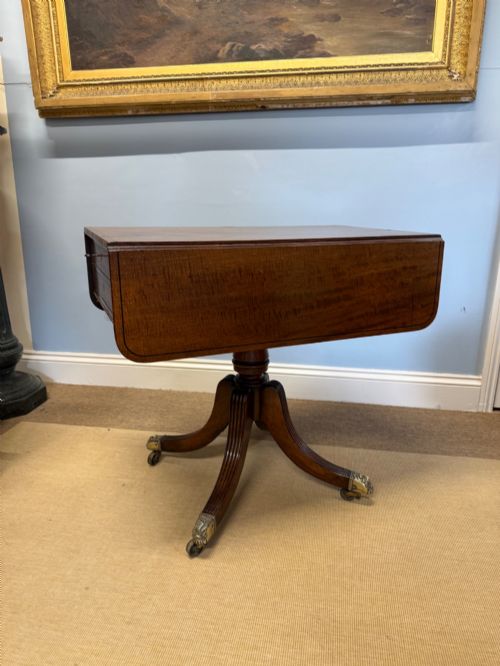
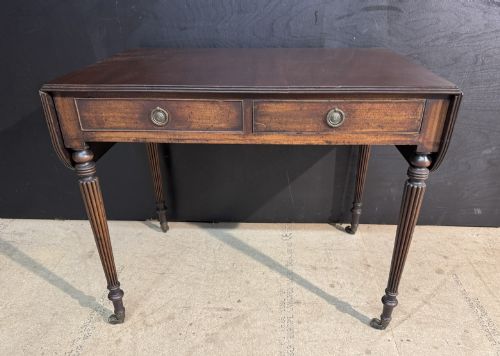
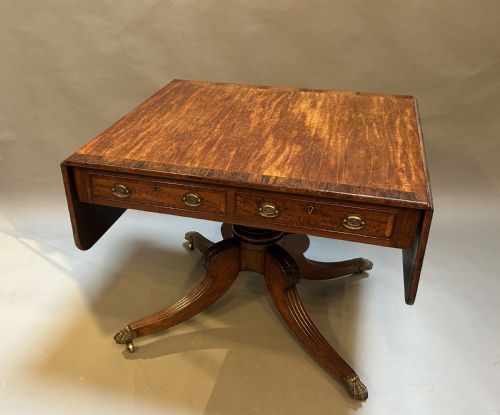
When you search for a reeded leg sofa table, you look at versatile tables designed during the Regency, George IV, and Georgian periods, alongside later Victorian and revival pieces. These forms typically feature rectangular tops with drop leaves at either end, often accompanied by drawers.
How they were made
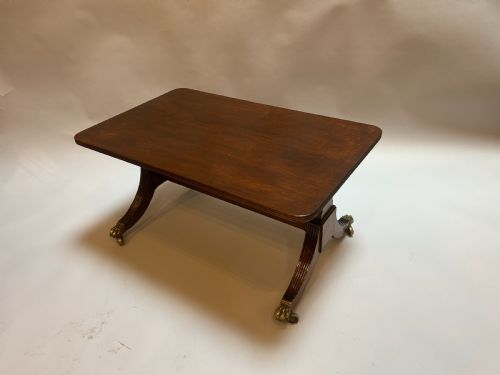
Cabinet makers constructed these tables primarily using figured mahogany, frequently incorporating brass details and occasionally satinwood or walnut cross-banding for contrast. The defining linear pattern on the supports was achieved through hand-carving parallel rounded channels into the timber.
Many examples utilise drop-leaf mechanisms supported by swing brackets, alongside twin drawers fitted with brass hardware. Pedestal bases, end supports, and splay or sabre legs provide the structural framework for these versatile tables.
Reeded Leg Sofa Table Retail Price Guide 2026
Typical asking prices for reeded leg sofa table among the pieces listed under this phrase on Sellingantiques today, from the lower quarter to the upper quarter. They describe what is for sale here now, not the wider market.
Dummy drawers feature on the reverse of many tables so they look tidy when floating in the middle of a room.
What varies in quality
Quality in these pieces rests upon the crispness of the hand-carved reeding on the legs and the choice of richly figured mahogany for the top. Subtle details such as finely turned pedestals and well-executed cross-banding distinguish superior cabinet work from simpler production.
The cleverness of the drop-leaf mechanism and the integration of functional drawers also indicate the standard of the piece. Revival items from later decades contrast with authentic period examples through the depth of timber patina and age.
Gillows·William Trotter
The Reeded Leg Sofa Table Glossary
- Reeded
- Carved with parallel rounded projecting strips resembling parallel reeds. This decorative moulding appears frequently on the legs of Regency and Georgian furniture.
- Drop leaf
- A hinged flap at the side of a table that can be raised to extend the surface area. It is supported when up by a hinged wooden bracket.
- Pembroke table
- A small rectangular table with two hinged drop leaves on opposite sides. They often feature one or two small drawers.
- Cross-banding
- A strip of veneer applied to the border of a table top with the grain running at right angles to the central panel. This technique creates a neat framing effect.
- Sabre leg
- A gently curved outward-slanting leg of uniform thickness, common on Regency seating and small tables. It adds a sense of lightness to the silhouette.
Reeded Leg Sofa Table: Frequently Asked Questions
What is a sofa table used for?
Originally designed to stand neatly against the back of a sofa in the drawing room, these tables provided a convenient surface for writing or holding lamps.
Today, their slender proportions and drop leaves make them equally useful as console tables in hallways or as compact desks in smaller rooms.
How do I tell a Regency original from a revival piece?
Authentic period pieces show natural timber ageing, traditional joinery methods, and the subtle wear patterns expected from long use.
Revival items, such as those from the later 19th or 20th century, often display more uniform surfaces and machine-assisted construction techniques.
Are all sofa tables fitted with drawers?
Many examples feature two small drawers built into the frieze, often balanced with dummy drawers on the reverse side for a uniform appearance.
Some lighter work tables or pembroke variations include storage compartments, while simpler side table forms omit drawers entirely.
How do I care for a mahogany table?
Protect the polished mahogany surface by avoiding direct sunlight and using mats beneath hot or damp items.
Regular dusting with a soft cloth and occasional application of appropriate wax will help maintain the timber's natural lustre.