

Regency Mahogany Writing Desk
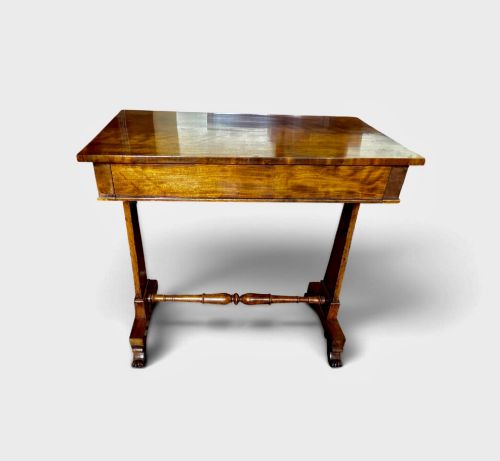
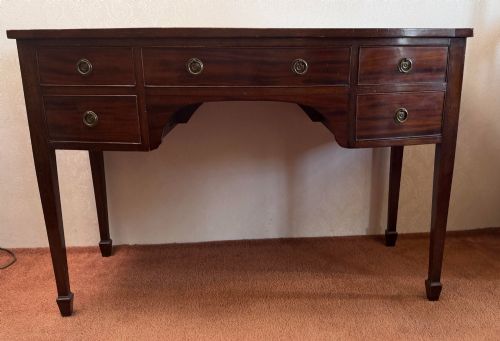
A regency mahogany writing desk brings architectural proportion and rich timber into a room, offering a functional surface shaped by early nineteenth-century cabinet makers.
Forms and Periods
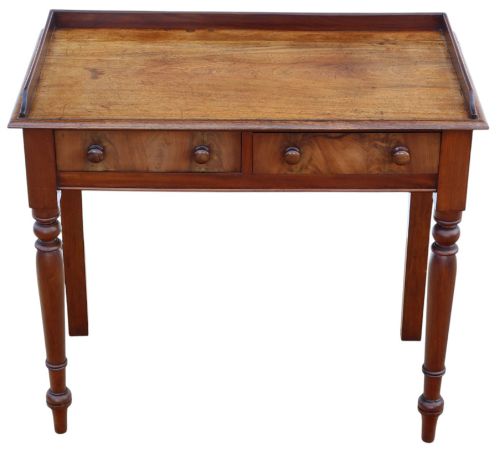
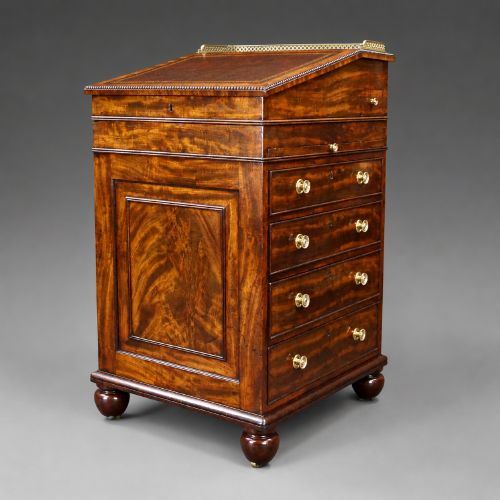
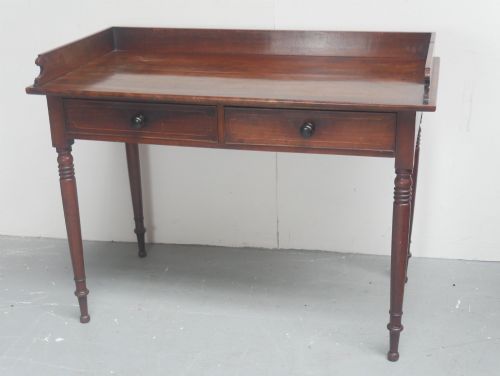
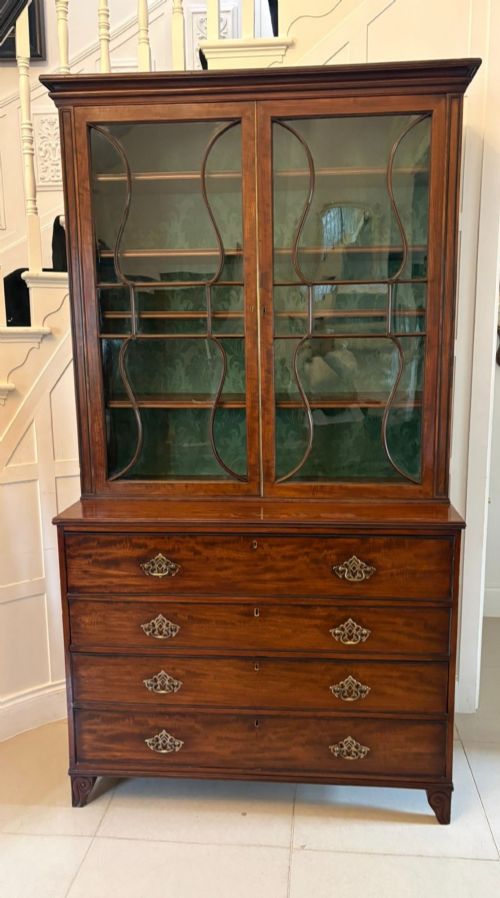
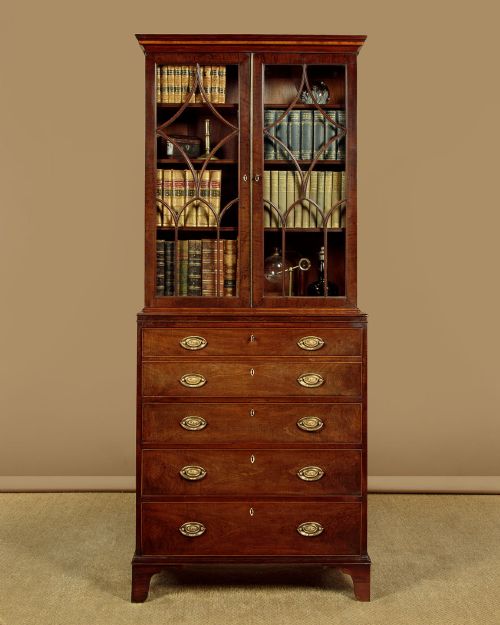
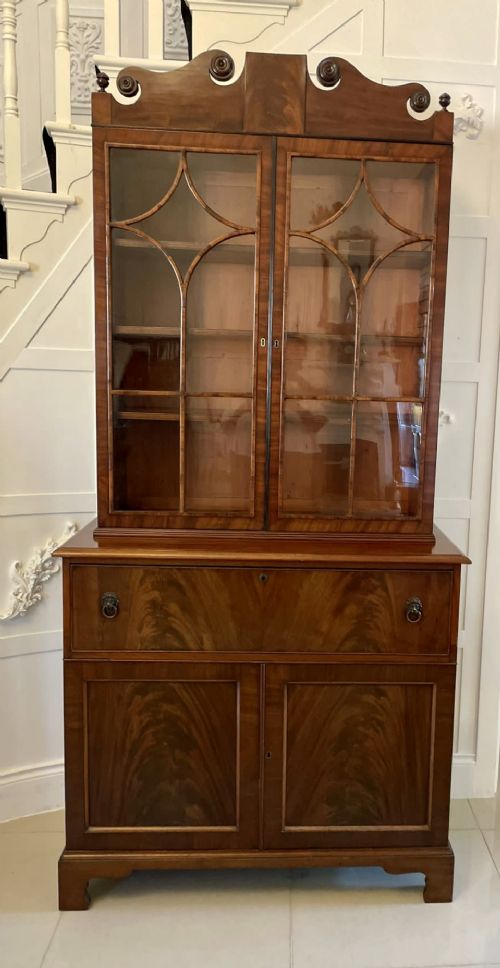
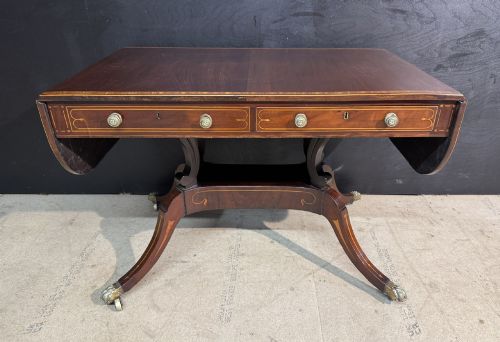
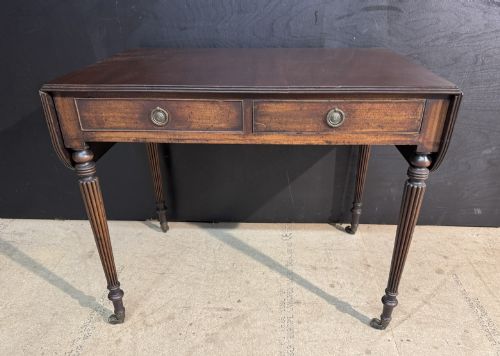
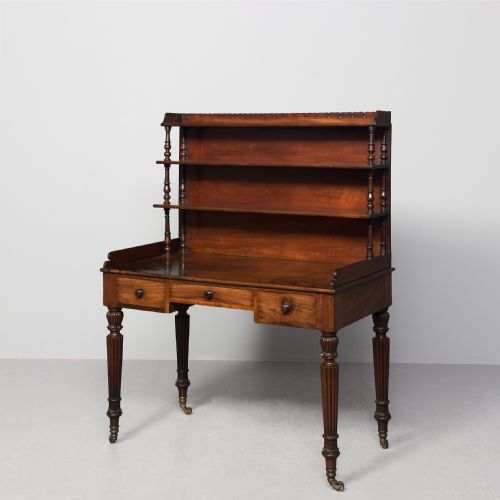
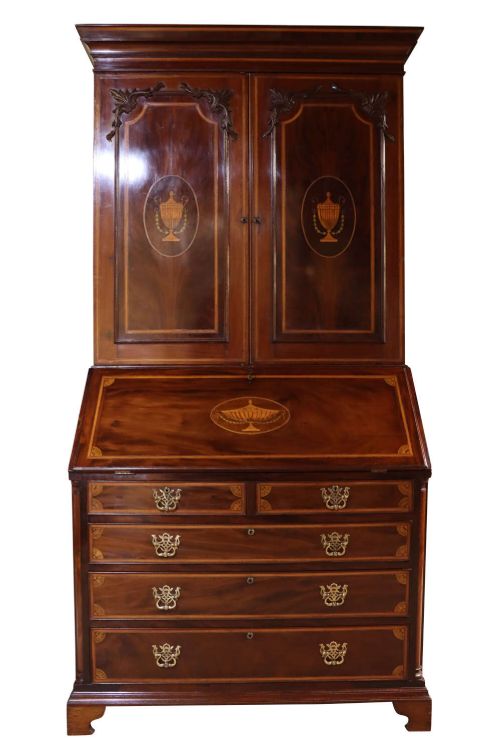
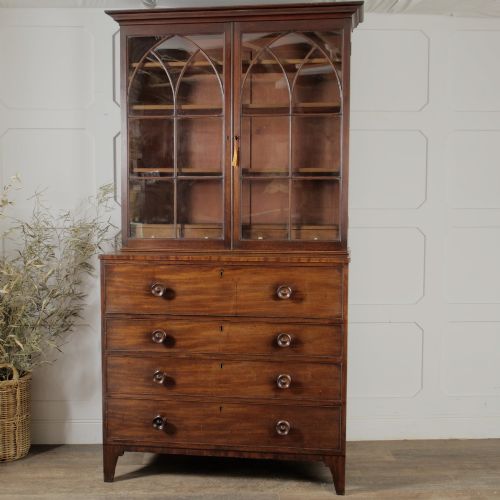
A regency mahogany writing desk encompasses a variety of compact and freestanding forms originating from the Georgian and Regency periods, alongside later twentieth-century interpretations. The selection frequently includes writing tables, sofa tables, Davenport desks, and secretaire bookcases designed for domestic study or parlour use.
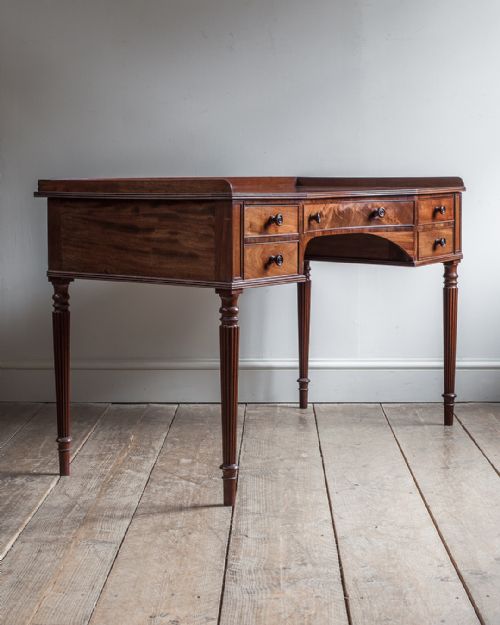
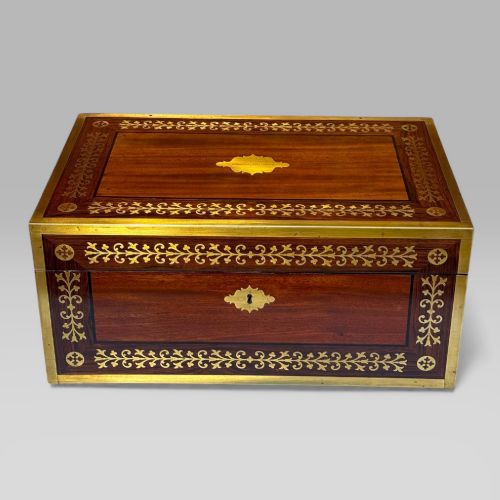
Makers of the era produced items spanning simple bow-front side tables to elaborate pieces with brass inlay and leather writing surfaces. Pieces designated as Regency style reflect the enduring appeal of these classical proportions well beyond the original manufacturing dates.

Materials and Construction
Cabinet makers relied primarily on mahogany timber, sometimes selected as flame veneer or figured grain, paired with secondary woods like oak for drawer linings. Surfaces often incorporated inset leather writing panels alongside cast brass handles, escutcheons, and occasional brass inlay.
Joinery techniques included dovetailed drawers and sturdy structural framing intended for daily correspondence. Many examples utilised freestanding formats finished on all sides for placement in the centre of a room.
Retail Price Guide 2026
Typical UK retail prices for regency mahogany writing desk, calculated from the Sellingantiques database of over a million retail prices indexed since 2003. This retail price guide relies exclusively on Sellingantiques data; no external sources or auction records are used, so the figures do not describe the wider market.
Secret compartments hidden within Davenport desks offered Georgian writers a private space for confidential letters and missing stationery.
Judgments of Quality
Quality rests upon the selection of timber figures, where rich flame mahogany grain elevates an example above plain stock. The refinement of turned legs, crisp brass details, and original secondary woods indicate superior workshop standards.
Proportion and restraint separate disciplined cabinet work from heavier interpretations. Pieces retaining their fitted interior drawers and original leather inserts hold greater integrity for collectors.
Gillows of Lancaster·Gillington of Dublin·S and H Jewell of London·Hobbs and Co
The Regency Mahogany Writing Desk Glossary
- Mahogany
- A durable tropical hardwood prized for its deep reddish-brown tone and stable grain. It served as the primary material for high-grade furniture throughout the Regency era.
- Secretaire
- A cabinet or desk incorporating a pull-down writing flap that conceals small drawers and pigeonholes. This form allowed correspondence materials to remain tucked away when not in use.
- Sofa table
- A rectangular occasional table designed to stand in front of or beside a sofa, often featuring drop leaves and twin pedestals. These versatile pieces frequently double as compact writing surfaces.
- Davenport
- A small compact desk featuring a sloping, leather-lined writing lid above a pedestal of drawers. It typically includes a side-opening inkwell compartment and stationary storage.
- Escutcheon
- A protective plate surrounding a keyhole, usually cast in brass. It shields the surrounding wood from wear caused by the frequent insertion of keys.
Frequently Asked Questions
Where should I place a freestanding desk?
A freestanding desk is designed to sit in the centre of a room rather than against a wall because the reverse side is finished with polish and veneer.
Positioning it away from boundaries allows the architectural proportions and timber grain to be appreciated from every angle.
How do I care for leather writing surfaces?
Leather surfaces require gentle dusting and occasional conditioning with appropriate balms to prevent the material from drying out over time.
Avoiding direct sunlight and moisture spills preserves the supple texture and gold-tooled borders of the insert.
Are these desks suitable for daily laptop work?
These compact writing surfaces accommodate modern laptops comfortably while offering integrated drawer space for stationery and small items.
Their shallow depths and modest widths make them practical for home offices where floor space is limited.
How do I distinguish original Regency from later revivals?
Distinguishing period pieces relies on examining secondary woods like oak, hand-cut dovetails, and the natural ageing of the mahogany timber.
Later nineteenth-century and twentieth-century revivals often display machine-cut elements and different internal construction methods.