
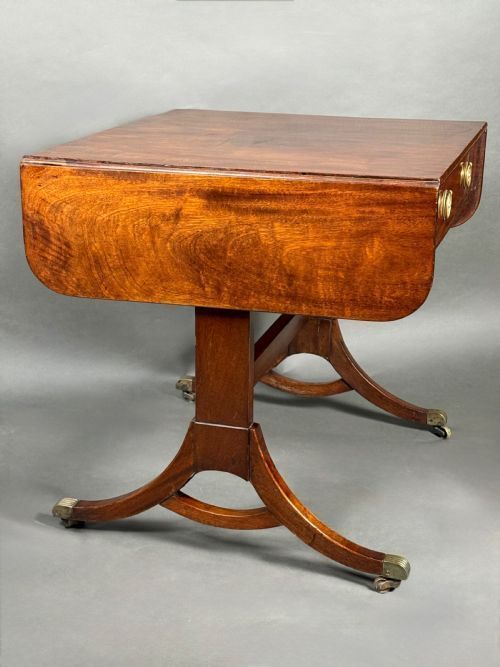
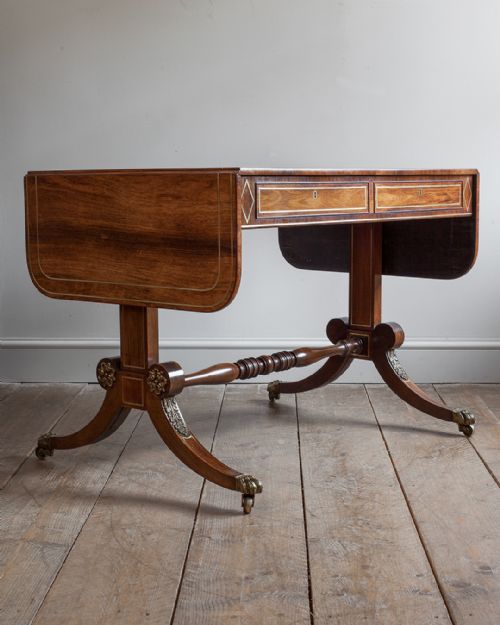

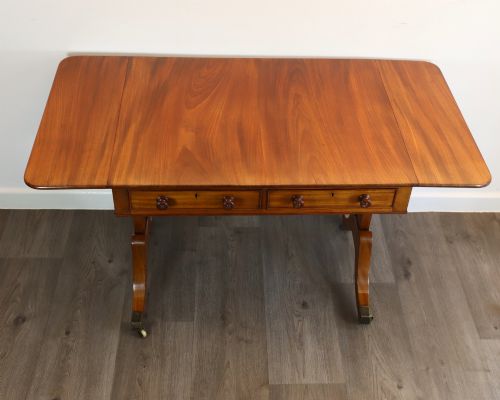
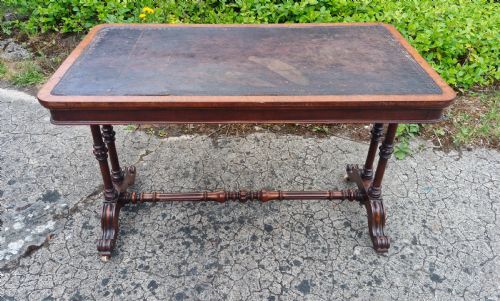


Twin Pedestal Sofa Table
A twin pedestal sofa table combines drop leaves and twin upright supports, offering a versatile surface designed originally to stand before a sofa.
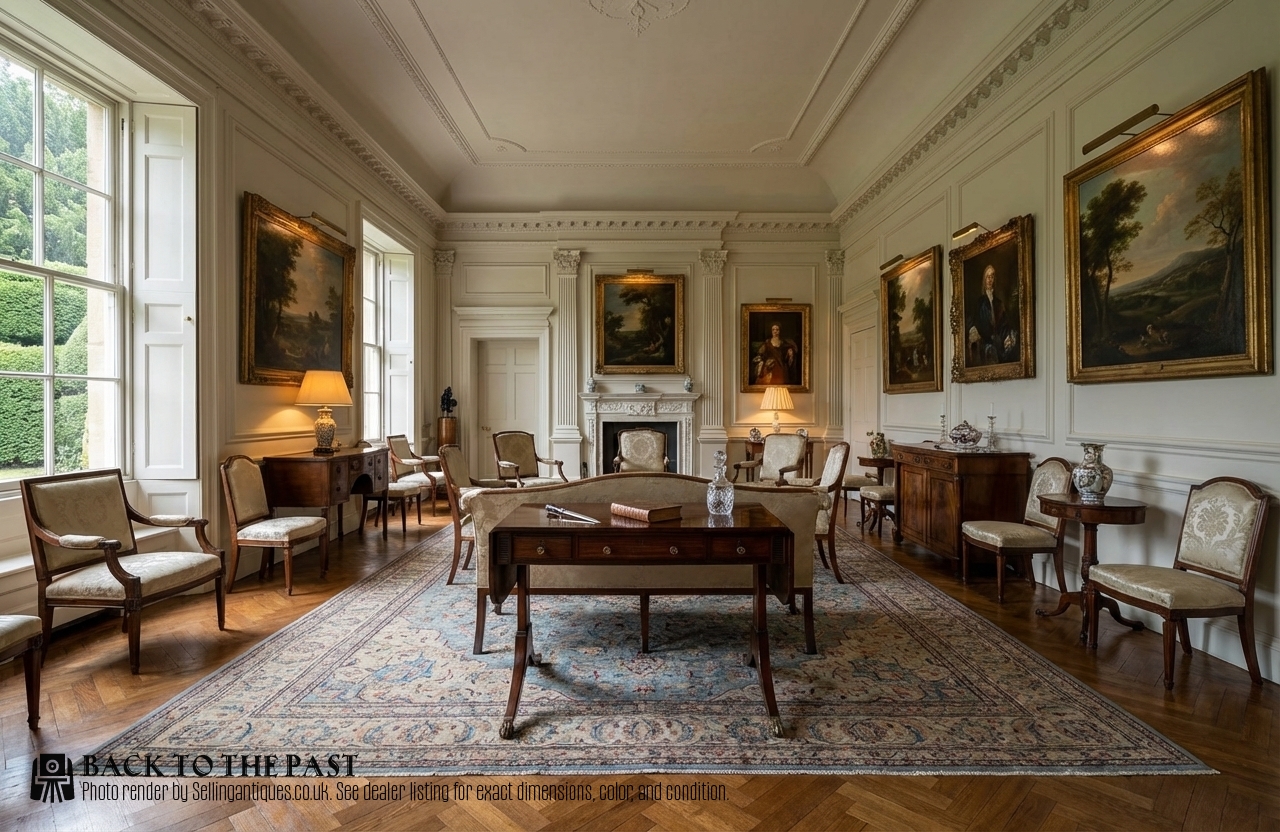
Twin Pedestal Sofa Table
A twin pedestal sofa table stands as a versatile centrepiece, defined by drop leaves on either side and dual supports rising from a shared platform or feet. These tables appear frequently from the Georgian and Regency periods through to the Victorian era, executed in timber forms suited to drawing rooms and libraries.
Makers shaped these tables to rest comfortably behind upholstery or serve freestanding roles as writing desks and occasional surfaces. The configuration commonly includes small drawers beneath the top, framed by characteristic drop leaves that expand the surface area when needed.
The material palette spans rich imported hardwoods like mahogany and rosewood alongside native timbers such as elm and yew. Examples surface in diverse stylistic interpretations, from strict Regency lines to later Victorian adaptations.

Materials and construction
Cabinet makers built these tables using solid timbers and carefully selected veneers, applying flame mahogany, rosewood, and burr walnut over stable secondary woods. Drop leaves required precise rule joints to ensure the hinged flaps dropped smoothly and aligned flat when raised.
Brass fittings frequently reinforced the design, appearing as castors beneath the pedestals, inlaid stringing along the top, or lion paw mounts. Pedestals were joined firmly to plinths or legs, often incorporating lyre supports or turned columns to bear the weight of the cantilevered leaves.
Twin Pedestal Sofa Table Retail Price Guide 2026
Typical asking prices for twin pedestal sofa table among the pieces listed under this phrase on Sellingantiques today, from the lower quarter to the upper quarter. They describe what is for sale here now, not the wider market.
Makers occasionally tucked tiny velvet-lined compartments inside the drawers for holding sealing wax and ink.
Distinctions in craftsmanship
Quality rests in the selection of timber figures, where symmetrical flame mahogany or richly figured rosewood grain elevates the visual impact of the top and leaves. Grain continuity across the drawer fronts and leaves indicates careful planning by the cabinet maker.
Fine construction shows in the weight and precision of brass inlays, the tightness of dovetails within the drawers, and the stability of the twin pedestals. Superior pieces maintain rigid joints without wobble in the drop leaf mechanism.

Gillington of Dublin
The Twin Pedestal Sofa Table Glossary
- Drop leaf
- A table top with hinged flaps on opposite sides that can be raised to enlarge the surface or lowered when space is restricted.
- Pedestal
- An upright architectural support holding the main body of the table, often dividing into branched feet.
- Crossbanding
- A strip of veneer laid around the border of a table top with the grain running perpendicular to the centre panel.
- Rule joint
- A curved moulding joint connecting a table top to its drop leaf, leaving no gap when the leaf is raised or lowered.
- Lyre end
- A twin pedestal shaped in the outline of a musical lyre, typical of Regency design.
Twin Pedestal Sofa Table: Frequently Asked Questions
Where did people place a twin pedestal sofa table?
These tables traditionally stood directly behind a sofa in the drawing room, allowing easy access to the surface while seated.
They also functioned independently as writing desks, centre tables, or breakfast surfaces when pulled into open spaces.
Are the drop leaves sturdy enough for daily use?
The drop leaves are supported by hinged wooden brackets or swing arms that pivot out from beneath the top.
While they provide a stable extension, heavy downward pressure should be avoided to protect the rule joints.
What maintenance do these timber surfaces require?
Polished hardwood surfaces benefit from occasional waxing to nourish the grain and protect the finish from moisture.
Direct sunlight and extreme temperature changes should be avoided to prevent timber movement or veneer lifting.