


Vintage Hall Table
These vintage hall table options offer compact occasional surfaces suited to narrow entryways, combining period craftsmanship with daily utility.
Defining the vintage hall table
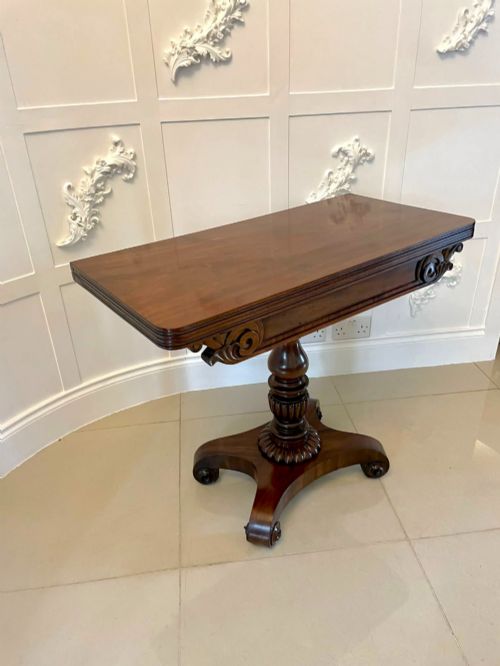
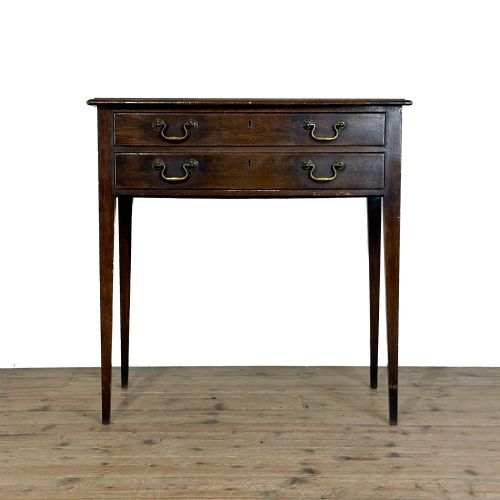
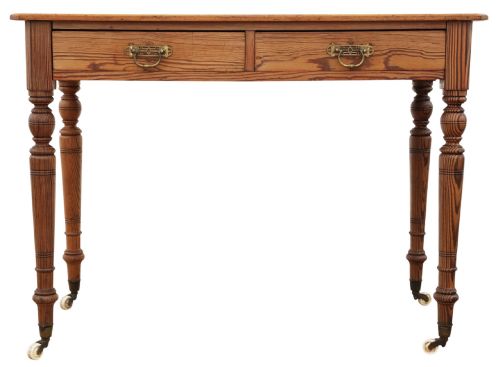
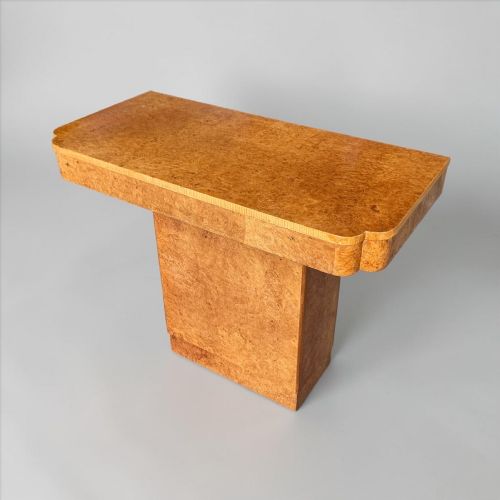
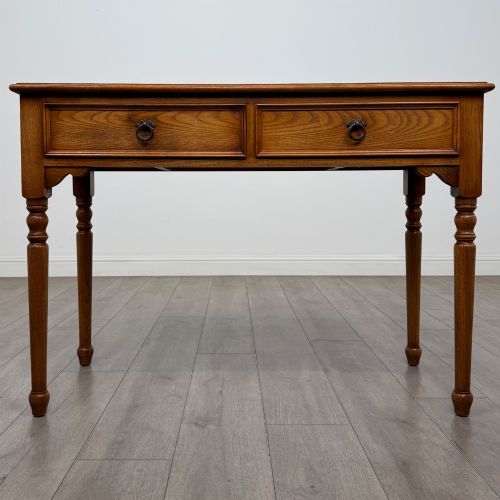
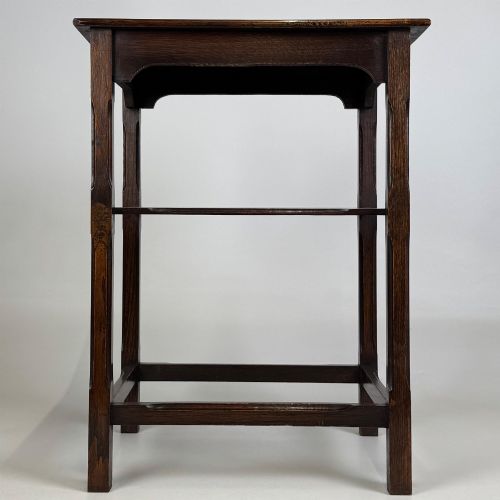
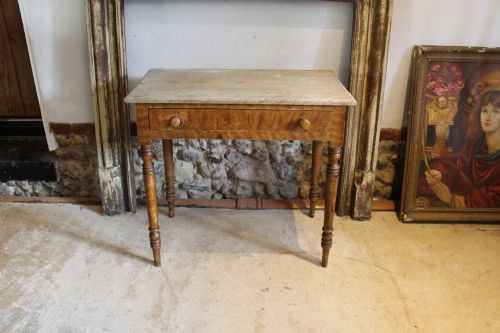
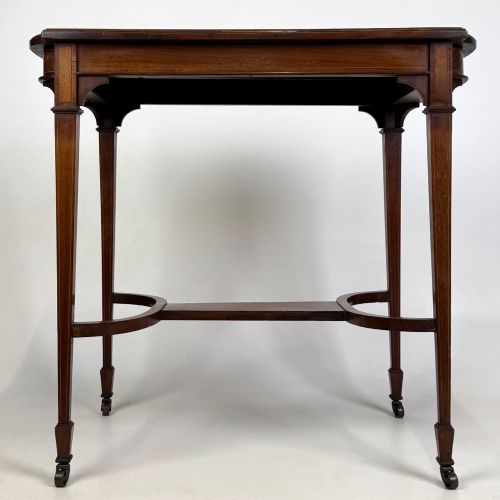
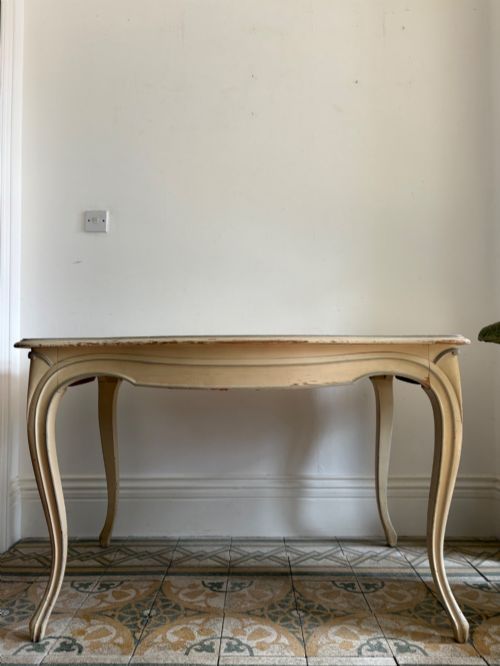
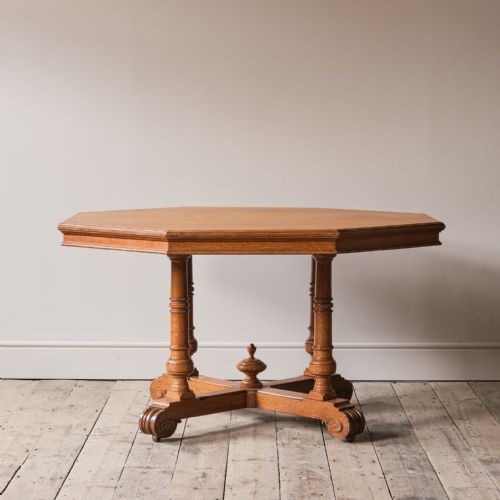
A vintage hall table provides a narrow surface for entryways and corridors, typically taking the form of side tables and centre tables. These pieces accommodate compact spaces while offering period character from Edwardian, 1930, and 19th-century eras.
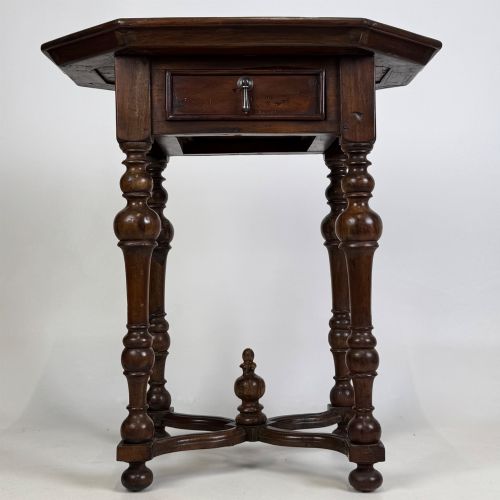
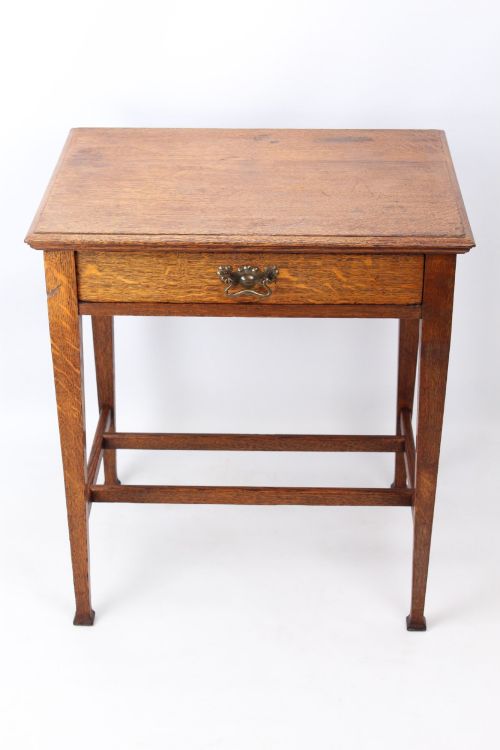
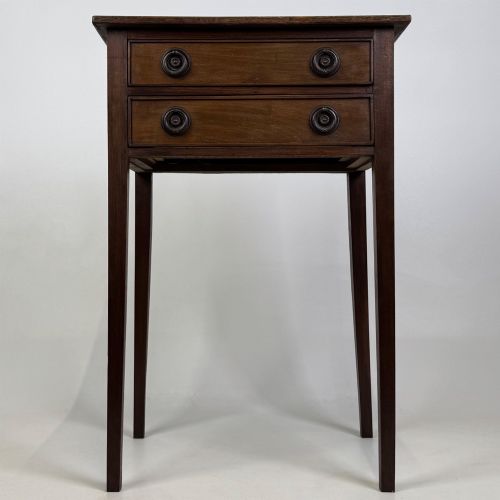
The selection ranges from simple oak constructions with barley twist legs to elaborate designs echoing Italian Baroque and William and Mary styles. Buyers encounter both utilitarian side tables and more decorative forms featuring drawers.
Materials span walnut, mahogany, hardwood, and oak, occasionally paired with stone surfaces like pink Salome marble. The majority of available examples lean towards Edwardian side tables and 1930s oak variations.
Materials and construction
Cabinetmakers utilised robust timber such as oak, walnut, mahogany, and general hardwood to build these foundational furniture pieces. Turning techniques produced decorative supports like barley twist legs seen on 1930s oak examples.
Surface adornment included hand-painted details on specific console variations alongside integrated drawers for storage. Structural elements frequently incorporated classical styling cues such as Italian Baroque and William and Mary revivals.
Marble tops, specifically pink Salome marble, appeared on European walnut centre tables, pairing stone with timber frames. Joinery relied on traditional methods appropriate to 19th-century and early 20th-century workshops.
Retail Price Guide 2026
Typical UK retail prices for vintage hall table, calculated from the Sellingantiques database of over a million retail prices indexed since 2003. This retail price guide relies exclusively on Sellingantiques data; no external sources or auction records are used, so the figures do not describe the wider market.
One particularly charming past listing featured a hand-painted cow on a side console table equipped with a drawer.
Distinctions in quality
The hierarchy of quality rests primarily on the choice of primary timber, where dense European walnut and figured mahogany command attention above standard utilitarian hardwoods. Finer pieces display deliberate stylistic cohesion, such as faithful adherence to William and Mary or Italian Baroque vocabulary rather than generic commercial production.
The Vintage Hall Table Glossary
- Barley twist
- A type of woodturning resembling a spiral rope, frequently found on the legs of 1930s oak tables. This decorative form adds vertical movement to furniture.
- Centre table
- A freestanding table designed to be viewed from all sides, often positioned in the middle of a room or grand hallway rather than pushed against a wall.
- Salome marble
- A distinctive pink decorative stone occasionally used for table tops, providing a contrasting hard surface to wooden frames. It appears on European walnut pieces.
- Side table
- A functional surface placed against a wall, functioning as a primary layout for narrow entryways and hallways. These pieces typically feature rectangular tops and four legs.
- William and Mary style
- A decorative aesthetic dating from the late 17th century that influenced later revival pieces, characterised by trumpet turning and rich veneers.
Frequently Asked Questions
Where should a hall table go?
These pieces fit comfortably in narrow entranceways, corridors, and reception spaces where floor area is restricted.
They provide a convenient drop zone for daily items while establishing a period aesthetic near the entrance of a home.
How do I identify Edwardian examples?
Edwardian pieces often feature lighter timbers such as walnut and mahogany, reflecting the refined domestic tastes of the early 20th century.
They generally avoid the heavy proportions associated with earlier Victorian furniture, leaning instead towards slender legs and restrained decoration.
What is a barley twist leg?
A barley twist is a spiral-carved wooden support shaped on a lathe to resemble a twisted rope.
This technique gained particular popularity on oak side tables during the 1930s, adding texture and traditional character.
Can these tables hold heavy objects?
Solid hardwood construction and sturdy timber frames allow these occasional surfaces to support lamps, books, and decorative ceramics.
Pieces with integrated drawers and robust oak or mahogany structures offer reliable daily stability for domestic use.