

Italian Marble Table
When choosing an italian marble table, you are selecting a piece that brings centuries of continental craftsmanship and stone-working heritage directly into a room.
Italian Marble Table
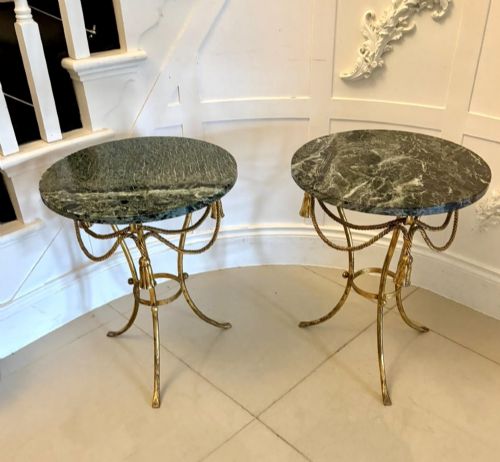
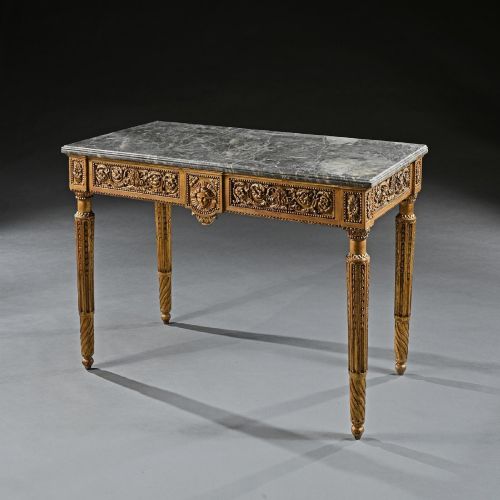
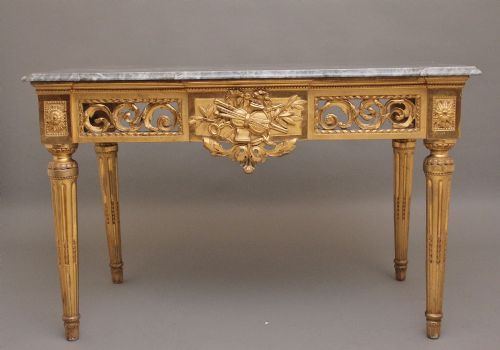
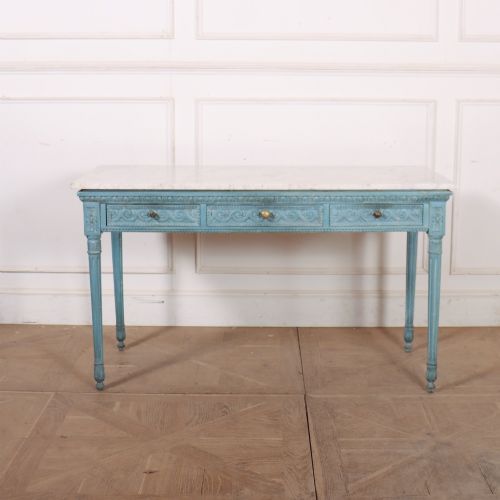
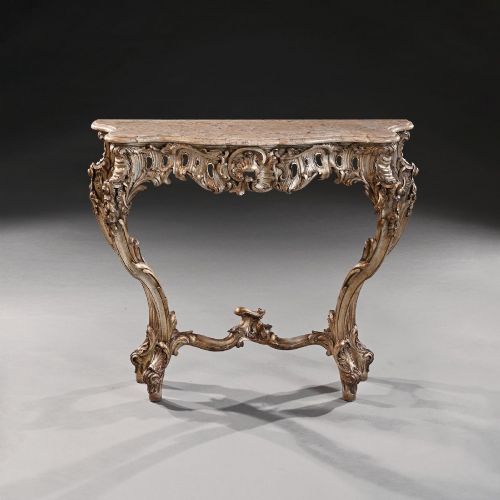
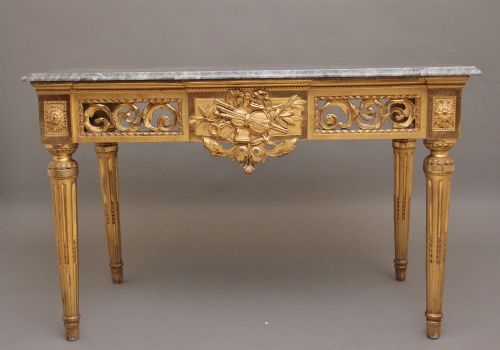
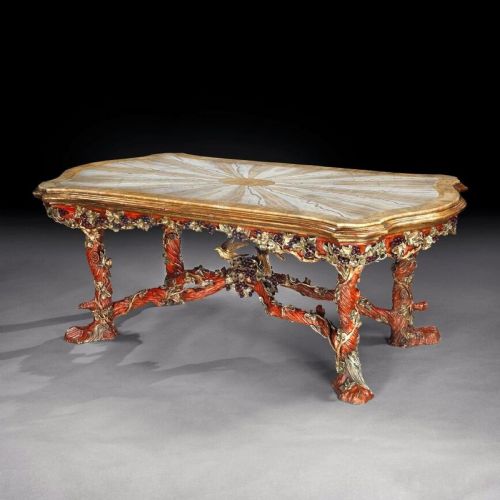
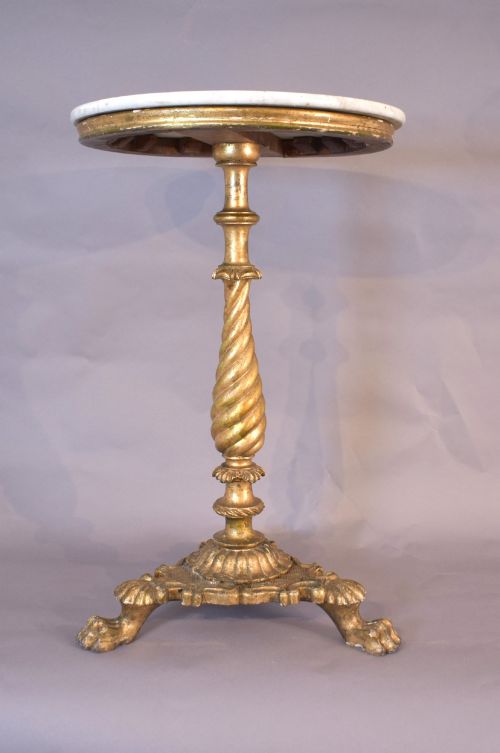
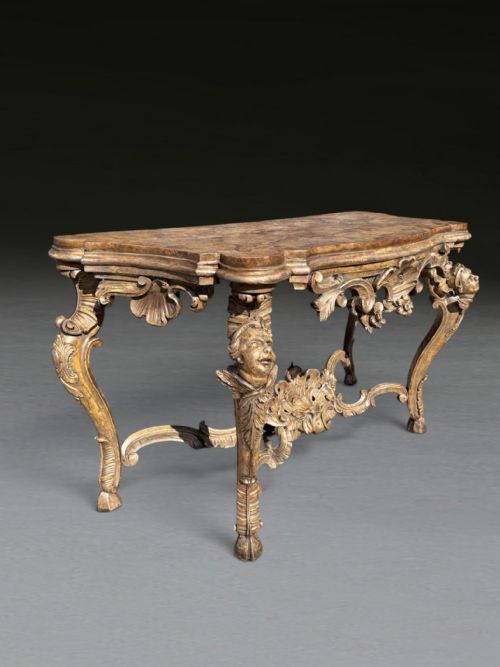
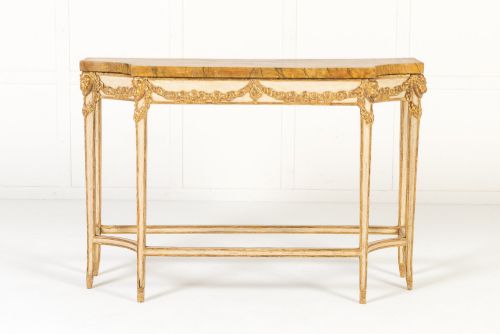
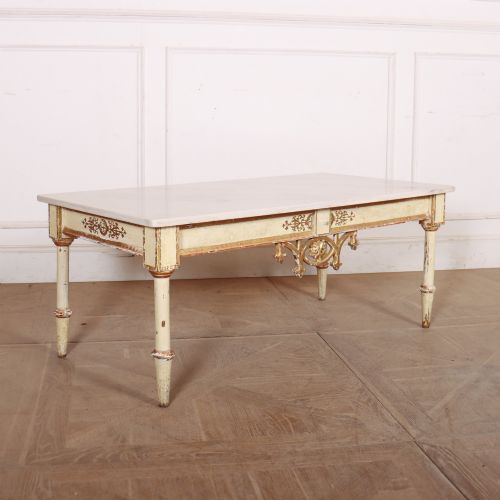
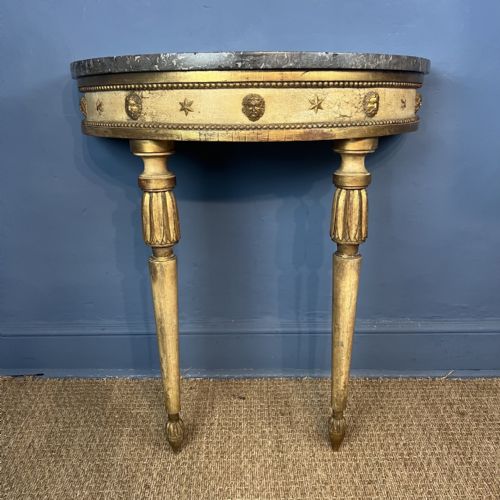
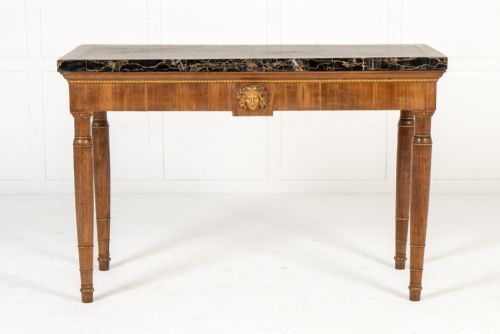
An italian marble table encompasses a variety of forms designed for display and utility, most frequently appearing as console tables, centre tables, and side tables across the listings.
These works span from the ornate carved giltwood creations of the eighteenth century through to later walnut, painted, and brass-mounted examples from the Victorian and early twentieth-century periods.
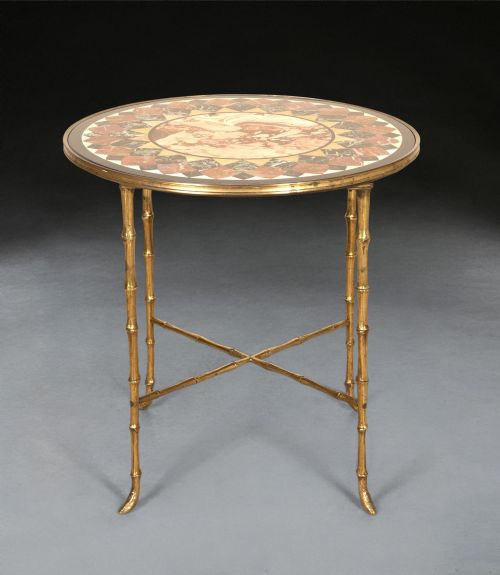
The stone surfaces themselves range from plain white or black slabs to complex mosaic specimen tops and inlaid pietra dura designs originating from Italian workshops.
Materials and Construction
Makers constructed the structural frames from European timbers such as walnut, mahogany, and oak, alongside lime wood and pine intended for heavy carving and gilding.
Gilding techniques involved applying gold leaf, silver gilt, or gesso over carved wooden foundations, often paired with cast brass, gilt metal, or ormolu mounts.
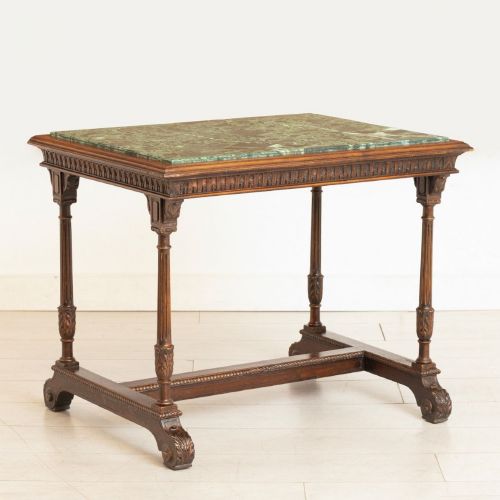
The stone tops utilised natural materials including Verde marble, breccia, onyx, and multi-coloured specimen marbles fitted directly into the wooden or metal bases.
Listings feature eighteenth-century and nineteenth-century periods, utilising materials such as walnut, mahogany, giltwood, and various specimen marbles.
Judging Quality and Execution
The distinction between standard and exceptional pieces rests in the depth and crispness of the hand-carved woodwork, particularly on eighteenth-century giltwood and revival console frames where relief work defines the silhouette.
Stone selection and execution dictate the upper tier, with multi-coloured specimen marble, micro-mosaic work, and detailed pietra dura inlays requiring vastly superior lapidary skill compared to plain marble slabs.
Amleto Bertoni·Messina Roma
The Italian Marble Table Glossary
- Console table
- A wall-mounted or heavily front-supported table designed to stand against a vertical surface, frequently topped with marble. These pieces often accompanied matching mirrors in grand interiors.
- Pietra dura
- An artistic technique of using cut and fitted, highly polished coloured stones to create geometric or pictorial images. It appears frequently on specimen table tops.
- Giltwood
- Wood that has been treated with a thin layer of gold leaf or gold paint over a prepared gesso base. It is a defining finish for decorative Italian frames.
- Breccia marble
- A composite stone made of broken fragments of minerals cemented together by a fine-grained matrix. It yields a rich, variegated pattern across large table surfaces.
- Gueridon
- A small, round occasional table supported by one or more central columns or figural pillars. Examples frequently incorporate inlaid marble tops.
Italian Marble Table: Frequently Asked Questions
What periods do these tables come from?
The pieces span from the eighteenth century through the nineteenth-century Victorian era and into the early twentieth century. Styles range from Baroque and Rococo revivals to Neoclassical designs.
Craftsmen across these periods utilised traditional timber framing and specialised stone-cutting techniques that evolved regionally within Italy.
Where were these tables originally placed?
Console tables were traditionally positioned against walls in reception rooms and hallways, often beneath large mirrors. Centre tables stood freely in the middle of principal rooms for display.
Smaller occasional and side tables served practical functions beside seating areas or within bedrooms as wash stands and bedside nightstands.
How do I identify specimen marble?
Specimen marble tops feature multiple distinct types and colours of stone arranged in geometric patterns, starbursts, or architectural mosaics. Craftsmen sourced these varied mineral fragments to display lapidary skill.
This work differs from single-slab marble tops by incorporating intricate jigsaw-like cutting and fitting of contrasting stones.
How should I care for an antique marble top?
Marble is a porous and acid-sensitive material that requires gentle cleaning with warm water and neutral soaps. Avoid harsh chemical cleaners, vinegar, and citrus substances that etch the polished surface.
Using coasters and protective pads helps prevent scratching and staining on both plain and inlaid stone tops.