


Baroque Hall Table
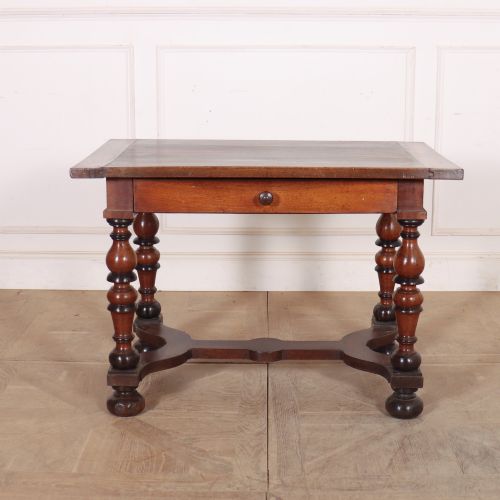
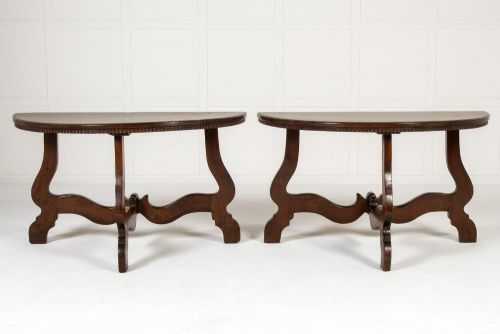
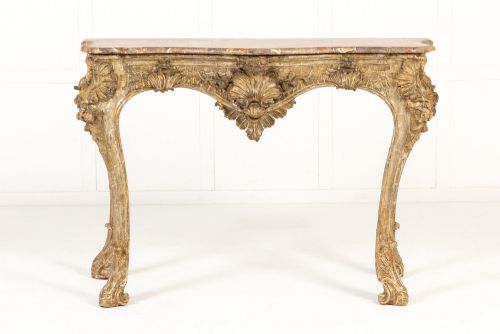
A baroque hall table commands attention in an entrance, bringing heavy walnut, carved giltwood and marble surfaces to an interior.
Baroque Hall Table
A baroque hall table encompasses console tables, side tables and centre tables originating mainly from seventeenth, eighteenth and nineteenth century European workshops. These pieces serve primarily as dramatic entrance furniture, designed to stand against a wall or anchor the middle of a grand room.
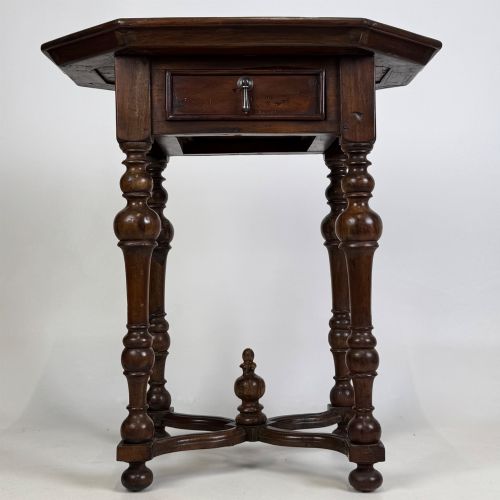
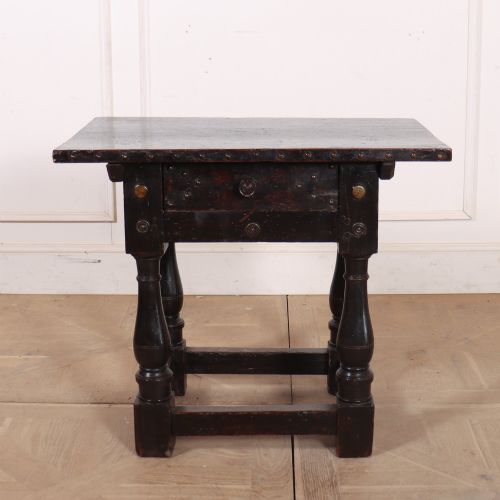
Italian and Spanish examples dominate the offerings, constructed in robust timbers like walnut and oak or finished in lavish giltwood and gesso. Forms range from straight-legged side tables to serpentine demi-lune consoles supported by carved lions' paws or putti.
Buyers seek these forms to introduce architectural presence and rich historical texture into domestic hallways. The selection relies heavily on continental craftsmanship, spanning provincial oak pieces to monumental gilded surfaces topped with breccia or onyx marble.
How they were made
Carpenters utilised solid European walnut, oak and fruitwood for structural frames, frequently employing parquetry and marquetry to create geometric or floral patterns across table tops. Timber construction often involved traditional joinery suited to supporting heavy stone surfaces.
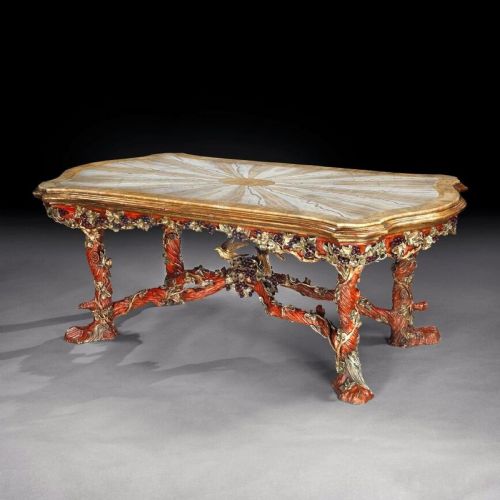
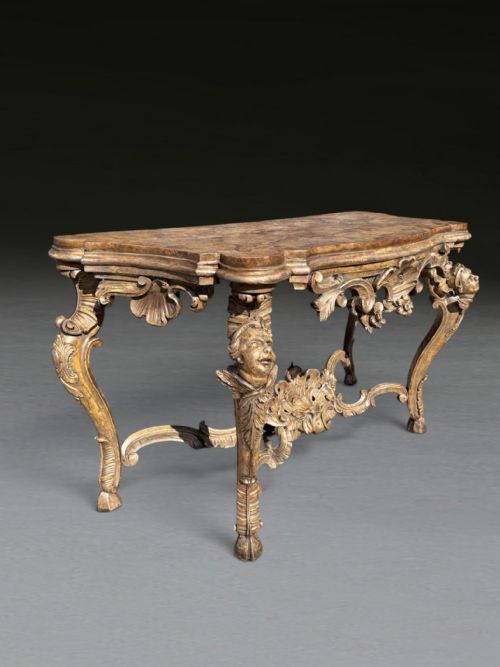
Gilding and polychrome painting applied over gesso provided the ornate finishes characteristic of the style, requiring skilled hands to lay gold leaf or build up carved relief details. Artisans shaped giltwood and carved wood elements into complex scrolls, rams' heads and maiden figures.
Slabs of marble, including pink Salome and breccia varieties, were cut and polished to fit heavy table bases, secured to withstand daily use. Metal elements such as iron appeared in specific structural supports, combining with wood and stone for added durability.
Keep an eye out for carved rams and maiden heads staring out from beneath heavy marble tops.
What varies in quality
The depth and crispness of hand-carved details separate exceptional tables from simpler workshop productions, particularly in how sharply acanthus leaves, figures and lion supports are defined. Superior pieces display fluid, confident chisel work rather than mechanical stiffness or flattened relief.
The choice and preservation of surface materials dictate the overall merit of a piece, from the depth of original patination on solid walnut to the intact survival of gold leaf on gesso. Tables retaining their original marble tops without modern replacement hold greater historical integrity.
Proportion and structural balance govern the architectural success of the design, ensuring that heavily decorated bases harmonize visually with their tops. Master carvers achieved a dynamic tension in console supports that lesser makers failed to capture.
Amleto Bertoni
The Baroque Hall Table Glossary
- Console table
- A table designed to be fixed against a wall, frequently supported by decorative brackets or front legs rather than four freestanding supports.
- Giltwood
- Timber coated with gold leaf or powder over a prepared gesso ground, standard in opulent seventeenth and eighteenth century furniture.
- Gesso
- A plaster mixture applied to wood surfaces as a smooth base for gilding or painting, allowing intricate relief ornamentation to be moulded.
- Parquetry
- Geometric mosaic woodwork used for decorative tabletops, formed by fitting small blocks of contrasting timbers together.
- Demi-lune
- A half-moon shape used for console tables designed to sit flush against a wall in narrow hallways.
- Breccia marble
- A composite stone made of broken rock fragments embedded in a fine-grained matrix, prized for colourful and varied geological patterns.
Baroque Hall Table: Frequently Asked Questions
Where should I place a baroque hall table?
These tables find a natural home in entrance halls, long corridors or living spaces where their decorative fronts create an immediate focal point. Because many console variants require wall mounting for stability, placing them against a solid structural wall ensures secure placement.
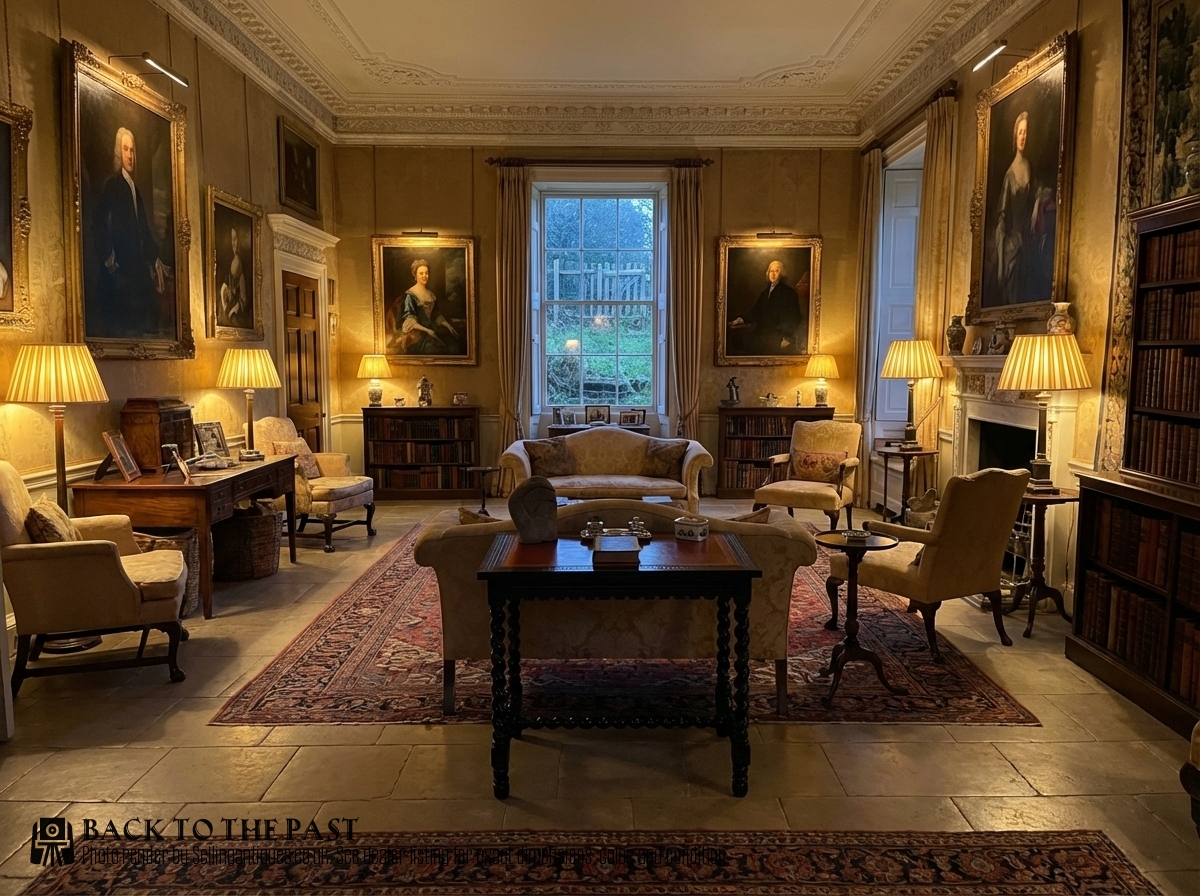
Pairing the surface with a mirror or painting hung directly above completes the traditional arrangement. Their heavy marble and carved timber construction demands a room with sufficient scale to balance their visual weight.
How do I care for a marble top?
Marble surfaces require simple maintenance using soft cloths and mild, non-acidic soap solutions to prevent dulling the polish. Avoid placing unsealed acidic items like citrus or wine directly on antique stone.
Applying a specialist stone wax periodically protects the historical surface from moisture rings and daily wear. Treating the timber base separately with appropriate furniture wax maintains the finish of walnut and gilt components.
Are these tables sturdy enough for daily use?
Solid timber frames built from walnut or oak offer high structural durability, though console tables anchored to walls rely on proper installation for complete safety. Freestanding centre tables handle everyday placement of objects reliably.
Care must be taken with heavy stone tops to avoid sudden impacts along the edges. Professional installation of wall brackets ensures that heavy giltwood consoles remain secure.
How do I distinguish seventeenth century from nineteenth century pieces?
Seventeenth century examples typically rely on heavier solid walnut or oak construction with simpler geometric mouldings or robust structural carving. Surfaces show deep patination accumulated over centuries of use.
Nineteenth century revival pieces often incorporate more theatrical, monumental carving styles influenced by baroque and rococo revivals. These later works frequently feature brighter gilding techniques and machine-assisted joinery alongside traditional hand-crafting.