




Baroque Library Table
A baroque library table brings substantial timber and deep regional carving into a room, offering a solid anchor for daily study or grand display.
Baroque Library Table
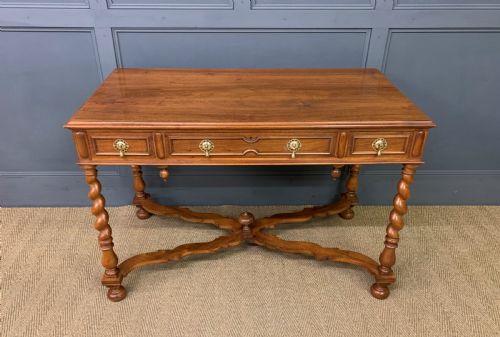
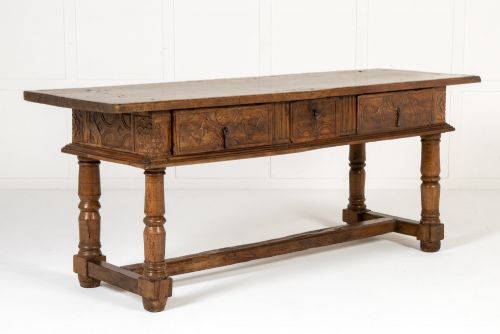
A baroque library table combines heavy proportions with sculptural woodwork, functioning primarily as a substantial writing surface, centre table, or console within a grand interior. These pieces emerge across the seventeenth, eighteenth, and nineteenth centuries, reflecting diverse European traditions from Spanish walnut workshops to Italian palazzos.
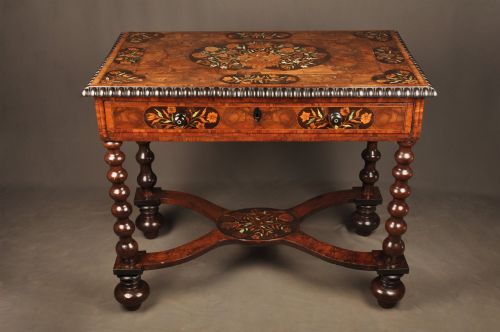
Buyers encountering this selection will most frequently meet walnut tables spanning the seventeenth and eighteenth centuries, alongside nineteenth-century revival pieces in oak and fruitwood. Forms vary from simple rectangular side tables to elaborate desks fitted with marquetry, parquetry, and inset marble tops.
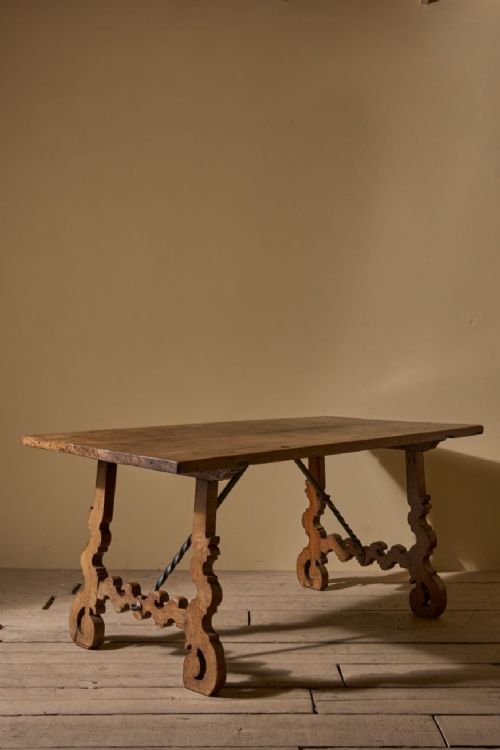
Regional variations define the category strongly, distinguishing the austere strength of early Spanish examples from the ornate marble-topped creations of Italian makers and the intricate parquetry of Dutch workshops. Each origin brings distinct joinery habits and surface treatments that mark out its place of manufacture.
Assessing Quality and Execution
Quality rests upon the selection of timber and the depth of the carved detail, where superior examples display crisp, confident chisel work rather than flat or mechanical moulding. The integrity of the original surface patina and the survival of secondary woods signal an uncompromised state of preservation.
Baroque Library Table Retail Price Guide 2026
Typical asking prices for baroque library table among the pieces listed under this phrase on Sellingantiques today, from the lower quarter to the upper quarter. They describe what is for sale here now, not the wider market.
At least one desk hides carved cherubs in its woodwork, watching over your inkwell.
Angiolo Barbetti Firenze
The Baroque Library Table Glossary
- Marquetry
- Decorative veneer work arranged in pictorial or geometric patterns across a timber surface. Skilled artisans cut thin slices of contrasting woods like fruitwood to create elaborate table tops.
- Parquetry
- Geometric mosaic woodwork formed by fitting small wooden blocks together into repeating patterns. This technique appears frequently on seventeenth-century Dutch table tops.
- Patina
- The surface sheen and mellowed tone developed by aged wood through handling, wax, and light over centuries. A good original patina preserves the visual depth of walnut and oak.
- Ebonised wood
- Timber treated with a dark chemical stain or finish to imitate expensive ebony. This dark contrast highlights carved details and geometric mouldings.
- Salome marble
- A decorative quarried stone valued for its distinctive pink coloration and veining. Italian makers occasionally inset this dense material into table frames.
Baroque Library Table: Frequently Asked Questions
What defines a baroque library table?
These tables are characterised by heavy timber construction, sculptural legs, and rich regional carving originating from seventeenth to nineteenth-century European workshops. They served traditionally as desks, centre tables, or writing surfaces in grand libraries and studies.
Buyers find distinct regional styles, including Spanish walnut tables, Italian marble-topped desks, and Dutch parquetry designs. Their substantial scale and ornate detail set them apart from later, lighter furniture forms.
Where were these tables made?
Production centres spanned across Europe, with strong representations from Spain, Italy, the Netherlands, and Portugal during the baroque period and subsequent nineteenth-century revivals. Each region utilised local timbers like walnut, oak, and fruitwood alongside distinctive decorative techniques.
Italian workshops often incorporated marble tops and elaborate figurative carvings, while Spanish and Portuguese makers focused on solid walnut and sturdy wrought iron supports.
How can I tell the period?
Dating relies upon examining construction methods, tool marks on the underside, wood species, and the specific vocabulary of the carved ornament. Seventeenth-century examples typically display heavier timber framing and simpler joinery than later revival pieces.
Comparing the hardware, secondary woods, and decorative motifs such as marquetry or ebonisation helps separate authentic early production from nineteenth-century interpretations.