
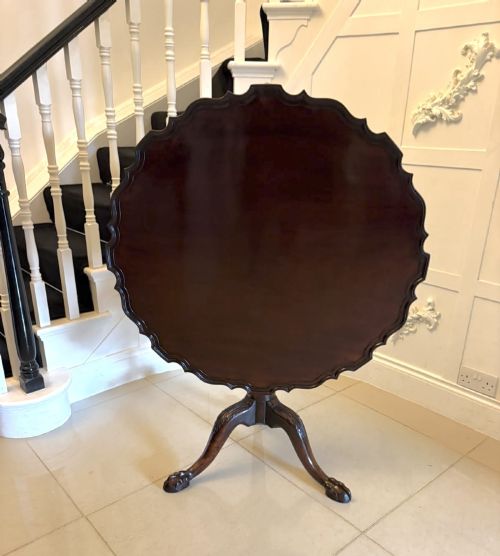
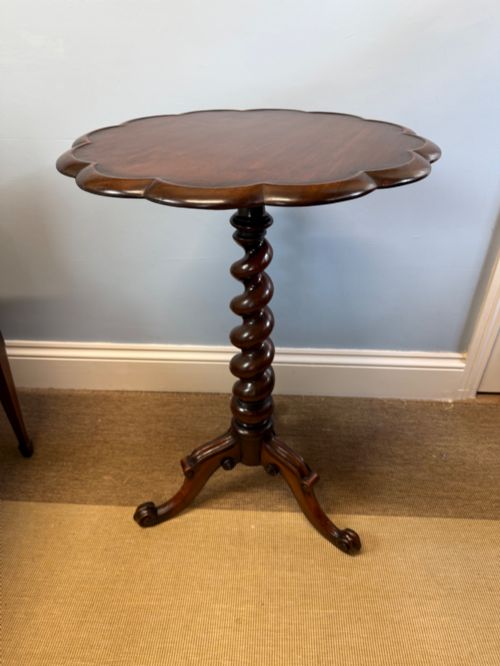
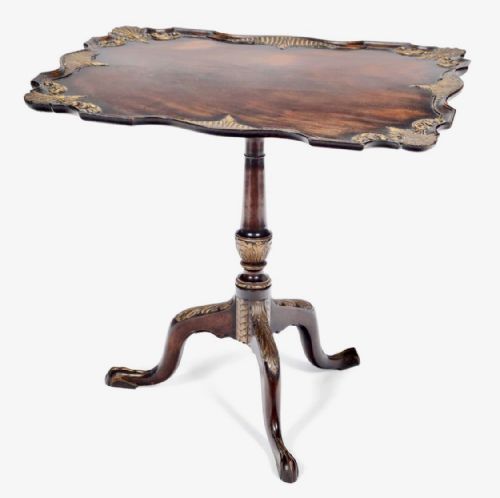
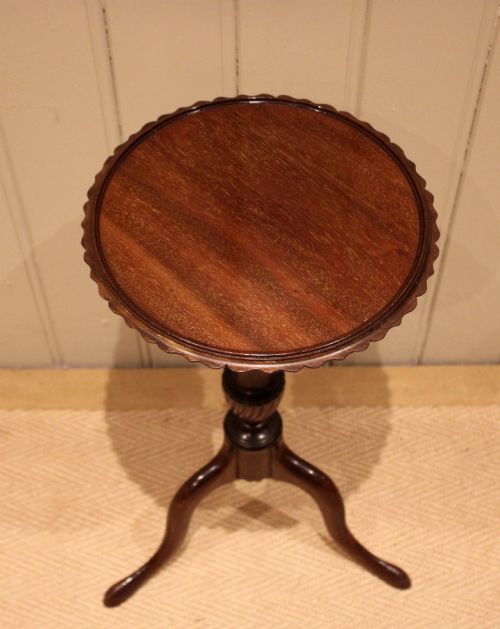
Scallop Carved Table
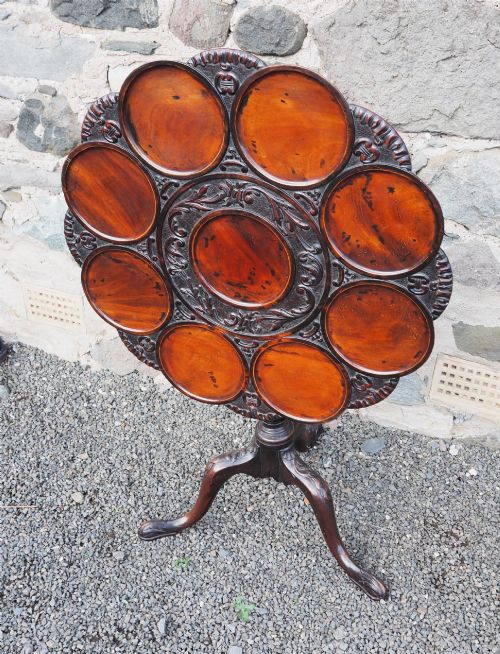
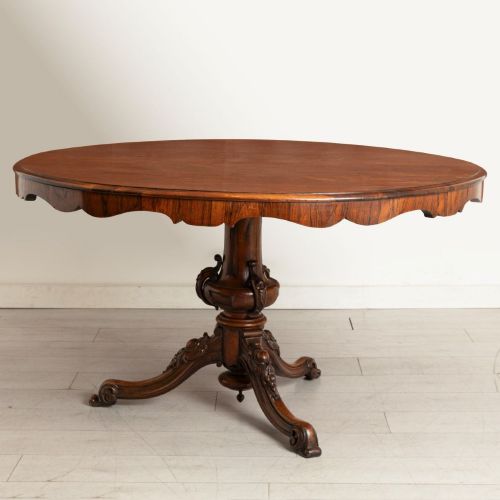
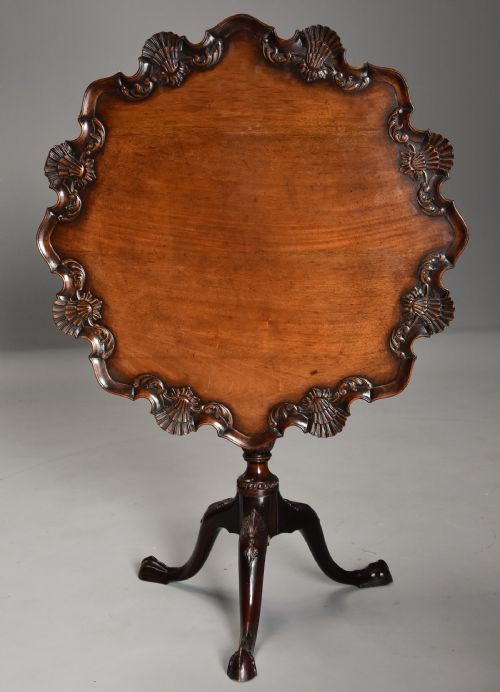
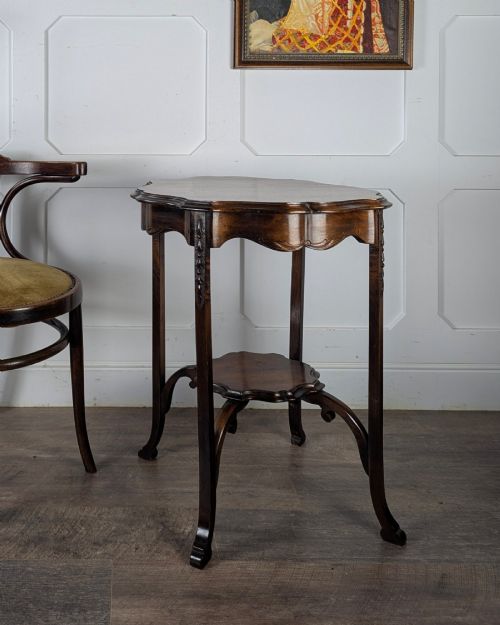
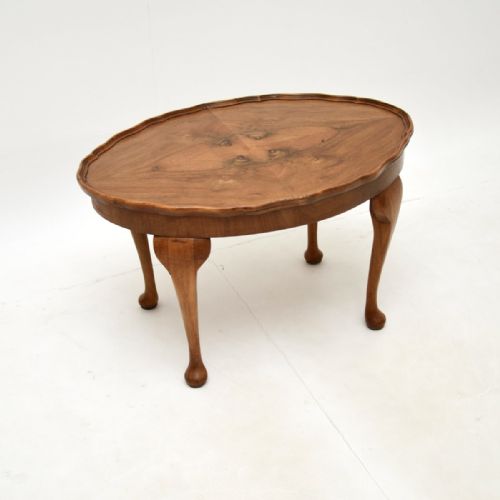
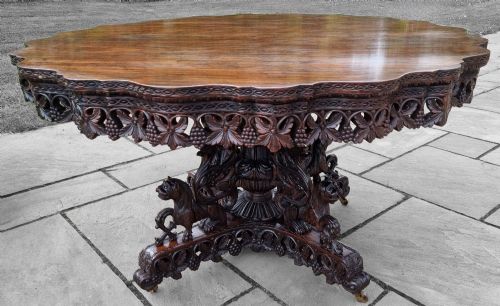
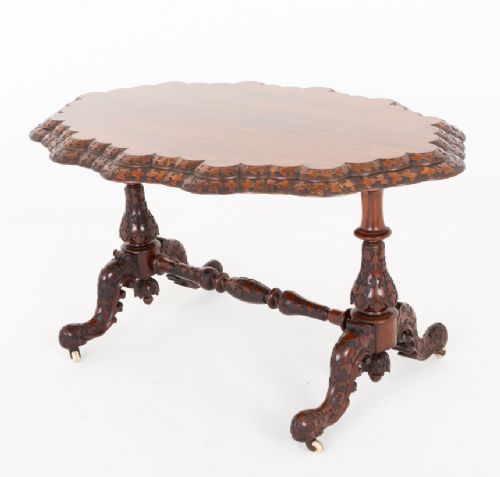
A scallop carved table brings texture to a room, offering shaped edges and turned supports from centuries of cabinet making.
Scallop Carved Table
The pieces recorded range from the eighteenth century through the Victorian era and into the early twentieth century, spanning revivals such as Queen Anne and Chippendale. Mahogany, burr walnut, and oak dominate the forms, alongside occasional examples in rosewood, pine, and padauk.
Occasional tables and side tables appear frequently alongside coffee tables and wine tables, often incorporating tripod bases or turned supports. The shaping along the top edge remains the defining visual element across these various forms.
How they were made
Cabinet makers utilised dense hardwoods such as mahogany, walnut, and oak to carve moulded borders and support intricate piecrust profiles. Turning lathes shaped central pedestals and tripod legs, while joinery techniques united solid tops with stable bases.
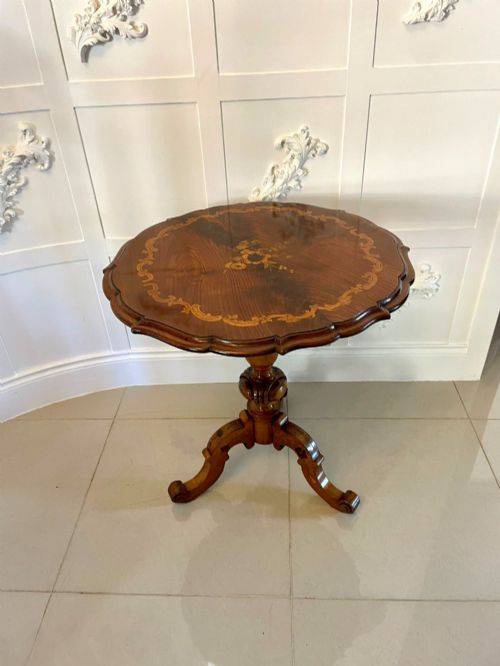
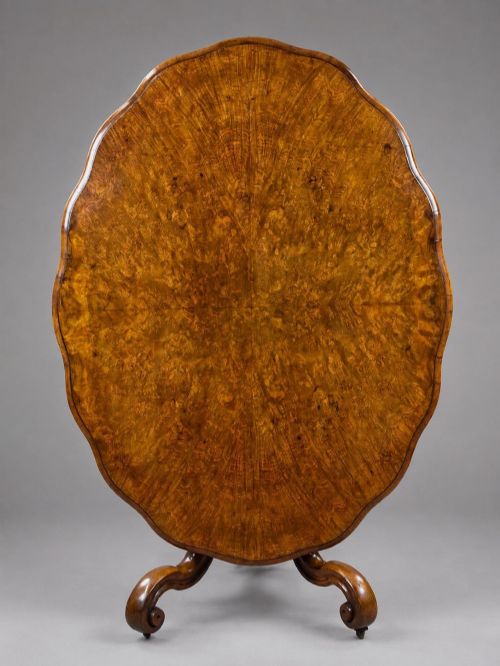
Surface decoration relied on natural grain patterns in burr walnut and figured mahogany, occasionally enhanced by marquetry inlay, parcel gilt, or painted finishes. Tilt-top mechanisms required precise hinge fitting to allow the surface to pivot safely when not in use.
Listings span the eighteenth, nineteenth, and early twentieth centuries, featuring mahogany, walnut, oak, and rosewood across multiple revival styles.
What varies in quality
The refinement of the carved edge separates standard production from exceptional examples, where hand-chiseled curves display clean depth and symmetry. Timber selection dictates visual weight, with well-matched burr walnut veneers or dense Cuban mahogany commanding greater presence.
Underframe construction determines stability, particularly on tilt-top tripod tables where the birdcage mechanism and leg joints must align without play. Crispness in turned columns and carved knees reveals the hand of a skilled workshop rather than mechanical reproduction.
Shapland and Petter
The Scallop Carved Table Glossary
- Piecrust edge
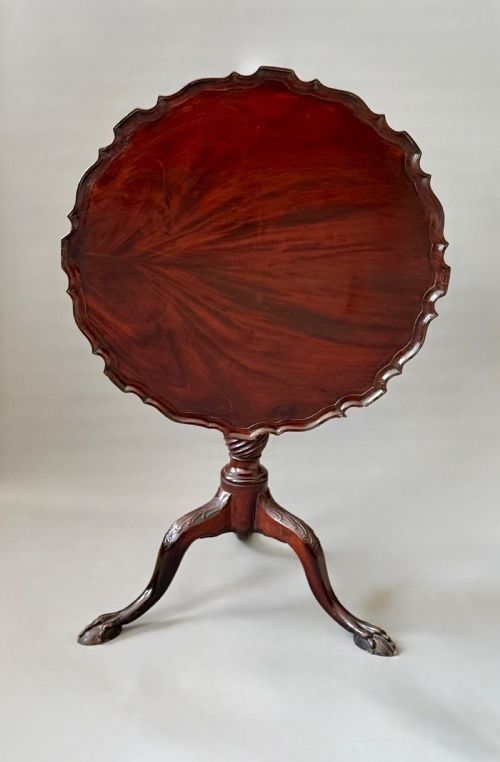
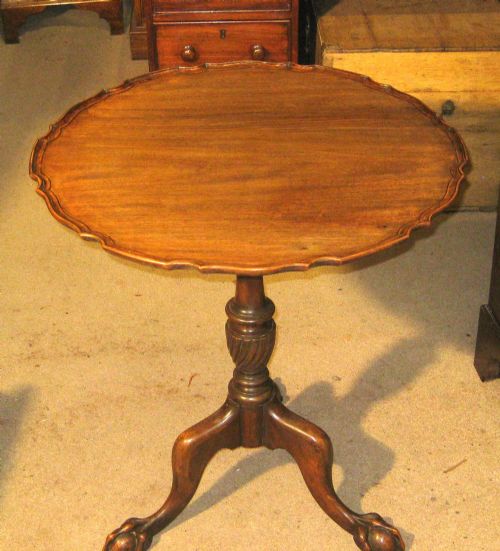
- A raised, carved border shaped with alternating curves and indentations resembling pastry work. This detail appears frequently on eighteenth-century and revival tilt-top tables.
- Tilt-top
- A hinged tabletop that pivots to a vertical position for storage or display against a wall. This mechanism typically rests on a central pillar with tripod legs.
- Tripod base
- A table support comprising three legs radiating from a central turned column. It provides balance on uneven floors and leaves floor space clear.
- Marquetry
- The art of applying pieces of veneer to a structure to form decorative patterns or pictures. Craftsmen utilise contrasting timbers to create floral or geometric designs.
- Grotto work
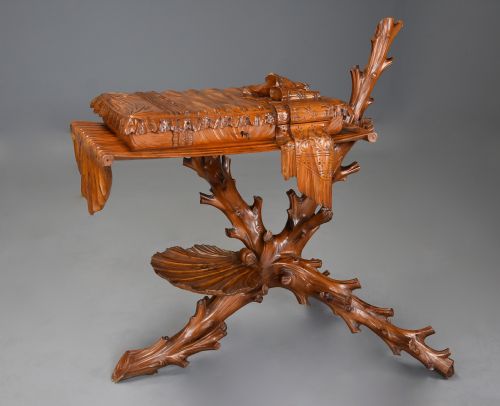
- Carved wooden decoration imitating natural rock formations, shells, or coral. This style appears in nineteenth-century decorative furniture.
- Occasional table
- A small, movable table designed for a specific, transient use in a sitting room or bedroom. These pieces often feature circular or oval tops.
Scallop Carved Table: Frequently Asked Questions
What is a scallop carved table used for?
These tables served various domestic functions, acting as surfaces for tea service, lighting, or displaying decorative objects in reception rooms.
Smaller versions functioned as wine tables or occasional stands beside seating, while tilt-top formats allowed rooms to be cleared when the surface was not in use.
What woods were used for these tables?
Makers relied heavily on dense hardwoods such as mahogany and walnut, which held crisp carved details along shaped edges. Burr walnut provided highly figured surfaces for decorative occasional tables.
Earlier pieces often utilised oak or mahogany, while nineteenth-century variations introduced rosewood, pine, and exotic timbers like padauk.
How do I date a piecrust table?
Dating relies on timber characteristics, construction methods, and the specific revival style associated with the piece. Eighteenth-century examples display hand-carved proportions typical of Georgian cabinet making.
Victorian and early twentieth-century interpretations often incorporate revival aesthetics such as Chippendale influence combined with heavier turned pedestals.