
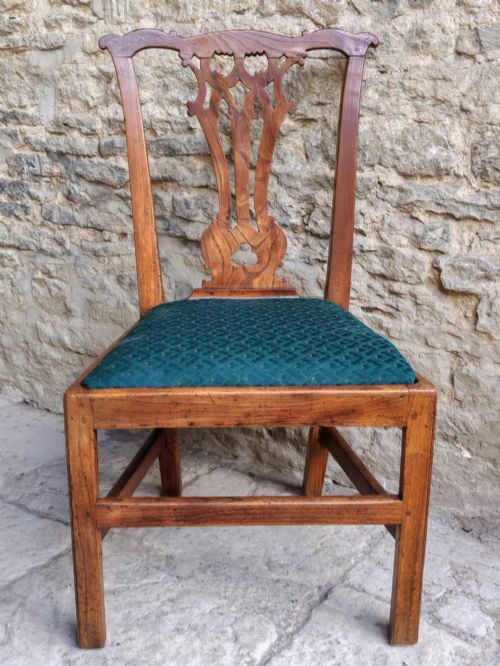
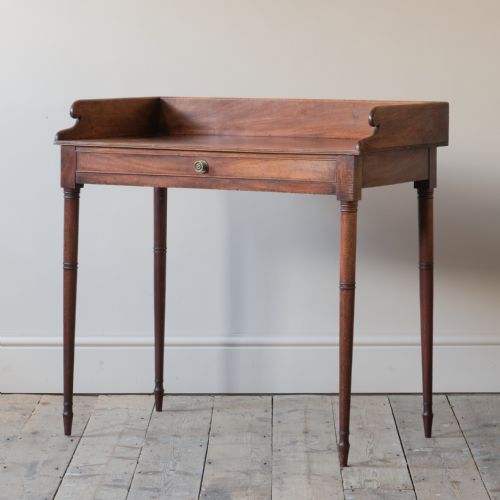
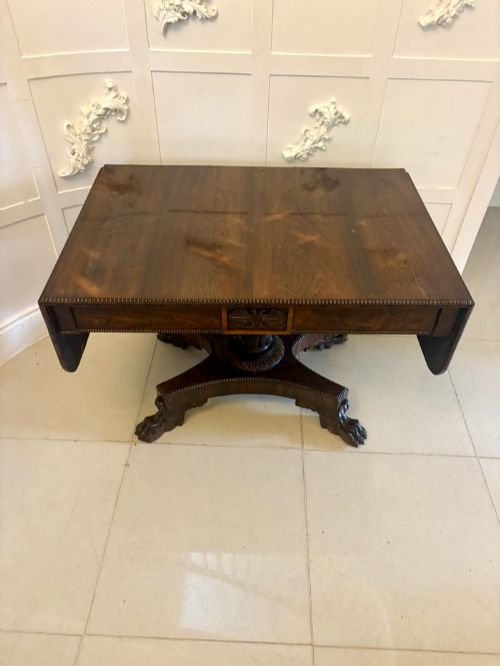
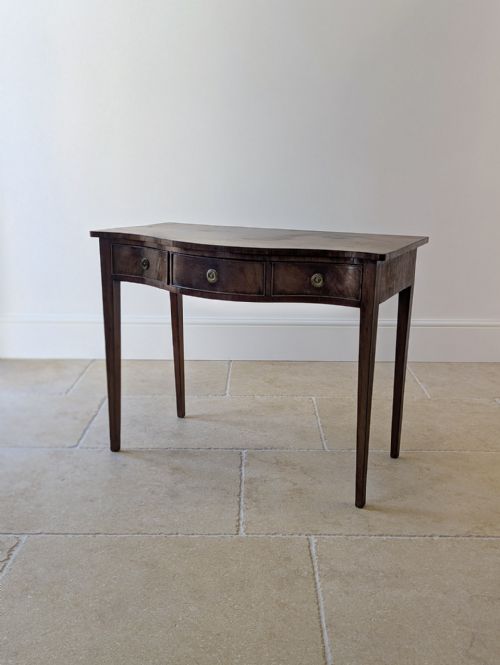
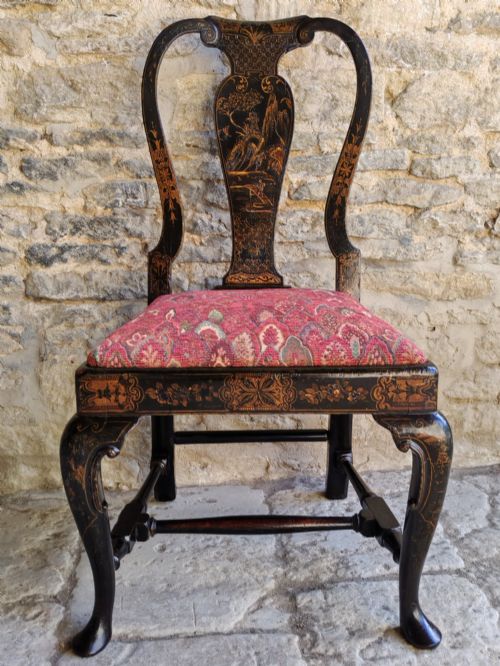
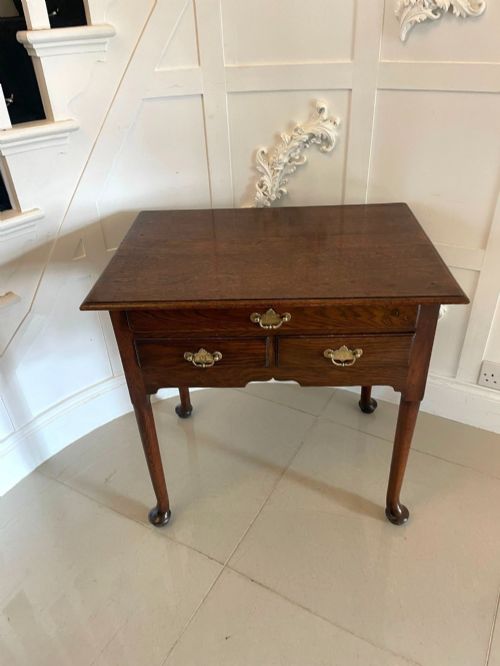
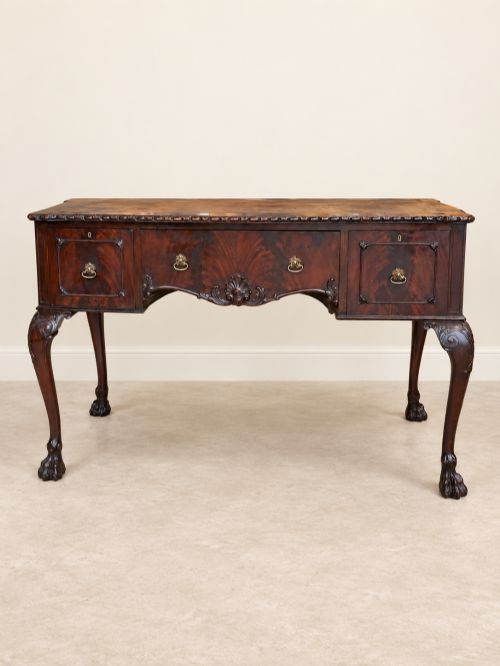
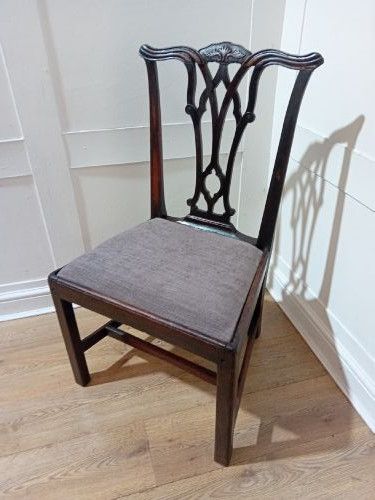
Georgian Side Desk
Georgian side desk pieces combine compact writing surfaces with domestic utility, offering timeless timber craftsmanship for daily use.
Forms and periods
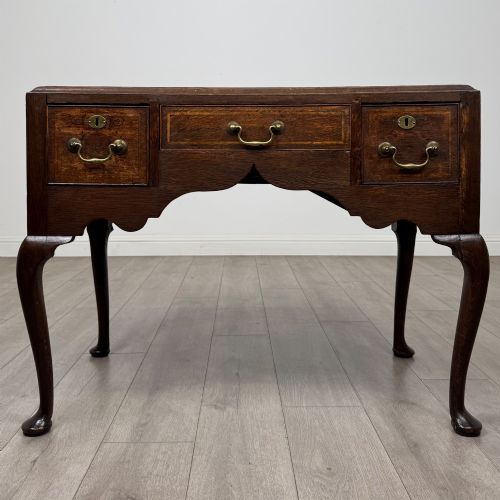
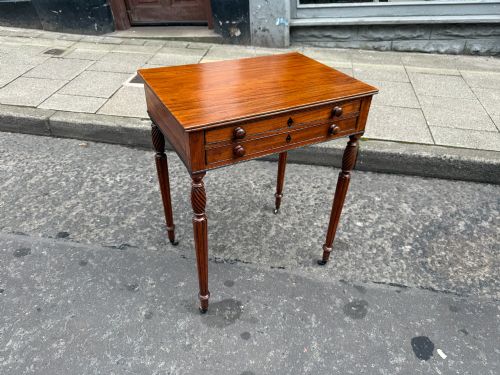
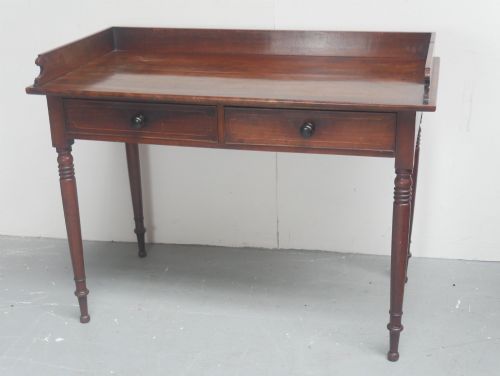
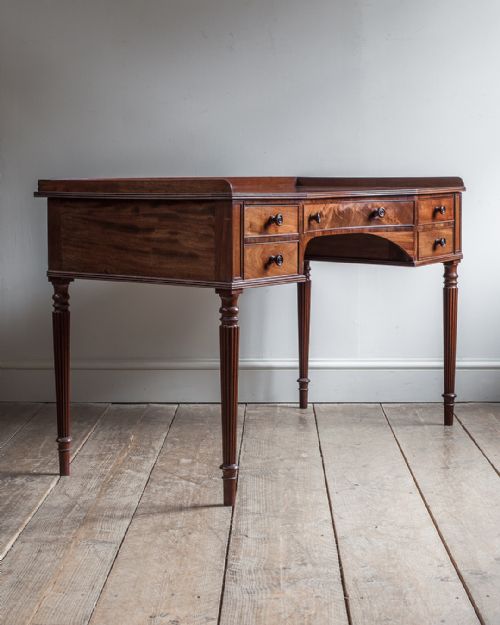
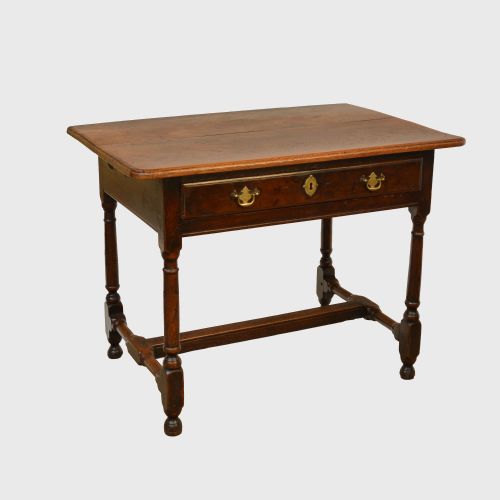
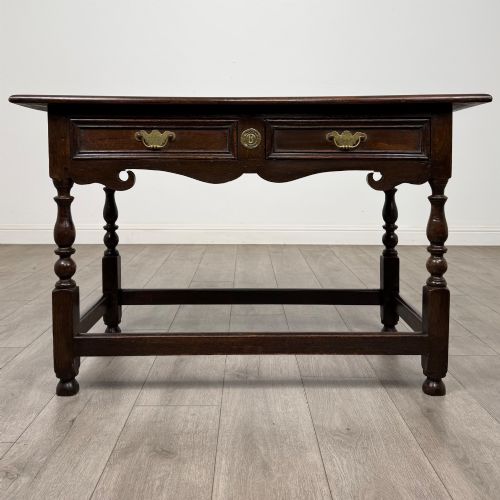
A georgian side desk bridges the gap between a domestic side table and a compact writing desk, functioning as a versatile surface for correspondence or hall use. The pieces appearing in this category span the Georgian, George III, and Regency periods, dating from the eighteenth century into the early nineteenth century.
Buyers will most frequently encounter mahogany and walnut versions structured as side tables, lowboys, or writing tables featuring single or multiple drawers. These items originate from English workshops and reflect stylistic shifts from straightforward Georgian utility towards more refined Regency lines.
Materials and construction
Cabinet makers utilised dense hardwoods including mahogany, walnut, oak, and elm, often selecting timber with rich grain patterns such as flame mahogany or burr walnut for primary surfaces. Secondary structural elements relied on sturdy native timbers.
Joinery involved traditional hand-cut techniques, whilst drawer construction frequently incorporated precision dovetailing. Brass hardware, including drop handles and escutcheons, completed the functional assemblage of these utilitarian items.
Retail Price Guide 2026
Typical UK retail prices for georgian side desk, calculated from the Sellingantiques database of over a million retail prices indexed since 2003. This retail price guide relies exclusively on Sellingantiques data; no external sources or auction records are used, so the figures do not describe the wider market.
Some calligrapher's tables even managed to outlive their ink splatters.
Qualities of execution
Superior examples distinguish themselves through the choice of timber veneer, where book-matched flame grain or burr walnut creates a coherent visual pattern across the top surface and drawer fronts. Poorer execution relies on plain, unfigured boards with less attention to grain direction.
Refinement in drawer construction and the subtlety of carved details, such as bracket feet, pad feet, or cross-banding, mark the upper tier of production. Structural integrity depends on the precision of the original joinery rather than later restoration work.
The Georgian Side Desk Glossary
- Lowboy
- A small oak or walnut table with one or more drawers, originating in the early eighteenth century and frequently utilised as a dressing or writing surface.
- Cross-banding
- A decorative border of veneer laid around the perimeter of a table top with the grain running perpendicular to the central panel.
- Pad foot
- A simple, rounded foot terminating the leg of a table, popular during the earlier part of the Georgian era.
- Cantilever
- A structural system where a horizontal member is supported at only one end, seen in specialised extending table designs from the Regency period.
- Escutcheon
- A protective brass plate surrounding a keyhole, designed to prevent wear to the surrounding wood.
Frequently Asked Questions
What is a georgian side desk used for?
These pieces function primarily as compact writing surfaces, occasional tables, or hall consoles. Their modest proportions allow them to fit into smaller domestic spaces while providing functional drawer storage.
Historically, they served the occupants of country houses and town residences for correspondence and record-keeping.
How do I date a georgian side desk?
Dating relies on observing timber choices, hardware styles, and construction methods. Earlier eighteenth-century pieces often employ oak or walnut with pad feet, whilst later George III and Regency examples lean towards mahogany and more linear proportions.
Examining drawer dovetails and internal secondary woods also provides clues regarding the decade of manufacture.
Are these desks suitable for daily laptop use?
Most of these tables feature shallow drawer arrangements and modest knee clearance designed for historical writing implements. While sturdy enough for modern laptops, users must check specific height and depth dimensions before regular computer work.
Protecting the antique timber surface with a blotter or leather pad prevents scratches from modern office equipment.
What woods were used in construction?
Cabinet makers relied heavily on imported mahogany and native walnut for visible surfaces, alongside oak and elm for structural framing and drawer linings. Figured veneers such as flame grain and burr walnut appeared on higher-status commissions.
Secondary timbers inside the drawers help verify the English origin and period authenticity of the piece.