

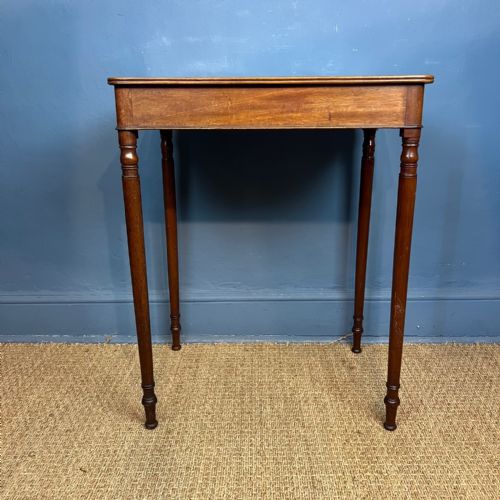
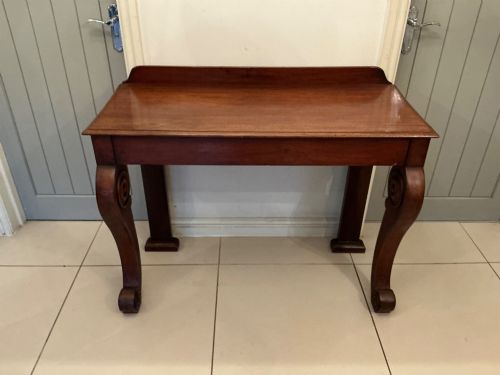
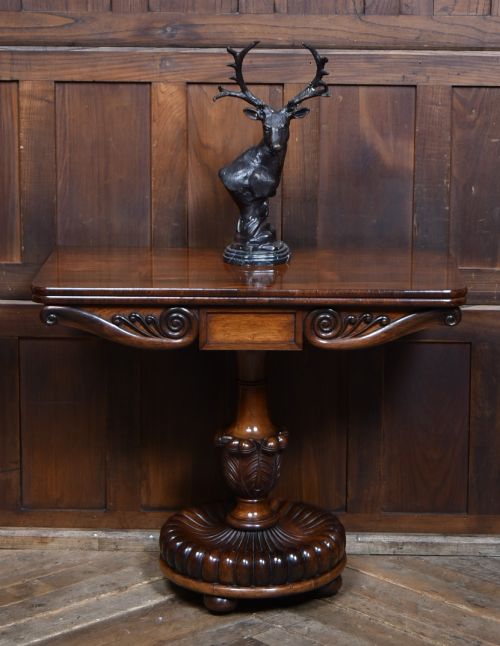
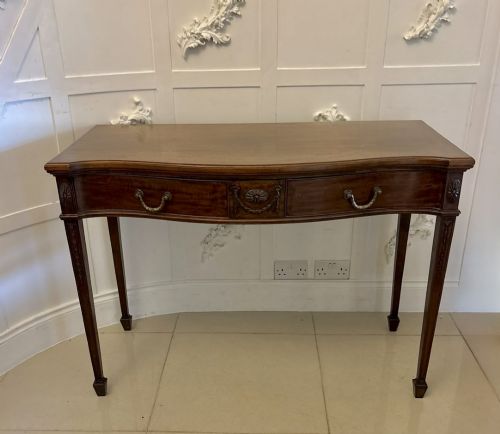
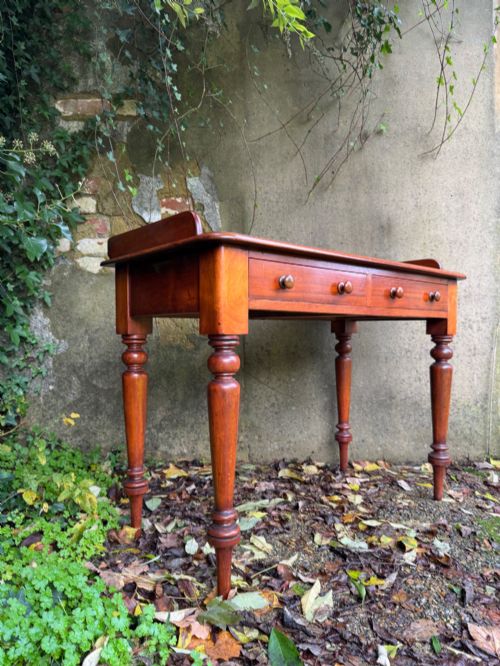
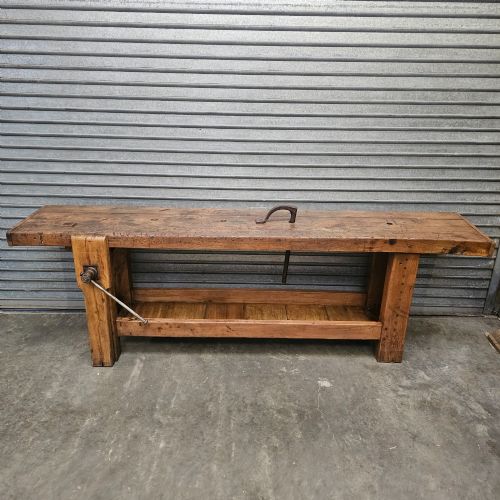
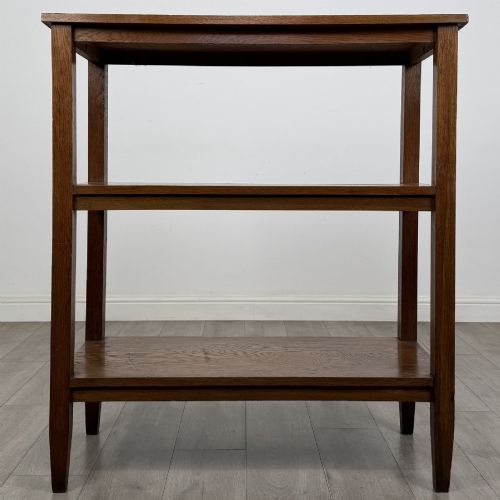
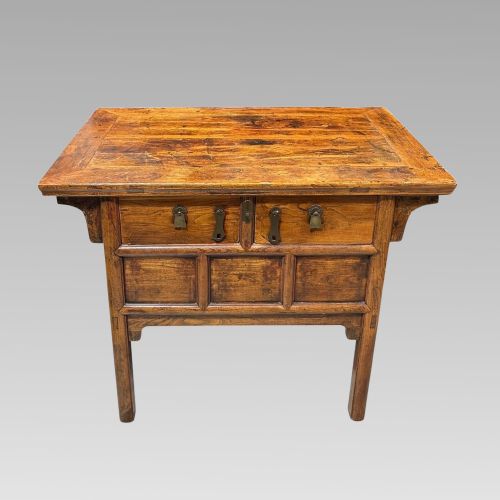
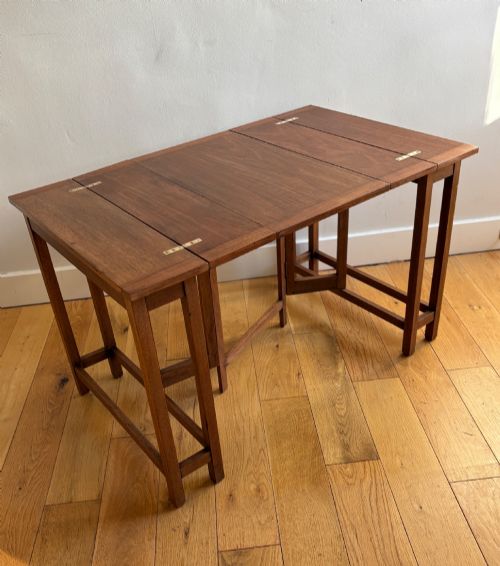
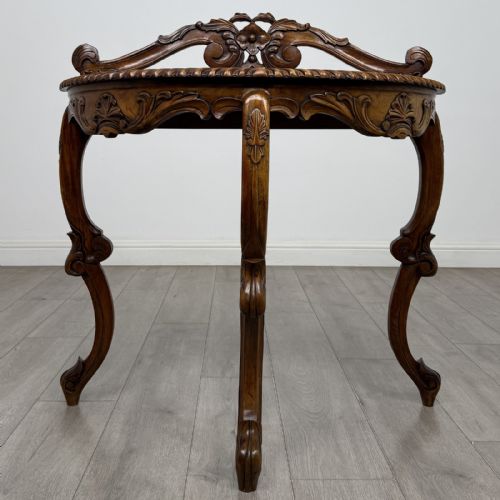
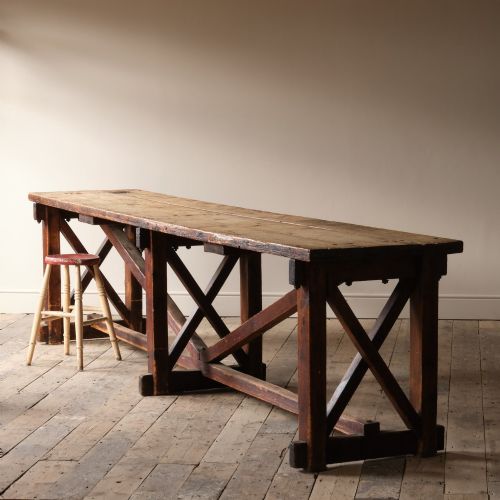
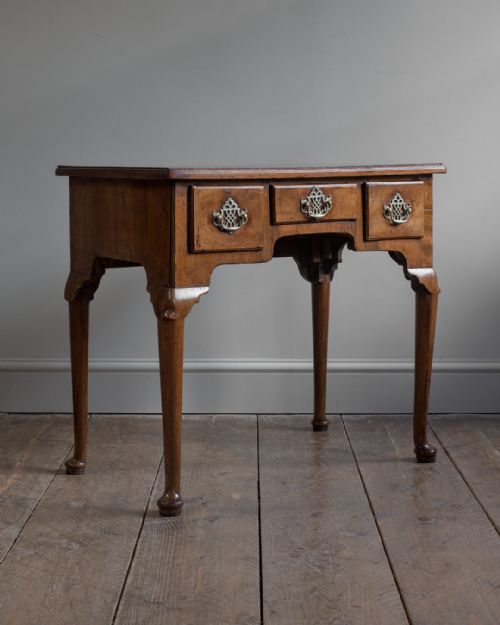
Brown Wooden Console Table
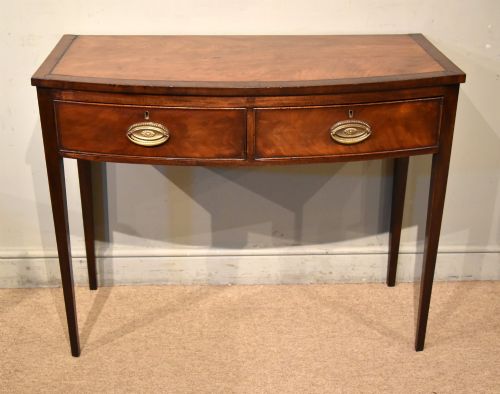
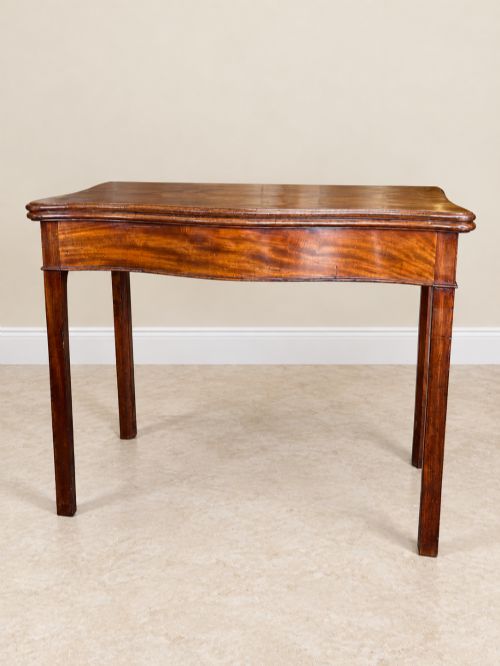
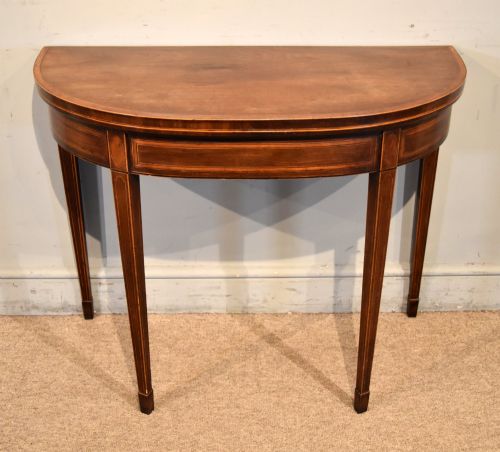
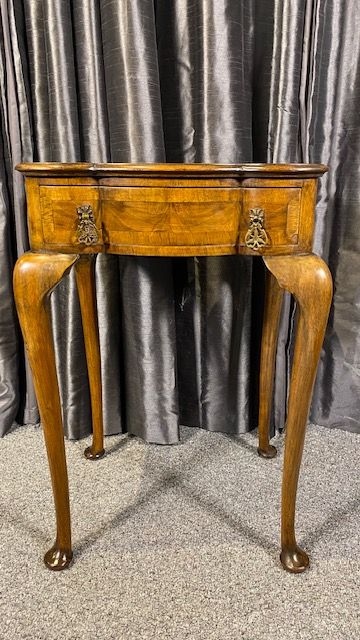
A brown wooden console table anchors a hallway or reception room with practical surface space and period character.
Brown Wooden Console Table
A brown wooden console table brings traditional surface space and structural presence into a hallway, landing or reception room. These pieces span Georgian, Victorian and Edwardian periods, appearing alongside side tables, serving tables and lowboys.
The versions met most frequently on this page combine timber frames with practical proportions designed to stand against a wall. Makers from the eighteenth and nineteenth centuries utilised native and imported woods to construct these versatile furnishings.
Forms range from simple pine and oak farmhouse pieces to polished mahogany designs reflecting Sheraton influence or Regency styling. Each example serves a functional role while displaying the distinctive construction methods of its era.
Materials and construction methods
Cabinet makers relied primarily on mahogany, oak, walnut and pine to build these tables, often selecting figured veneers for drawer fronts and tops. Secondary woods such as elm or fruitwood appear in drawer linings and internal framing.
Joinery methods involved traditional hand-cut dovetails for drawers and mortise and tenon joints for the structural framework. Surfaces received wax or polish finishes that protected the timber while highlighting natural grain patterns.
Brown Wooden Console Table Retail Price Guide 2026
Typical asking prices for brown wooden console table among the pieces listed under this phrase on Sellingantiques today, from the lower quarter to the upper quarter. They describe what is for sale here now, not the wider market.
Listings feature items built from mahogany, oak, pine, walnut, elm, boxwood, iron and brass across Georgian, Victorian and Edwardian periods.
Distinctions in quality
Quality rests upon the selection of timber, such as flame mahogany or burr walnut, matched with the precision of the underlying joinery. Superior examples display carefully managed grain orientation and original brass hardware.
Proportion and restraint in decorative elements separate standard production items from finer workshop pieces. The handling of secondary timbers and the integrity of the structural carcass further define the standard of execution.
The Brown Wooden Console Table Glossary
- Console table
- A table designed to stand against a wall, frequently secured to it or supported by front legs. These items function as decorative and practical surfaces in entrance halls.
- Lowboy
- A small table with one or more tiers of drawers, standing on relatively tall legs. Eighteenth-century examples often utilise oak or walnut.
- Dovetail
- A joint formed by interlocking wedge-shaped fingers, used primarily in drawer construction. Hand-cut variations indicate traditional workshop origins.
- Sofa table
- A rectangular table featuring drop leaves on either side, originally designed to stand in front of a sofa. Nineteenth-century versions frequently incorporate double pedestals or trestle ends.
- Flame mahogany
- Timber cut from the fork of the mahogany tree to produce a rippling, flame-like pattern. Cabinet makers used this veneer on primary display surfaces.
Brown Wooden Console Table: Frequently Asked Questions
Where should I place a console table?
These tables suit narrow circulation spaces like hallways, corridors and landings where surface area is needed without blocking passage.
They also function effectively against living room walls beneath mirrors or artwork.
How do I care for antique wooden tables?
Maintain the finish by applying natural beeswax periodically and buffing with a soft, clean cloth.
Keep timber furniture away from direct heat sources and strong sunlight to prevent warping and drying.
What is the difference between a console table and a side table?
Console tables traditionally stood against walls, sometimes supported by brackets or specific leg arrangements.
Side tables offer freestanding utility and feature four legs distributed evenly beneath the top.
How do I identify the period of a wooden table?
Examine the timber species, secondary woods, construction joints and overall proportions against known design styles.
Georgian and Victorian periods exhibit distinct hardware choices, leg profiles and veneering techniques.