

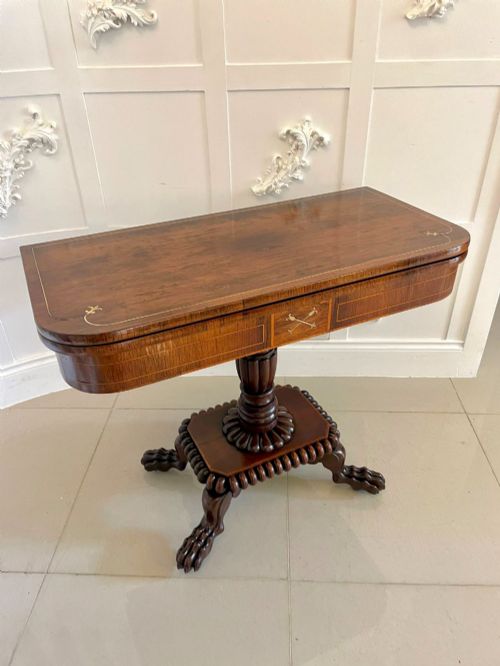
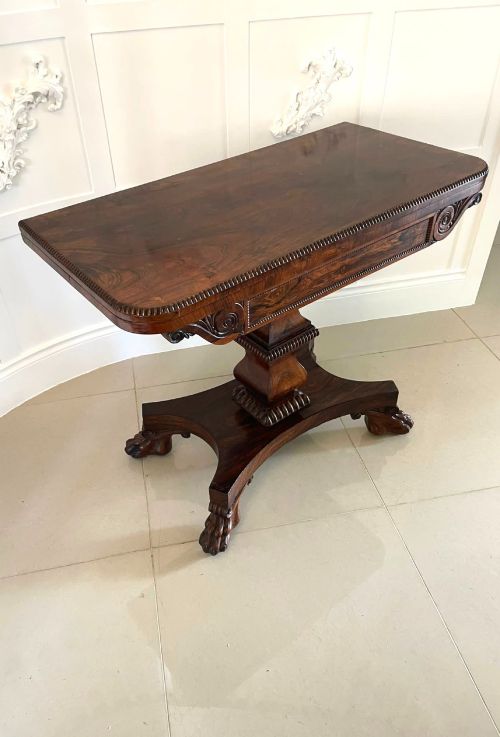
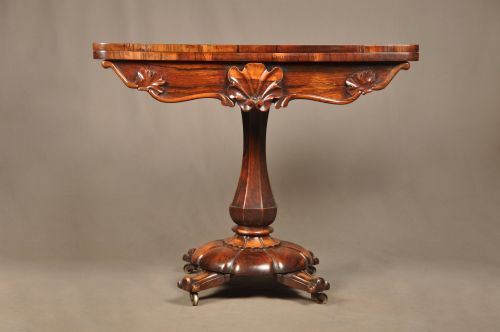
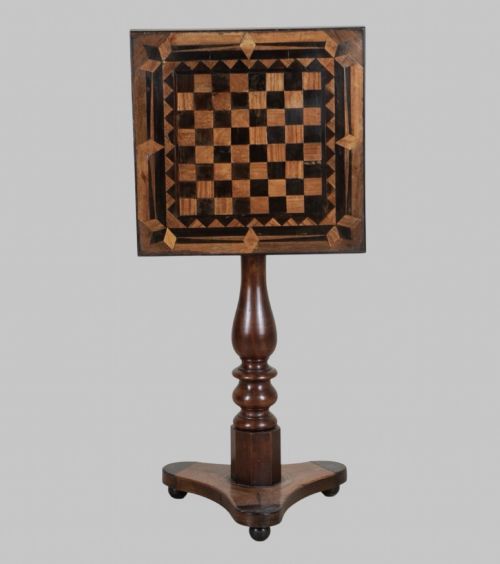
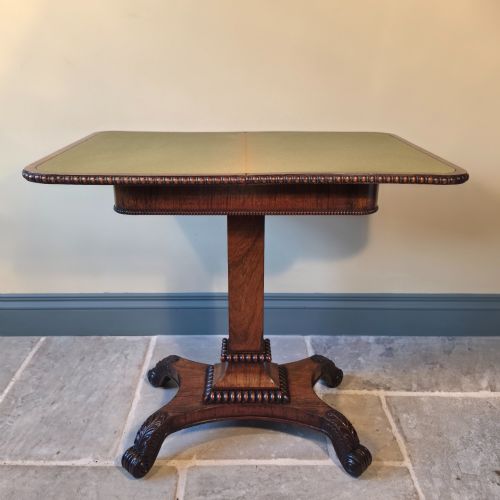
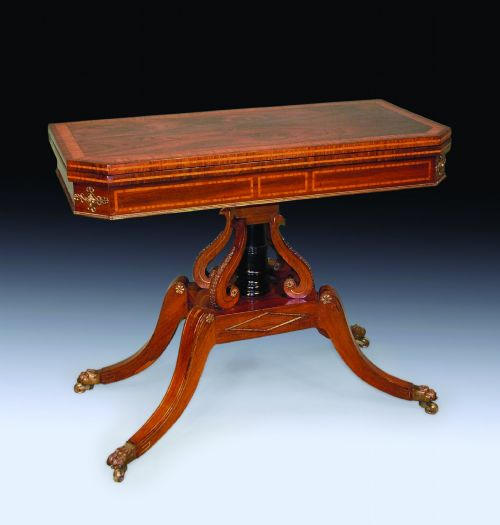
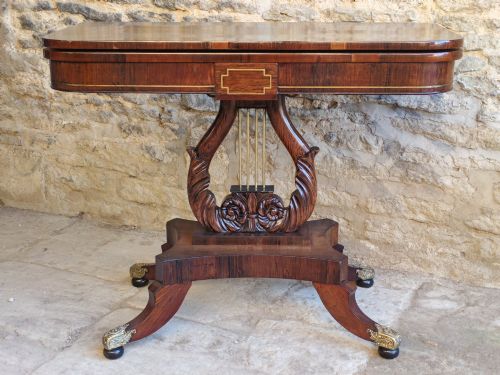
Regency Rosewood Games Table
A regency rosewood games table brings the tactile warmth of figured timber and clever folding mechanism into a modern interior.
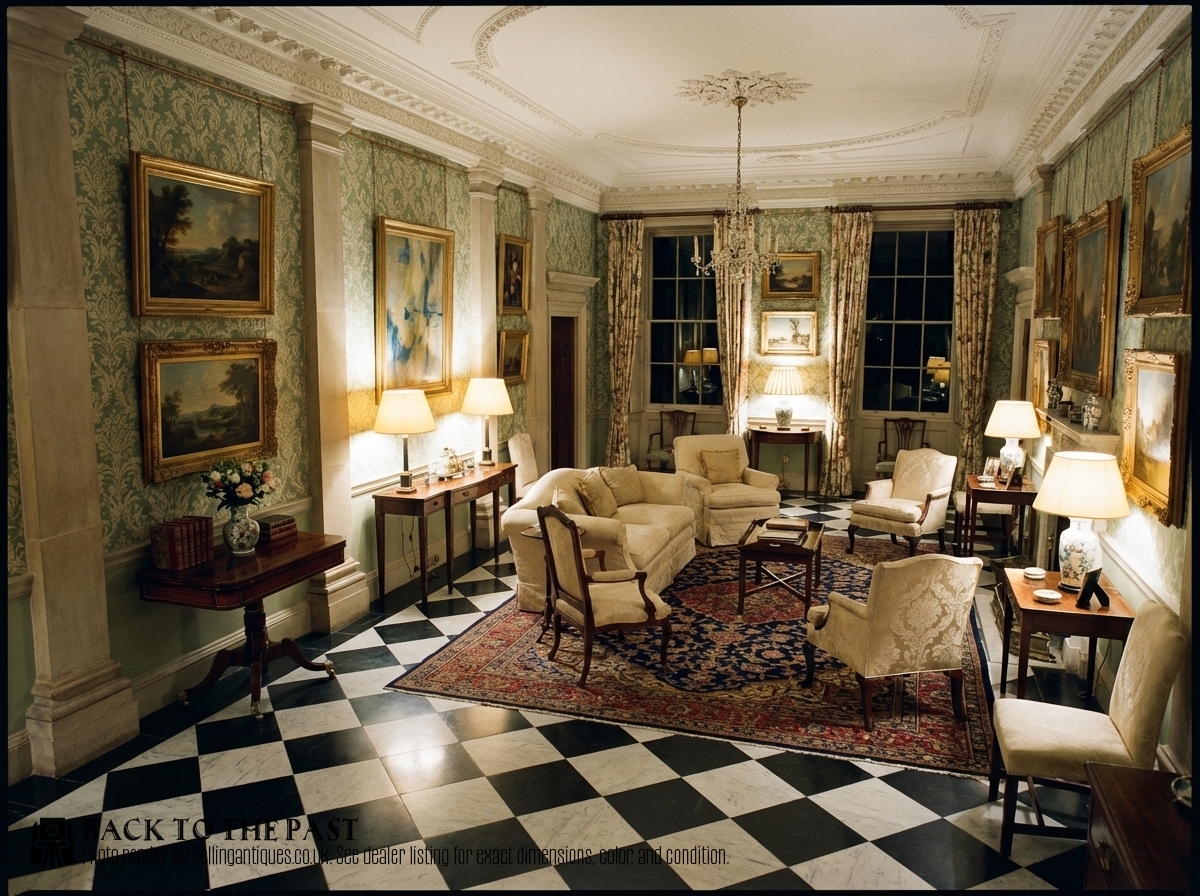
Regency Rosewood Games Table
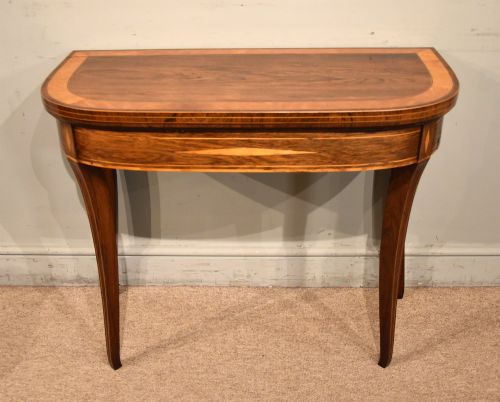
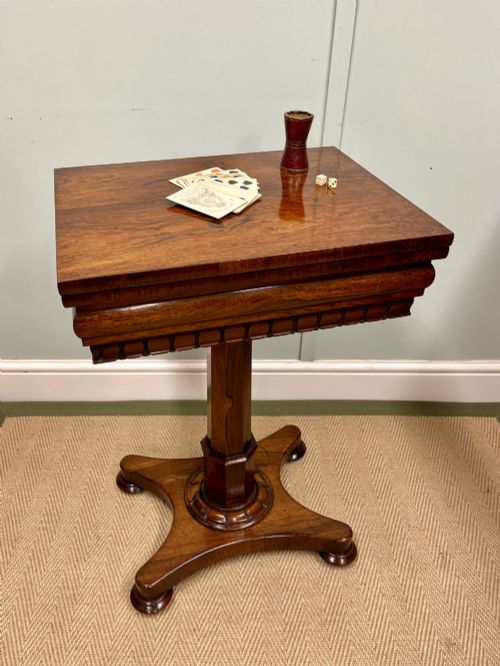
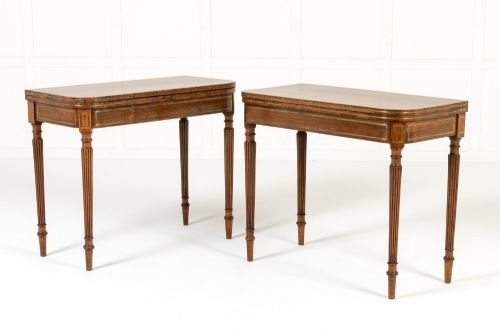
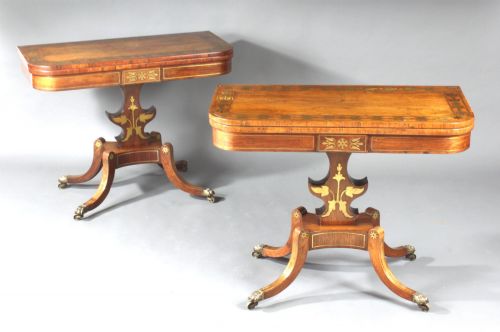
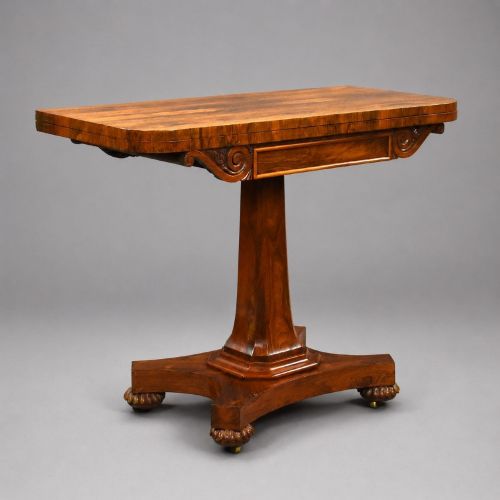
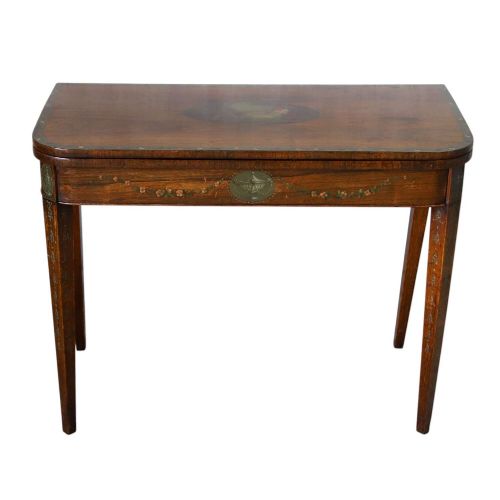
When you search for a regency rosewood games table, you encounter pieces designed primarily for card playing, chess, and domestic leisure during the early nineteenth century. These forms typically arrive as fold-over top card tables, swivel-top versions, or specialised chess tables resting on pedestal bases.
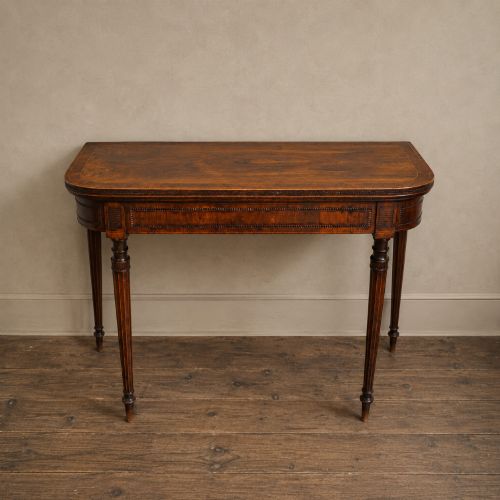
The versions most commonly met on this page date from the Regency and William IV periods, often showcasing D-shaped or rectangular tops that double as console tables when closed. Alongside standard card tables, the selection includes nests of tables, sewing combinations, and occasional pieces utilising the same dense dark timber.
Originating largely from English workshops of the Georgian and Regency eras, these tables combine social utility with formal elegance. They reflect an era when furniture had to adapt rapidly between display surfaces and active gaming boards.
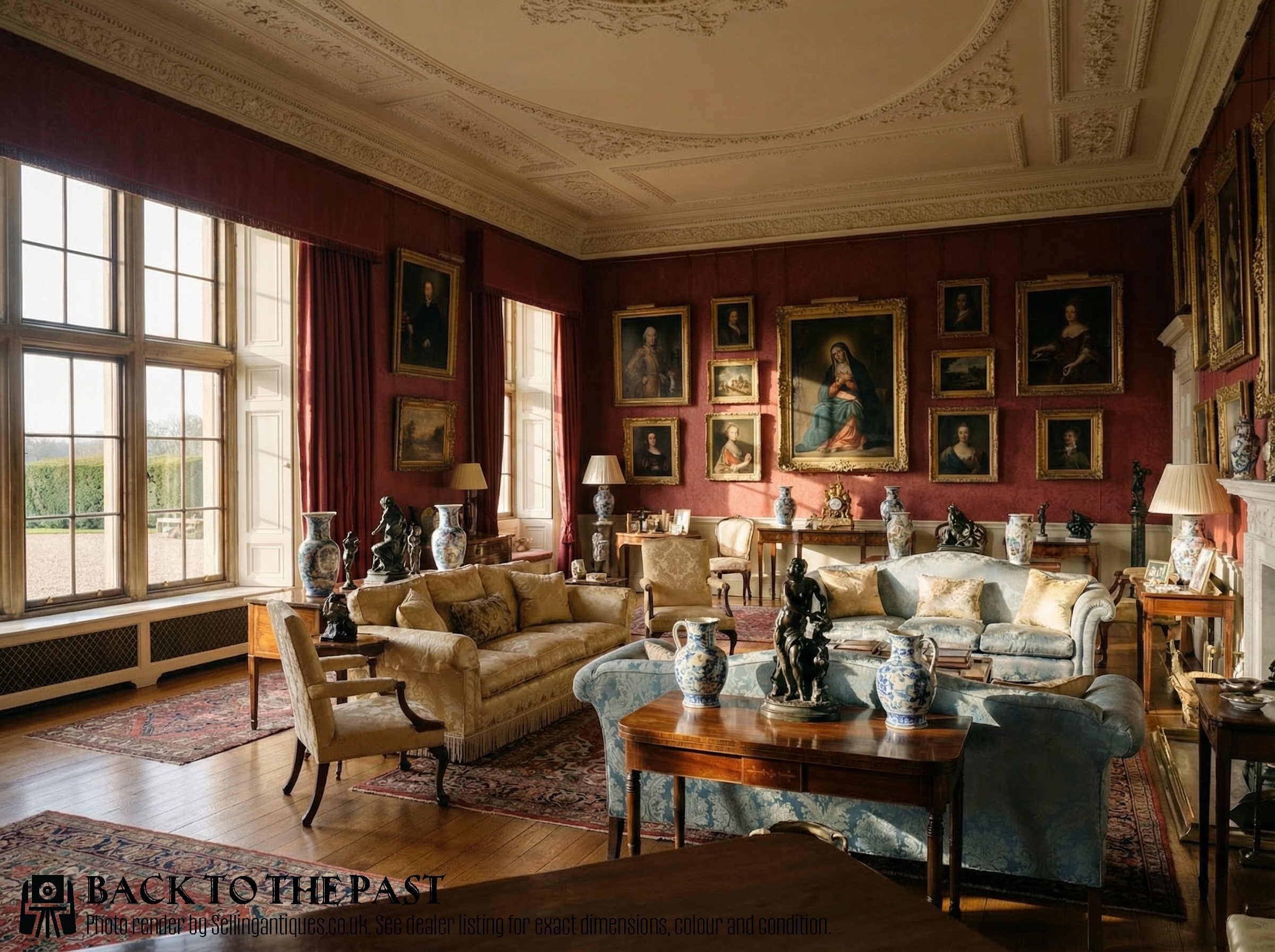
Materials and Construction Techniques
Makers built these pieces using solid and veneered rosewood, frequently selecting highly figured grain for the primary surfaces. This dark timber was often enhanced with contrasting stringing and banding in satinwood, boxwood, and mahogany.
Brass inlay forms a major decorative technique across the period, appearing as intricate geometric lines or scrolling motifs set directly into the rosewood top. Ormolu mounts, brass sabots, and brass castors frequently complete the lower framework of pedestal and pillar supports.
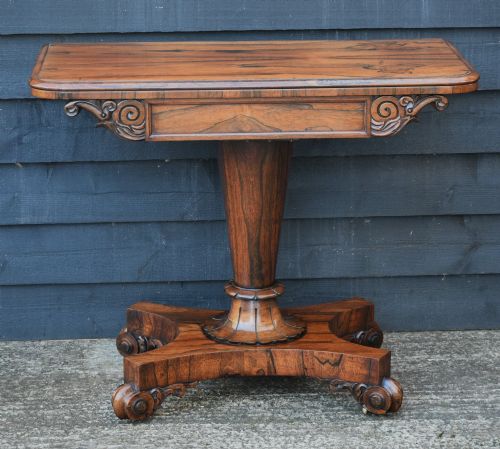
Internal structures rely on clever joinery to support swivel and fold-over tops, sometimes concealing lined playing surfaces of baize or fabric. Pedestal bases commonly feature carved scrollwork, lyre shapes, or dolphin motifs supported by quadruple or platform feet.
Regency Rosewood Games Table Retail Price Guide 2026
Typical asking prices for regency rosewood games table among the pieces listed under this phrase on Sellingantiques today, from the lower quarter to the upper quarter. They describe what is for sale here now, not the wider market.
Some tables hide secret compartments beneath the fold-over top, designed to swallow lost gaming counters and wandering shillings.
Separating Ordinary from Exceptional
The upper tier of these tables reveals itself through the choice of timber and the precision of its grain matching across the fold-over leaves. Superior examples display intensely figured rosewood that has matured with a rich, deep lustre rather than a flat, uniform brown.
The integration of decorative elements dictates much of the distinction between standard and high-end pieces. Finely hand-cut brass inlay and crisp carving on the pedestal bases separate ambitious workshop output from routine commercial production.
Structural integrity and the smoothness of the pivoting or folding mechanism demonstrate the original maker's skill. Tables that retain their original brass castors, internal compartments, and unwarped tops command greater appreciation among collectors.
George Bullock·Gillows·William Trotter
The Regency Rosewood Games Table Glossary
- Crossbanding
- A border of veneer laid around the perimeter of a table top with the grain running perpendicular to the central panel. This technique frames the primary wood and adds visual depth.
- Baize
- A coarse woolen fabric traditionally used to line the playing surfaces of card tables. It provides a soft, non-slip texture designed for dealing cards.
- Ormolu
- Gilded bronze used for decorative mounts and accents on furniture. It adds metallic contrast against dark rosewood surfaces.
- Sabot
- A metal sleeve or shoe fitted to the foot of a table leg. Brass versions protect the lower timber and frequently incorporate castors.
- Quartetto
- A matched set of four graduating tables that nest inside one another. Regency examples sometimes integrate chess boards into the top surface.
Regency Rosewood Games Table: Frequently Asked Questions
What is a regency rosewood games table used for?
These tables served as versatile furniture for domestic entertainment, specifically card games, chess, and writing. When closed, they functioned as console or side tables against a drawing room wall.
Opening the fold-over or swivel top revealed a lined playing surface ready for evening gatherings. Some variants also incorporated sewing compartments or writing drawers for daytime utility.
How do I tell a Regency table from William IV?
Regency pieces generally exhibit lighter proportions, refined brass inlay, and elegant pedestal supports such as lyres or slender columns. The aesthetic leans towards classical restraint and delicate detail.
William IV furniture tends to be heavier and more robust, featuring bolder architectural elements and larger carved scroll or dolphin bases. The rosewood used in the later period often appears slightly darker and denser.
How do I care for rosewood furniture?
Keep rosewood tables away from direct sunlight and heat sources to prevent the wood and veneers from drying out or splitting. Maintaining stable room humidity preserves the integrity of the timber and brass inlay.
Dust gently with a soft cloth and avoid commercial silicone polishes. Traditional wax applied sparingly helps maintain the natural lustre of the polished surface.
Were these tables made in pairs?
Makers occasionally produced matching pairs of card tables to stand symmetrically in large Georgian and Regency reception rooms. One table remained folded against the wall while its partner mirrored it on the opposite side.
Finding a matched pair today is unusual, as surviving pieces often became separated over centuries of changing ownership and interior decoration.