




Victorian Rosewood Card Table
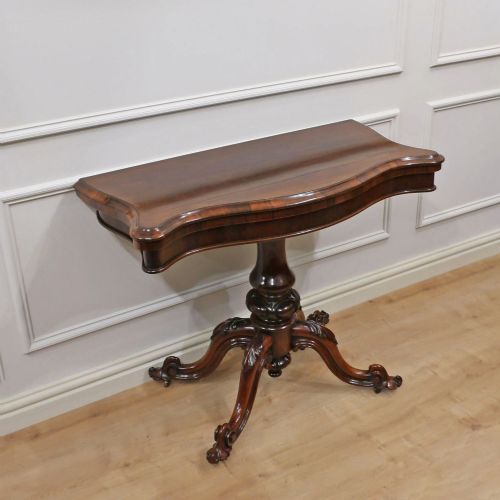
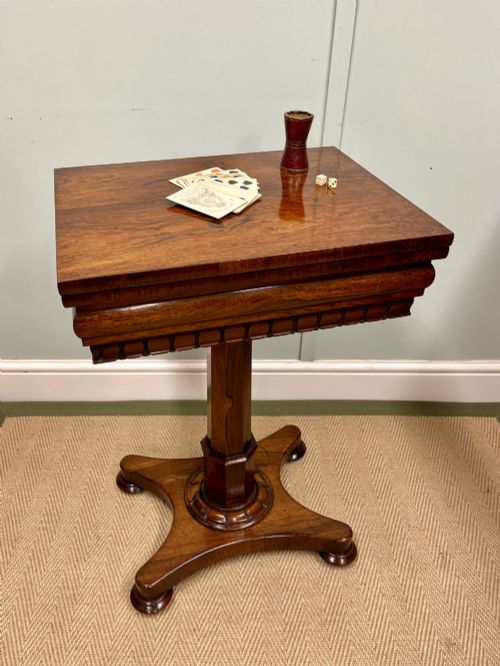
A victorian rosewood card table offers a hinged top that folds open to reveal a baize-lined playing surface, combining everyday utility with formal nineteenth-century drawing room elegance.

Forms and Origins
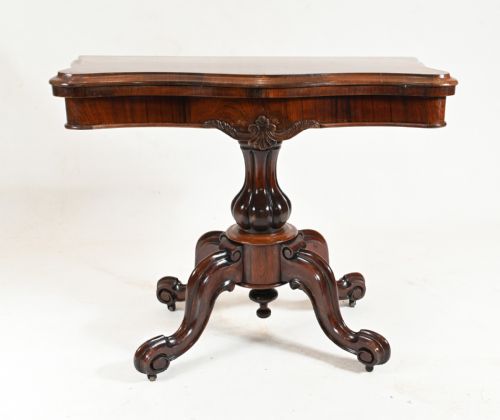
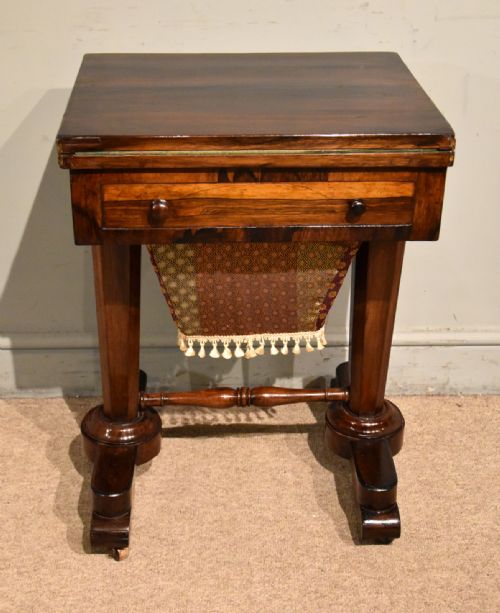
A victorian rosewood card table typically manifests as a fold-over or turnover table designed for parlour games and card playing in nineteenth-century homes. The selection encompasses standard fold-over designs alongside specialised envelope card tables and demi lune tea tables.
Pieces span the nineteenth century, including Regency and William IV periods, with specific examples dated around eighteen-sixty. Makers such as Gillows appear in the record alongside standard cabinet work from the broader Victorian era.
Variations in shape include serpentine fronts, console configurations, and pedestal supports. The objects served a dual purpose in the domestic interior, functioning as console or side tables when closed and full gaming surfaces when opened.
Materials and Construction
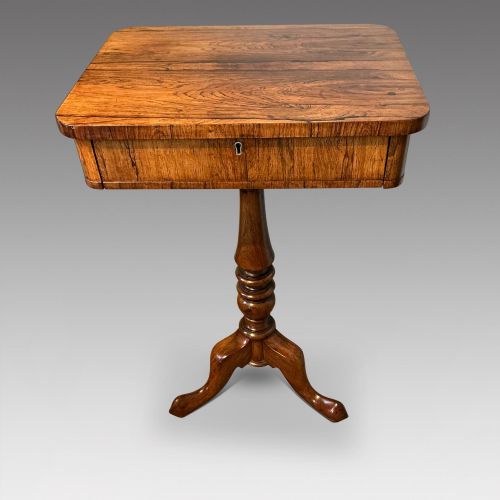
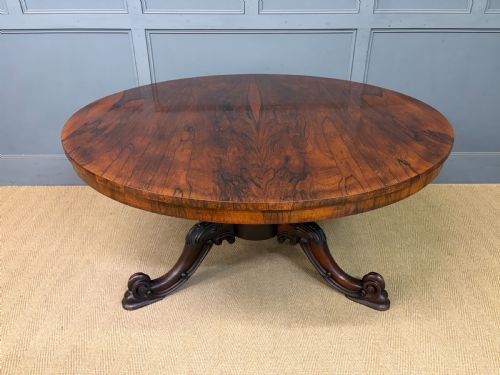
Construction relies heavily on solid and veneered rosewood, selected for its rich grain and deep colour. Selected examples incorporate intricate wood inlay to enhance the primary surfaces.
Mechanisms permit the top to fold over or swivel open on a pivot, supported by a central pedestal or carved pillar. Bases often feature platform feet or scroll-carved supports consistent with nineteenth-century cabinet-making techniques.
Retail Price Guide 2026
Typical UK retail prices for victorian rosewood card table, calculated from the Sellingantiques database of over a million retail prices indexed since 2003. This retail price guide relies exclusively on Sellingantiques data; no external sources or auction records are used, so the figures do not describe the wider market.
The archive records rosewood card tables spanning the nineteenth century, including specific pieces from the Regency and William IV periods.
Judging Quality
The distinction between standard examples and superior pieces rests on the choice of figured timber and the crispness of carved details. Finer items display meticulously matched grain patterns across the folding leaves and sophisticated inlay work.
Structural integrity of the pivoting mechanism and the smoothness of the fold-over action separate better-executed tables from simpler workshop production. Cabinet-making attribution, such as work bearing the Gillows mark, elevates the standing of an individual piece.
Gillows
The Victorian Rosewood Card Table Glossary
- Rosewood
- A dense, dark timber with distinct grain patterns used extensively in nineteenth-century cabinet making. It provides both structural stability and a decorative exterior finish.
- Envelope card table
- A square table with four triangular flaps that fold diagonally inwards to cover the playing surface. When opened, these flaps resemble an open envelope.
- Demi lune
- A half-moon or semicircular shape applied to tables designed to stand flat against a wall. This profile appears on both tea and card variants.
- Baize
- A coarse woollen felt material traditionally used to line the playing surface of card tables. It provides a soft, non-slip texture for handling cards.
Frequently Asked Questions
How do you open a card table?
The hinged top rotates on a pivot or lifts and folds over to double the surface area. A pivoting wooden gate-leg or a swing-action frame beneath then moves outward to support the opened leaf.
This movement requires steady handling to protect the nineteenth-century hinges and internal wooden supports from strain.
What were envelope tables used for?
Envelope tables functioned as compact centre or lamp tables when closed, occupying minimal space in a Victorian drawing room. Opening the four triangular flaps revealed a baize-lined interior designed specifically for card games.
They offered a clever space-saving solution that concealed gaming paraphernalia until guests gathered for evening entertainment.
How do I identify a Regency period piece?
Regency pieces often display classical architectural influences, heavier pedestal bases, and distinct brass mounts or inlay. The proportion tends to be robust, reflecting furniture design from the early decades of the nineteenth century.
Comparing the support structure and leg configuration against standard Victorian styles helps clarify the production date.
Where should I place a card table at home?
These tables sit well against a drawing room wall or in a hallway as a console when closed, displaying decorative objects on top. Opening them requires clearance around the piece to accommodate the unfolded leaves and seated players.
Direct sunlight should be avoided to protect the rosewood veneer and the coloured baize lining from fading.