

Carved Rosewood Accent Table
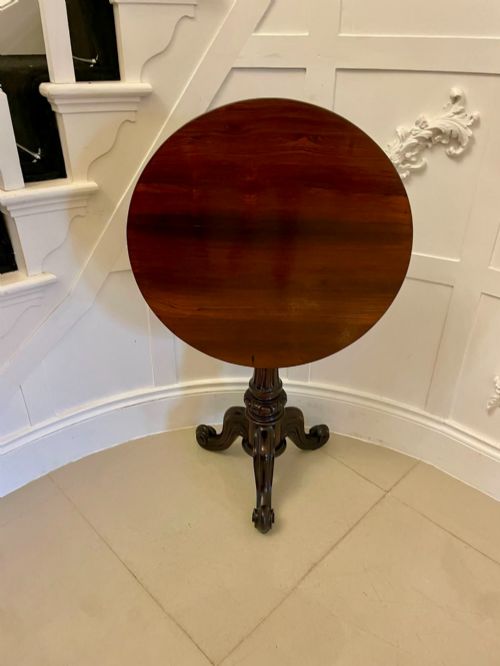
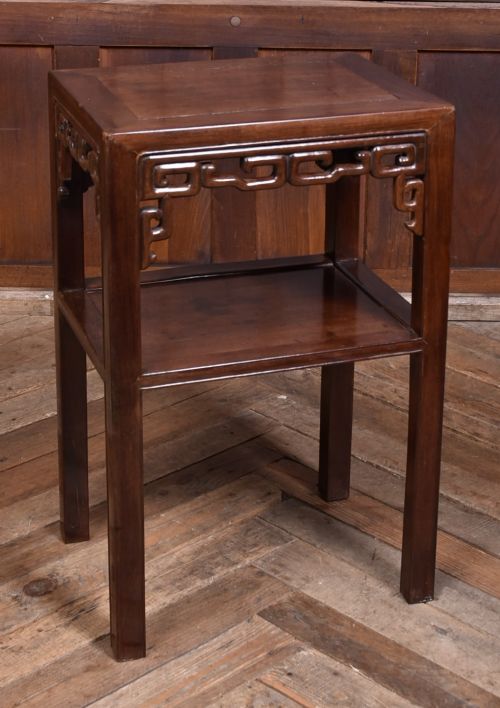
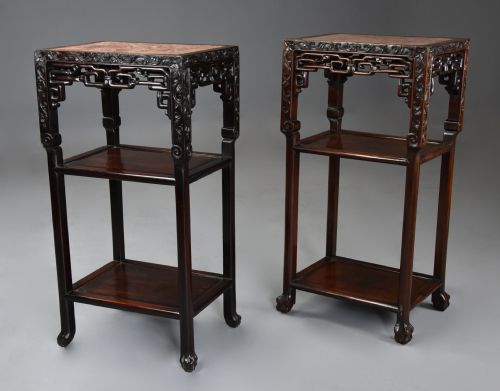
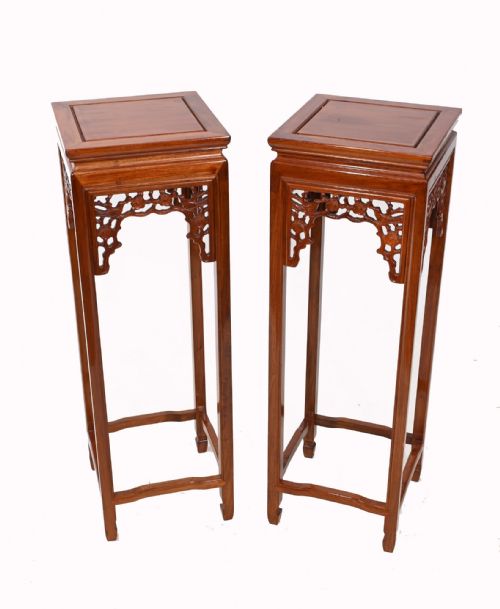
A carved rosewood accent table brings dense grain and intricate relief work into a room, serving as a sturdy perch for lamps or plants.
Carved Rosewood Accent Table
Every carved rosewood accent table follows distinct regional traditions, spanning Victorian British workshops, Anglo-Indian centres, and Chinese export ateliers. These pieces emerge as side tables, occasional tables, plant stands, and low coffee tables designed for domestic utility.
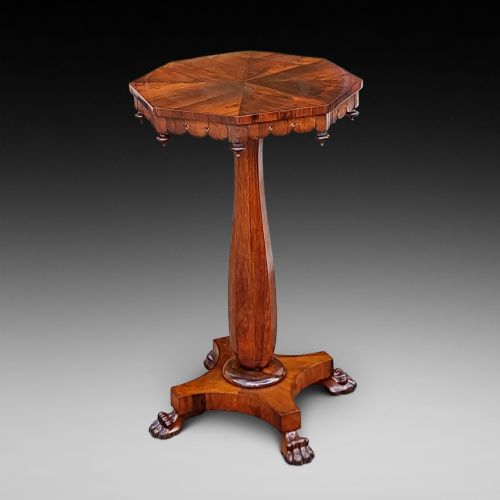
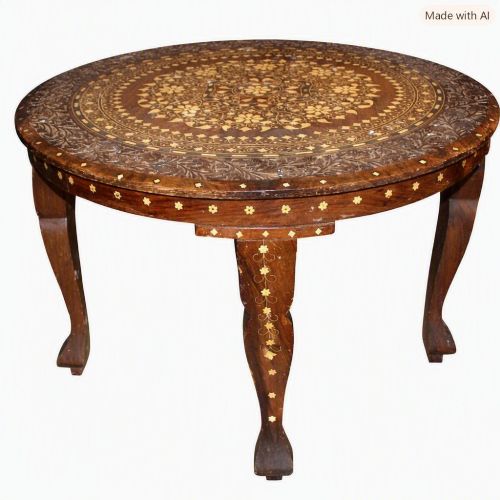
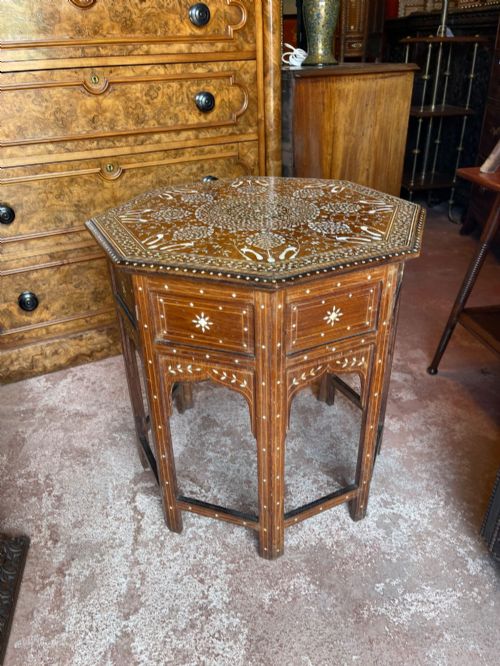
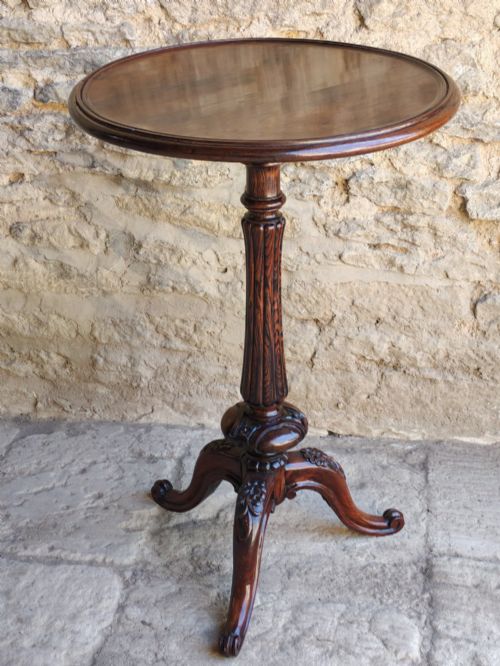
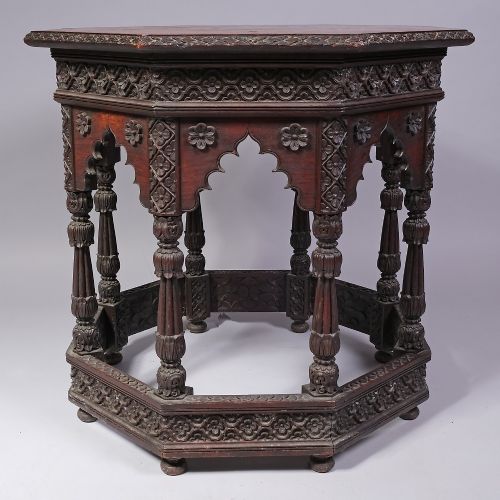
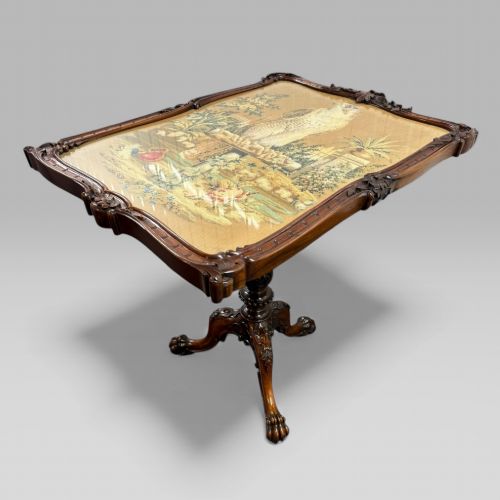
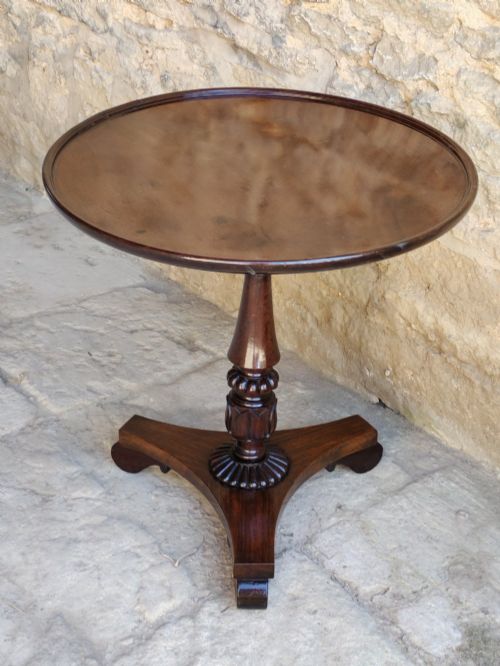
The most frequent encounter on this page is the nineteenth-century occasional or side table, often displaying circular or octagonal tops supported by carved pedestals or tripod legs. Makers across different continents adapted the dense tropical timber to suit local aesthetic preferences, resulting in deeply carved floral motifs or geometric structures.
Origin points range widely from British domestic cabinetmakers working in the Regency and Victorian idioms to specialised craftsmen in Hoshiarpur and various Chinese provinces. Each regional variant employs specific structural proportions and characteristic carving depths that identify its geographic source.
Materials and Construction
Construction relies upon dense rosewood and related hardwoods, selected for their structural stability and capacity to hold razor-sharp carved details. Artisans joined components using traditional joinery methods, allowing the heavy timber to endure decades of use without warping.
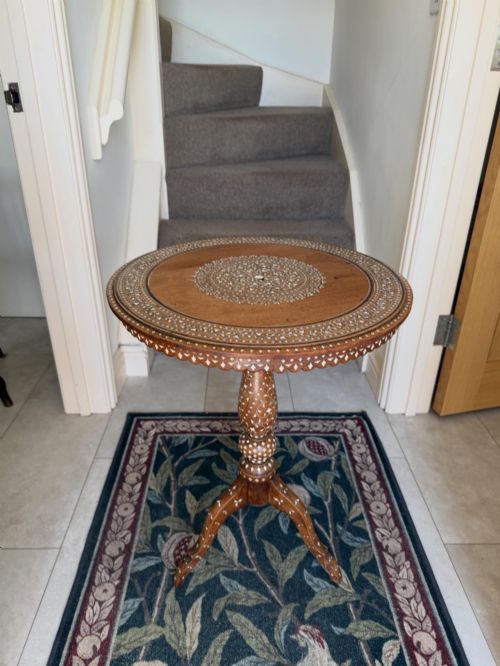
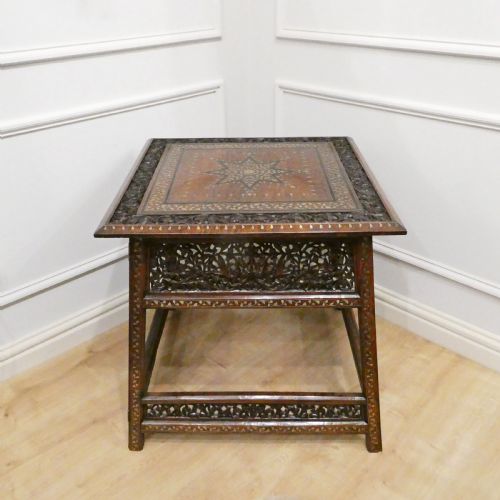
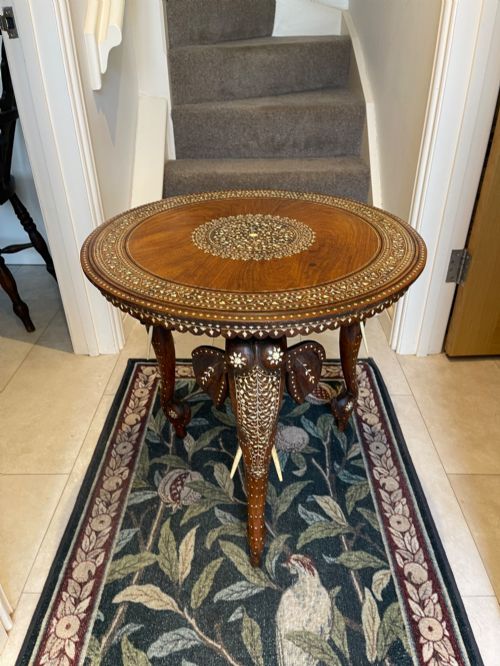
Surface ornamentation frequently incorporates contrasting elements such as bone, mother-of-pearl, and brass wire inlay set flush into the dark ground. Marble inserts appear atop plant and vase stands to provide a cool, water-resistant surface alongside carved wooden surrounds.
Carving techniques vary from shallow incised leaf motifs to deeply undercut figures of dragons and elephants that project boldly from the furniture frame. Skilled hands executed these reliefs entirely by hand using specialised chisels and gouges before finishing the wood with traditional polishes.
Listings span the nineteenth and early twentieth centuries, featuring Victorian, Regency, and Edwardian periods alongside Qing Dynasty and Anglo-Indian styles.
Distinction in Craft
Quality rests upon the crispness of the carving and the depth of relief work across the timber surface. Superior examples exhibit sharply defined foliage, animals, or geometric patterns where every edge remains distinct rather than softened by excessive sanding or thick finishing coats.
The integrity of inlay work separates standard productions from exceptional pieces, particularly where bone or mother-of-pearl sits flush and secure within tight channels. Well-executed tables maintain structural balance and alignment between the top and the supporting pedestal or legs.
The selection of the rosewood itself dictates much of the visual weight, with rich natural grain patterns and uniform colour distribution enhancing the overall presence of the furniture. Master workshops utilised mature timber sections that accepted intricate detailing without splitting along the grain.
Gillows·Liberty and Co
The Carved Rosewood Accent Table Glossary
- Rosewood
- A dense, heavy timber characterised by deep brown tones and distinct grain patterns. It provides a durable base for intricate carving and polishing.
- Hoshiarpur
- A North Indian centre renowned for intricate woodwork. Artisans there specialised in dense surface carving and delicate bone inlay.
- Jardiniere Stand
- A tall table or pedestal designed to support heavy plant pots or floral arrangements. These pieces typically feature waterproof tops made of marble or inset tile.
- Tilt Top
- A tabletop mechanism hinged to the central pillar so it can pivot vertically when not in use. This clever design saved valuable floor space in nineteenth-century interiors.
- Hongmu
- A traditional Chinese term translating to red wood, encompassing dense tropical hardwoods including various species of rosewood. Furniture made from this material often displays archaistic motifs or pierced relief carving.
Carved Rosewood Accent Table: Frequently Asked Questions
How do I identify an Anglo-Indian table?
These tables are recognised by dense, all-over floral carving and contrasting bone or mother-of-pearl inlay work. They frequently feature folding spider legs or octagonal tops.
Originating from workshops in regions like Hoshiarpur, these pieces reflect a distinct blend of traditional Indian craftsmanship and British Victorian furniture forms.
What is a Chinese export rosewood table?
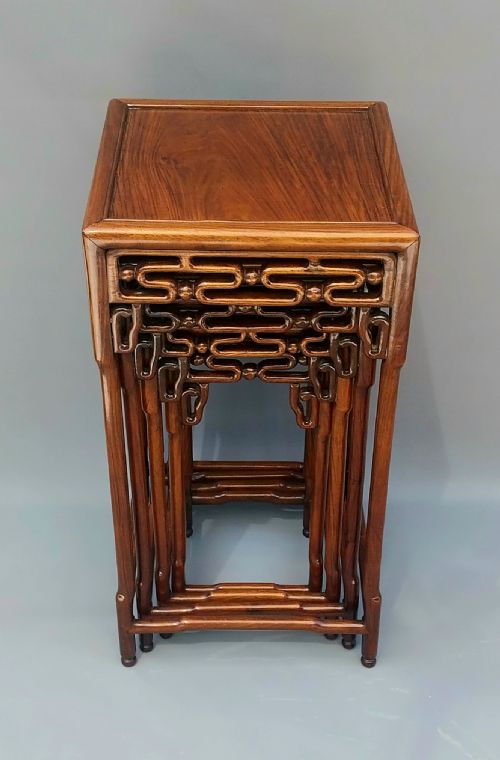
Chinese export pieces combine traditional joinery with decorative motifs such as dragons, prunus blossom, or geometric lattice panels. Many incorporate inset marble tops designed to hold heavy vases or plants.
These tables were produced for Western markets during the nineteenth century, utilising dense local hardwoods often referred to as hongmu.
Where should I place an accent table?
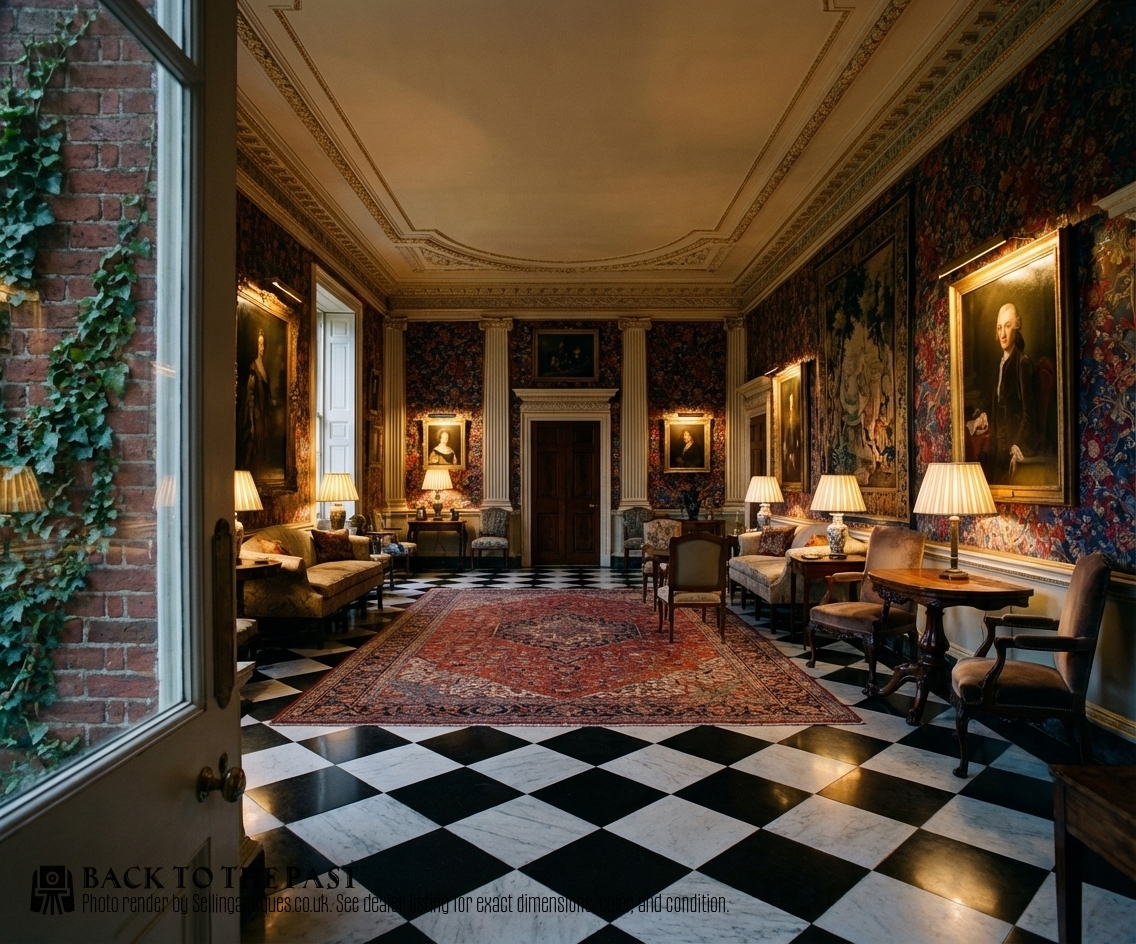
An accent table functions well beside a seating arrangement to hold a lamp, book, or small decorative object. Their modest proportions allow them to fit into hallways, corners, or tight spaces.
Because many examples feature finished surfaces on all sides, they can also stand freely in the centre of a room as a display surface.
How do I care for antique rosewood?
Maintain the timber by dusting regularly with a soft, dry cloth and avoiding placement near direct heat sources or strong sunlight. Proper humidity levels prevent the wood and any inlaid elements from drying out.
Occasional application of appropriate wax polish helps preserve the deep lustre of the rosewood grain without building up a heavy film.