




Rococo Revival Tea Table
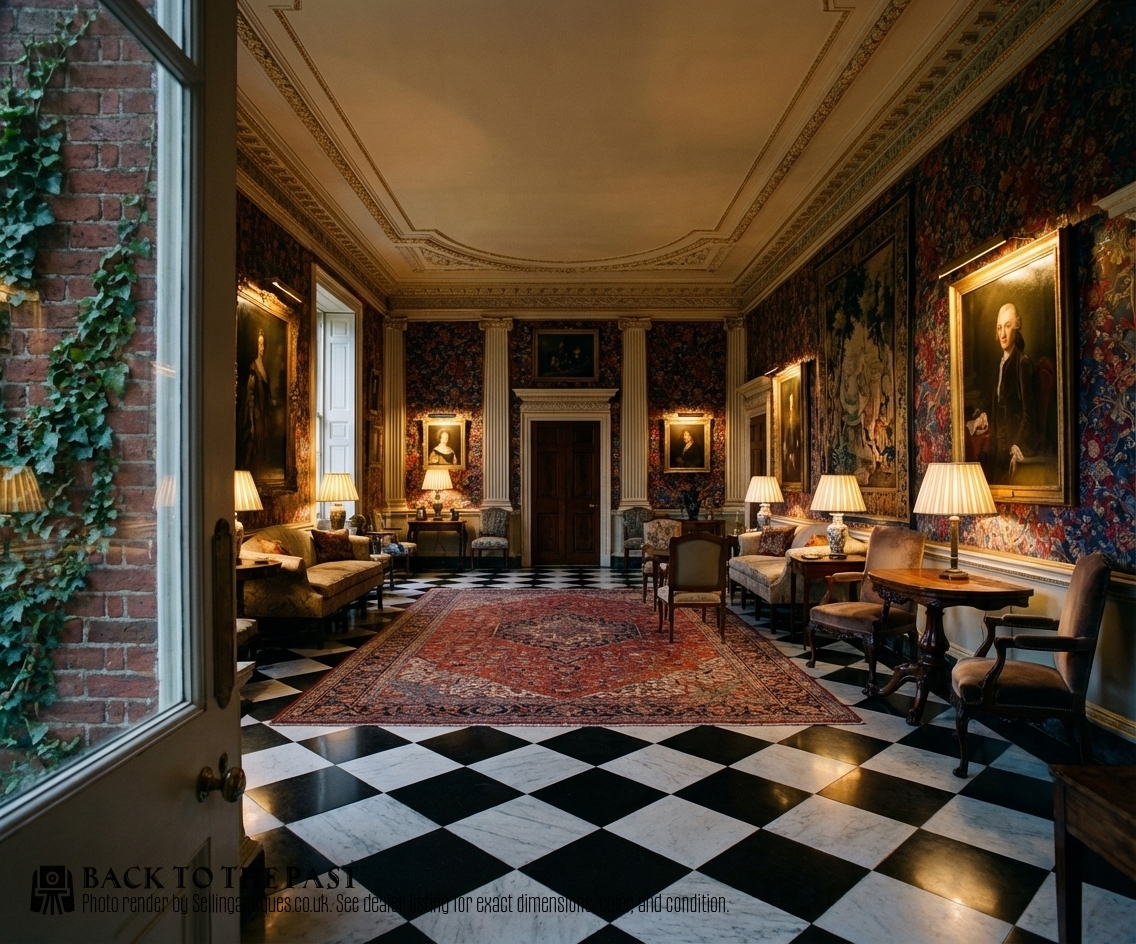
A rococo revival tea table brings curvilinear French flair and rich timber into a room.
Rococo Revival Tea Table
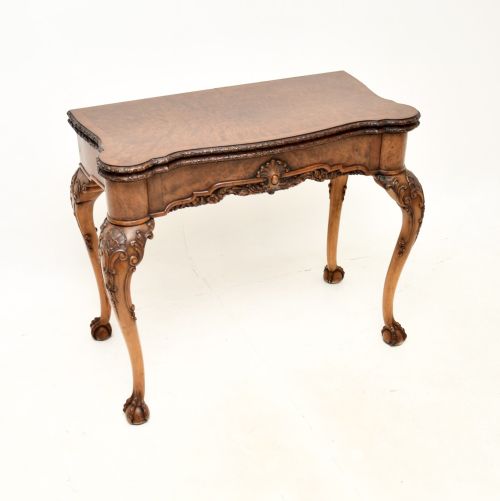
A rococo revival tea table draws on eighteenth-century French design, reappearing across the nineteenth century and into the twentieth in various European workshops. These pieces function as occasional, centre, or games tables, frequently featuring fold-over tops designed for cards and tea.
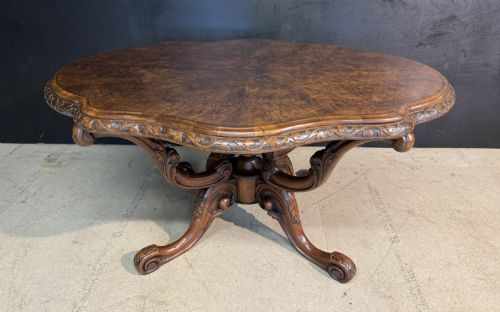
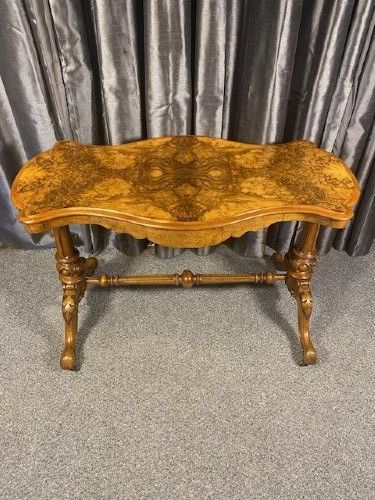
The versions most commonly found here date from the Victorian era, utilising dense timbers like burr walnut, rosewood, and mahogany. They often display serpentine edges and complex shapes suited to formal reception rooms.
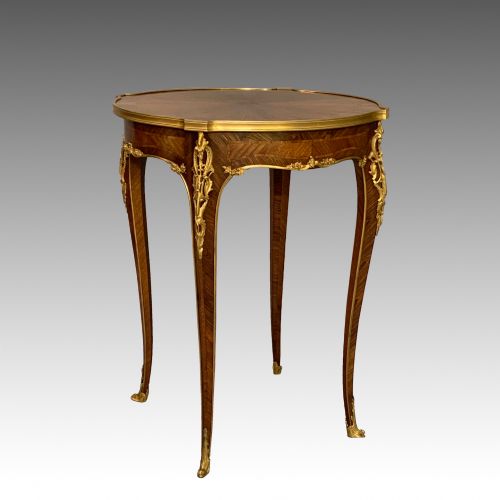
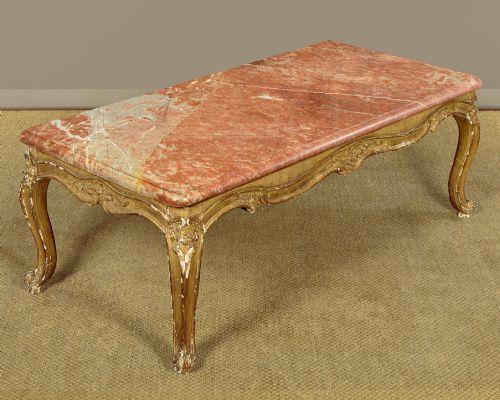
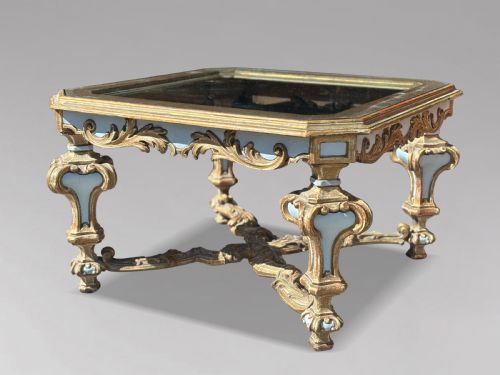
Originating across Britain, France, Sweden, and Denmark, these tables reflect diverse regional interpretations of the revived Louis XV aesthetic. Makers applied marquetry inlay, giltwood, or ormolu mounts to enhance the ornate silhouettes.
How they were made
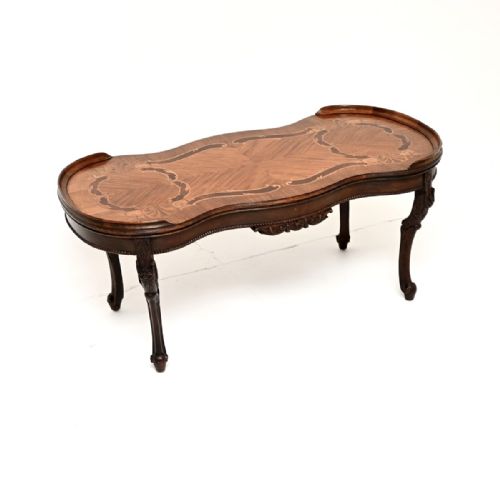
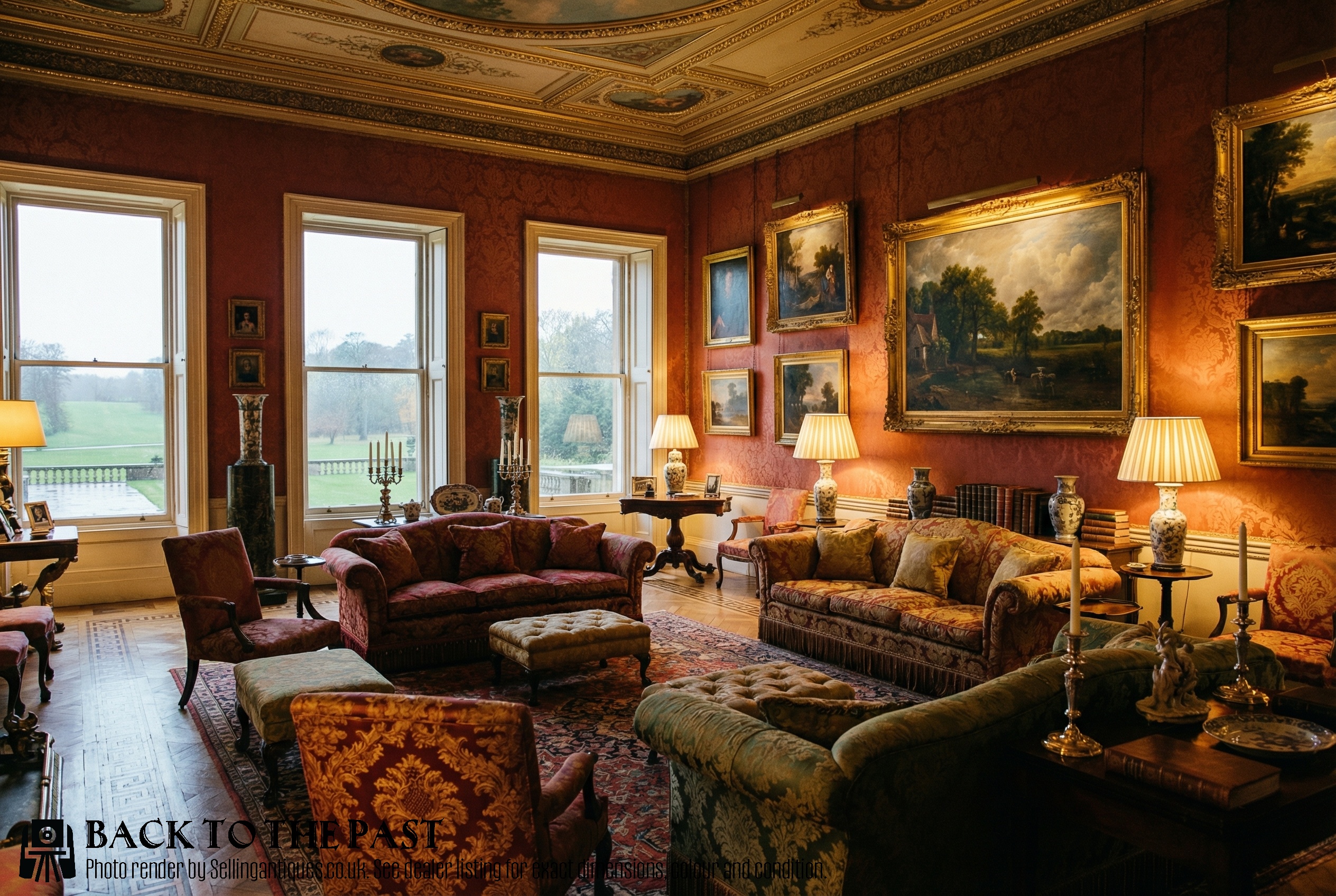
Cabinet makers built these tables using robust carcases of mahogany or walnut, overlaid with decorative veneers such as burr walnut, kingwood, and satinwood. Marquetry inlay added floral or geometric patterns across the top surfaces.
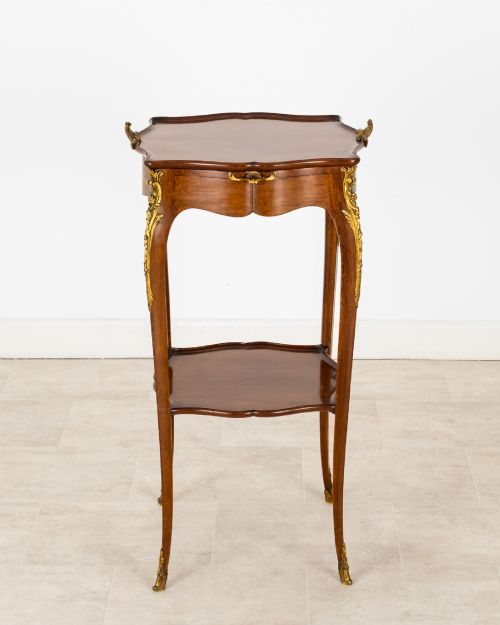
Ormolu mounts and brass detailing were cast and chased to highlight the curved corners and cabriole legs characteristic of the style. Carved walnut elements provided structural support while maintaining the flowing lines demanded by the revival.
Rococo Revival Tea Table Retail Price Guide 2026
Typical asking prices for rococo revival tea table among the pieces listed under this phrase on Sellingantiques today, from the lower quarter to the upper quarter. They describe what is for sale here now, not the wider market.
Butterfly shapes flutter into the drawing room via ingenious folding card tables.
What varies in quality
Quality rests in the selection of the timber, particularly the grain pattern of the burr walnut or the precision of the marquetry inlay. Tables featuring finely figured veneers and hand-carved details stand apart from plainer production.
The complexity of the form dictates distinction, with serpentine edges, butterfly shapes, and robust ormolu mounts indicating higher craftsmanship. Maker attribution, such as work associated with François Linke or Joseph-Emmanuel Zwiener, further defines the upper tier.
Joseph-Emmanuel Zwiener·François Linke
The Rococo Revival Tea Table Glossary
- Ormolu
- Gilt bronze mounts applied to furniture for decoration. This technique was widely utilised in French cabinet making to accentuate curved corners.
- Marquetry
- Decorative veneer patterns formed by fitted pieces of wood. Craftsmen used various coloured timbers to create intricate floral or geometric designs.
- Serpentine
- A curved line that waves inward and outward. This contour frequently appears on the edges of tea and card table tops.
- Cabriole
- A furniture leg that bends outward and then tapers inward. It mimics animal limbs and forms a central feature of the revival style.
Rococo Revival Tea Table: Frequently Asked Questions
What is a rococo revival tea table used for?
These tables served primarily for entertaining guests, holding tea services or functioning as games and card tables with fold-over tops.
In period interiors, they occupied prominent spaces in drawing rooms as both functional furniture and decorative centrepieces.
How do I identify a Victorian piece?
Victorian examples frequently employ burr walnut or rosewood, displaying characteristic serpentine edges and carved cabriole legs.
Many pieces from this period incorporate hinges for fold-over card surfaces or lower tiers for display.
Are all these tables French?
While the style originates from French Louis XV design, the listings include pieces made in Britain, Sweden, and Denmark.
Cabinet makers across Europe reinterpreted the aesthetic using local timbers such as Swedish birch alongside imported mahogany and walnut.
What timber was most commonly used?
Walnut and burr walnut dominate the selection, offering rich grain patterns well suited to veneered marquetry decoration.
Mahogany and rosewood also appear frequently, particularly in earlier nineteenth-century examples and folding card tables.