
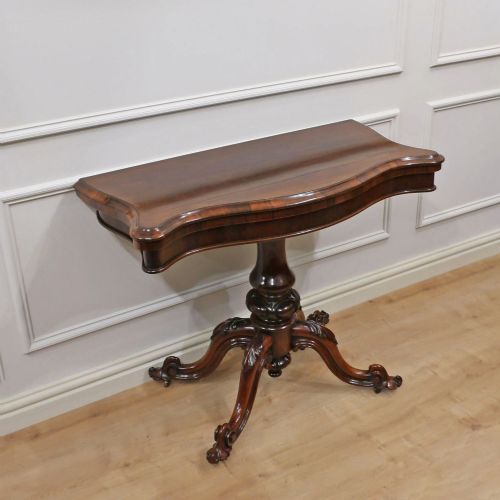
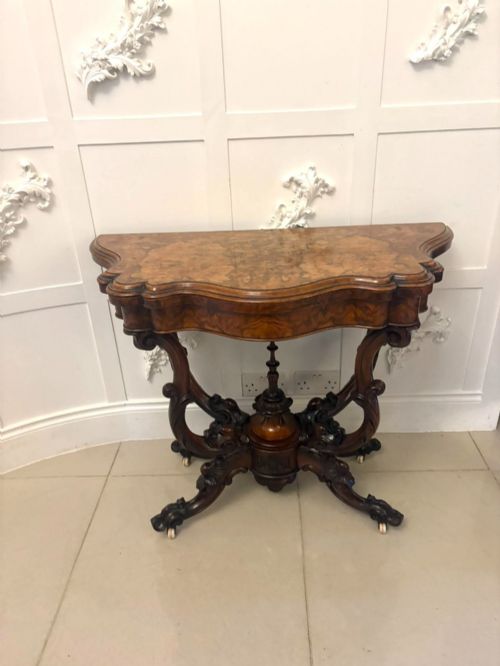
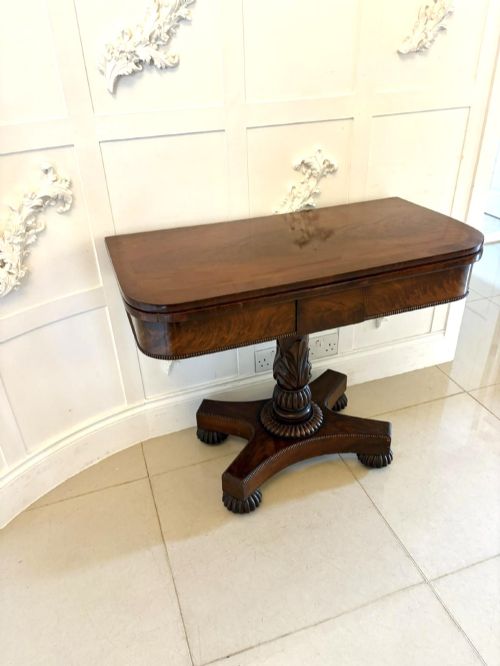
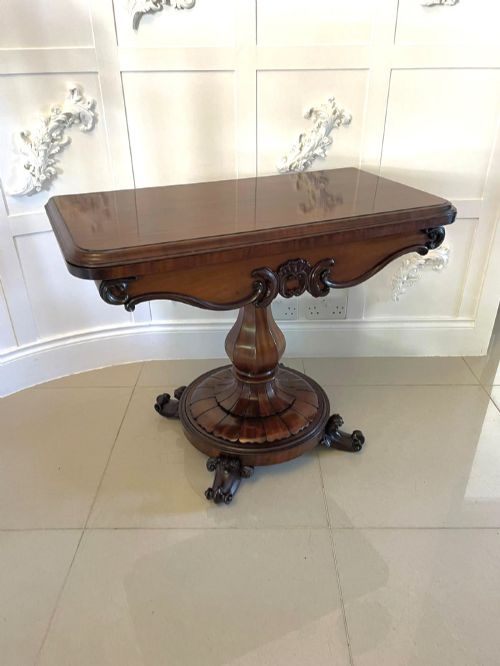

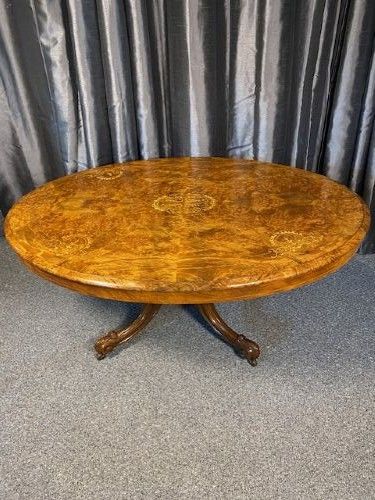
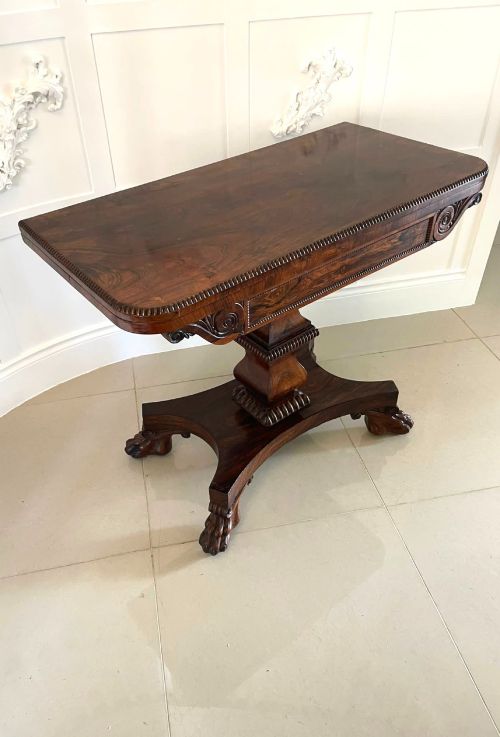
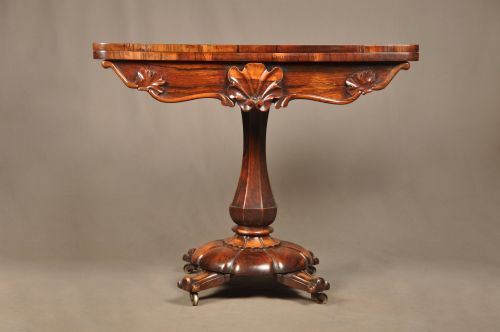
Carved Pedestal Tea Table
These carved pedestal tea table pieces offer refined timber surfaces and sturdy columns, bringing historic hosting elegance straight to your sitting room.
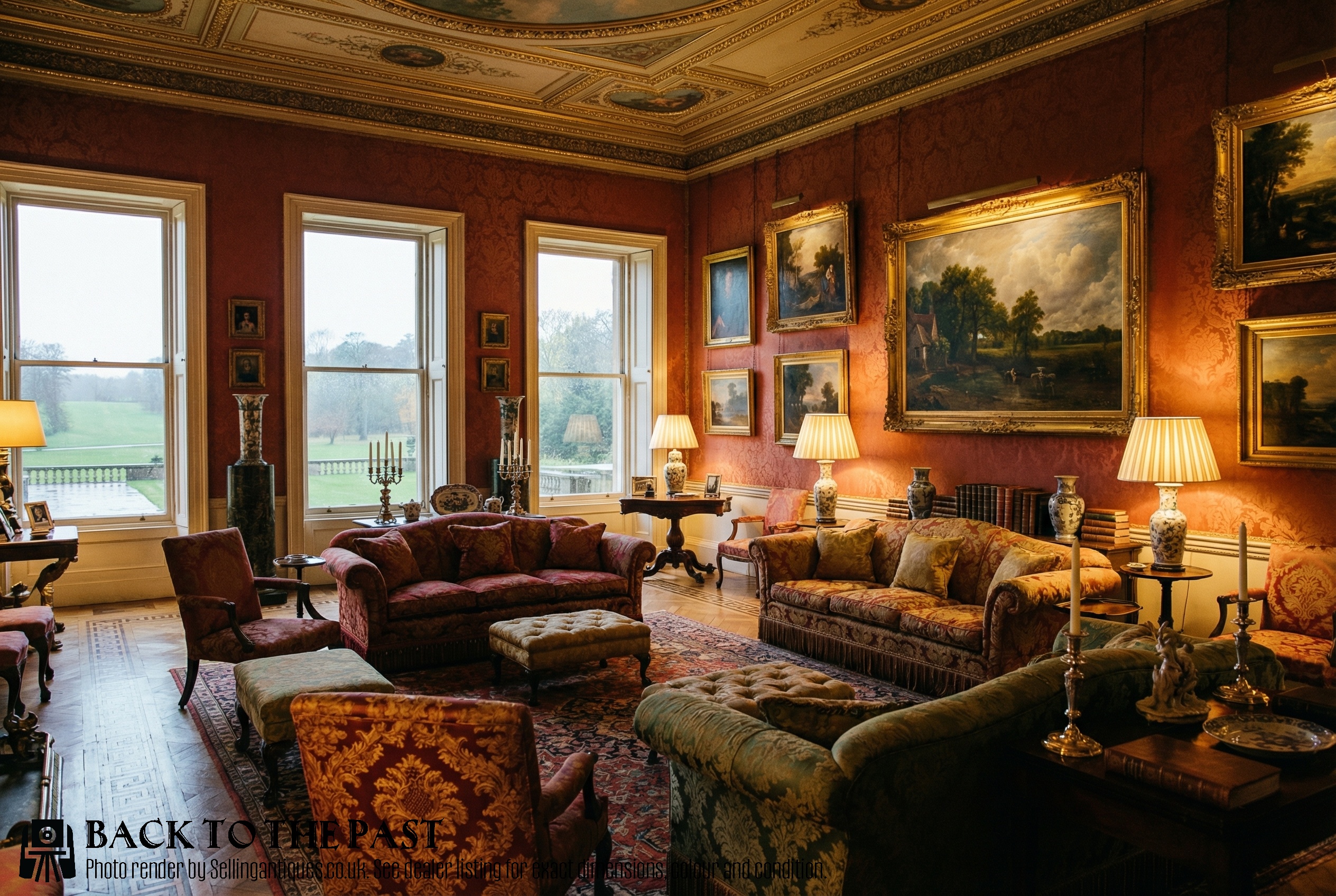
Identifying your carved pedestal tea table
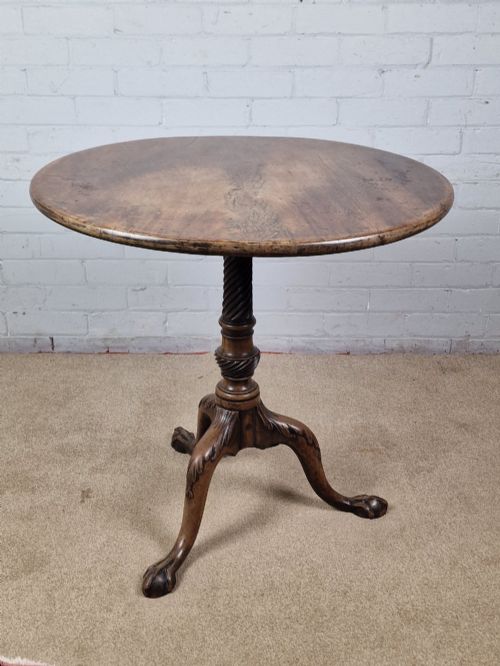
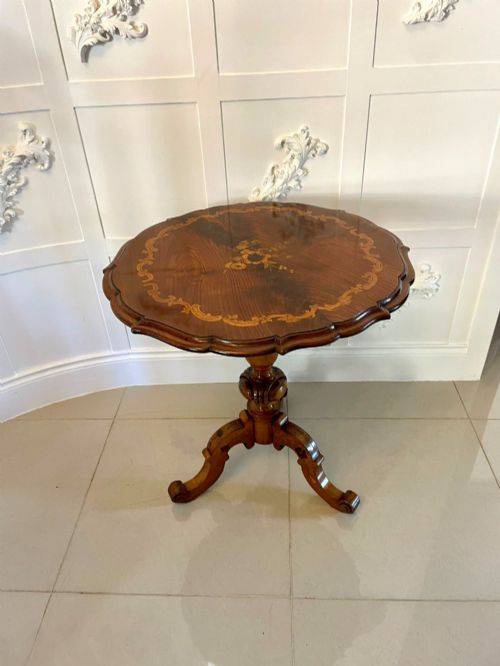
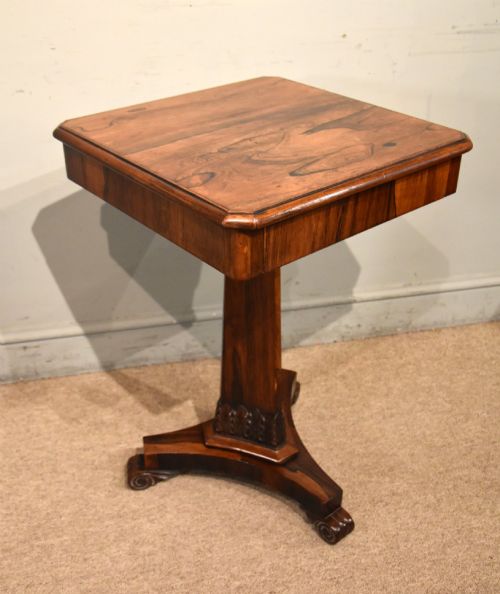
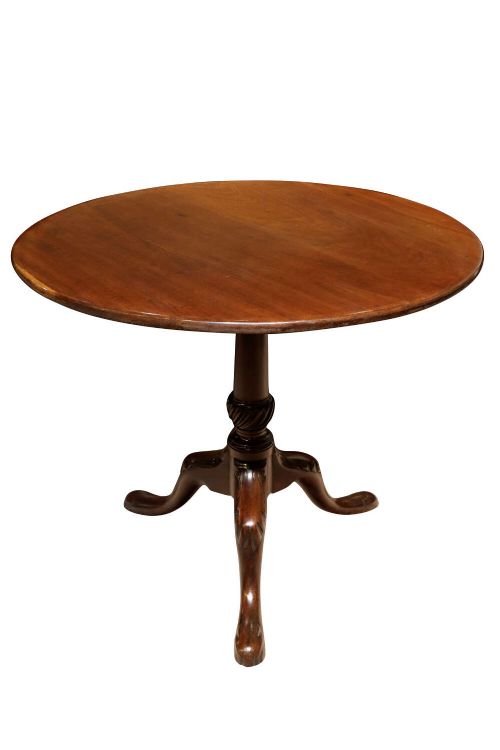
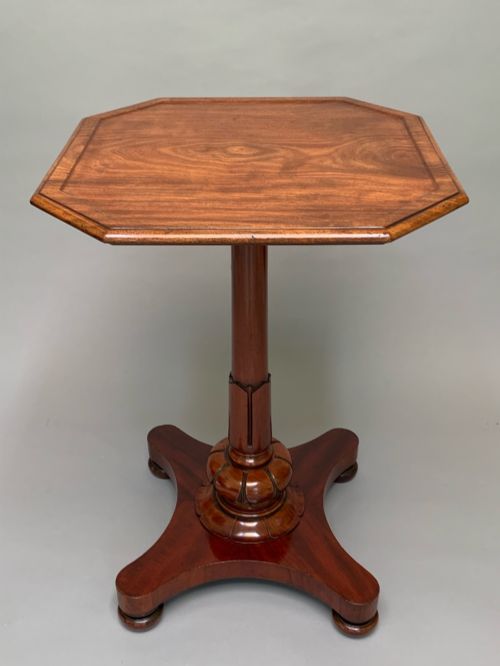
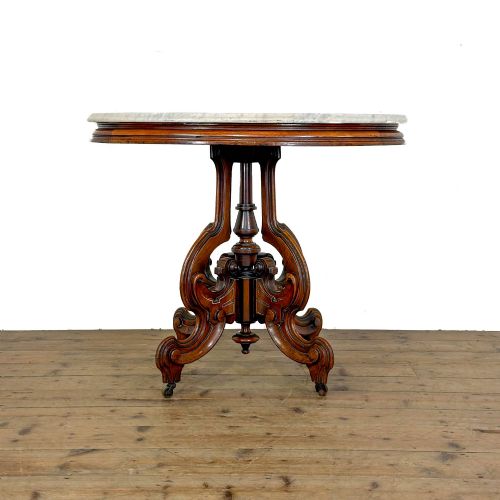
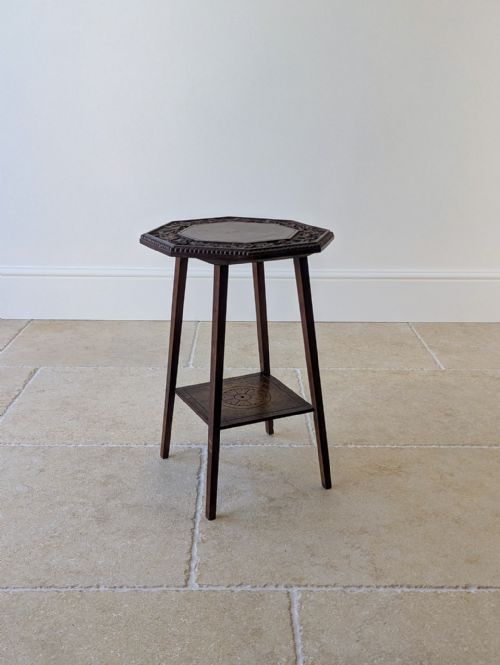
A carved pedestal tea table is a foundational piece of nineteenth century dining and entertaining furniture designed to hold refreshments or display ornaments. When you browse this selection, you encounter forms ranging from standard tea tables and foldover demi lune designs to specialised teapoys and wine tables.
The pieces appearing on this page span the Regency and Victorian eras, alongside objects dated around eighteen fifty. You find examples spanning standard British workshops and specific regional makers such as Scottish and North Indian production.
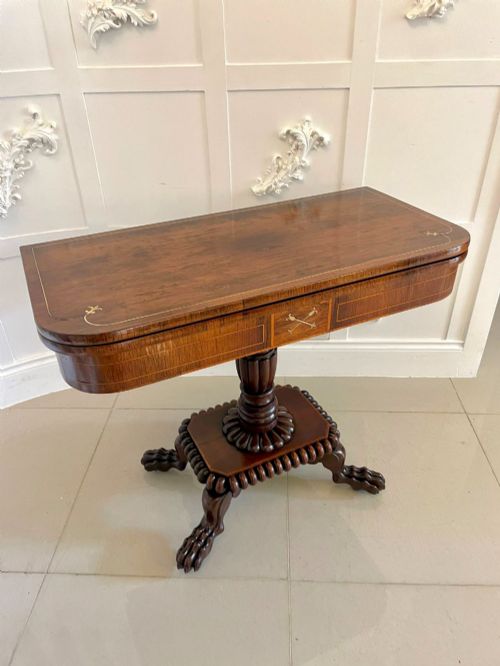
Most items on show take the form of tea tables featuring hinged tops that swivel or fold over for dual use. Alongside these, related pedestal forms like wine tables and storage teapoys complete the selection available to the buyer.
Materials and construction methods
Cabinet makers constructed these tables primarily using dense, figured hardwoods including rosewood, mahogany and teak. These timbers were selected for their rich grain patterns and structural stability when supporting heavy turned or carved central pedestals.
Metal components appear selectively, with brass fittings utilised for castors, hinges or decorative accents on moving parts. Wood carving defines the central columns and borders, executed by hand to create crisp foliate or classical detailing.
Retail Price Guide 2026
Typical UK retail prices for carved pedestal tea table, calculated from the Sellingantiques database of over a million retail prices indexed since 2003. This retail price guide relies exclusively on Sellingantiques data; no external sources or auction records are used, so the figures do not describe the wider market.
Some nineteenth century guests likely balanced their porcelain cups on tables that double as secret tea leaf storage boxes.
Judging the quality of a carved pedestal tea table
The distinction between ordinary and exceptional examples rests upon the depth and sharpness of the carving on the pedestal column. Superior pieces display crisp, undercut foliage and well-proportioned pillar supports rather than shallow, mechanical milling.
Timber selection and grain matching further separate the grades, with top tier examples featuring continuous figured rosewood or mahogany across folding top leaves. Construction integrity, such as smooth swivel mechanisms and tight joints in the pedestal base, determines lasting functional worth.

Gillows·William Trotter
The Carved Pedestal Tea Table Glossary
- Pedestal
- A central vertical column supporting a table top, often heavily turned or carved in nineteenth century furniture. It replaces traditional four-leg configurations to allow easier seating access.
- Foldover
- A hinged table top design that opens out to double the surface area, frequently concealing a shallow well beneath for storing cards or tea accessories. This mechanism defines the standard nineteenth century tea table format.
- Teapoy
- A small box or chest mounted on a central pillar, originally used for storing and blending loose tea leaves before they were served. They often feature fitted interiors with small compartments.
- Demi lune
- A half-moon shaped furniture form designed to sit flat against a wall when closed, opening into a full circle or oval when the hinged leaf is deployed.
- Serpentine
- A curved outline featuring a convex centre flanked by concave ends, creating a flowing, wave-like edge along the front of a table top.
Frequently Asked Questions
What was a teapoy used for?
A teapoy served as a secure storage chest for expensive loose tea leaves, which were kept under lock and key in the parlour during the nineteenth century. The mistress of the house would mix the blends inside before service.
Over time, the form evolved from simple storage boxes into decorative pedestal furniture pieces that matched the surrounding tea tables and parlour suites.
How do I tell Regency from Victorian tables?
Regency pieces often display cleaner classical influences, drawing on ancient Greek and Roman motifs with restrained brass inlay and architectural pedestal turning. They typically date from the early decades of the nineteenth century.
Victorian examples tend to feature heavier proportions, darker rosewood or mahogany timbers, and more exuberant, naturalistic floral carvings around the pillar and base.
Can I use these tables for dining?
Most tea tables are designed for occasional use, holding drinks, books or decorative objects rather than heavy daily meals. The foldover mechanism provides a useful surface for card games or tea service when guests visit.
Placing hot items directly on the polished wood surface should be avoided to protect the historic rosewood or mahogany polish from heat rings.