
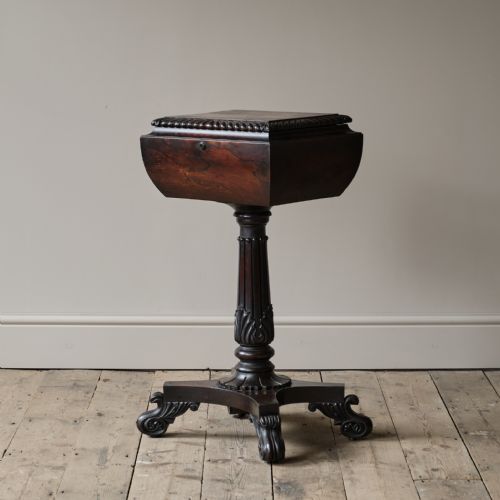


William IV Teapoy
A william iv teapoy is a grand pedestal tea caddy designed to hold precious leaves, offering both functional elegance and striking timber figure.
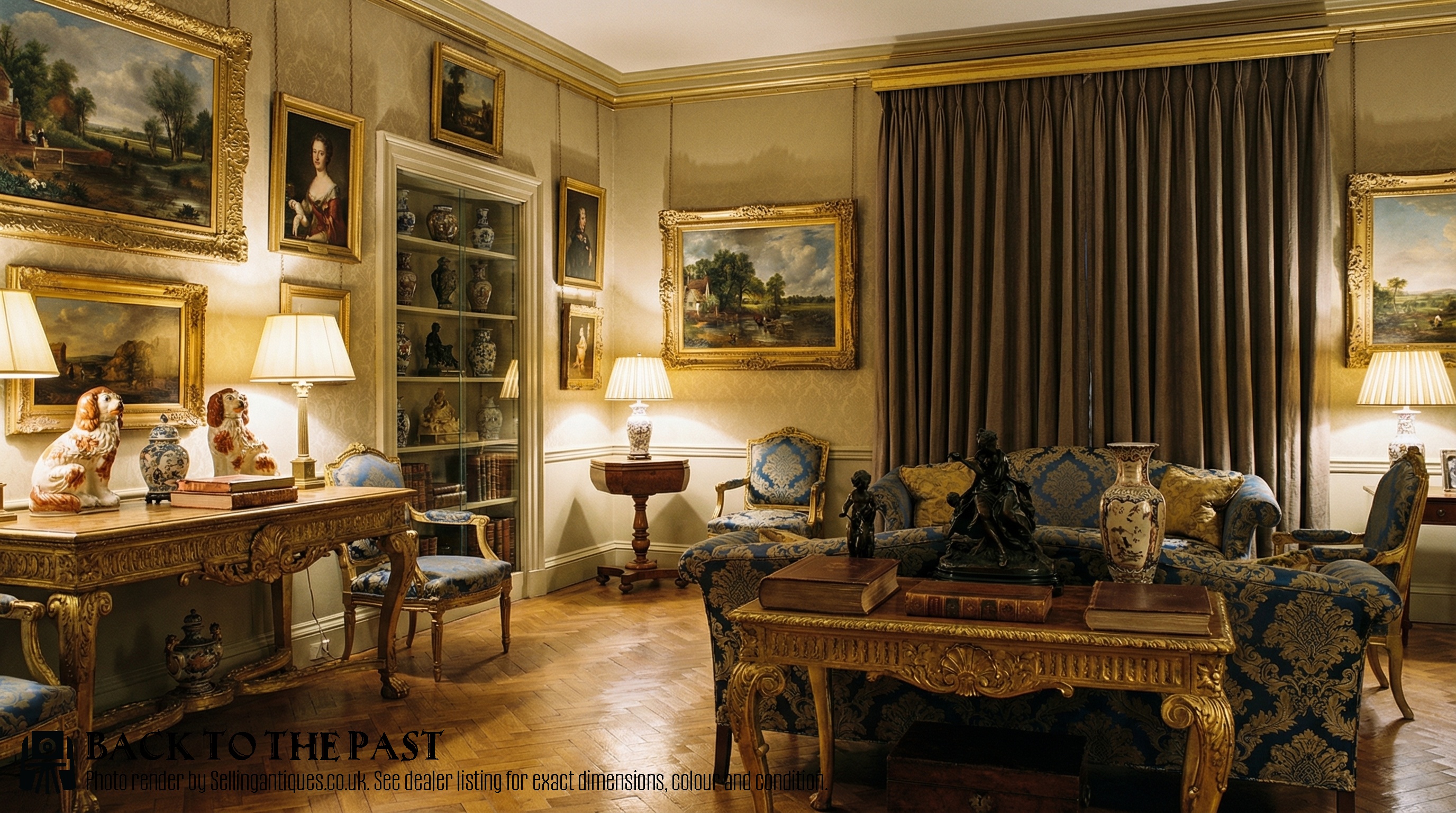
Identifying a William IV Teapoy
A william iv teapoy sits upon a central pedestal base with platform support, typically taking the form of a lidded box designed to store loose tea leaves and mixing bowls. Most examples encountered here belong to the Georgian and Victorian periods, often spanning the Regency era up to the mid nineteenth century.
The dominant timbers used in these pieces include rosewood and flame mahogany, alongside burr maple, burr walnut, burr yew, and hardwood. Forms range from dedicated tea chests with fitted interior compartments to hybrid designs doubling as work boxes or spirits tables.
Materials and Construction
Cabinetmakers constructed these chests from solid hardwoods faced with highly figuredveneers such as flame mahogany and rosewood. Interior compartments frequently feature intricate lidded caddies and small mixing bowls, fitted precisely into the upper box.
Support structures rely on robust central columns, often intricately carved, mounted onto platform bases with brass castors. Burr maple and burr yew were also utilised to provide striking visual contrast across the surfaces.
Retail Price Guide 2026
Typical UK retail prices for william iv teapoy, calculated from the Sellingantiques database of over a million retail prices indexed since 2003. This retail price guide relies exclusively on Sellingantiques data; no external sources or auction records are used, so the figures do not describe the wider market.
Listings feature mahogany, rosewood, burr maple, and burr yew across various forms including work boxes and spirits tables.
Assessing Quality and Execution
Superior examples display exceptional choice of timber veneer, where flame mahogany or burr walnut grain patterns match symmetrically across the lid and sides. Cabinetmaking by renowned workshops exhibits finer precision in the joinery and interior fittings.
The sophistication of the pedestal carving and the quality of the brass hardware distinguish finer pieces from standard production. Fully intact interior fittings, including original mixing bowls and caddy lids, elevate the standing of the piece significantly.
Gillows·Strahan
The William IV Teapoy Glossary
- Teapoy
- A pedestal table featuring a lidded box on top, specifically designed for storing and preparing tea in the nineteenth century. These pieces often include internal caddies and glass mixing bowls.
- Flame mahogany
- A highly figured timber cut from the fork of the mahogany tree, prized for its swirling, flame-like grain patterns. Cabinetmakers used it on prominent surfaces to catch the light.
- Burr timber
- Wood taken from the abnormal growths on trees, yielding complex, speckled grain patterns. Burr maple, walnut, and yew appear frequently on finer nineteenth-century furniture.
- Pedestal base
- A central column support resting on a platform or footed base, common in nineteenth-century tables and teapoys. This design allowed greater legroom and structural stability.
Frequently Asked Questions
What is a teapoy used for?
A teapoy served as a portable or stationary tea chest where householders stored expensive loose leaves securely away from moisture. The interior typically contained lidded canisters and a glass bowl for blending.
In the drawing room, the mistress of the house used the top surface to prepare the brew before serving guests. Some versions also doubled as work boxes for sewing or small storage.
How do I date a teapoy?
Dating relies heavily on the timber selection, pedestal design, and structural proportions characteristic of the period. Pieces from the Georgian and Regency eras often feature rosewood or flame mahogany with restrained classical carving.
Later Victorian examples tend towards heavier proportions and more elaborate carved details on the central column. Examining the secondary timbers inside the caddies also helps confirm the era of manufacture.
Are the mixing bowls original?
Finding original glass mixing bowls inside a teapoy is uncommon due to the fragile nature of blown glass over two centuries. Many surviving pieces retain replacement bowls that match the period style.
When evaluating a piece, look closely at the fit of the bowl within its circular recess. A snug, correct fit indicates either an original or a very carefully sourced period replacement.
How should I care for rosewood?
Rosewood and mahogany require protection from direct sunlight and dramatic humidity changes to prevent the timber from splitting or fading. Applying a light coat of quality wax periodically helps maintain the natural sheen of the polished surface.
Avoid placing damp items directly onto the timber top, particularly if the original polish is thin or worn. Gentle dusting with a soft cloth is sufficient for routine maintenance.