



Antique Rosewood Teapoy
An antique rosewood teapoy offers a stately stand for holding loose tea leaves, bringing period character and warm timber tones to any room.
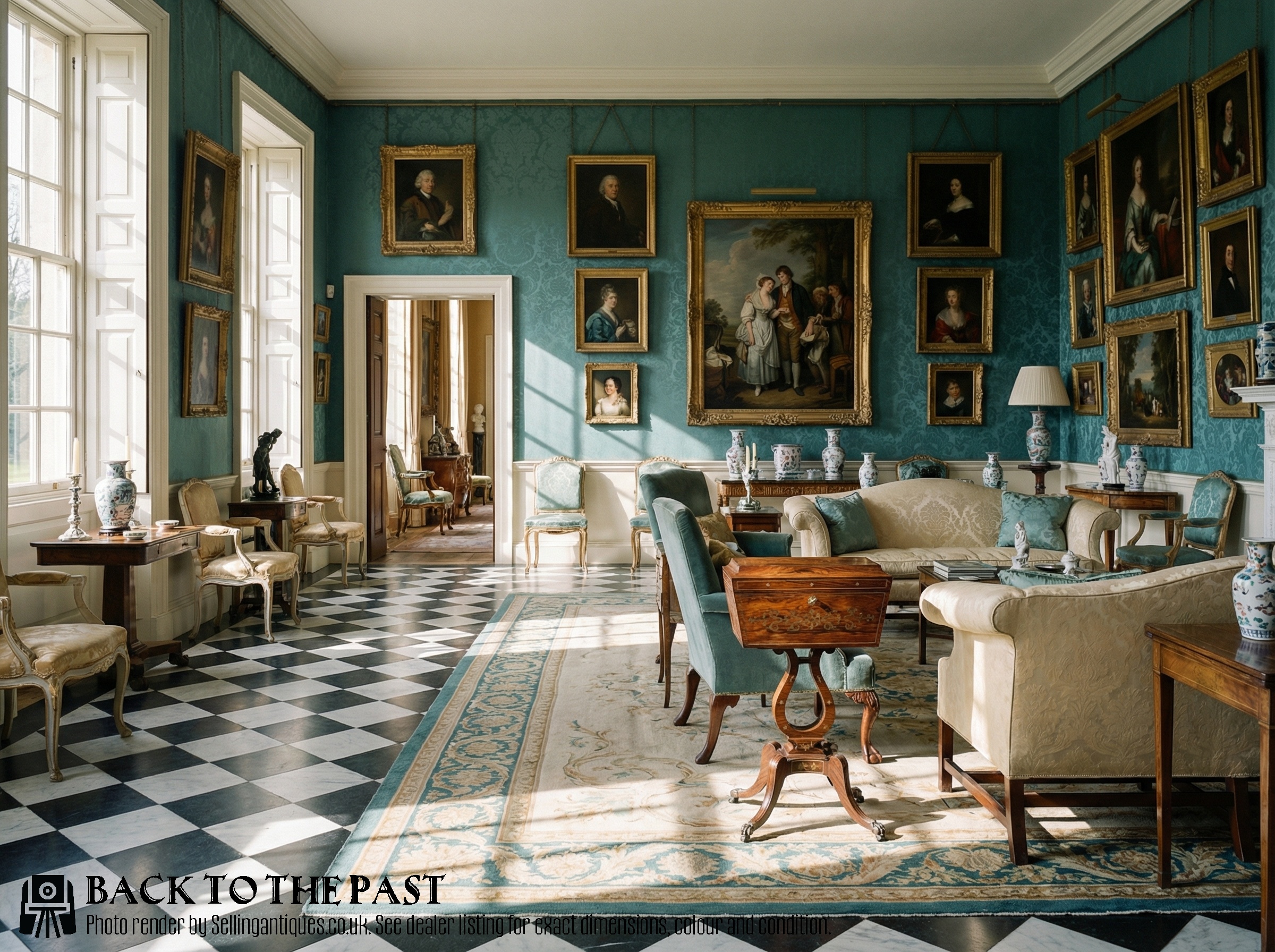
Antique Rosewood Teapoy
An antique rosewood teapoy is a specialised table designed for storing and serving tea during the Georgian, Regency, William IV, and Victorian periods. These pieces combine compact storage compartments with elegant stands, serving as focal points in period drawing rooms.
The versions most commonly met on this page date from the Regency era through to the mid-nineteenth century. They appear primarily as teapoys alongside related forms like side tables and work tables.
Makers utilised rich tropical hardwoods, translating fashionable interior styles into functional furniture for wealthy households. Surviving examples reflect both domestic English cabinet-making and Anglo-Indian colonial craftsmanship.
How they were made
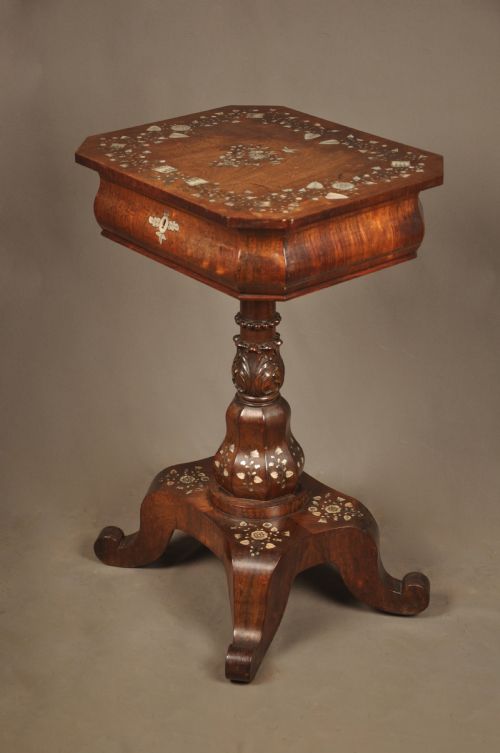
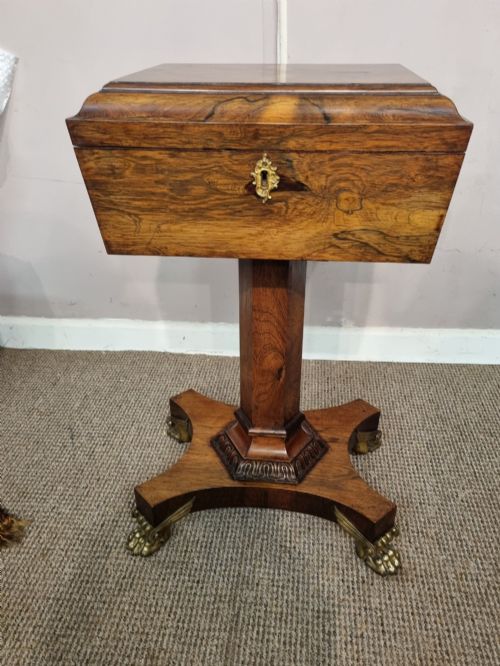
Cabinet-makers constructed these tea chests and stands using solid rosewood and padouk, often applying fine veneers over secondary timbers. Surfaces were frequently embellished with precision brass inlay work that catches the light.
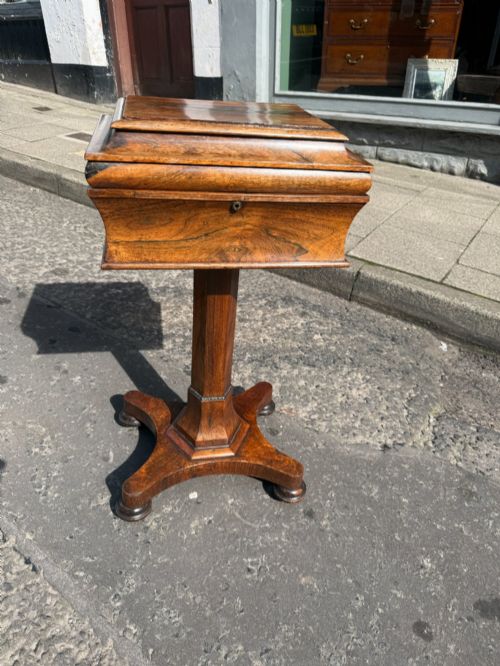
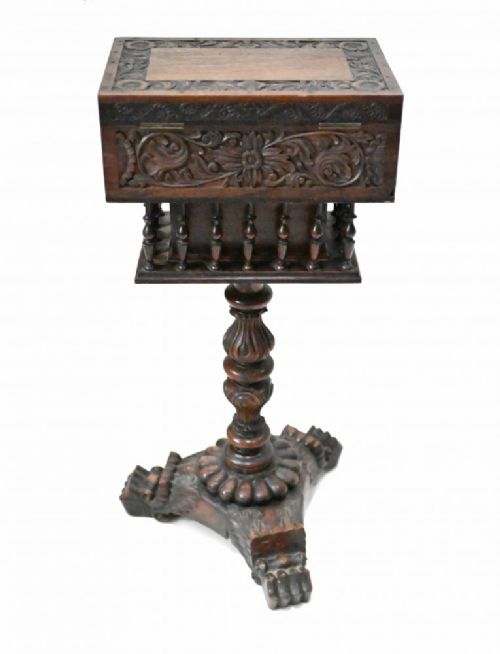
Structures range from lidded boxes mounted on pillar stands to pieces adapted as work tables. Supporting frames utilise central pedestals with robust feet, or four-legged bases suited to heavy timber tops.
Antique Rosewood Teapoy Retail Price Guide 2026
Typical asking prices for rosewood teapoy among the pieces listed under this phrase on Sellingantiques today, from the lower quarter to the upper quarter. They describe what is for sale here now, not the wider market.
Tea was once so valuable that these little tables came with built-in locks so the servants could not pinch the leaves.
What varies in quality
The standard of an antique rosewood teapoy depends on the crispness of its carving, the precision of its brass inlay, and the figuring of the grain in the timber. Pieces featuring intricate brass work or carved padouk distinguish themselves from plainer domestic examples.
Alterations and conversions influence the character of surviving pieces, as some retain their original internal caddies while others have been repurposed for sewing or general storage over the decades.
The Antique Rosewood Teapoy Glossary
- Teapoy
- A small table or stand equipped with a lidded box for storing tea leaves. These pieces originated in India before becoming fashionable in British drawing rooms.
- Padouk
- A dense tropical hardwood prized for its deep reddish colour and durability. It appears frequently in carved Anglo-Indian colonial furniture.
- Regency
- A stylistic period spanning the early nineteenth century defined by classical restraint and archaeological revival motifs. Furniture from this era often incorporates brass inlay and bold rosewood veneers.
- William IV
- A transitional design phase during the 1830s characterised by robust proportions and scrolling supports. Pieces from this era display heavier architectural elements than earlier Regency works.
Antique Rosewood Teapoy: Frequently Asked Questions
What is an antique teapoy used for?
These pieces were originally built to hold loose tea leaves in internal canisters, keeping expensive tea secure and dry in the drawing room.
Today, they function well as decorative side tables or small storage chests in living spaces.
How do I identify a Regency teapoy?
Regency examples typically feature dark rosewood timber, architectural pillar supports, and precise brass inlay work across the lid or frieze.
They date from the early nineteenth century and reflect classical design influences from that period.
Are all teapoys made of rosewood?
While rosewood is the predominant timber found in these listings, examples also appear in carved padouk and mahogany.
Makers selected these dense tropical hardwoods for their rich colour and ability to take a fine polish.
Can converted teapoys still be used?
Converted pieces have often lost their internal tea canisters, with some adapted for sewing equipment or general work table use during the nineteenth century.
These alterations reflect how owners repurposed furniture to suit changing domestic habits.