
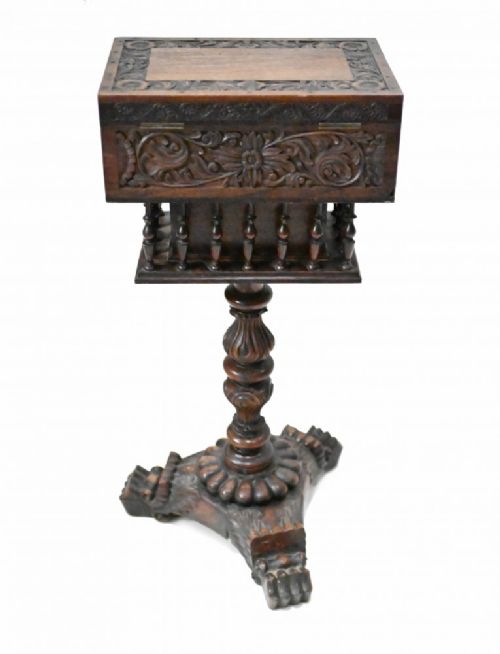


Rosewood Tea Caddy Table
These rosewood tea caddy tables are refined storage pieces for leaf tea that double as elegant occasional tables in Regency and William IV interiors.
Rosewood Tea Caddy Table
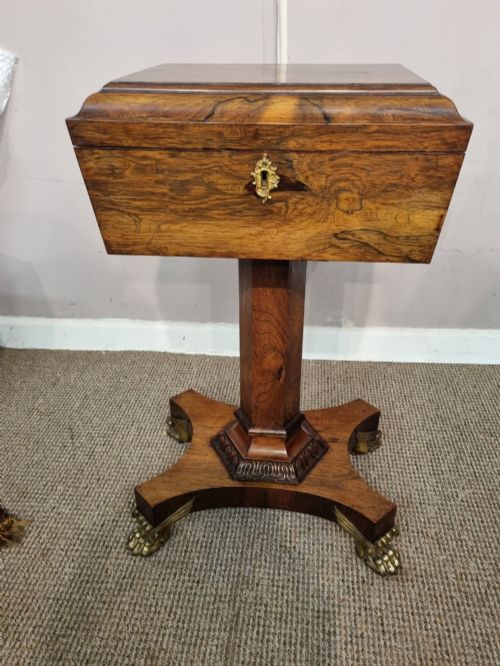
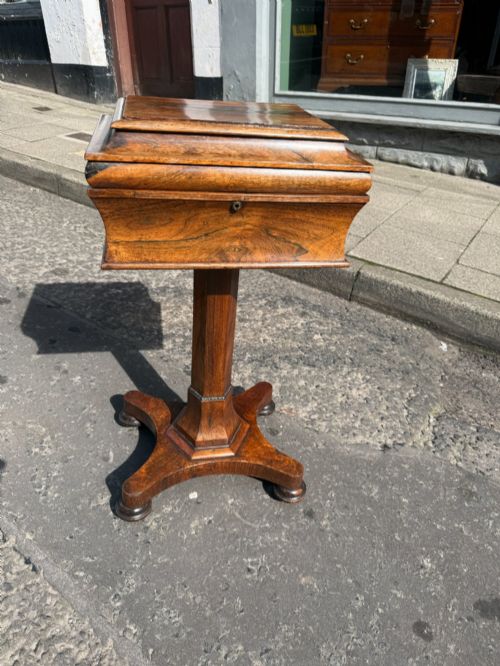
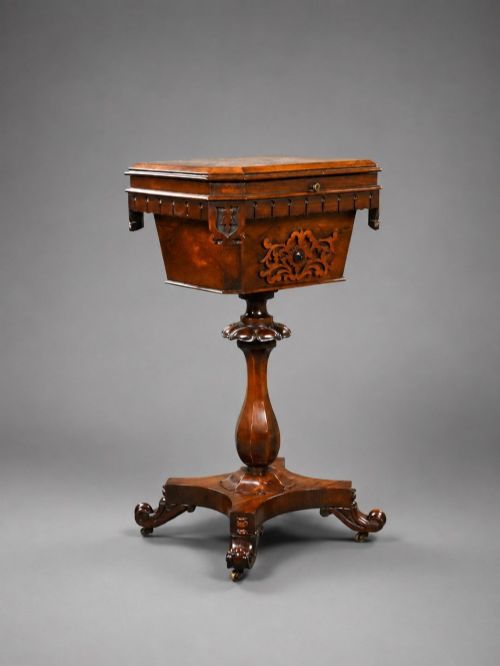
A rosewood tea caddy table, frequently styled as a teapoy or tea poy, combines a lidded storage box for tea with a standalone table base. These functional items served elite households during the Georgian, Regency, and William IV eras, keeping costly tea leaves securely locked away from servants.
Most examples found on this page date from the early nineteenth century, spanning Regency and William IV periods. They appear predominantly as formal teapoys, occasional tables, side tables, and work tables fitted with caddy tops.
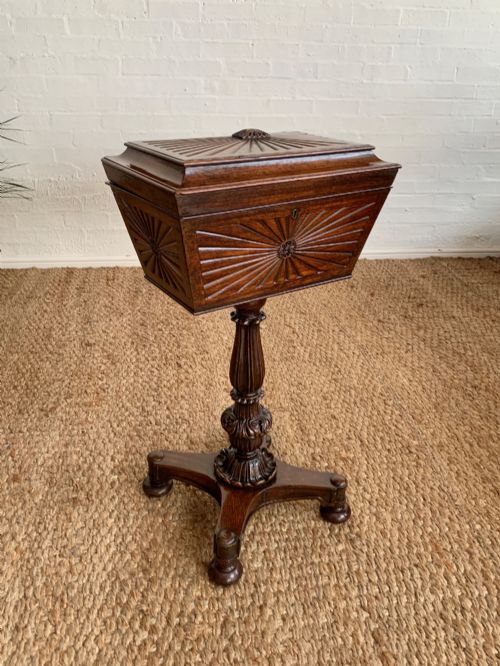
Origin variations include English workshops alongside Anglo-Indian colonial pieces carved from padouk wood. Forms range from dedicated tea storage boxes on pillar stands to multipurpose work tables featuring internal compartments and sunburst carving.
How they were made
Cabinetmakers constructed the primary carcases and veneers using rich dark rosewood, occasionally substituting padouk on colonial pieces or utilising mahogany for internal framing. The dense grain of rosewood provided an ideal canvas for high-gloss polishing and precise decorative embellishments.
Craftsmen elevated the visual appeal of these tables through contrasting inlay work, embedding fine brass stringing and motifs directly into the rosewood lids and friezes. Structural support came from central turned pedestals rising from platform bases, frequently resting upon paw feet or casters.
Current listings demonstrate a concentration of Regency and William IV pieces, utilising rosewood, brass, and padouk across teapoys and work tables.
What varies in quality
Quality rests significantly upon the crispness of the timber selection and the precision of the brass inlay work across the primary surfaces. Superior examples display tightly matched rosewood veneers and deeply carved pillar supports rather than plain, utilitarian turnings.
The integrity of the internal fittings defines the upper tier of these pieces, particularly the presence of original glass mixing bowls, fabric linings, and fitted tea caddies. Converted items or those lacking their internal canisters sit at a different level of desirability for collectors.
The Rosewood Tea Caddy Table Glossary
- Regency
- A British design period spanning roughly from 1811 to 1820, characterised by classical restraint and archaeological revival motifs. Furniture from this era often incorporates brass inlay and rosewood veneers.
- William IV
- A British stylistic phase covering the 1830s, bridging Regency elegance and early Victorian mass production. Pieces from this era typically exhibit heavier proportions and bolder carved details.
- Padouk
- A heavy tropical hardwood with a distinctive reddish hue, utilised extensively in Anglo-Indian colonial furniture. It offers exceptional durability and carvability for intricate floral motifs.
Rosewood Tea Caddy Table: Frequently Asked Questions
What is a teapoy table?
A teapoy table is a specialised piece of antique furniture combining a lidded storage box for tea with a supportive pedestal base. These tables were positioned in reception rooms so the lady of the house could dispense tea.
Over time, many of these pieces lost their internal caddies or were converted into general work tables. They remain sought after as decorative occasional tables.
How do I date a rosewood teapoy?
Dating relies on examining the stylistic markers of the woodwork, hardware, and pedestal construction. Regency examples typically feature slender pillar supports and delicate brass inlay, while William IV pieces display heavier carved elements.
Constituent materials like rosewood and brass were utilised across the early nineteenth century, with specific regional carving pointing towards English or Anglo-Indian workshops.
Were these tables used for drinking tea?
These tables served primarily to store and lock away expensive tea leaves rather than to hold hot teacups. The interior compartments kept different varieties of tea secure from household staff.
Many examples include small glass bowls or mixing trays inside the box for blending leaf varieties before brewing.
What distinguishes Anglo-Indian teapoys?
Anglo-Indian teapoys are characterised by dense, intricate hand-carving executed in exotic timbers like padouk rather than standard European mahogany or rosewood veneer. They reflect British colonial trade and craftsmanship in the nineteenth century.
These pieces often feature floral and foliate motifs carved directly into the solid wood surfaces of the box and pedestal.