
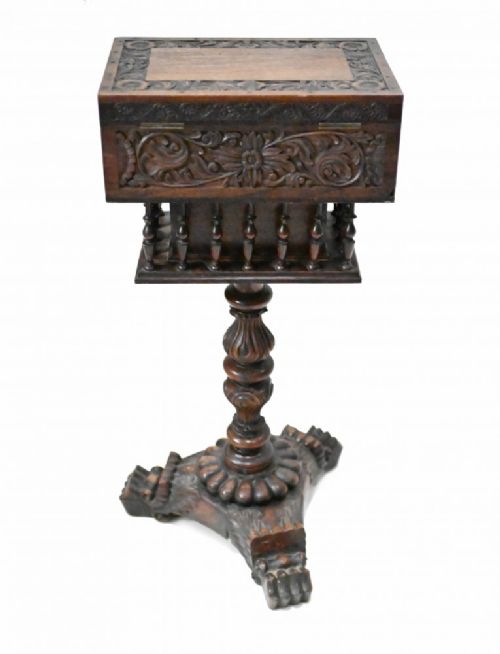


Rosewood Teapoy Box
A rosewood teapoy box is a refined receptacle for storing tea leaves, prized for its dense grain and elegant craftsmanship.
Rosewood Teapoy Box
When you search for a rosewood teapoy box, you encounter pieces primarily from the Regency, Georgian, and Victorian periods, alongside 19th-century examples. These items span forms such as teapoys, side tables, and work tables, reflecting their varied uses in historic interiors.
The version you are most likely to meet on this page is the Regency rosewood teapoy, often detailed with brass inlay and configured either as a box on a stand or a combined work table.
Some variations incorporate influences from Anglo-Indian colonial design, utilising padouk alongside traditional British timbers.
Materials and construction
Cabinetmakers utilised rich rosewood and padouk timbers, selecting them for their deep colour and prominent grain patterns. These dense woods provided a durable shell for storing valuable tea leaves.
Decoration often involved precision brass inlay set directly into the rosewood surface, creating geometric or classical motifs. Interiors frequently incorporated glass and fabric elements alongside fitted compartments.
Some teapoys were cleverly converted in the 19th century from holding leaves to holding embroidery.
Judging the work
Quality rests in the crispness of the brass inlay and the selection of the rosewood veneer. Finer examples display meticulous alignment in the metalwork and harmonious grain matching across the lid and sides.
The sophistication of the underlying support structure also defines the grade, ranging from simple box forms to elaborate pedestal stands with carved or inlaid details.
The Rosewood Teapoy Box Glossary
- Teapoy
- A small stand or box designed specifically for holding tea caddies. These pieces sat in the drawing room for the hostess to prepare tea.
- Brass inlay
- Fine strips of brass set flush into the wooden surface to form decorative patterns. This technique defined much of the Regency aesthetic.
- Padouk
- A heavy tropical timber with a reddish hue used in colonial furniture. It offered durability and a striking alternative to standard British hardwoods.
- Work table
- A multi-functional item featuring a storage box for sewing materials, occasionally adapted from tea storage. These tables combined utility with parlour elegance.
Rosewood Teapoy Box: Frequently Asked Questions
What is a rosewood teapoy box?
A rosewood teapoy box is a specialised container built during the Georgian, Regency, and Victorian eras to store loose tea leaves safely under lock and key.
Tea was an expensive commodity in these periods, requiring secure and decorative storage in the principal rooms of the house.
How were teapoys used originally?
These pieces served as portable or stationary receptacles where the lady of the house mixed various teas before they were brewed by the servants.
Inside, you typically find internal caddies or compartments designed to keep different grades of tea separate and airtight.
How do I date a rosewood teapoy?
Dating relies on observing the stylistic markers of periods like the Regency or William IV, such as brass inlay work and pedestal base designs.
Timbers and construction methods also provide clues, with early 19th-century pieces showing distinct cabinetmaking traits compared to later Victorian items.
Can I use a teapoy as a side table?
Many examples sit comfortably on stands or legs, making them suitable for use as compact side tables in modern living spaces.
Their enclosed compartments also make them practical for storing small household items while maintaining a decorative appearance.