



Dark Wood Teapoy
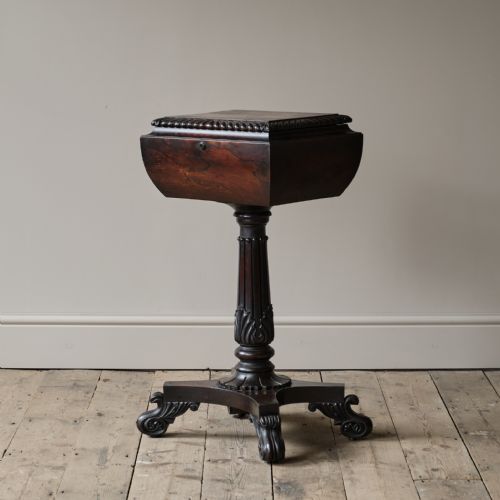
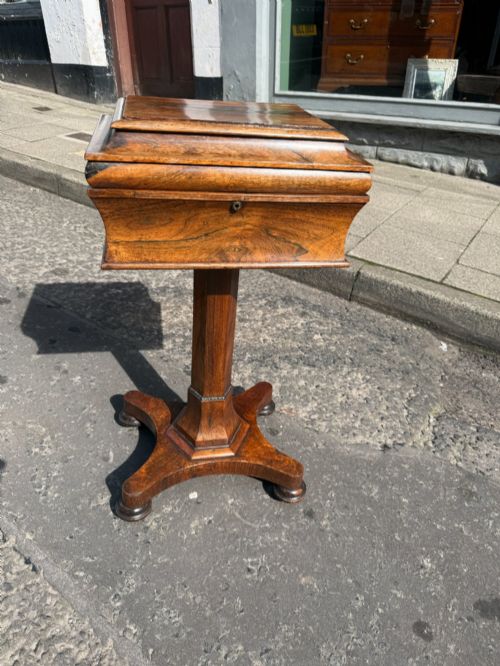
These dark wood teapoys are nineteenth-century tea caddies on stands, offering a tactile piece of social history for the drawing room.
Dark Wood Teapoy
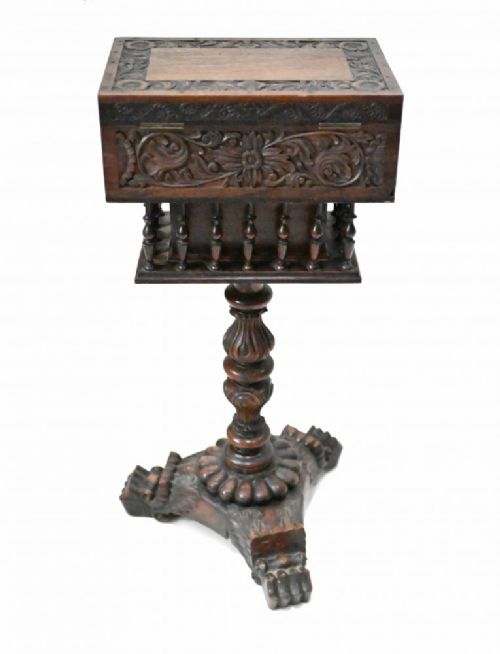
When you search for a dark wood teapoy, you are looking at specialised nineteenth-century furniture designed to store loose tea leaves securely under lock and key. These pieces typically take the form of sarcophagus-shaped boxes or lidded containers mounted on central pedestals or four-legged stands.
The versions you are most likely to meet on this page span the Georgian, Regency, William IV, and Victorian periods. They are constructed in timbers such as rosewood, mahogany, padouk, and oak, reflecting the dominant tastes of the nineteenth century.
Beyond holding tea, some examples double as work tables or incorporate compartments for sewing equipment and glass mixing bowls. They serve equally well today as distinctive side tables or occasional tables in a traditional interior.

How they were made
Cabinet makers utilised dense hardwoods like mahogany and rosewood, often enhanced with marquetry inlay or brass stringing to accentuate the geometric lines of the box. Exotic timbers such as padouk appear in Anglo-Indian colonial pieces, showing intricate carved decoration carved directly into the solid wood.
The internal arrangements demand precise joinery, featuring lidded caddies and small compartments designed to keep different tea varieties dry and separated. Stands employ sturdy pillar-and-base construction or elegant tapering legs to support the weight of the heavy lidded box above.
Dark Wood Teapoy Retail Price Guide 2026
Typical asking prices for dark wood teapoy among the pieces listed under this phrase on Sellingantiques today, from the lower quarter to the upper quarter. They describe what is for sale here now, not the wider market.
Object forms on this page include dedicated tea caddies on stands alongside multi-purpose work tables fitted with internal compartments.
What varies in quality
The standard of timber selection and figure in the rosewood or mahogany dictates much of the initial visual appeal. Superior examples display rich, book-matched veneers and finely chased brass inlay rather than simple painted lines.
Internal complexity also separates standard pieces from the finest workshops, particularly where fitted mixing bowls, working locks, and original interior caddies survive intact. The integrity of the stand and the crispness of any carved detail further distinguish standard production from exceptional cabinet work.
The Dark Wood Teapoy Glossary
- Teapoy
- A small stand or table equipped with a box for storing tea, popular during the eighteenth and nineteenth centuries. They often feature internal caddies and mixing bowls.
- Sarcophagus
- A coffin-like box shape with a domed lid and sloping sides, frequently utilised for Regency and Georgian tea caddies. This form provides substantial internal volume for storage.
- Padouk
- A heavy, durable tropical hardwood with a reddish-brown hue, seen in Anglo-Indian colonial furniture. It lends itself well to deep, crisp carving.
- Marquetry
- The art of applying pieces of veneer to a structure to form decorative patterns and pictures. It creates a contrasting visual surface on the lid or sides.
- Caddy
- A small container or compartment within the teapoy designed to hold tea leaves. They often feature individual lids to preserve the aroma.
Dark Wood Teapoy: Frequently Asked Questions
What is a dark wood teapoy used for?
Originally, these pieces served to store expensive tea leaves securely in the drawing room, complete with lockable lids to prevent servants from helping themselves. Inside, compartmentalised caddies kept different tea varieties fresh.
Today, collectors use them as decorative side tables or occasional tables. The internal boxes work well for storing small items while retaining their historical character.
How do I identify a Regency teapoy?
Regency examples often feature dark rosewood veneers, brass inlay, and sarcophagus-shaped boxes mounted on robust pedestal bases. They reflect classical architectural influences popular in the early nineteenth century.
Look for crisp brass stringing, ring-turned stems, and paw feet. The timber selection typically favours heavily grained rosewood or rich mahogany.
Are all teapoys made of dark wood?
The majority of pieces recorded here utilise dark hardwoods such as mahogany, rosewood, padouk, and walnut. These dense timbers suited the formal aesthetic of nineteenth-century reception rooms.
While oak and lighter fruitwoods occasionally appear, dark polished timbers remain the standard for this furniture form. The grain and colour deepen with age and wax polishing.
How do I style a teapoy in a modern room?
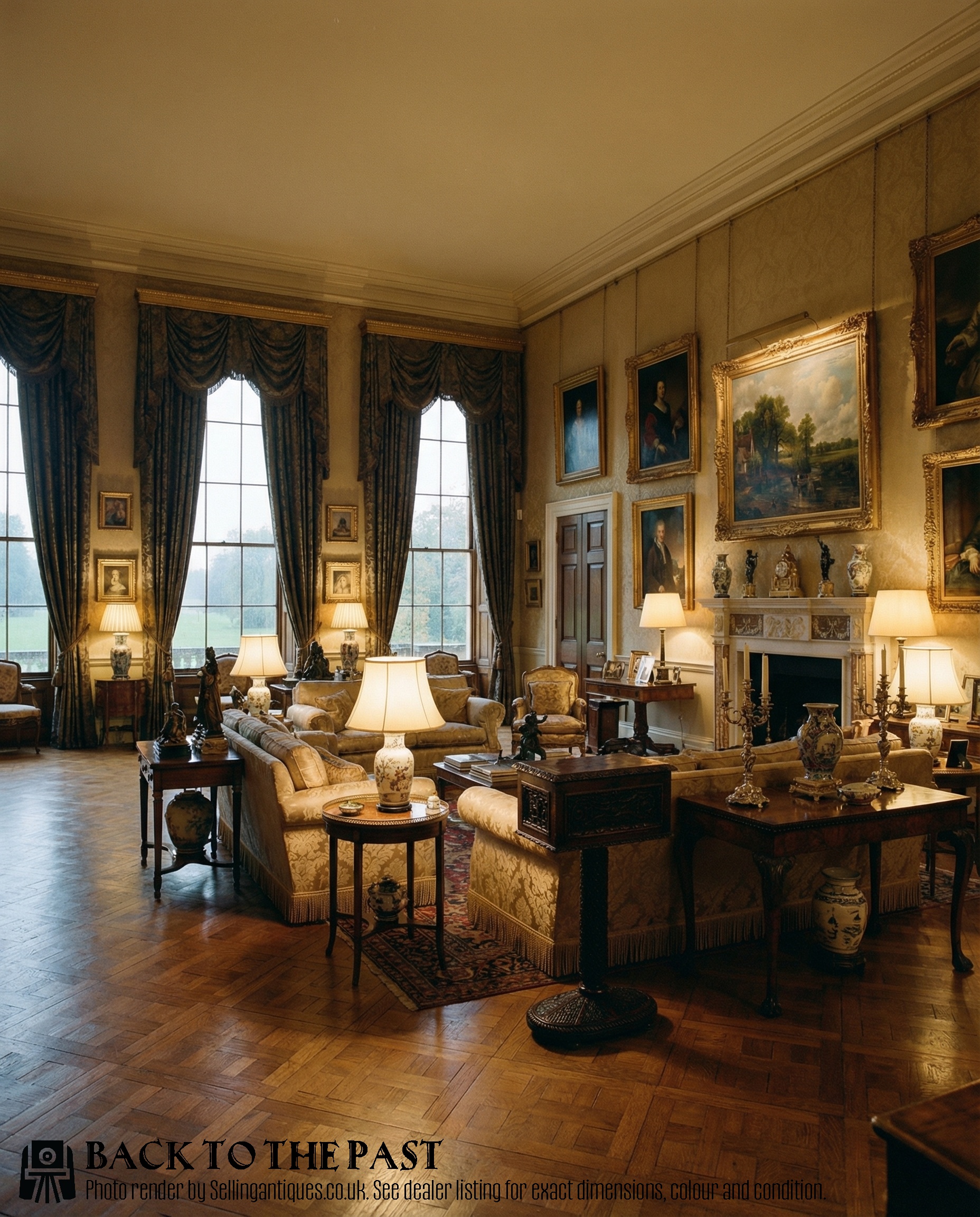
A dark wood teapoy functions effectively as an occasional table beside a sofa or armchair. Its enclosed top provides a flat surface for a lamp or book while concealing storage beneath.
Let the timber grain stand out by keeping surface items minimal. The rich tones of rosewood or mahogany complement both traditional and eclectic interiors.