

Antique Wooden Tea Caddy
An antique wooden tea caddy is a small storage box built to hold valuable tea leaves, combining fine cabinetmaking with period domestic ritual.
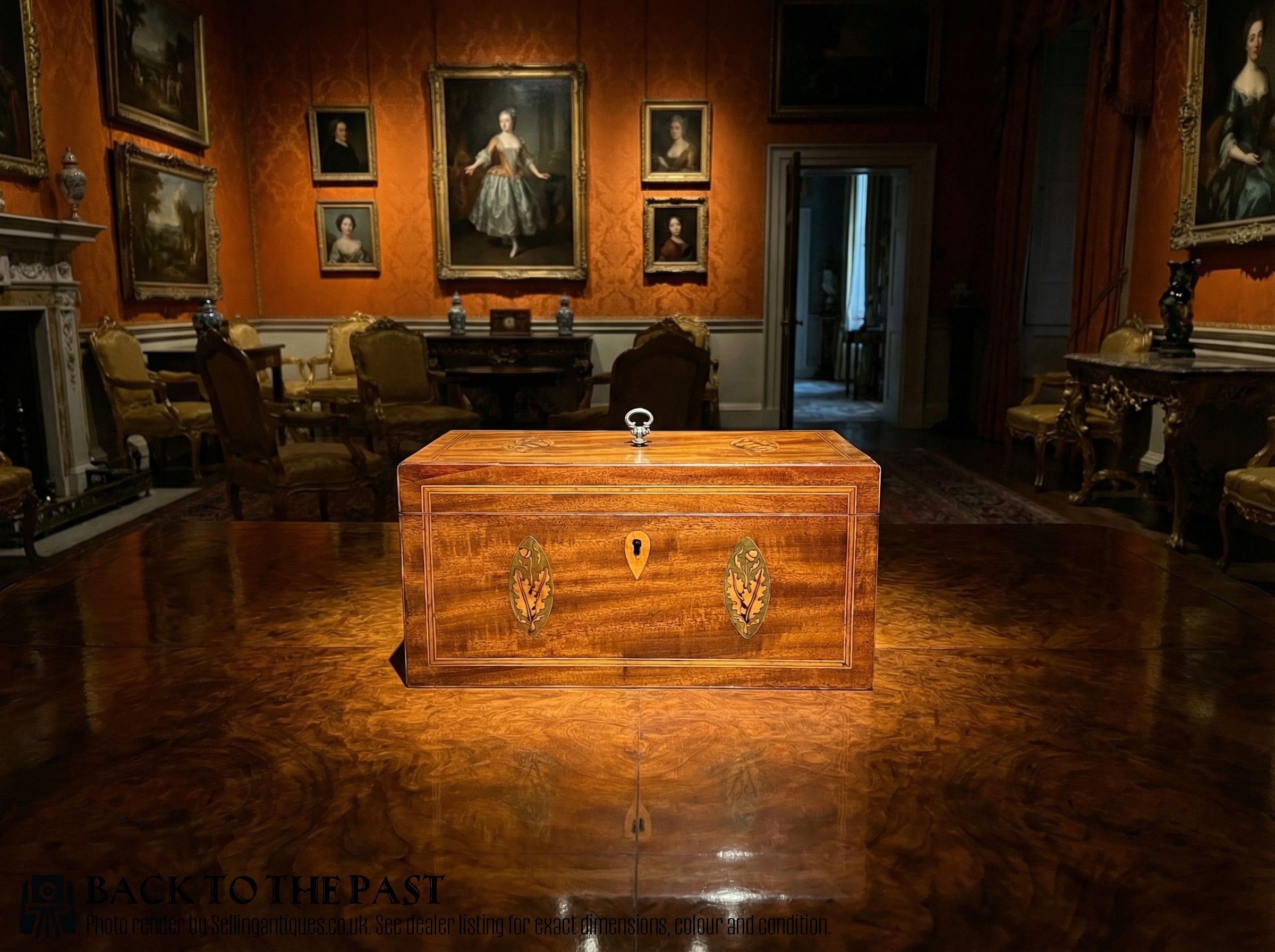
Antique Wooden Tea Caddy
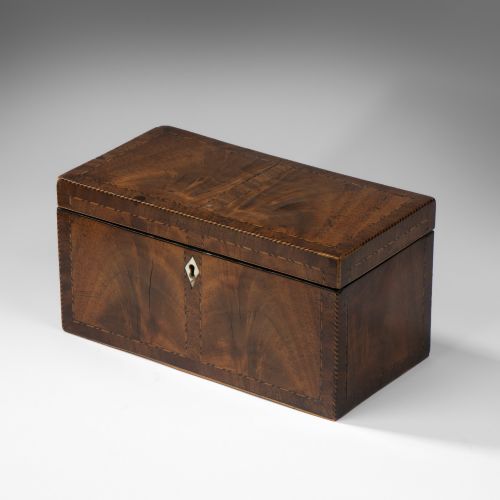
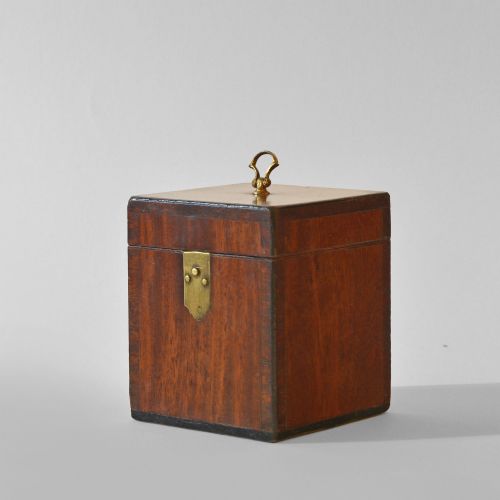
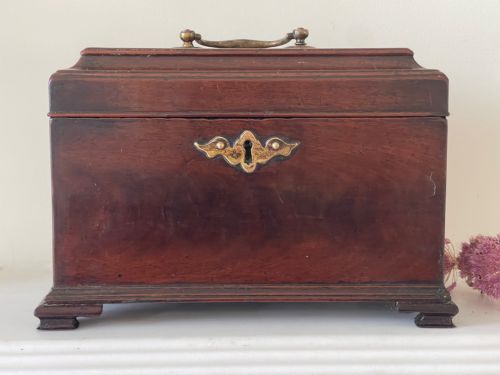
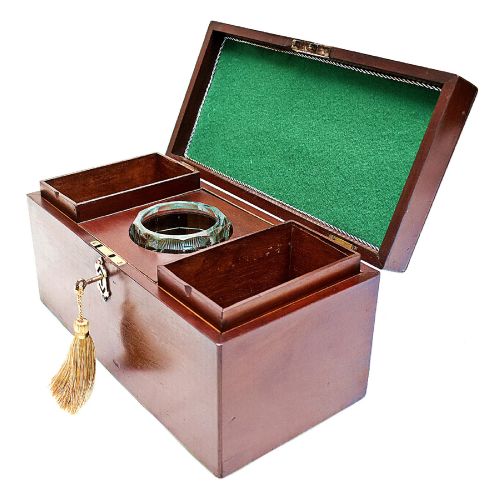
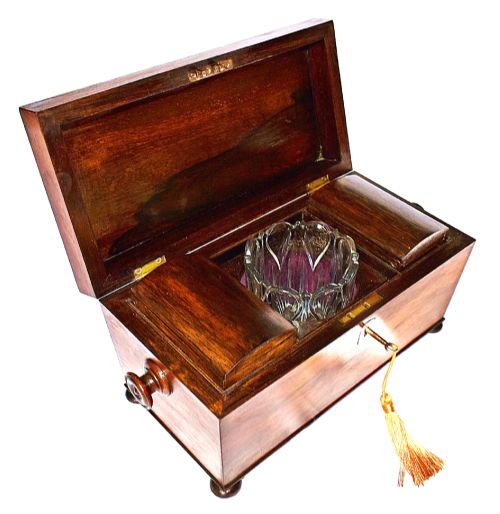
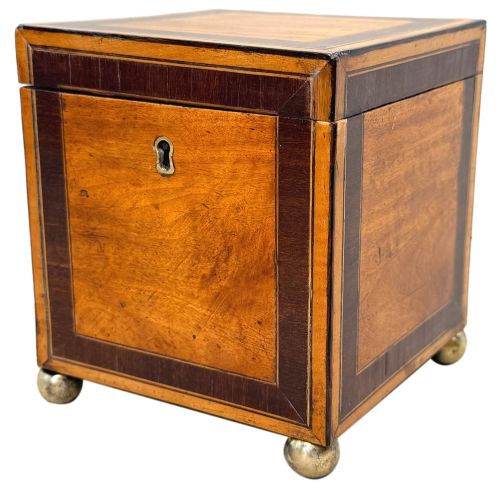
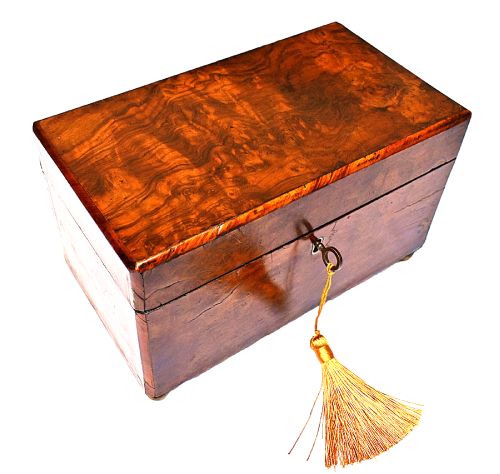
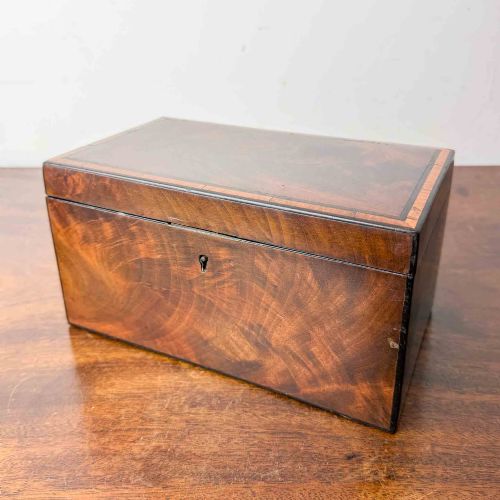
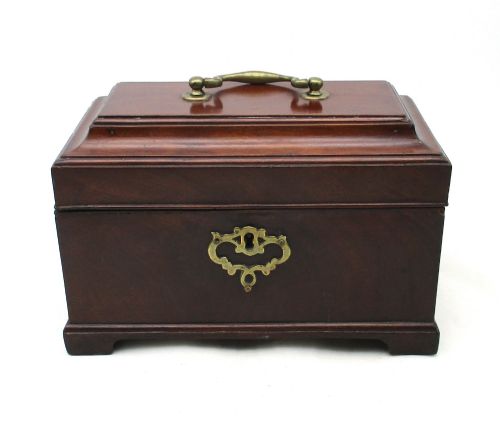
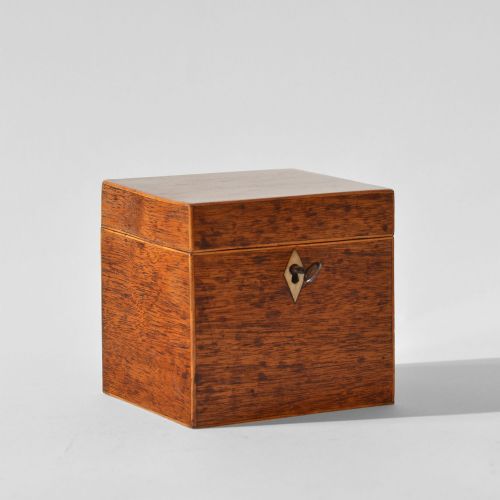
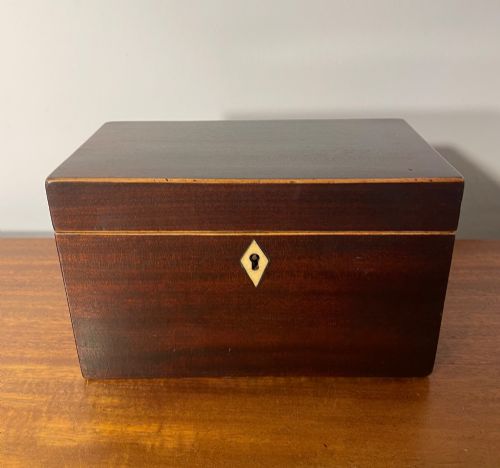
An antique wooden tea caddy most frequently appears from the Georgian, Regency, and Victorian periods, taking shapes such as sarcophagus boxes, rectangular chests, and oval or hexagonal forms. These pieces served to lock away precious tea leaves in the dining room or drawing room.
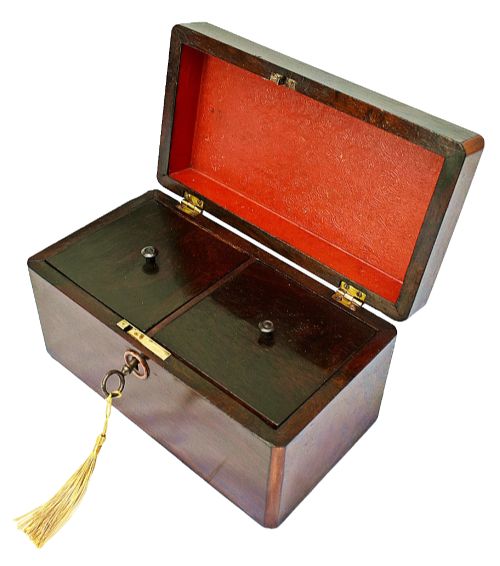
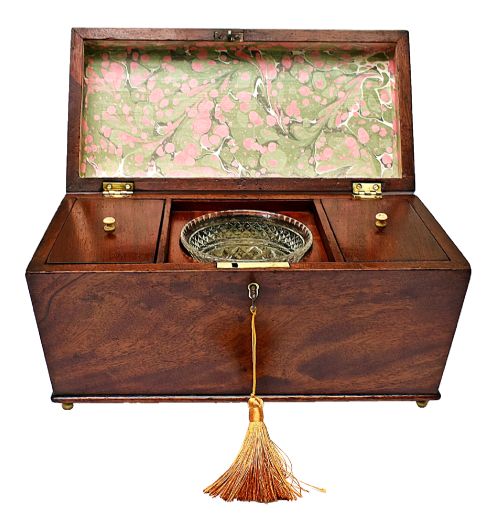
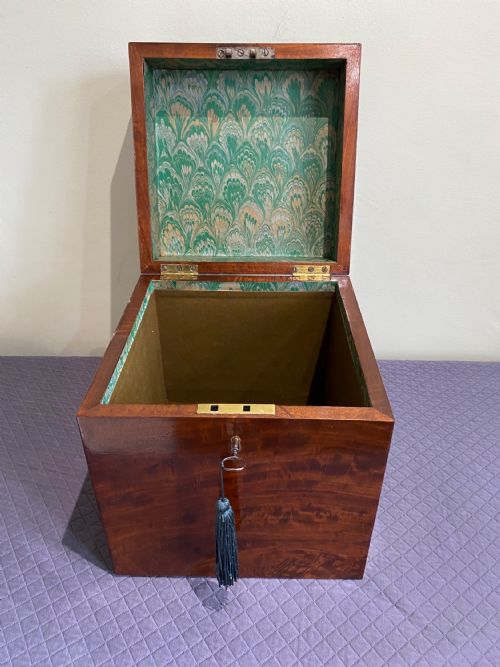
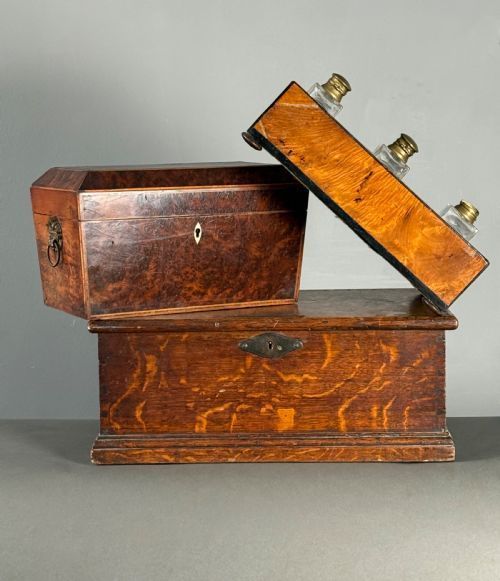
Makers produced these boxes in various formats, including larger teapoys on stands and smaller desk chests, sometimes incorporating fitted interiors with mixing bowls or multiple compartments. The selection spans straightforward mahogany timber construction through to elaborate veneered examples.
Examples on this page originate primarily from eighteenth and nineteenth century workshops, reflecting shifts from plain geometric timber boxes to decorative Regency and Victorian designs incorporating parquetry and Tunbridge ware.

Materials and construction
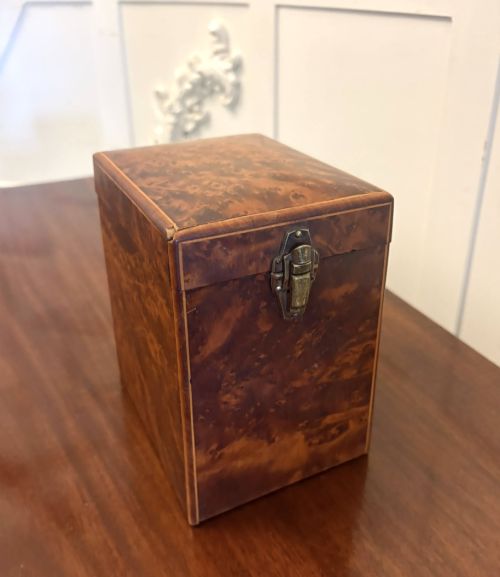
Cabinetmakers utilised dense timbers such as mahogany, rosewood, walnut, satinwood, and padouk, often applied as fine veneers over a secondary wood carcase. Boxes frequently display intricate surface embellishments including brass inlay, mother of pearl, bone, and boxwood stringing.
The construction of an antique wooden tea caddy relies on traditional joinery methods, with dovetailed corners and internal partitions designed to protect fragile contents. Surfaces received careful polishing to highlight the natural grain and colour of the timber.
Antique Wooden Tea Caddy Retail Price Guide 2026
Typical asking prices for wooden tea caddy among the pieces listed under this phrase on Sellingantiques today, from the lower quarter to the upper quarter. They describe what is for sale here now, not the wider market.
Listings feature eighteenth and nineteenth century periods, utilising mahogany, rosewood, walnut, and satinwood with brass and mother of pearl details.
Assessing quality
Quality in an antique wooden tea caddy rests upon the selection of timber figures, the precision of stringing or parquetry work, and the survival of original interior fittings like mixing bowls, lids, and locks. Superior pieces exhibit seamless veneer matching and crisp carving.
The presence of specialised details such as secret drawers, lion mask handles, and intact Tunbridge ware micro-mosaic panels elevates a piece. Conversely, heavy replacement of internal components or crude repairs diminishes the integrity of the work.
Henry Hollamby
The Antique Wooden Tea Caddy Glossary
- Teapoy
- A small tea caddy mounted on a central pillar or legs, serving as a standalone piece of furniture in the room. They often contain internal compartments for dry tea and a mixing bowl.
- Tunbridge Ware
- A form of woodworking characterised by mosaic scenes or geometric patterns created from hundreds of tiny blocks of naturally coloured woods. Originating in Kent, it decorated the surfaces of nineteenth century boxes.
- Sarcophagus
- A box shape featuring a domed or steep-sided profile reminiscent of ancient stone coffins, popular for Regency and Victorian tea caddies. This design allowed for deeper storage and decorative feet.
- Parquetry
- Geometric mosaic woodwork formed by fitting small veneer pieces together in repetitive patterns. It adorns the exterior surfaces of select nineteenth century boxes.
- Navette
- A boat-shaped oval profile with pointed ends, seen in eighteenth century caddy design. This symmetrical form required careful curvature of the timber veneers.
Antique Wooden Tea Caddy: Frequently Asked Questions
What were tea caddies used for?
Tea caddies stored dried tea leaves securely, protecting expensive imported leaves from dampness and theft in the household. Servants kept them locked until tea time.
Inside, the boxes typically featured lidded compartments to separate green and black teas, and often included a glass bowl for blending leaves or sugar.
How do I date a wooden tea caddy?
Dating relies on observing the timber species, shape, and decorative techniques characteristic of periods like the Georgian era or the Victorian age. Earlier eighteenth century pieces favour satinwood and simple rectangular or oval geometry.
Later Regency and Victorian examples frequently employ rosewood, heavy sarcophagus proportions, and complex brass inlay or Tunbridge ware details that help pinpoint the decade of manufacture.
Are keys usually included with antique caddies?
Original working keys are uncommon because locks were easily misplaced over centuries of domestic use. Many surviving boxes retain their brass escutcheons and lock mechanisms even when the key is absent.
Finding a caddy with its original key that still operates the lock adds notable interest for collectors of cabinet hardware.
How should I clean and maintain my wooden tea caddy?
Maintenance requires gentle dusting with a dry, soft cloth to protect vulnerable veneers and delicate boxwood stringing from moisture damage. Avoid modern silicone polishes that can degrade historical finishes.
Keeping the piece away from direct sunlight and sudden temperature changes preserves the natural timber and prevents warping of the box carcase.