




Inlaid Wooden Tea Box
An inlaid wooden tea box brings tactile warmth and period elegance to any surface, holding centuries of refined social history within its small timber frame.

Inlaid Wooden Tea Box
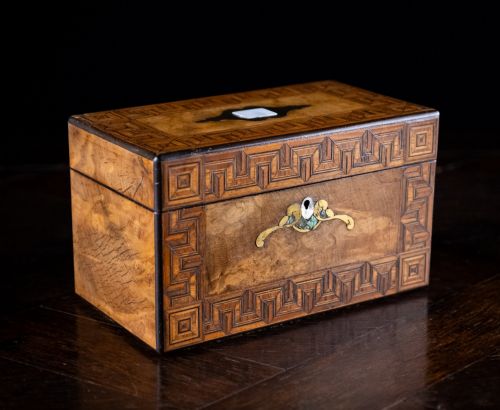
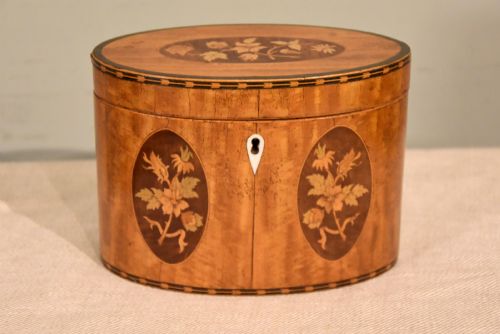
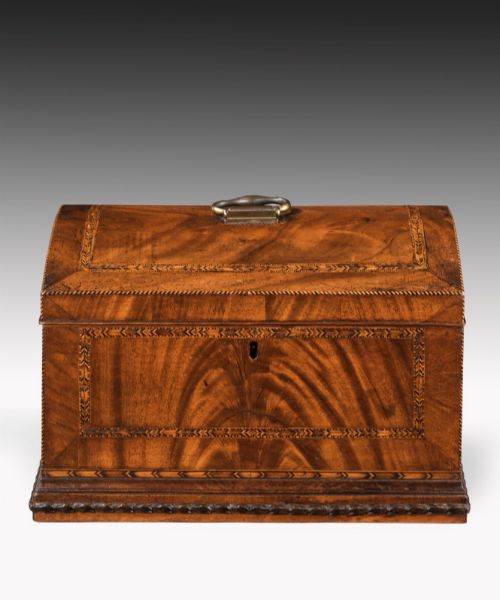
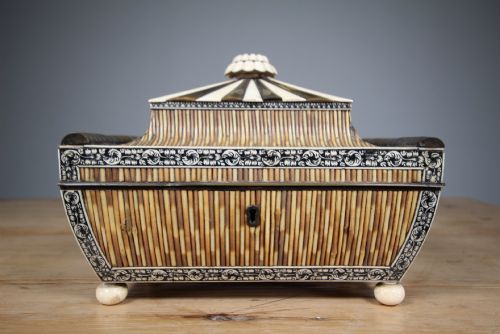
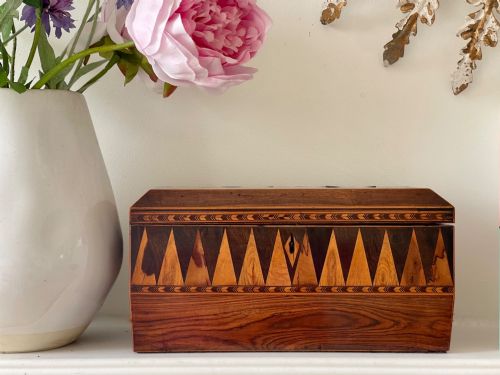
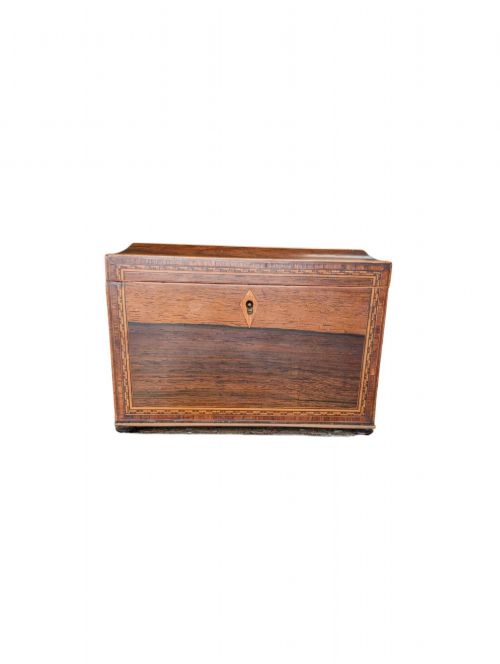
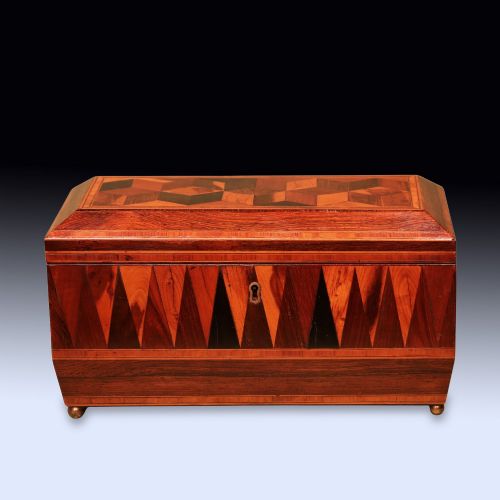
The pieces appearing most frequently originate in the Georgian and Regency periods, rendered in dense timbers like mahogany, rosewood, and satinwood. Makers integrated contrasting woods and metals to create geometric and pictorial motifs on lids and panels.
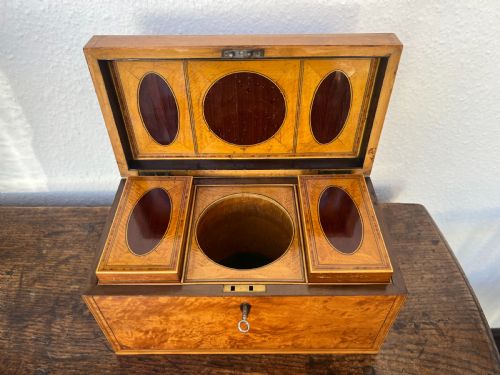
Beyond simple storage, these objects served as decorative centrepieces in polite drawing rooms, often containing fitted interior compartments for blending different varieties of tea.
Materials and construction methods
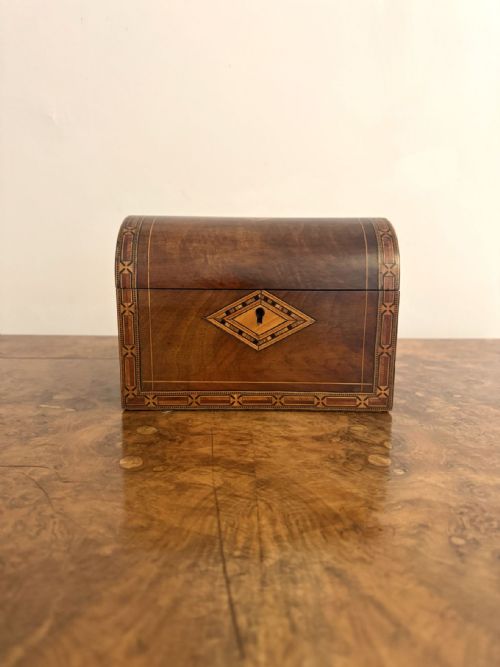
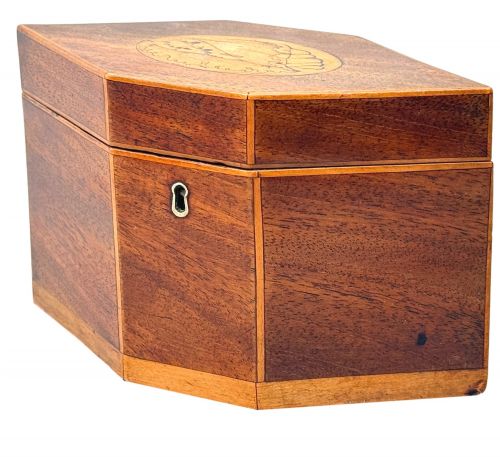
Cabinetmakers constructed the primary carcase from stable timbers such as mahogany, walnut, or pine, subsequently applying decorative face veneers of exotic woods like satinwood, rosewood, and harewood. Tunbridge ware examples utilised thousands of tiny tinted wood blocks assembled into intricate mosaic pictures.
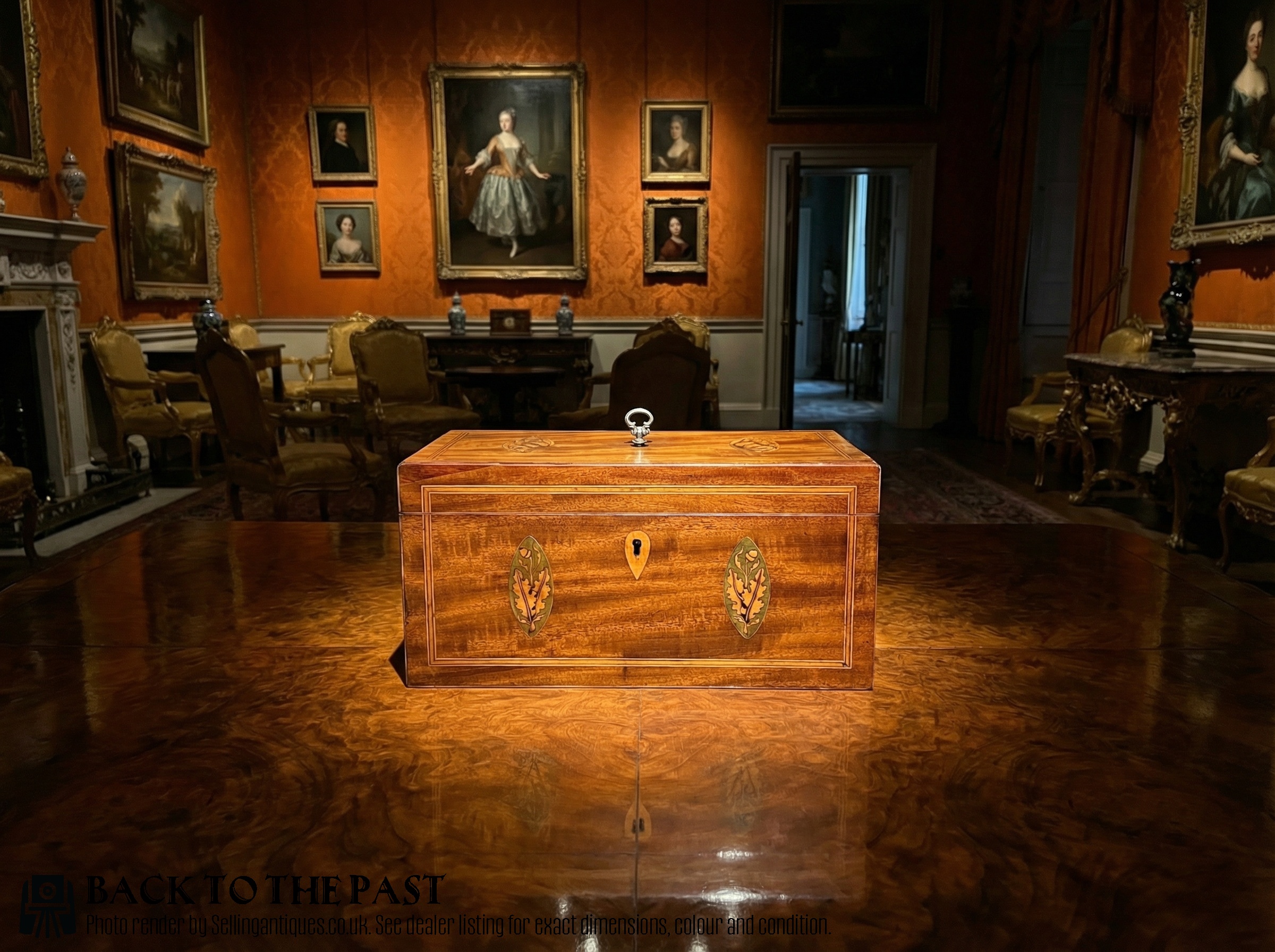
Inlay work incorporated contrasting boxwood, ebony, and brass lines, sometimes complemented by mother-of-pearl or bone elements set flush into the wooden surface. Interior compartments frequently retained remnants of foil lining or fitted wooden lids designed to preserve aroma.
Some nineteenth-century boxes feature secret locking mechanisms hidden beneath sliding panels to keep family secrets as safe as the tea.
Distinctions in craftsmanship and design
The refinement of an inlaid wooden tea box rests on the precision of the parquetry and veneer work, alongside the selection of figured timber grain. Superior examples display seamless alignment in complex geometric patterns and well-balanced proportions across sarcophagus or oval bodies.
Internal architecture contributes significantly to overall merit, distinguishing basic single-compartment boxes from elaborate items containing original glass mixing bowls, tiered caddies, and working locks with matching keys.
Henry Hollamby
The Inlaid Wooden Tea Box Glossary
- Parquetry
- Geometric mosaic woodwork formed by fitting small veneer blocks together. This technique creates repeating patterns across box lids.
- Sarcophagus
- A heavy, flared-base box shape popular during the Regency period. It mimics the monumental form of ancient stone coffins.
- Teapoy
- A pedestal table fitted with a lidded box for storing tea. These freestanding pieces often incorporate internal canisters.
- Tunbridge Ware
- A specialised form of mosaic woodwork originating in Kent. Artisans glued coloured wood strips together to produce detailed pictorial veneers.
- Veneer
- A thin layer of decorative wood applied to a secondary timber carcase. This method allowed makers to display rich grain patterns economically.
Inlaid Wooden Tea Box: Frequently Asked Questions
How were tea boxes used?
Tea remained an expensive commodity kept under lock and key by the head of the household. Servants rarely handled the leaves directly, relying on the homeowner to dispense portions for daily social gatherings.
Interior compartments allowed different leaf varieties to be stored separately before being blended in a central mixing bowl.
How do I date an inlaid wooden tea box?
Dating relies upon stylistic markers such as the transition from straight-sided Georgian rectangles to curved Regency sarcophagus shapes. Timber choice also indicates age, with satinwood and harewood prevailing in the eighteenth century and rosewood dominating later decades.
Construction details, including the presence of hand-cut dovetails and secondary woods like pine or oak, provide further chronological clues.
Can I still store tea inside them?
Modern storage remains possible if the interior lining is clean and dry, though original foil or paper linings are often fragile. Most collectors choose to store small keepsakes, jewellery, or letters inside rather than loose leaf tea.
Keeping timber boxes away from direct sunlight and radiators prevents the old veneers from drying and lifting.
What is Tunbridge inlay?
Tunbridge inlay involves binding numerous minute blocks of naturally coloured wood together to form a mosaic picture. Artisans sliced this bundle crosswise to create multiple identical geometric or floral panels.
These detailed panels were then applied to the exterior surfaces of boxes during the nineteenth century.