


Antique Pedestal Teapoy
An antique pedestal teapoy brings a touch of Georgian and Regency refinement to a room, offering both a lidded box for storage and a sturdy central column.

Antique Pedestal Teapoy
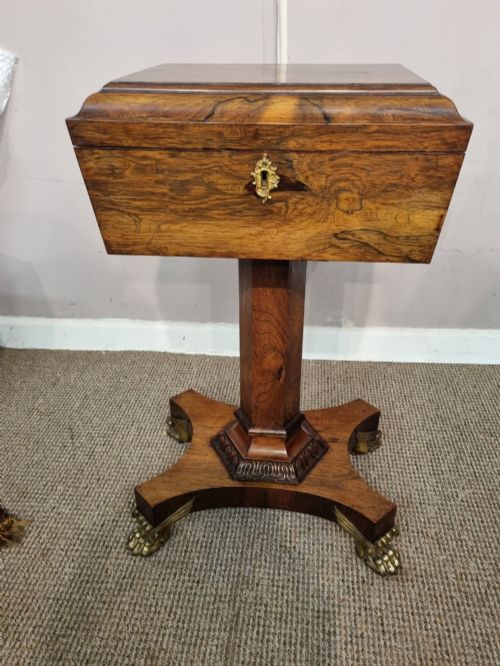
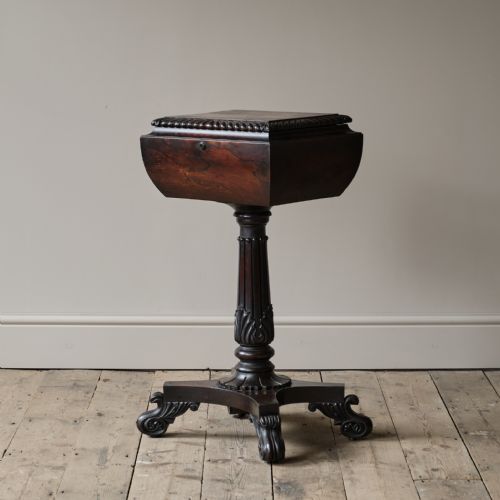
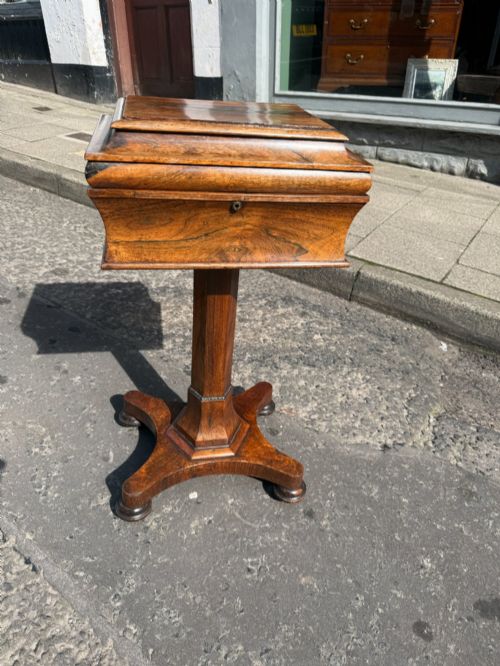
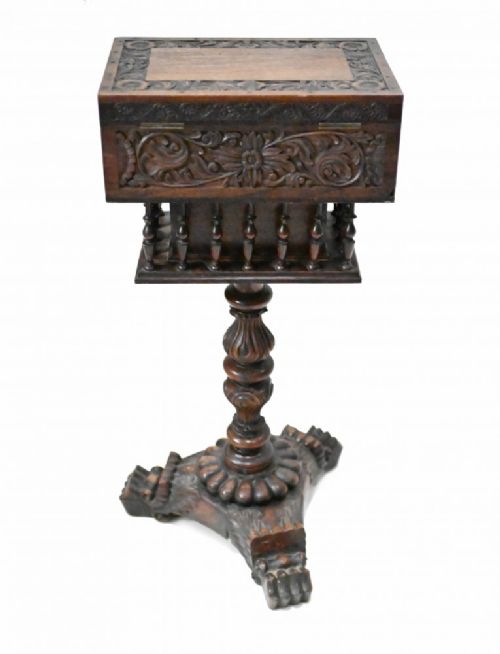
An antique pedestal teapoy is a freestanding piece of furniture designed originally to store and dispense precious tea leaves safely away from humidity. These items typically feature a lidded box mounted upon a central pillar and a platform base, resting on three or four feet.
You are most likely to encounter Regency and Victorian examples on this page, often formed from rich timbers like rosewood and mahogany. Some double as work tables, spirit stands, or jardinieres, reflecting how owners adapted them over time.
How they were made
Cabinet makers utilised dense native and imported timbers, notably mahogany, rosewood, walnut, and padouk, often selecting figured veneers such as burr walnut and burr maple for the visible surfaces. Construction involved precise joinery to build the lidded boxes and stable central pedestals.
Decoration relied on skilled hand-craftsmanship, including brass inlay, intricate carved details, and deep polishing to highlight the natural grain of the wood. Brass fittings also secured internal compartments and supported the bases.
One adaptable piece spent its life doubling as a tea stove and a jardiniere.
What varies in quality
The choice of timber grain and veneer selection dictates much of the visual appeal, with highly figured flame mahogany or burr elm marking out superior examples. Finer pieces display crisp, deep hand-carving and precise brass inlay rather than plain surfaces.
Structural integrity in the central pillar and the stability of the pedestal base separate robust items from weaker ones. The sophistication of the internal compartments, such as fitted tea canisters and mixing bowls, also indicates the tier of the original maker.
Gillows
The Antique Pedestal Teapoy Glossary
- Teapoy
- A small box on a pedestal used for holding tea, which gained popularity during the Georgian and Regency periods. These pieces often include internal caddies and compartments.
- Sarcophagus
- A box shape featuring sloping sides and a flat top, commonly utilised for the main body of Regency teapoys. This classical form mimics ancient stone tombs.
- Jardiniere
- An ornamental stand or container designed to hold plants and flowers. Certain teapoys were converted or made for this horticultural purpose.
- Padouk
- A heavy, durable exotic hardwood known for its rich reddish-brown colour. Cabinet makers used it in colonial furniture production.
- Brass inlay
- The technique of embedding thin strips or motifs of brass into the wood surface for decoration. It is frequently seen on Regency rosewood examples.
Antique Pedestal Teapoy: Frequently Asked Questions
What is an antique pedestal teapoy used for today?
Modern owners often utilise these lidded boxes as side tables or occasional tables in a sitting room, storing small items inside the compartment.
They also serve as lamp stands or decorative display pieces, bringing period character and warm timber tones to an interior space.
How do I distinguish a Regency teapoy from a Victorian one?
Regency examples frequently display architectural lines, brass inlay, and rosewood or mahogany veneers influenced by classical styles. Look for sarcophagus-shaped boxes and delicate pillar supports.
Victorian pieces tend to use oak, walnut, or mahogany with heavier proportions, deeper carving, and sometimes simpler internal arrangements.
What is inside a traditional teapoy?
Original interiors typically feature fitted wooden caddies or metal canisters designed to keep different varieties of tea leaves fresh and dry. Many also contain a small glass bowl used for rinsing cups or mixing leaves.
Over the decades, some interiors were removed or converted into work boxes for sewing materials or spirit stands for glassware.
Are all pedestal teapoys made of rosewood?
No, while rosewood is common among Regency pieces listed here, makers also used mahogany, walnut, burr walnut, burr maple, oak, padouk, and burr yew.
Each timber brings a distinct grain pattern and colour range, from deep red-brown mahogany to highly figured blonde and brown burrs.