
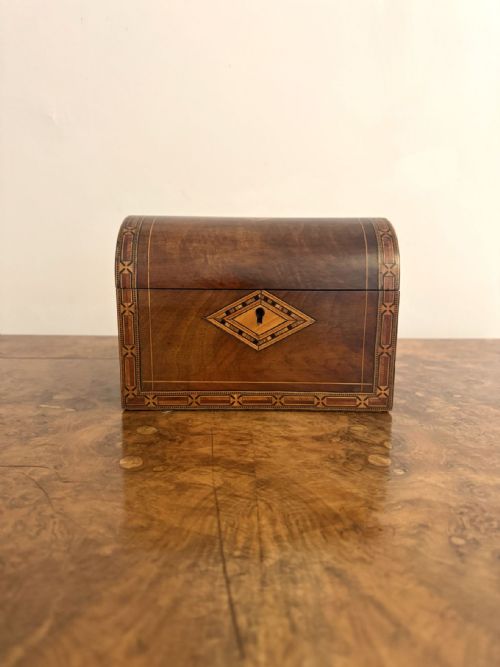
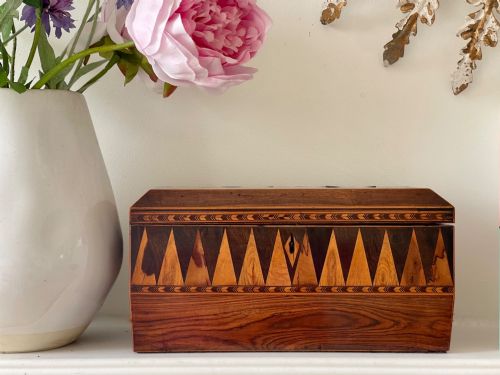

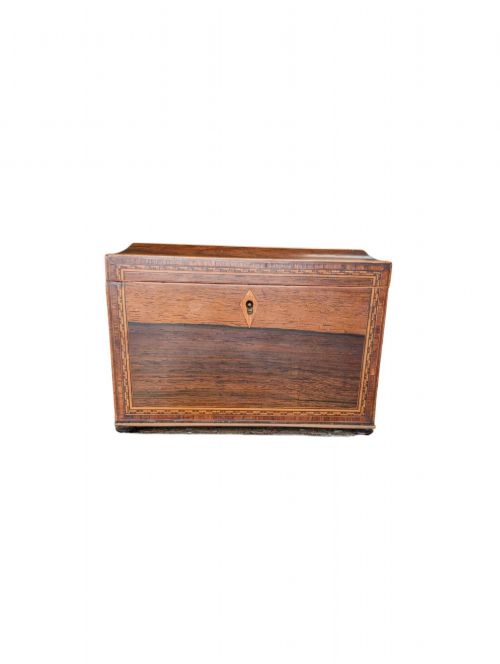
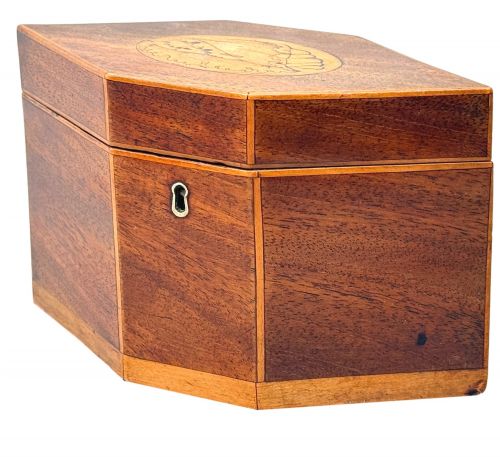
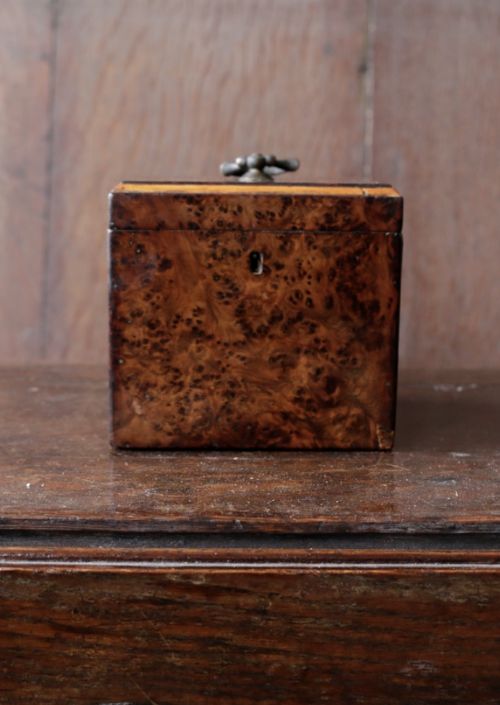


Marquetry Tea Box
A marquetry tea box is a timber container patterned in contrasting veneers, prized for holding expensive leaves on a Georgian or Victorian sideboard.
Marquetry Tea Box
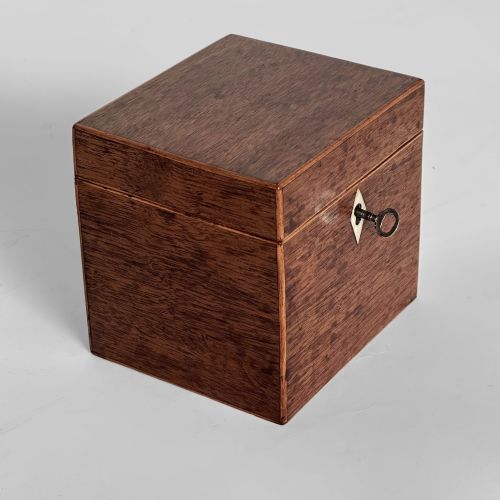
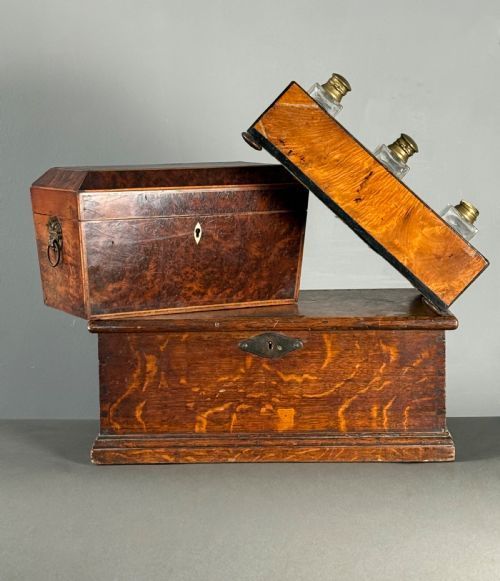
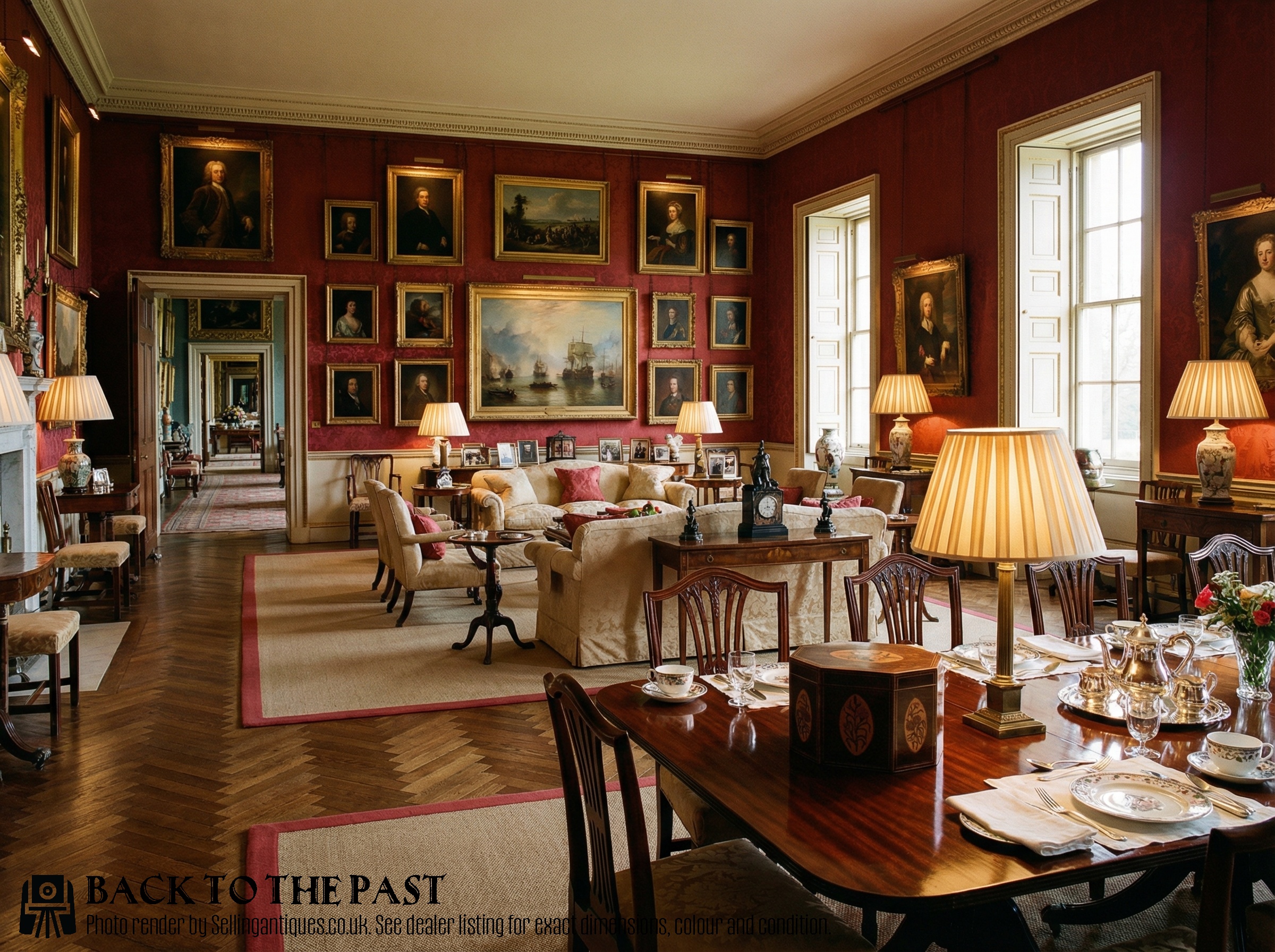
A marquetry tea box is a receptacle designed to store dried leaves safely away from damp air and odours, constructed with hinged lids and internal compartments. These vessels emerge primarily from the Georgian, Regency and Victorian eras, taking forms from simple rectangular caddies to hexagonal and sarcophagus shapes.
Makers shaped these objects to sit prominently in the parlour or drawing room, where hosting guests involved measuring tea leaves with care. The survival of fitted interiors and original keys distinguishes the standard domestic box from more heavily altered examples.
How they were made
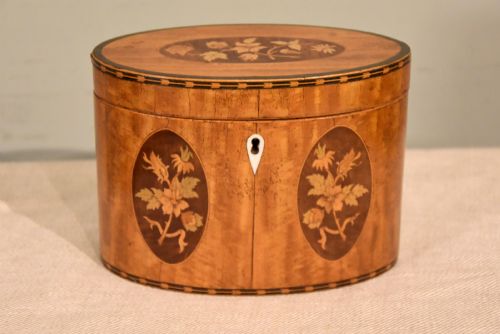
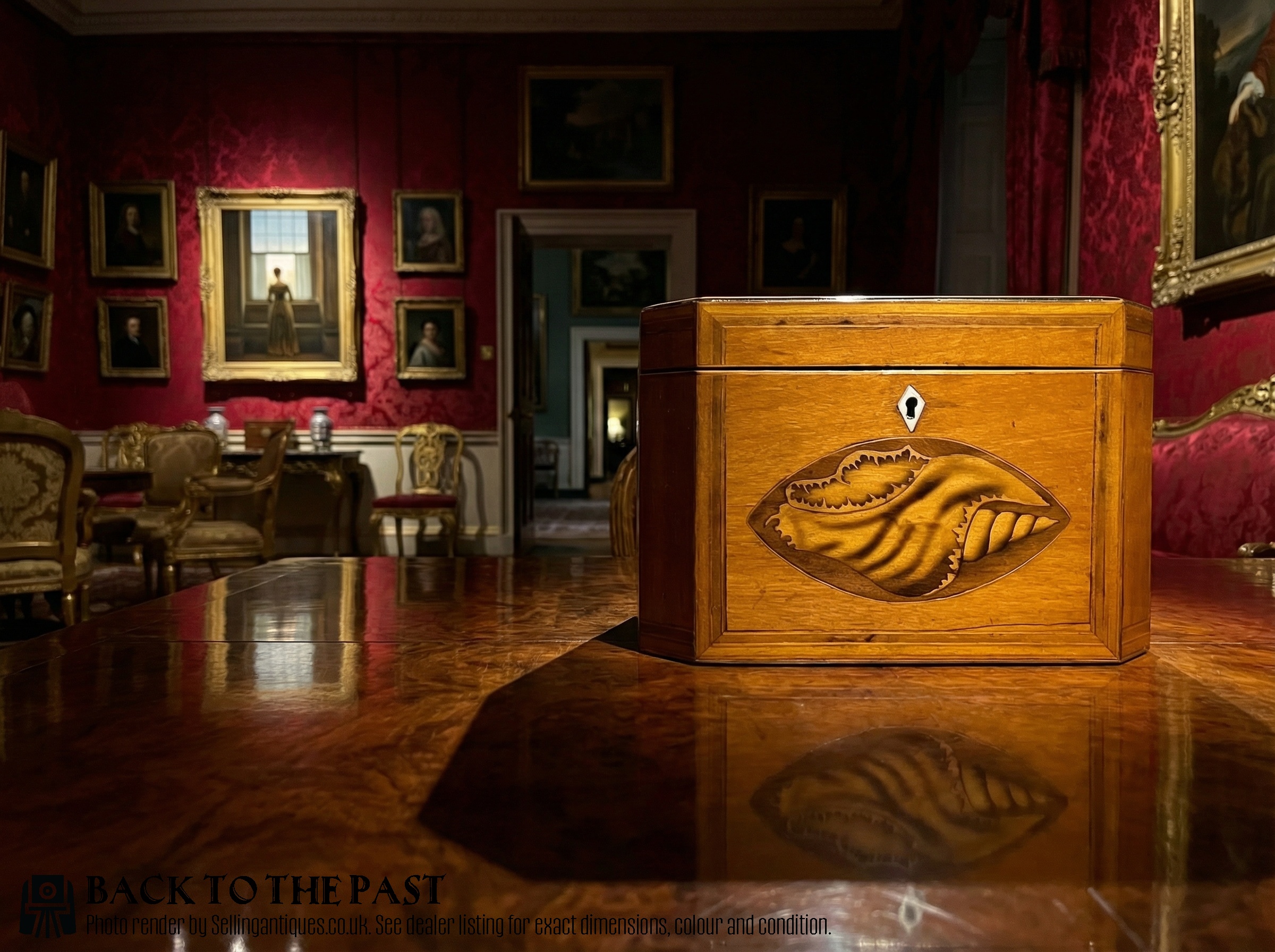
Cabinetmakers constructed the carcase using dense native and exotic timbers such as mahogany, walnut and rosewood, applying thin veneers across the exterior surfaces. Marquetry designs relied on sawing fine slices of contrasting woods like satinwood, boxwood and harewood to form intricate pictorial or geometric motifs.
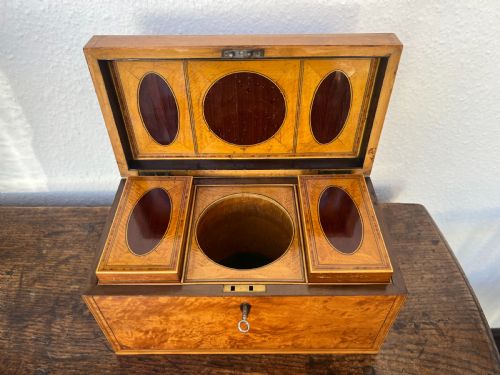
Specialist workshops incorporated brass stringing, mother of pearl and bone details into the wooden surfaces to accentuate panels and borders. Interior compartments often received secondary linings of foil or paper to preserve the aroma of the leaf contents.
Marquetry Tea Box Retail Price Guide 2026
Typical asking prices for marquetry tea box among the pieces listed under this phrase on Sellingantiques today, from the lower quarter to the upper quarter. They describe what is for sale here now, not the wider market.
Listings feature pieces spanning the eighteenth, nineteenth and early twentieth centuries, encompassing Georgian, Regency and Victorian periods.
What varies in quality
Quality rests upon the precision of the veneer work and the depth of the timber selection, where burr woods and figured grains command greater visual presence. The crispness of the marquetry cutting and the integration of contrasting elements define the skill of the original workshop.
The survival of internal fittings, such as lidded canisters and glass mixing bowls, elevates the integrity of a piece. Superior examples retain original locks, escutcheons and working keys alongside sound carcase construction that resists warping.
Henry Hollamby
The Marquetry Tea Box Glossary
- Marquetry
- The art of applying decorative pieces of veneer to a structural carcase to form geometric or pictorial patterns. This technique transforms a plain timber box into a decorative surface.
- Teapoy
- A larger stand-mounted tea container or small table fitted with internal caddies. These pieces often feature substantial pedestal bases and elaborate wood inlays.
- Tunbridge ware
- A specific type of woodwork featuring mosaic patterns assembled from thousands of tiny tinted wood blocks. This regional specialty appears frequently on Victorian boxes.
- Sarcophagus
- A box shape characterised by a domed or sloping lid and a tapered body resting on small feet. Cabinetmakers frequently utilised this form for Regency and George IV pieces.
- Calamander
- A heavy, durable hardwood featuring dark brown and light yellowish stripes, favoured for luxury furniture and boxes. It provides a striking contrast when paired with lighter veneers.
Marquetry Tea Box: Frequently Asked Questions
How were these boxes used?
These containers served to protect high-value tea leaves from moisture and loss in the home. Hosts kept the lids locked to ration the contents during social gatherings.
Servants prepared the infusions in the parlour using the internal canisters and mixing bowls housed inside. The key remained with the head of the household to maintain control over the stores.
How do I date a tea box?
Dating relies on observing the timber species, construction methods and stylistic motifs present on the exterior. Georgian pieces tend toward satinwood and subtle stringing, whilst Victorian examples frequently employ heavier walnut and Tunbridge mosaics.
Internal configurations also shift over time, moving from double-lidded wooden compartments to glass bowls and fitted metal canisters. Hardware like hinges and locks provides further clues to the period of manufacture.
Are original interiors common?
Many surviving examples retain some portion of their original fitted compartments, though complete sets of inner lidded caddies are less frequent. Replacements and alterations often occur over centuries of domestic use.
Buyers look for undisturbed secondary linings and matching timber lids within the main cavity. The presence of original foil or paper lining indicates minimal disturbance.
How do I care for wood inlay?
Maintenance requires keeping timber boxes away from direct sunlight and sudden shifts in temperature or humidity. Excessive dryness causes veneers to lift and crack.
Periodic application of suitable microcrystalline wax helps nourish the polished surface without building up residue. Gentle dusting with a soft cloth preserves the delicate marquetry details.