
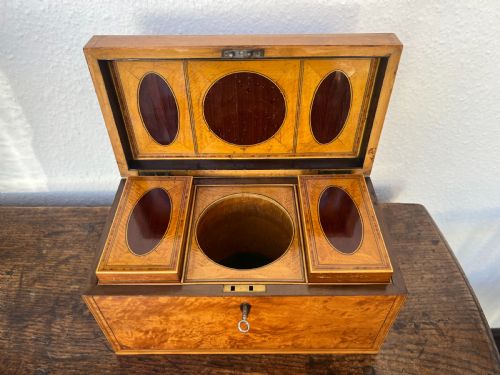
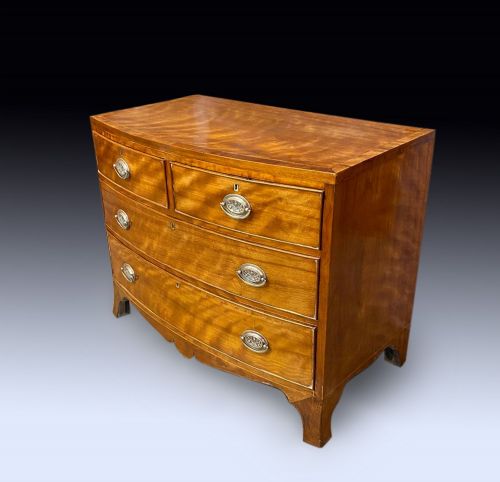


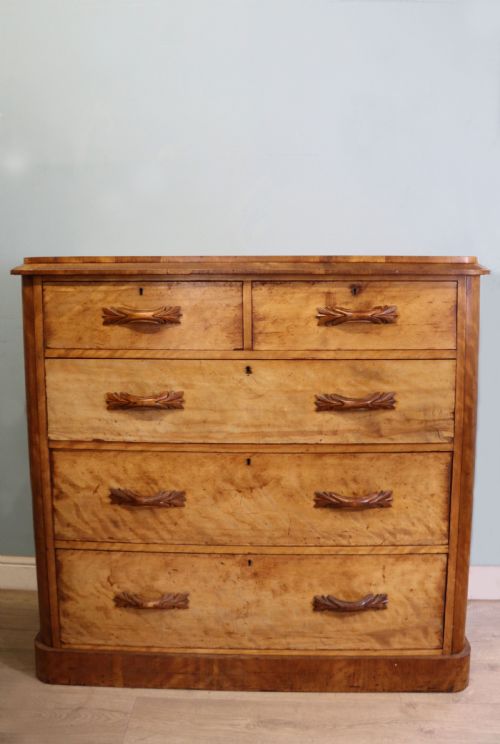


Honey Satinwood Chest
These honey satinwood chest pieces bring warm timber tones and period craftsmanship into a room.
Honey Satinwood Chest
When you search for a honey satinwood chest, you encounter forms ranging from Georgian and Victorian chests of drawers to tea caddies and secretaire chests. The items on this page span the 18th century, Victorian era, Edwardian period, and 1930s, reflecting diverse functional household pieces.
The chest of drawers remains the primary form met here, alongside bedside cabinets, dressing tables, and smaller decorative boxes. These pieces display the characteristic yellow-gold grain of satinwood, sometimes partnered with satin birch or mahogany timbers.
Originating across British and French traditions, these items vary from bow-fronted George III examples to Art Deco designs. Each object serves as a storage piece or small cabinet while showcasing light-coloured cabinet-making woods.
How they were constructed
Cabinet makers utilised satinwood veneers and solid timbers over supportive wood bases, often incorporating contrasting stringing in ebony or rosewood. Brass handles, escutcheons, and occasional bone details complete the hardware on drawers and boxes.
Surface finishing relied on French polishing or clear sealing to highlight the natural chatoyant figure of the wood. Carpenters shaped timber into bow-front profiles, secretaire fitted interiors, and decorative tea caddy boxes.
Several tea caddies retain their original glass mixing bowls and sticks, ready for the serious tea blender of two centuries ago.
What determines quality
The distinction between ordinary and superior pieces lies in the selection of the satinwood veneer and the precision of the cabinet work. Finer examples display carefully matched grain patterns across drawer fronts and balanced proportions in bow-fronted or secretaire designs.
Original hardware, intact brass fittings, and secondary timbers such as mahogany or satin birch indicate higher grade construction. The integration of period details like inlaid banding and fitted interior compartments separates standard utility pieces from masterwork furniture.
The Honey Satinwood Chest Glossary
- Satinwood
- A dense, light-coloured tropical timber known for its lustrous, reflective grain that resembles satin. It is the primary decorative wood used in these chests and boxes.
- Secretaire Chest
- A drawer chest featuring a pull-down writing flap that conceals small drawers and pigeonholes inside. This form combines chest storage with a desk.
- Bow Front
- A convex, curved front profile popular in Georgian and Victorian case furniture. This shape softens the corners of a chest of drawers.
- Stringing
- Thin lines of contrasting wood or bone inlaid into the surface of furniture for decorative effect. Ebony and rosewood are typical contrasting materials.
- Teapoy
- A small stand or caddy designed to hold tea canisters, popular in the 18th and 19th centuries. These boxes often feature internal compartments and mixing bowls.
Honey Satinwood Chest: Frequently Asked Questions
How do I date a satinwood chest?
Dating relies on stylistic clues such as overall form, leg shape, and the presence of bow-front profiles or Edwardian inlays. Georgian and Victorian pieces show distinct construction methods in their drawer linings and backboards.
Examining secondary timbers like mahogany or satin birch also helps place the piece within its specific century.
Where were these chests made?
The pieces originate primarily from British and French workshops, encompassing Georgian, Regency, and 19th-century continental styles. Makers ranged from regional cabinet shops to larger furniture houses.
French pieces often include secretaire chests and ballot boxes reflecting continental design trends of the period.
How should I care for satinwood?
Satinwood furniture requires gentle dusting with a soft, dry cloth to protect the polished surface and veneer. Avoid placing pieces in direct sunlight or near heat sources to prevent timber movement.
Applying occasional appropriate wax preserves the lustre of the wood without building up heavy residues.