
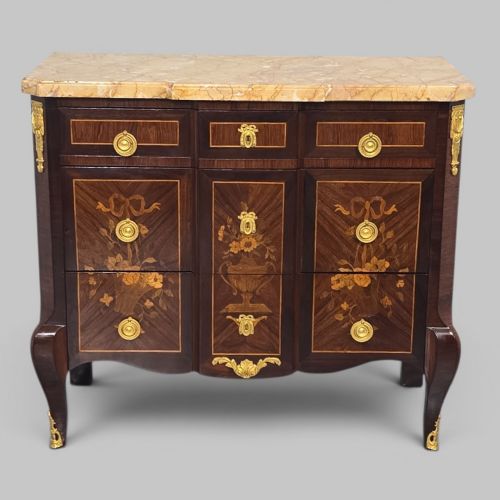
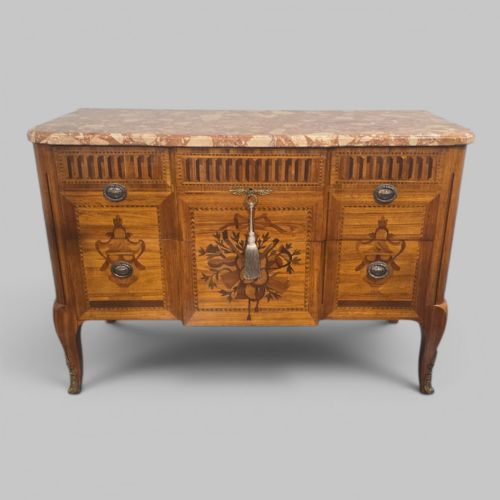


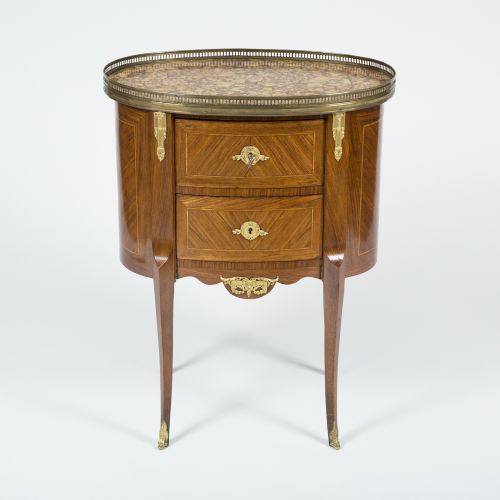

French Transitional Commode
A french transitional commode marries curved rococo lines with rectilinear neoclassical restraint, offering sophisticated storage for any interior.
French Transitional Commode
A french transitional commode bridges the stylistic gap between the flamboyant Louis XV period and the geometric order of the Louis XVI reign, bringing together gentle curves and straight tapering supports. These pieces appear in forms ranging from traditional chests of drawers and side cabinets to secretaire chests and compact bedside tables.
The materials recorded in these listings span walnut, mahogany, cherrywood, and exotic veneers like satinwood, rosewood, and kingwood, frequently paired with marble tops. The surviving examples date from the eighteenth century through the nineteenth century, alongside revival pieces produced around nineteen-ten and nineteen-twenty.
Buyers encounter commodes finished with marquetry, inlay, or painted surfaces, reflecting both authentic eighteenth-century craftsmanship and later stylistic revivals. The overarching design vocabulary remains tied to french transitional aesthetics, incorporating brass or ormolu mounts and gilt bronze details.
Materials and construction methods
Cabinetmakers constructed the carcase using structural timbers like walnut or mahogany before applying elaborate decorative veneers including satinwood, rosewood, tulipwood, and kingwood. Marquetry patterns and inlaid motifs formed intricate geometric or floral designs across the drawer fronts and side panels.
Heavy slabs of marble, including variegated and breche d'alep varieties, were shaped to fit precisely onto the top surface of each commode. Artisans finished the furniture with cast brass, ormolu, and gilt bronze mounts that accented the corners, apron, and keyhole escutcheons.
French Transitional Commode Retail Price Guide 2026
Typical asking prices for french transitional commode among the pieces listed under this phrase on Sellingantiques today, from the lower quarter to the upper quarter. They describe what is for sale here now, not the wider market.
Listings feature commodes spanning the eighteenth century, the nineteenth century, and revival pieces from nineteen-ten and nineteen-twenty.
Factors determining quality
The distinction between tiers of quality rests upon the selection and handling of cabinet timbers and decorative veneers. Richly figured satinwood, rosewood, and kingwood combined with detailed marquetry elevate a piece above simpler painted or single-wood versions.
The refinement of the cast ormolu and gilt bronze mounts, alongside the density and natural patterning of the marble top, signals superior workshop production. Original eighteenth-century pieces carry historical weight, while later nineteenth-century and twentieth-century interpretations demonstrate varying degrees of cabinetmaking skill.
The French Transitional Commode Glossary
- Ormolu
- Gilded bronze mounts applied to the corners and feet of furniture. This decorative technique added metallic brightness to the timber carcase.
- Marquetry
- Small pieces of coloured veneer fitted together to form pictures or geometric patterns. Artisans used this method to decorate drawer fronts.
- Transitional style
- A design phase merging Louis XV curves with Louis XVI straight lines. This aesthetic dominated cabinetmaking during the late eighteenth century.
- Breche d'alep marble
- A specific type of variegated marble featuring brecciated patterns with tones of brown, cream, and grey. It served as a durable surface top for commodes.
- Secretaire chest
- A cabinet containing a drop-down writing flap concealing small drawers and pigeonholes. These multifunctional pieces combined storage with a desk surface.
French Transitional Commode: Frequently Asked Questions
What is a french transitional commode?
A french transitional commode is a set of drawers or cabinet built during the period when furniture design shifted from ornate rococo curves to the straight lines of neoclassicism.
These pieces combine functional storage with decorative veneers, marble tops, and bronze or brass mounts.
How do I style a commode at home?
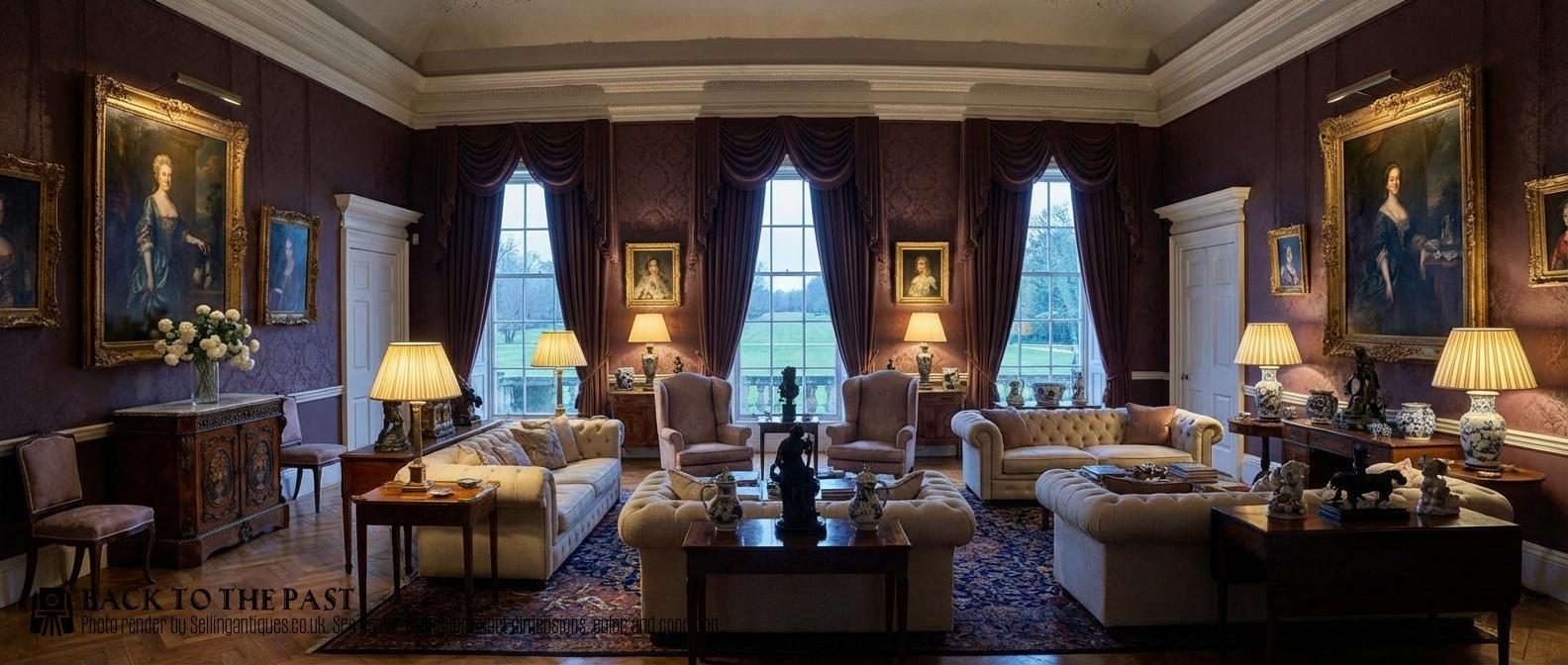
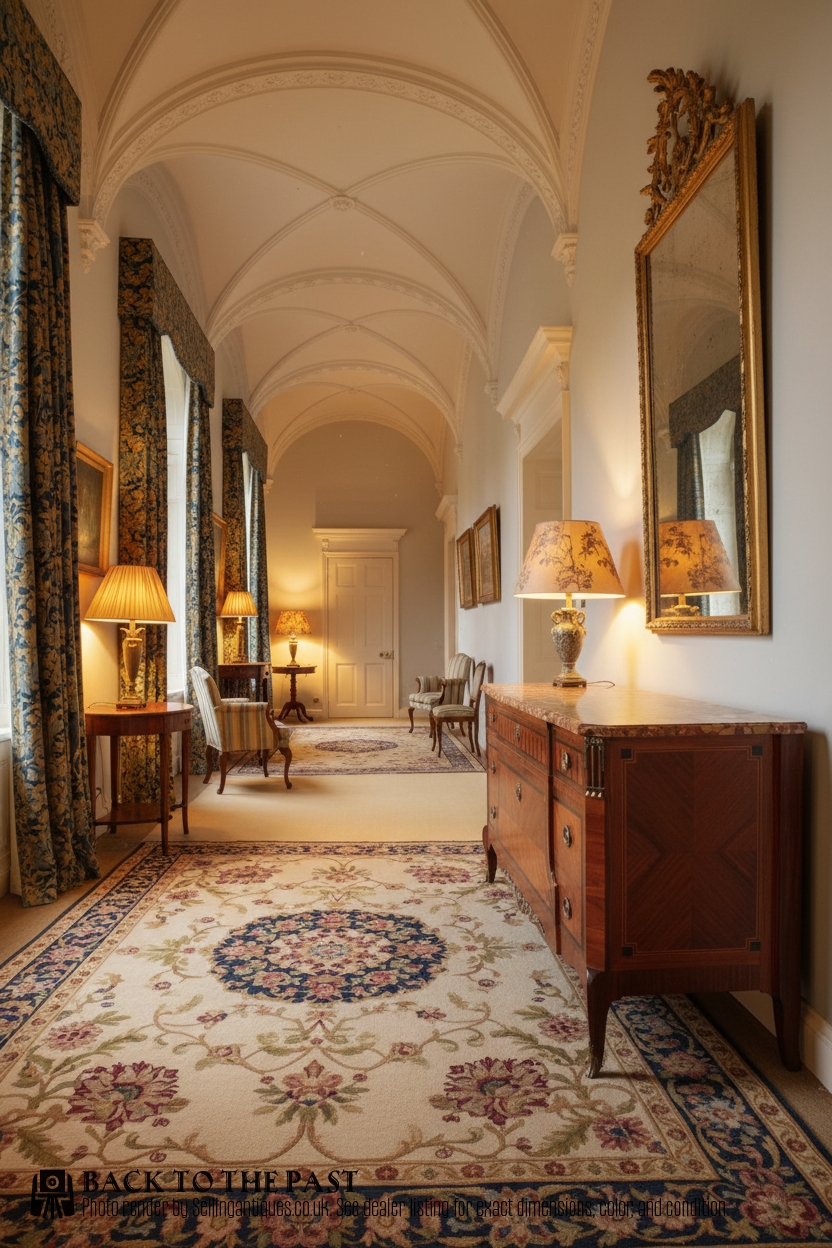
Place a commode against a principal wall in a living room, hallway, or bedroom where its decorative veneers and marble top can act as a focal point.
Keep surface styling simple with a mirror or lamp to allow the inlaid woodwork to remain visible.
Are these commodes suitable for daily use?
These cabinets provide practical drawer space for linens, clothing, or household items while maintaining their decorative appeal.
Care should be taken with moisture on wooden surfaces and heavy impacts on the marble tops.
How do I tell an original eighteenth-century piece apart from later revivals?
Eighteenth-century commodes exhibit period construction methods, timber ageing, and hand-cut joinery specific to that era.
Nineteenth and twentieth-century revival pieces often display machine-sawn elements and stylistic traits from later manufacturing periods.