


French Secretaire Chest
A french secretaire chest combines practical drawer storage with a clever fold-down writing surface, offering an elegant solution for modern study and living spaces.
French Secretaire Chest
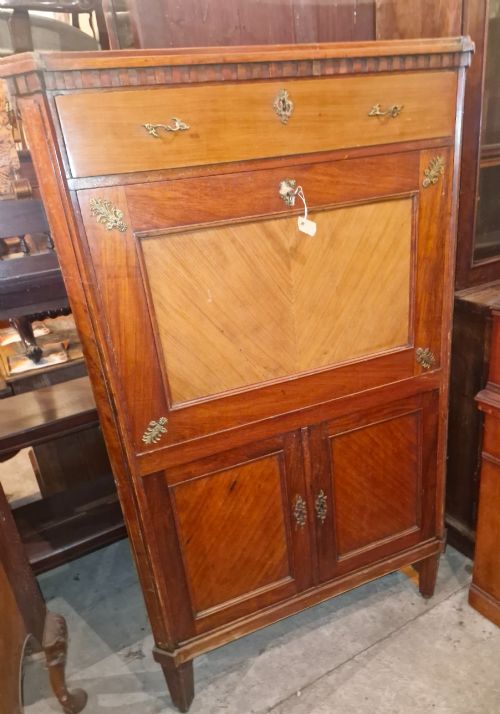
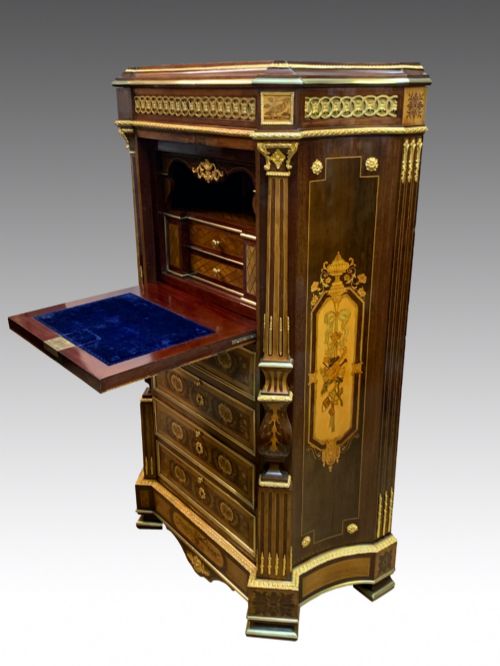
A french secretaire chest bridges the gap between a conventional chest of drawers and a dedicated writing desk. The top drawer or upper section typically conceals a drop-front writing flap and fitted interior compartments for correspondence.
Examples on this page span several distinct eras, from nineteenth-century mahogany and walnut designs to twentieth-century art deco and lighter satinwood or elm variations. Tall semanier formats and marble-topped bombe shapes also appear frequently across the selection.
Originating largely from continental workshops and nineteenth-century British adaptations of French forms, these pieces served both formal reception rooms and private chambers. Their dual function remains their primary attraction for contemporary interiors.
Materials and Construction
Cabinet makers utilised a rich palette of timbers including mahogany, walnut, rosewood, kingwood, tulipwood, and satinwood, often enhanced by intricate marquetry inlays. Carcase construction frequently incorporated sturdy oak or elm foundations beneath decorative hardwood veneers.
Ornate brass and ormolu mounts punctuate many pieces, framing drawer fronts and protecting corners. Upper surfaces on specific bombe and serpentine forms feature heavy marble slabs fitted precisely to the timber carcase.
Interior compartments within the drop-down writing sections demand meticulous joinery, featuring small drawers, pigeonholes, and occasionally velvet-lined writing surfaces. Boullework and ebonised finishes further demonstrate the complex decorative techniques applied by period artisans.
Materials recorded across the archive include mahogany, walnut, rosewood, kingwood, satinwood, elm, marble, velvet, and ormolu.
Assessing Quality and Craftsmanship
The sophistication of the internal stationery fittings often signals the overall standard of manufacture, where hidden drawers and secret compartments display finer dovetailing than the main carcase. The crispness of ormolu mounts and the precision of marquetry patterns reveal the skill invested in the exterior decoration.
Timber selection dictates visual depth, particularly in burr walnut and figured mahogany pieces where grain matching across drawer fronts requires deliberate planning. Heavy marble tops must sit flush against the timber framing with consistent overhang and bevelling.
Structural integrity depends on smooth operation of the central writing flap mechanism and the alignment of deep drawer runners over decades of use. Superior examples maintain tight veneer joints and original brass hardware without excessive shrinkage cracks.
Maison Krieger
The French Secretaire Chest Glossary
- Secretaire abattant
- A tall fall-front desk where the writing flap drops vertically to reveal internal compartments. This form maximises vertical storage while providing a stable writing surface.
- Ormolu
- Gilt bronze mounts and decorative accents applied to furniture. It adds metallic contrast and refined detail to rich timber surfaces.
- Bombe
- A convex, swelling contour typical of serpentine furniture fronts. This curvaceous profile requires advanced veneer bending and shaping techniques.
- Marquetry
- Elaborate patterns created by fitting thin pieces of contrasting wood veneer into a timber ground. It decorates drawer fronts and primary panels with geometric or floral motifs.
- Semanier
- A tall chest of seven drawers designed to hold one week of clothing or paperwork. The format provides significant vertical capacity within a narrow footprint.
French Secretaire Chest: Frequently Asked Questions
How do I use one today?
You can utilise the drop-front writing surface as a compact laptop station or correspondence desk in a bedroom, hallway, or living room. The remaining drawers provide practical storage for household items or stationery.
Leaving the fall-front open displays the fitted interior compartments while closed pieces maintain a clean, formal cabinet appearance.
Are these pieces strictly French?
While many examples originate directly from France or follow distinct French aesthetic movements like Louis XVI and Empire styles, British cabinet makers also produced similar forms during the Victorian era.
Regional variations incorporate native timbers like elm alongside classic continental choices such as kingwood and rosewood.
How do I date a secretaire chest?
Dating relies on identifying primary timber choices, construction methods, and decorative hardware styles across different periods. Nineteenth-century pieces often feature mahogany, walnut, or heavy ormolu mounts, while twentieth-century examples display art deco influences.
Internal joinery techniques and secondary woods inside the drawers provide further clues regarding the era of manufacture.