
Gilt Bronze Mounted Chest
A gilt bronze mounted chest brings formal European presence into a room through heavy cast metal mounts on timber.
Gilt Bronze Mounted Chest
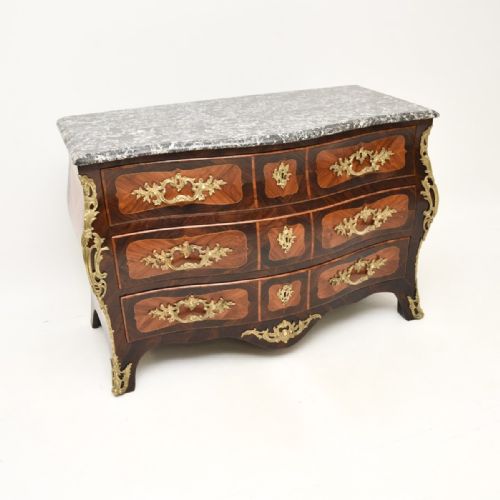
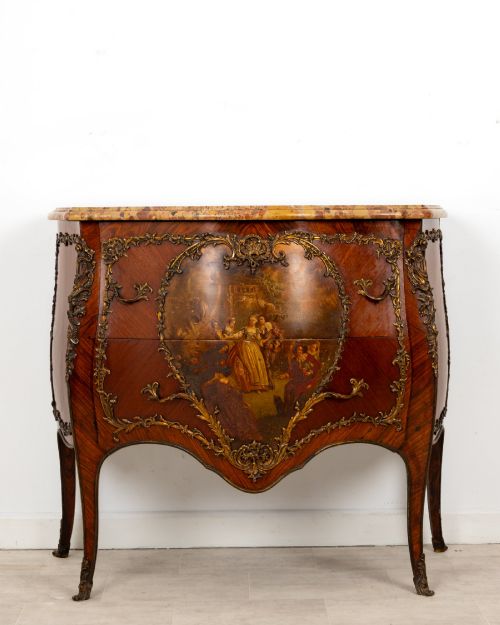
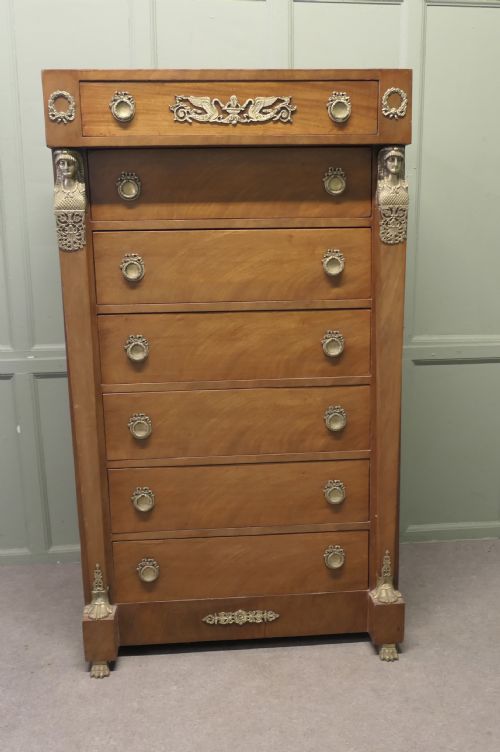
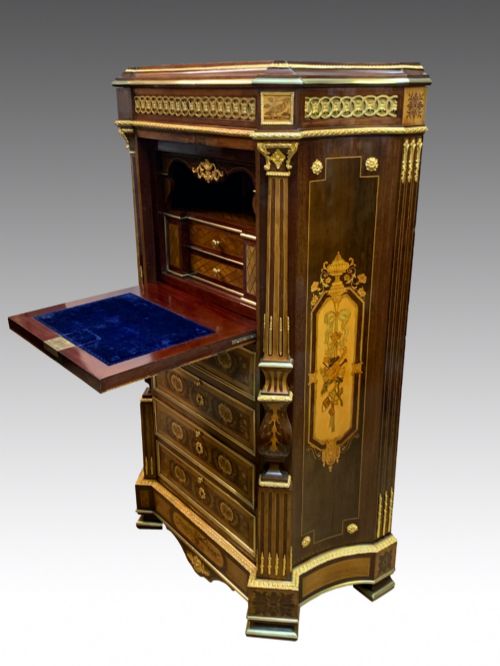
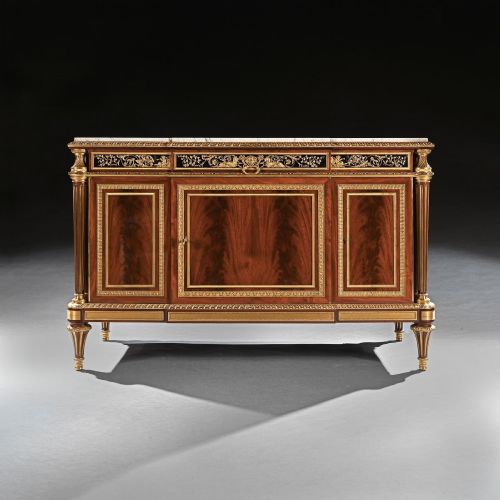
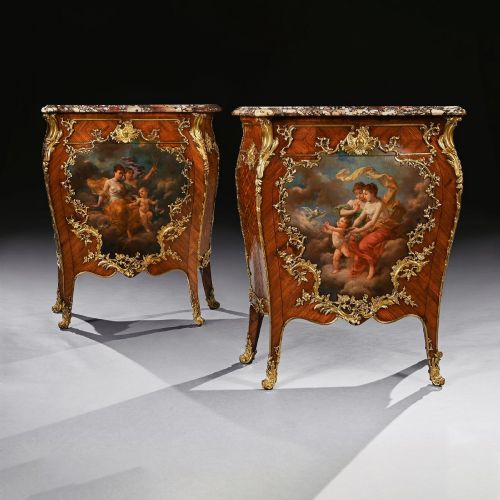
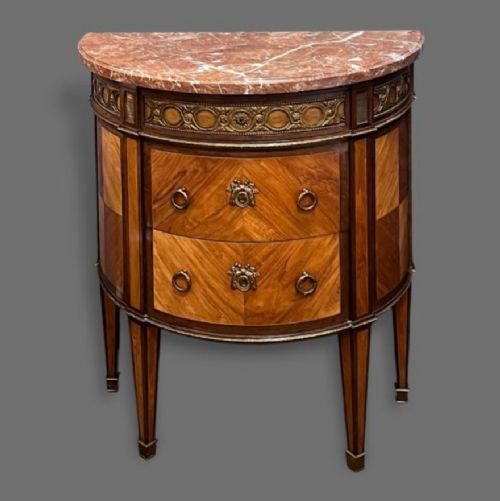
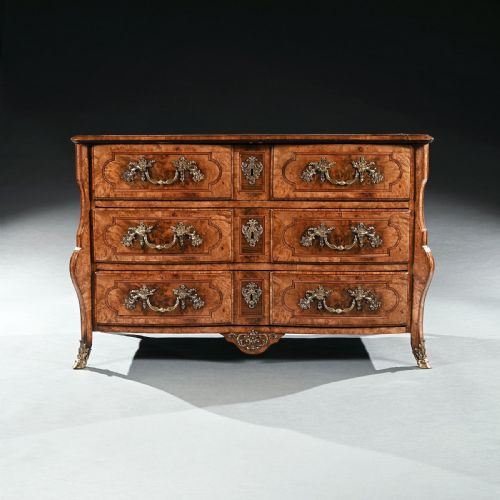
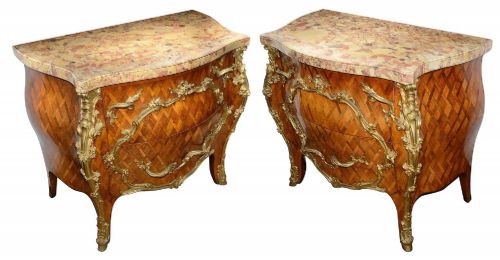
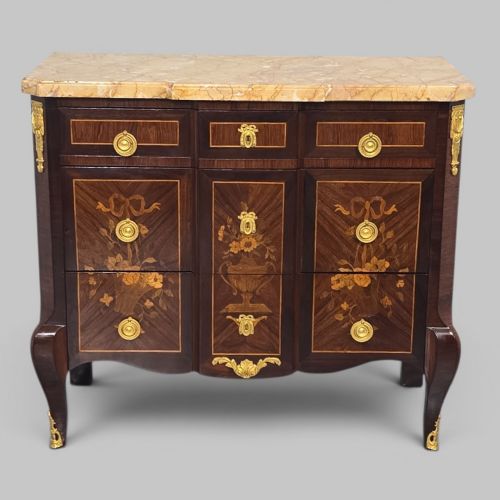
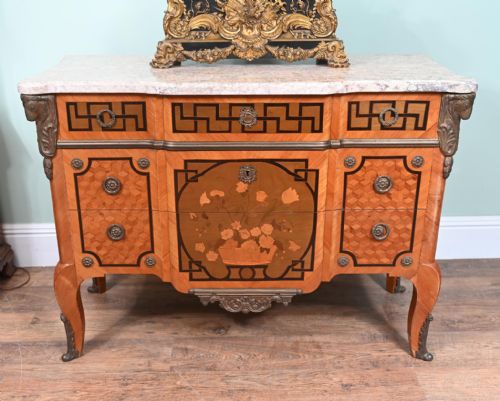
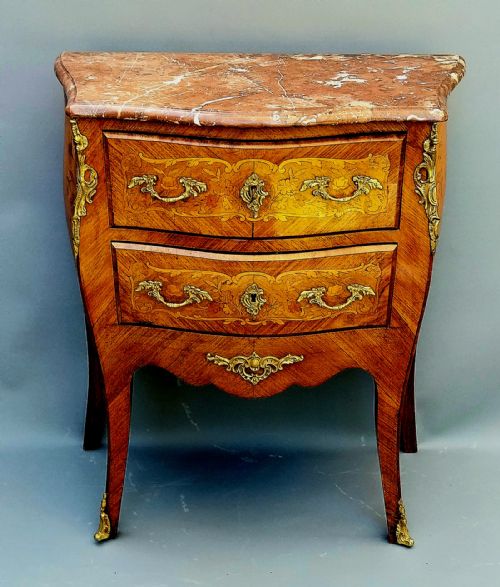
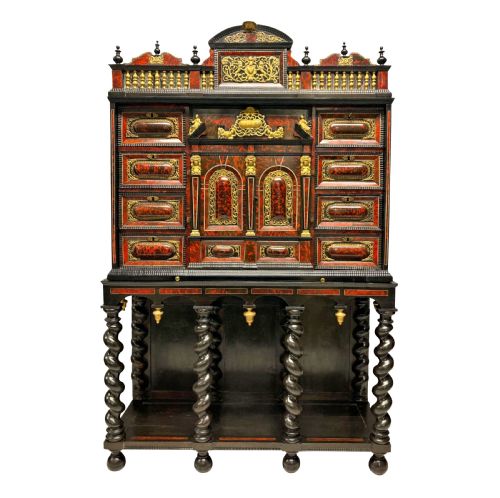
A gilt bronze mounted chest is principally found here as a French commode, cabinet, or secretaire desk dating across the seventeenth, eighteenth, nineteenth, and early twentieth centuries. These storage pieces take low bombé shapes or taller architectural forms, often topped with marble slabs.
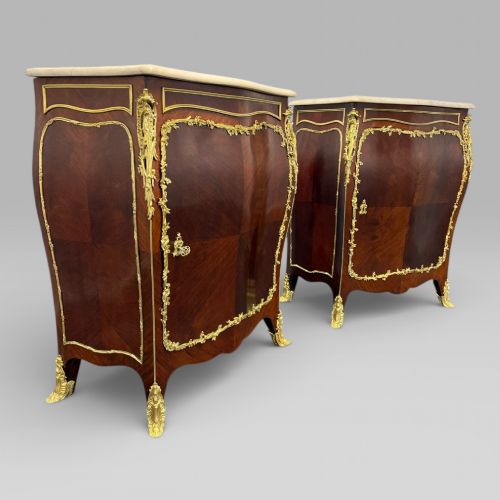
The prevailing aesthetic draws heavily from Louis XV, Louis XVI, and Baroque design idioms, executed either in period workshops or during nineteenth-century revivals. Buyers encounter standard chests of drawers alongside twin commodes and specialised cabinets on stands.
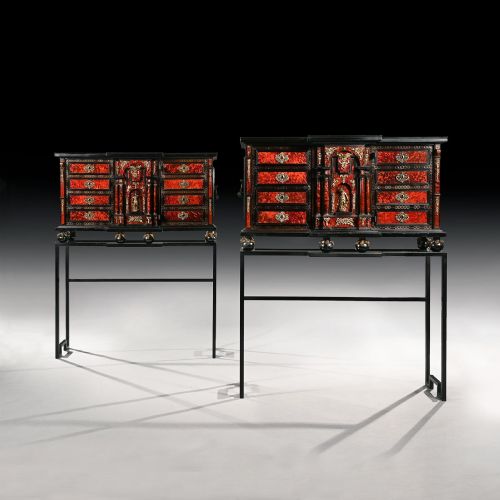
Origin points cluster tightly around Parisian workshops, though Flemish, Spanish, and Italian pieces also appear within the selection. The fundamental form marries practical drawer storage with sculptural metalwork applied to the corners, apron, and handles.
Materials and Technique
Construction relies on a sturdy carcase of walnut, mahogany, or oak, layered with decorative timber veneers such as kingwood, rosewood, satinwood, and burr maple. Marquetry and parquetry patterns frequently adorn the drawer fronts and sides in geometric or floral arrangements.
Mounts of gilt bronze or ormolu are cast, chased, and fire-gilded before being secured to the timber frame around keyholes and corners. Heavy marble tops, cut to fit the exact contours of the commode or cabinet, rest upon the upper surface.
Listings span the seventeenth to the early twentieth centuries, uniting seventeenth-century Spanish cabinets with nineteenth-century French revival commodes.
Evaluating the Pieces
Quality rests heavily on the crispness of the gilt bronze chasing and the depth of the metal's surface gilding. Weaker examples feature flat, mechanically cast mounts with little hand-chiselling, whereas superior pieces show sharp relief and careful integration with the wood.
The precision of the cabinetwork dictates the tier of the piece, particularly in the alignment of marquetry veneers and the smooth operation of heavy drawers. Original marble tops that match the exact profile of the carcase distinguish higher-grade examples from later replacements.
Jacques Bircklé·Maison Krieger·Henry Dasson·E. Kahn·Thomas Hache·Jean-Henri Riesener·Charles Cressant
The Gilt Bronze Mounted Chest Glossary
- Ormolu
- Gilded bronze applied as decorative mounts on furniture. The technique involves fusing a mercury and gold amalgam to a bronze base through heat.
- Bombé
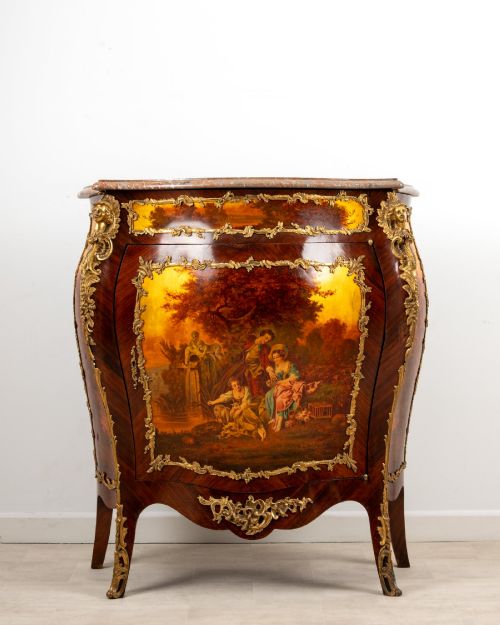
- A swelling, convex curved shape typical of seventeenth and eighteenth-century case furniture. This undulating profile requires specialised veneer shaping.
- Marquetry
- Inlaid wood patterns forming pictorial or decorative designs across the surface of a chest. Cabinetmakers use contrasting timber veneers to achieve tonal variation.
- Commode
- A low French chest of drawers standing on legs, popular from the Regency period onward. These pieces combine storage with decorative display surfaces.
- Vernis Martin
- A simulated Japanese lacquer technique developed in France. Artisans applied multiple layers of varnish to create translucent coloured finishes.
Gilt Bronze Mounted Chest: Frequently Asked Questions
Where should I place a gilt bronze mounted chest?
These decorative storage pieces suit formal reception rooms, large hallways, or spacious bedrooms where their ornate metal mounts can catch the light. They function effectively as standalone focal points against plain walls.
Because many examples feature marble tops and delicate veneer work, position them away from direct heat sources and strong sunlight to protect the wood and finish.
How do I distinguish Louis XV from Louis XVI styles?
Louis XV pieces, often called Rococo, display asymmetrical curves, sweeping bombé fronts, and organic scrollwork in their gilt bronze mounts. The overall silhouette avoids straight lines.
Louis XVI furniture introduces neoclassical symmetry, featuring straight fluted legs, rectangular proportions, and geometric parquetry panels influenced by classical architecture.
What is the difference between a commode and a standard chest of drawers?
A commode is specifically a low, decorative French chest of drawers usually raised on distinct legs and heavily ornamented with ormolu mounts. They were designed for fashionable European parlours and bedchambers.
Standard chests of drawers often follow simpler domestic forms with less emphasis on curved carcases, elaborate veneers, or sculptural metal fittings.
How do I care for antique wood veneers and ormolu mounts?
Dust the timber surfaces regularly with a soft, dry cloth and apply occasional specialist wax to nourish the underlying wood and veneer. Avoid modern liquid polishes that can damage old finishes.
Clean the gilt bronze mounts gently with a dry brush to remove dust from the crevices, avoiding chemical cleaners that strip the historic gilding.