

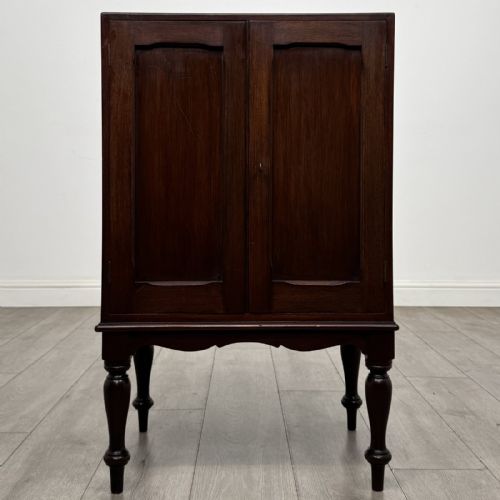
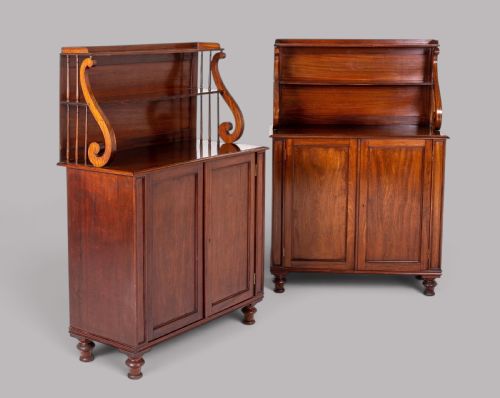
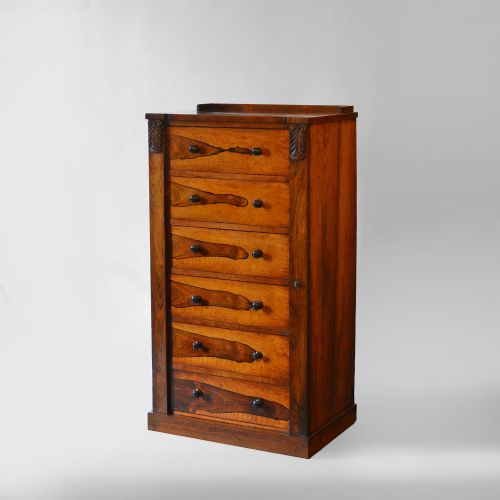
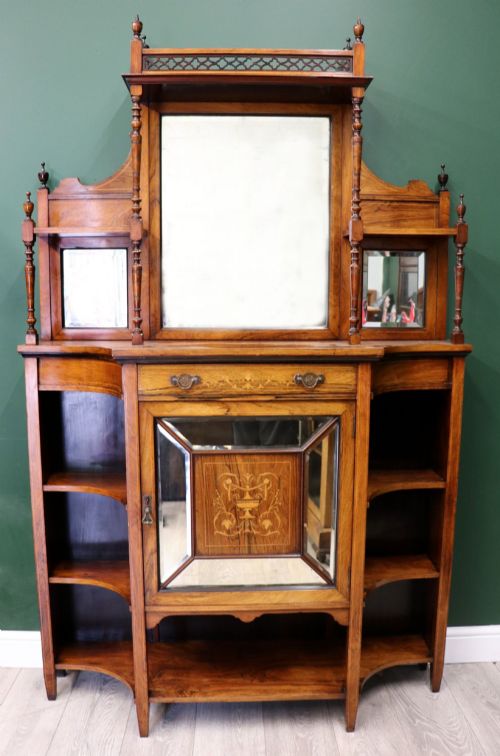
Brown Wood Side Cabinet
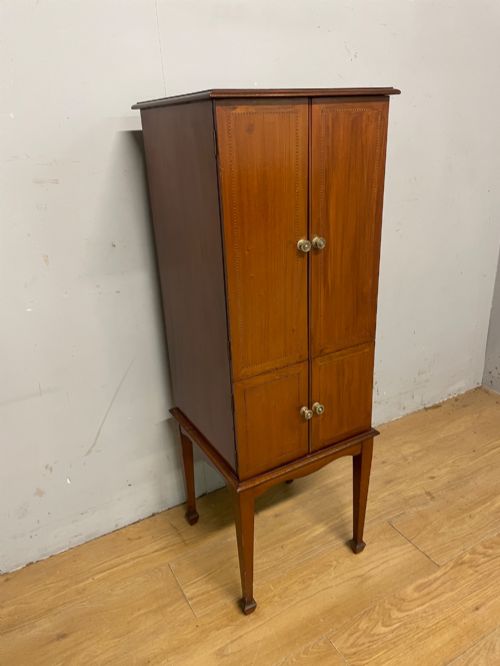
A brown wood side cabinet brings utility and warmth to a room, offering practical storage through timber surfaces.
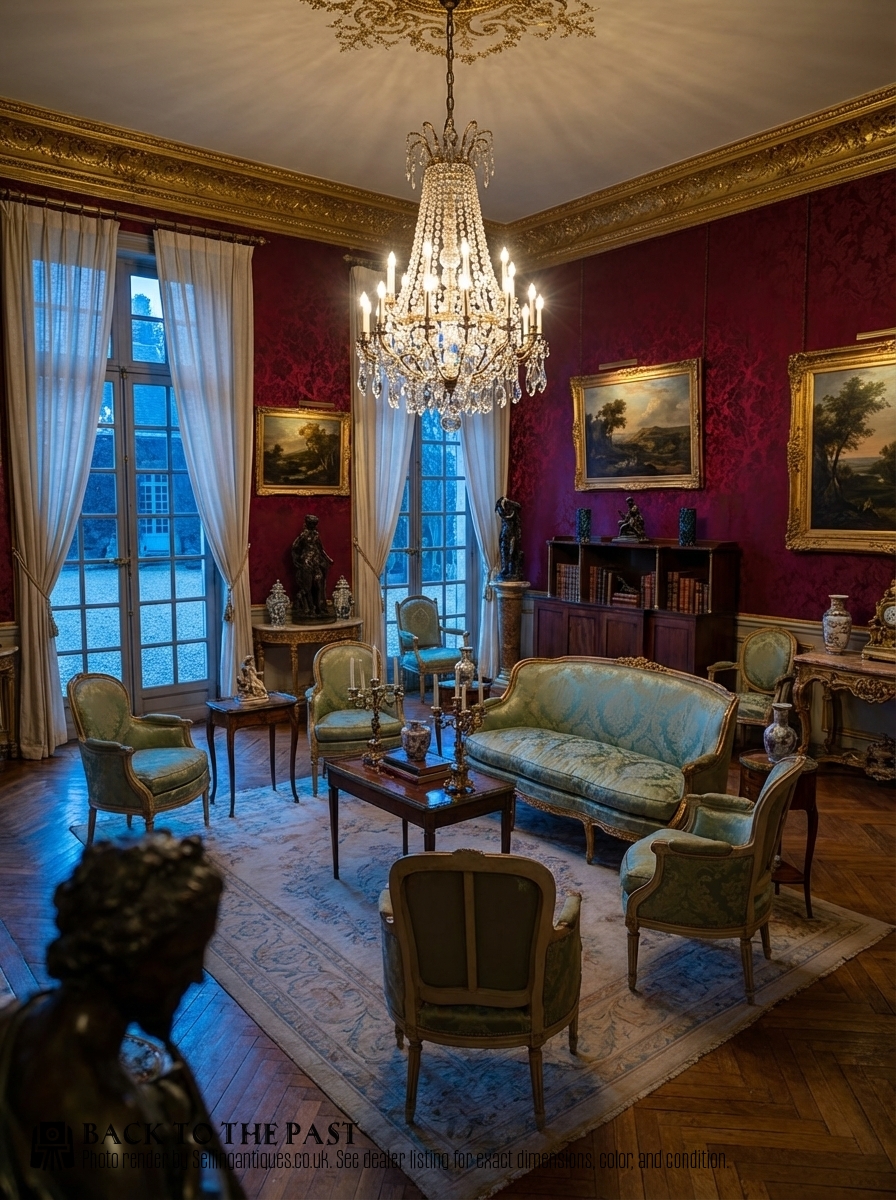
Brown Wood Side Cabinet
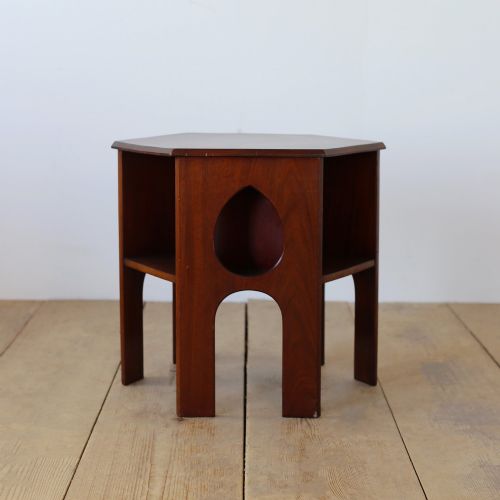
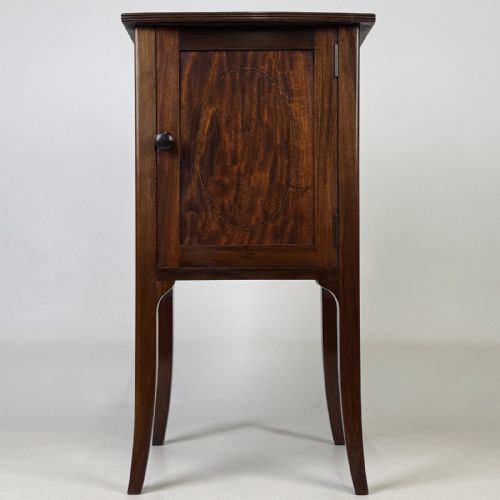
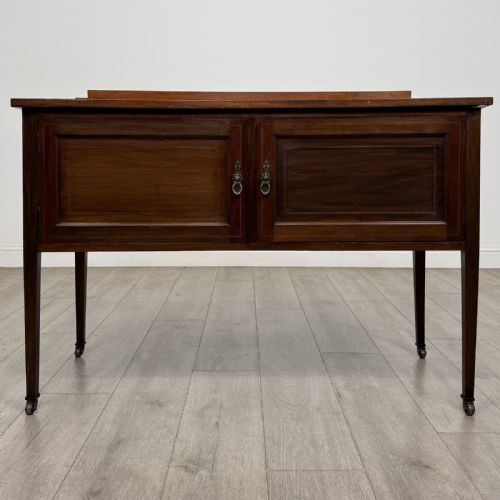
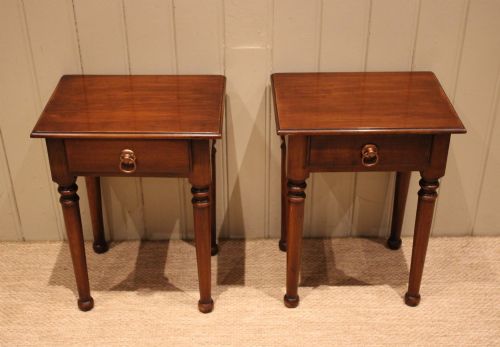
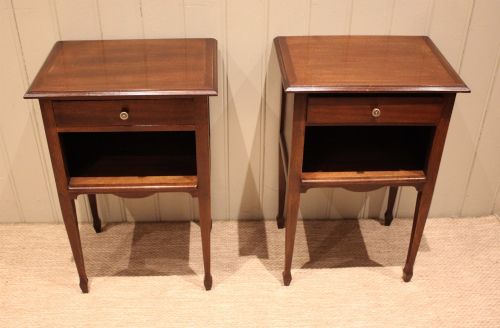
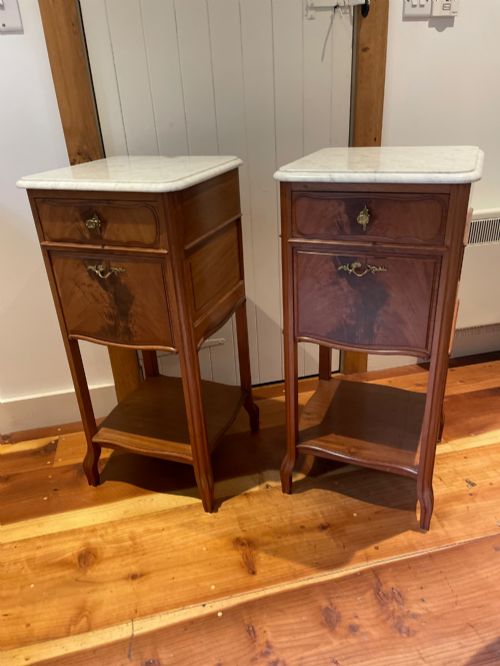
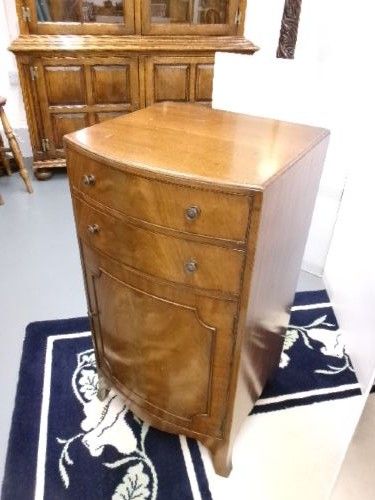
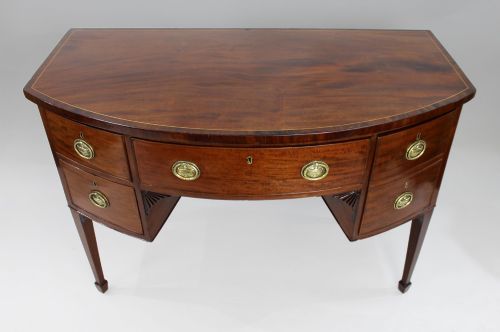
A brown wood side cabinet provides enclosed or surface storage in a domestic interior, drawing on forms developed across the Georgian, Victorian, and Edwardian periods. Pieces range from compact bedside tables and small cupboards to taller display units, credenzas, and chiffoniers.
Mahogany and walnut appear most frequently in the selection, often complemented by satinwood, rosewood, oak, or yew wood. Makers utilised these dense timbers for strength and rich grain patterns, frequently adding brass hardware, glass panels, or marble tops.
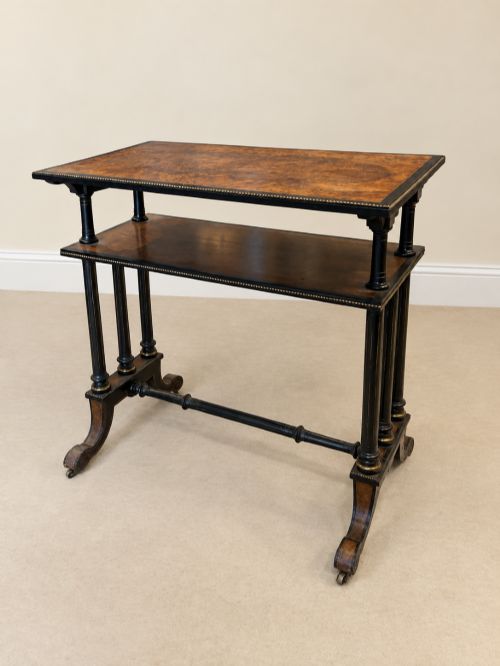
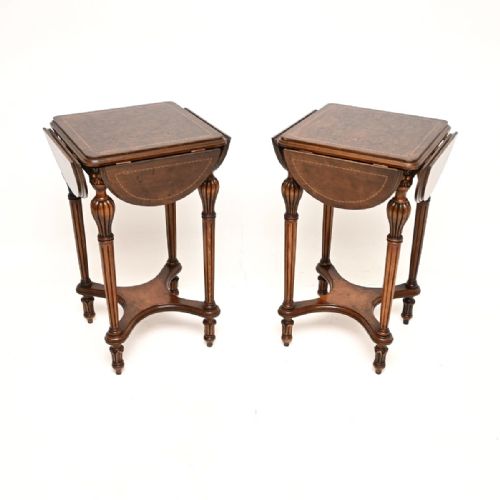
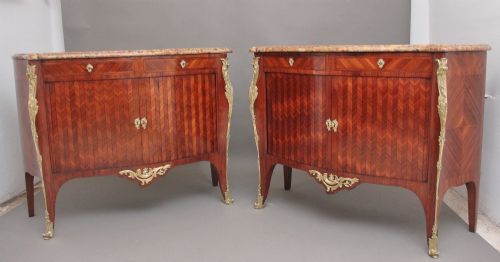
The selection includes specific regional designs such as French Louis XV style marquetry pieces alongside British and continental cabinet-making traditions. Buyers encounter everything from simple drop leaf tables to elaborate metamorphic writing desks and music cabinets.
How they were made
Cabinet-makers relied on solid timbers and fine veneers like flame mahogany, rosewood, and walnut, laid over structural woods using traditional joinery. Surfaces often received wax or polish treatments to highlight the natural grain.
Inlay work incorporated satinwood and various contrasting woods to create geometric or floral motifs on drawer fronts and tabletops. Metal elements such as brass handles and mounts secured doors and drawers while adding decorative contrast.
Brown Wood Side Cabinet Retail Price Guide 2026
Typical asking prices for brown wood side cabinet among the pieces listed under this phrase on Sellingantiques today, from the lower quarter to the upper quarter. They describe what is for sale here now, not the wider market.
The inventory includes nineteenth-century pieces alongside Edwardian, Georgian, and Art Deco designs executed in mahogany, walnut, oak, and rosewood.
What varies in quality
The choice of timber and veneer determines much of the visual character, with figured mahogany and book-matched walnut sitting at the higher end. The precision of inlay and the presence of secondary woods reveal the level of workshop care.
Hardware integrity, from original turned knobs to cast brass handles, influences the overall coherence of a piece. Structural stability in legs, doors, and drawers depends on the original joinery methods employed by the maker.
Collinson & Lock·François Linke
The Brown Wood Side Cabinet Glossary
- Chiffonier
- A low sideboard or cabinet featuring shelves or a small superstructure, common in nineteenth-century interiors. These pieces typically combine enclosed lower cupboards with display space above.
- Marquetry
- The art of applying pieces of veneer to a structure to form decorative patterns and pictures. Craftsmen used various coloured woods to achieve pictorial designs.
- Gonçalo Alves
- A dense exotic hardwood with striking dark brown and cream markings, utilised for high-status furniture. It offers exceptional durability and a highly decorative figure.
- Metamorphic
- Furniture designed to transform from one form into another, such as a table concealing a writing desk. These pieces demonstrate clever mechanical ingenuity from the Edwardian era.
- Demi lune
- A half-moon shape used for tables and cabinets designed to stand flat against a wall. This form saves floor space while providing a useful top surface.
Brown Wood Side Cabinet: Frequently Asked Questions
Where do brown wood side cabinets work best?
These cabinets suit living rooms, hallways, and bedrooms where surface space and enclosed storage are required. Smaller versions function effectively as bedside tables or lamp stands.
Larger credenzas and chiffoniers anchor dining spaces or act as focal points in reception rooms, providing room for display and organisation.
How do I identify a Georgian cabinet?
Georgian pieces often display formal proportions, heavy use of flame mahogany, and restrained decorative carving. Look for construction methods and timber choices typical of the eighteenth and early nineteenth centuries.
Drawer linings in secondary woods and traditional hand-cut dovetails help distinguish these older pieces from later revival styles.
What is the difference between a chiffonier and a credenza?
A chiffonier is typically a compact sideboard featuring a raised shelf or small cupboard at the back, popular during the nineteenth century. It provides both surface utility and enclosed storage in a modest footprint.
A credenza generally refers to a lower, longer sideboard without a superstructure, frequently associated with Victorian display and dining furniture.
How should I care for antique mahogany and walnut?
Keep wooden furniture away from direct heat sources and strong sunlight to prevent the timber and veneers from drying out. Consistent indoor humidity levels protect the structural joints.
Apply a traditional beeswax polish periodically to maintain the lustre of the wood and nourish the surface without building up excessive residue.