
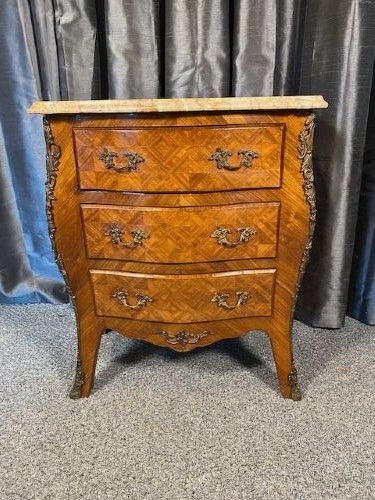
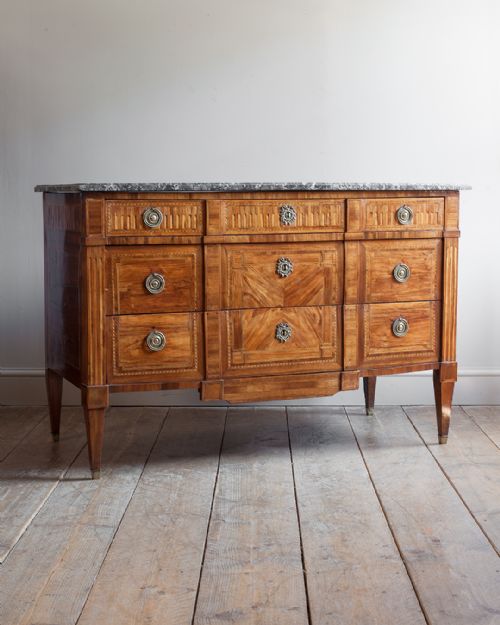
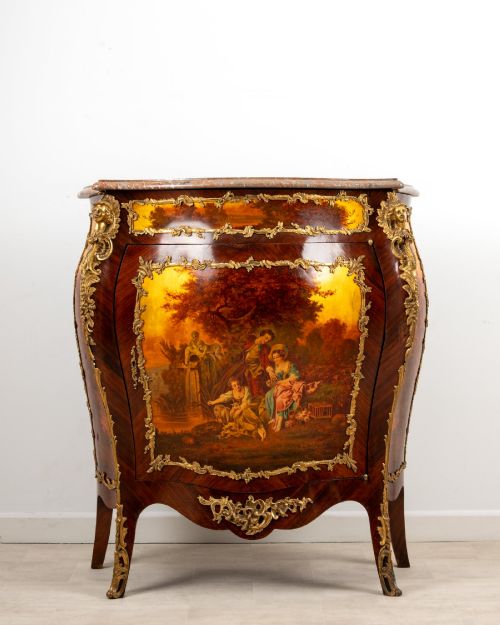
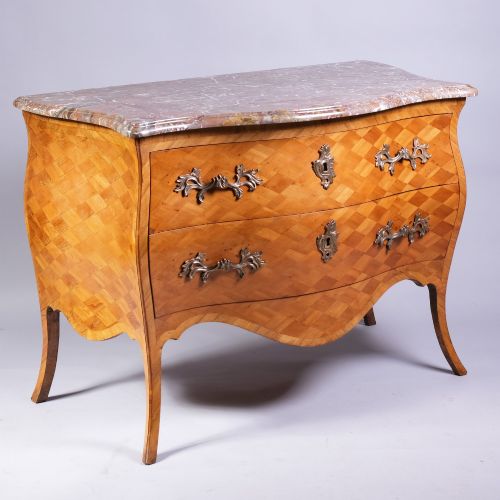
Kingwood Marble Commode
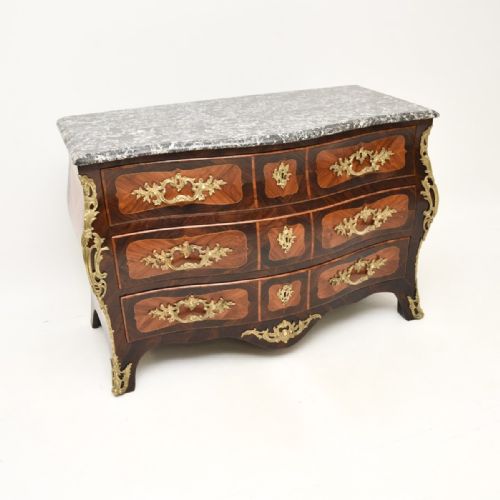
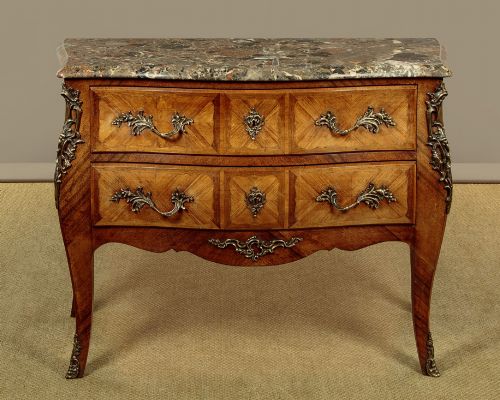
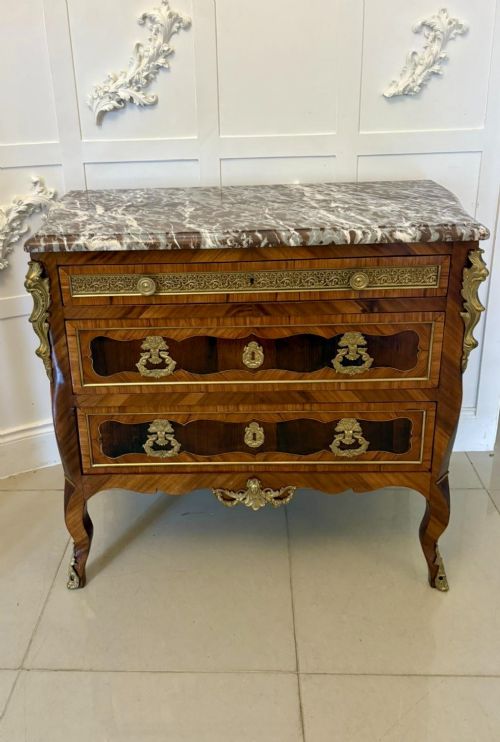
A kingwood marble commode brings together richly figured timber and stone in a singular piece of furniture designed for display.
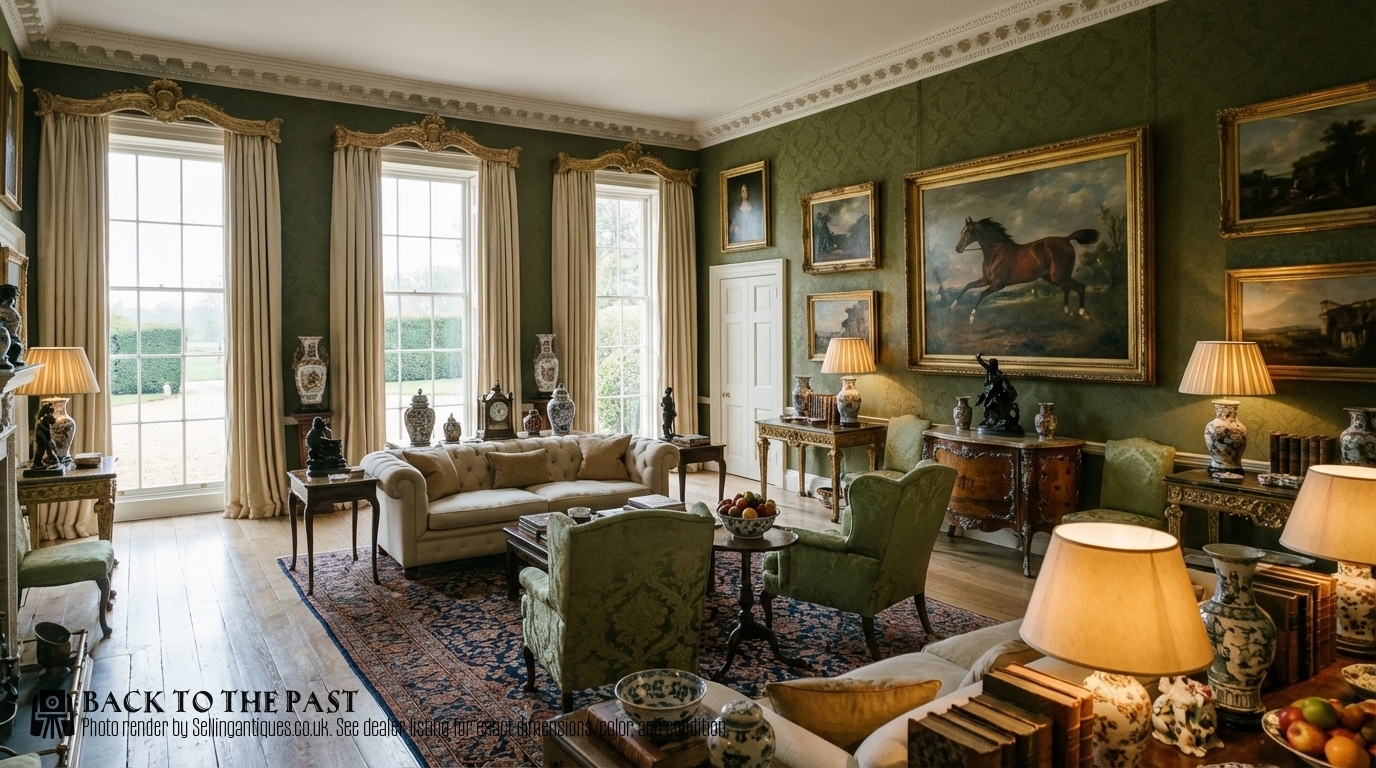
Kingwood Marble Commode
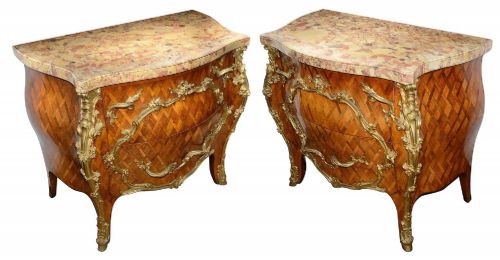
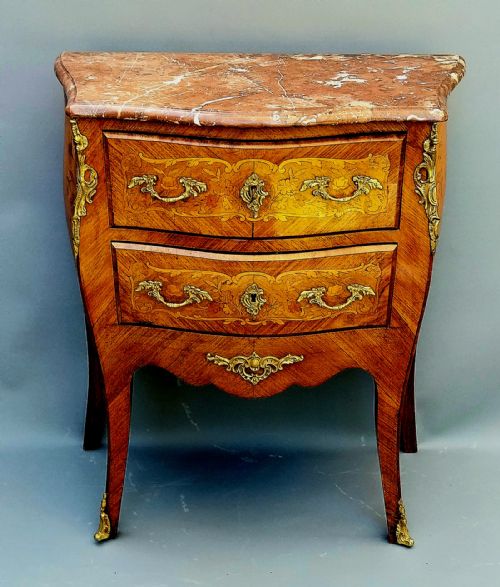
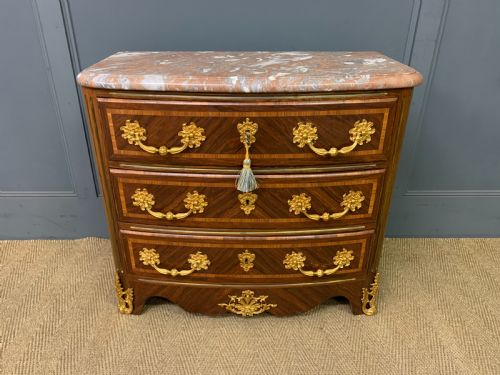
A kingwood marble commode is a low chest of drawers or side cabinet surfaced with exotic veneer and topped with polished stone. These pieces originate predominantly from French workshops spanning the eighteenth, nineteenth and early twentieth centuries.
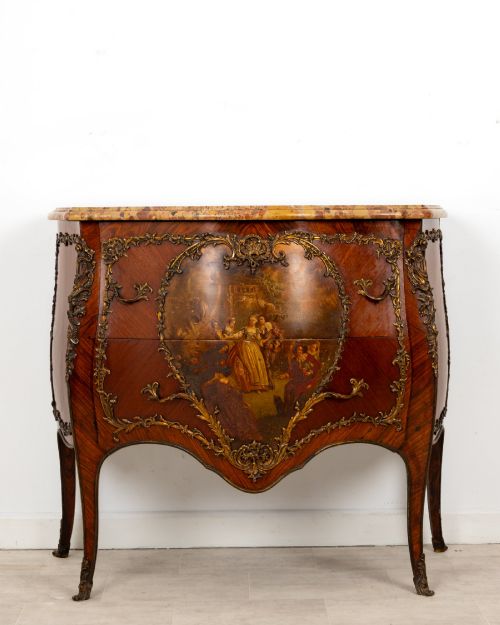
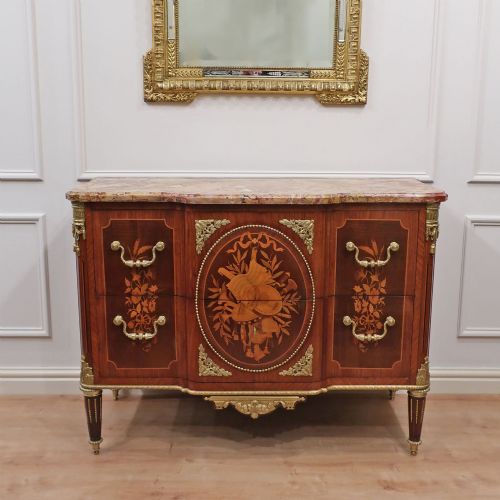
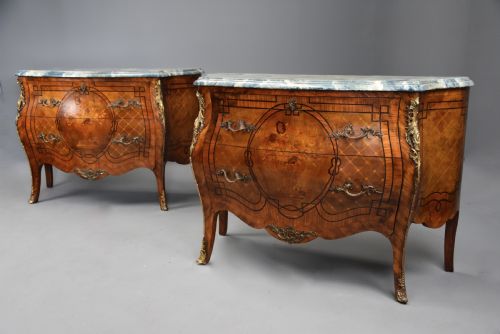
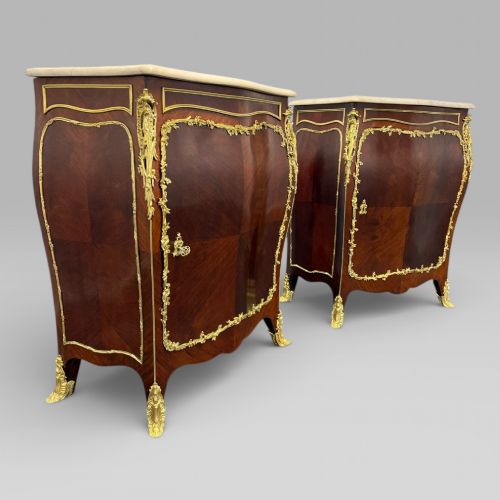
The physical form varies from straight-fronted chests to swelling bombe shapes and serpentine fronts. Surviving examples frequently adhere to historic design vocabularies such as Louis XV and Louis XVI styles.
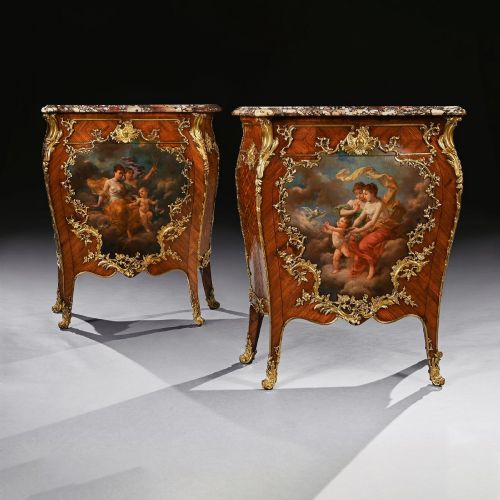
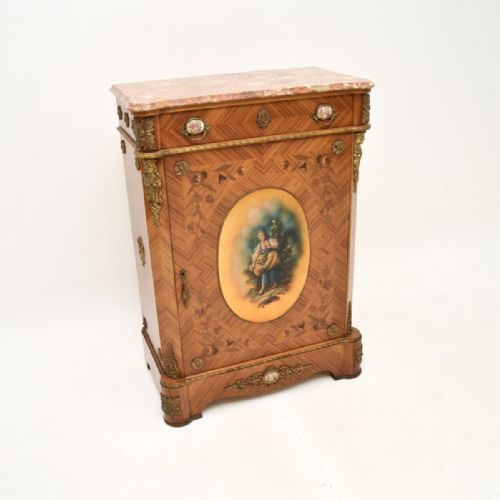
Beyond standard chests of drawers, buyers encounter companion pieces including bedside cabinets, side tables and two-door cupboards. Many examples emerge as matched pairs rather than single items.
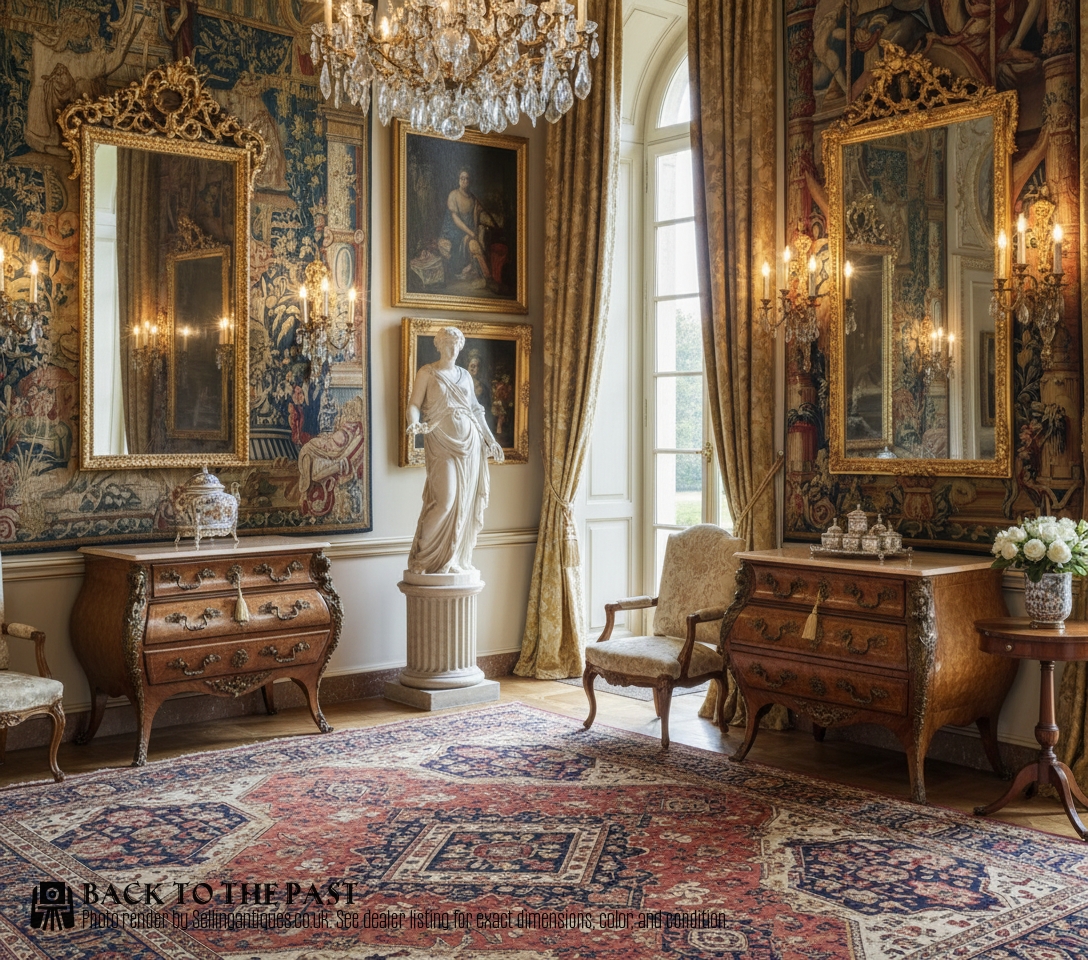
Materials and Construction
Makers laid kingwood veneers in intricate parquetry and marquetry patterns across carcass frames built from secondary timbers like walnut and oak. Slabs of shaped marble, frequently finished with a profiled edge, sit directly upon the upper surface.
Foundational timber structures support decorative cast metal elements known as ormolu or gilt-bronze mounts. Certain variations incorporate painted panels executed in the Vernis Martin technique.
Joinery techniques account for the undulating curves of bombe carcasses and the precise alignment of drawer frames. Metal mounts are pinned or screwed directly through the veneer into the primary timber substrate.
Kingwood Marble Commode Retail Price Guide 2026
Typical asking prices for kingwood marble commode among the pieces listed under this phrase on Sellingantiques today, from the lower quarter to the upper quarter. They describe what is for sale here now, not the wider market.
The inventory records side cabinets, bedside tables, and chests of drawers executed in Louis XV and Louis XVI styles.
Distinctions in Execution
Execution separates standard production from exceptional cabinet work through the precision of the veneer layout. Symmetrical grain alignment and complex floral marquetry demand advanced technical skill from the artisan.
The calibre of metalwork influences the standing of a piece, with finely chased ormolu mounts offering sharper relief than mass-produced castings. Heavier, deeply profiled marble tops indicate superior initial commissioning.
Attribution to documented makers elevates historical interest, particularly when signatures or stamps remain visible upon the timber carcass or bronze mounts.
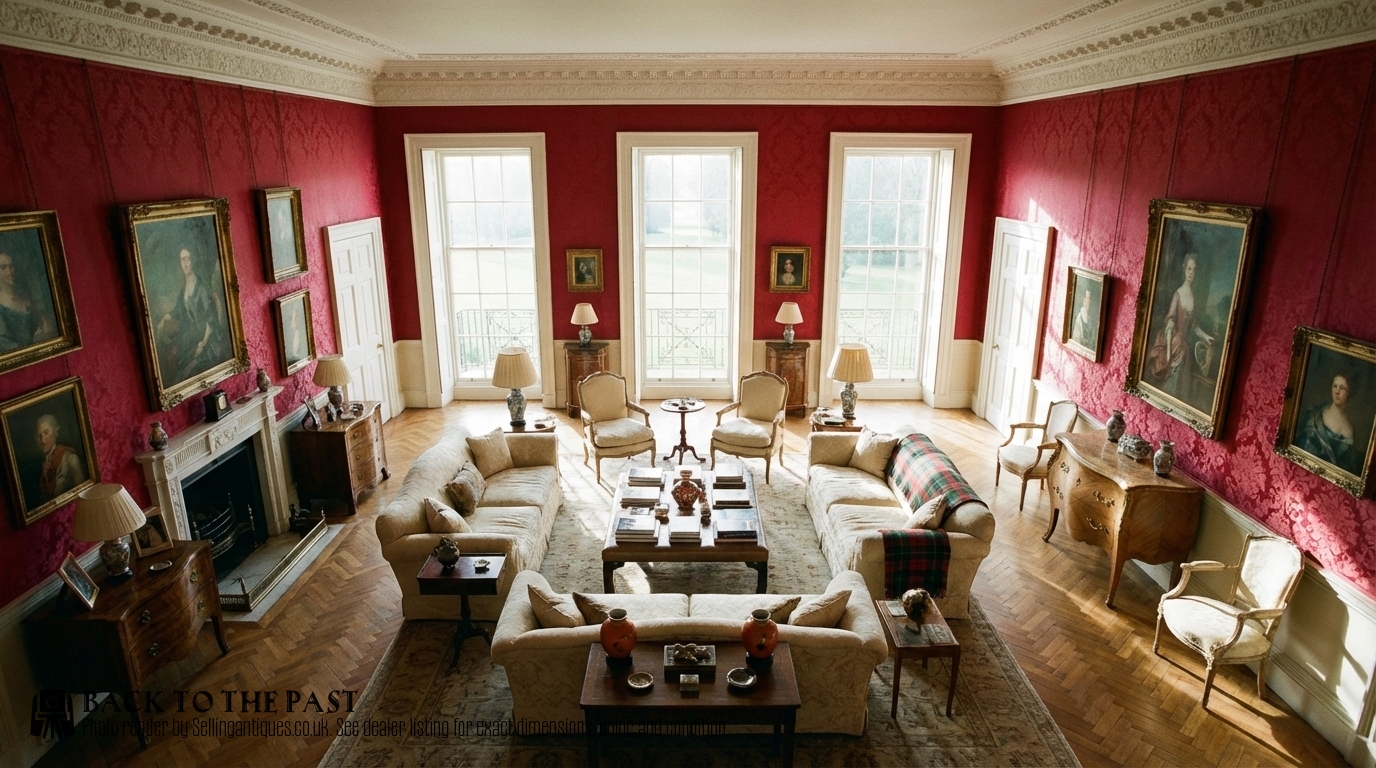
Jacques Birckle·E Kahn·Maison Millet·Paul Sormani·Bruneau
The Kingwood Marble Commode Glossary
- Kingwood
- A dense, heavily figured Brazilian timber displaying rich brown and violet tones. Cabinet makers prized this wood for decorative veneering.
- Ormolu
- Gilded bronze applied as decorative mounts, handles and feet on fine furniture. The technique involves treating metal with gold amalgam.
- Bombe
- A swollen, convex furniture contour curving outward in multiple directions. This shape defines many French Rococo designs.
- Marquetry
- Inlaid wood veneers forming pictorial or geometric patterns across a surface. Artisans cut various timber species to fit flush within a background veneer.
- Vernis Martin
- A simulated Japanese lacquer finish developed in France during the eighteenth century. The technique utilises layered resin varnishes, often over painted scenes.
Kingwood Marble Commode: Frequently Asked Questions
What rooms suit a kingwood marble commode?
These decorative cabinets function effectively in principal reception rooms, hallways and bedrooms as surface display areas.
The substantial stone top provides a durable landing space for lamps, ornaments and domestic objects while concealing storage within the drawers or cupboards below.
How do I care for the marble top?
Polished stone surfaces require gentle cleaning with damp cloths and neutral soaps rather than acidic household detergents.
Limiting direct contact with liquids prevents staining on porous marble varieties while preserving the original surface sheen.
How do I distinguish eighteenth-century pieces from later revivals?
Construction methods, timber shrinkage patterns and tool marks on internal secondary woods reveal the age of a carcass. Nineteenth and twentieth-century revivals often employ machine-cut elements and standardised assembly techniques.
Stylistic proportions and the character of the bronze mounts also provide reliable indicators of period manufacture.
Are these commodes suitable for everyday storage?
Interior drawer configurations accommodate smaller garments, linens and general household items safely.
Original drawer mechanisms function best when handled with care to protect historic timber runners and internal joinery.