
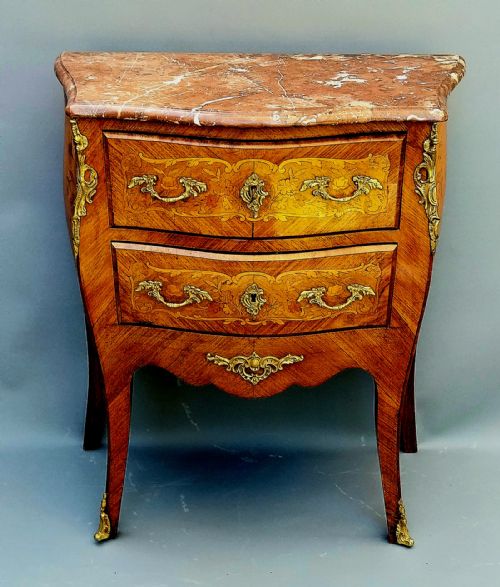
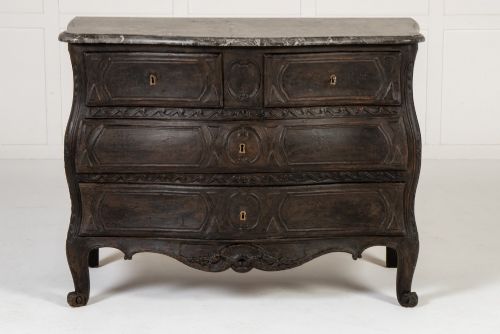
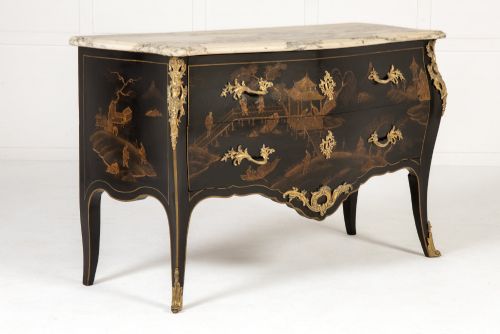
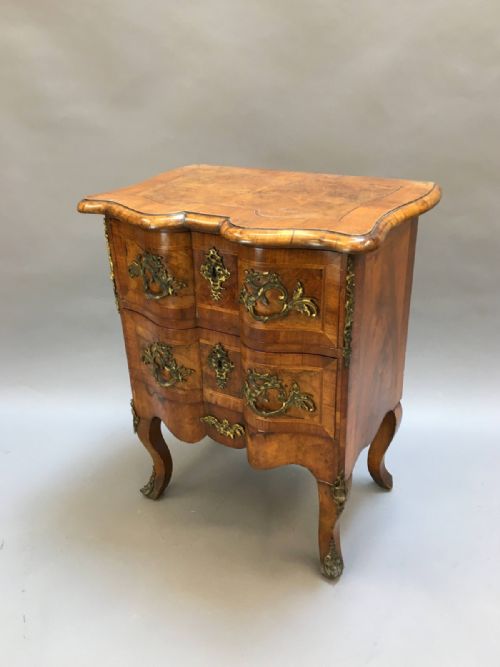
Louis XV Bombe Commode
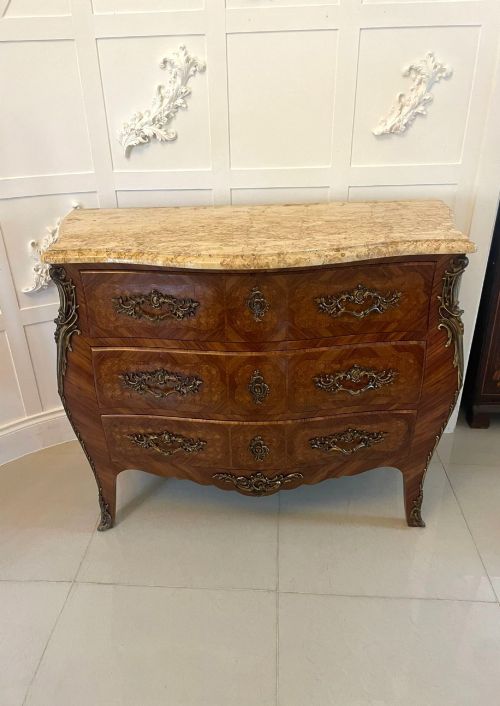
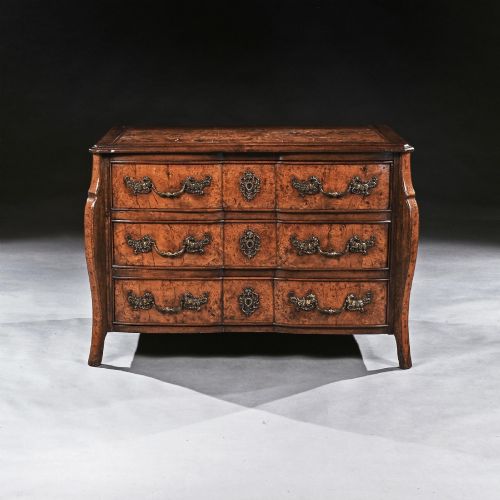
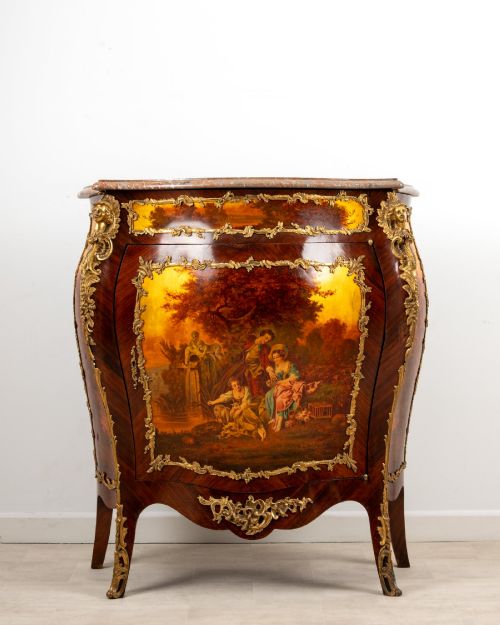
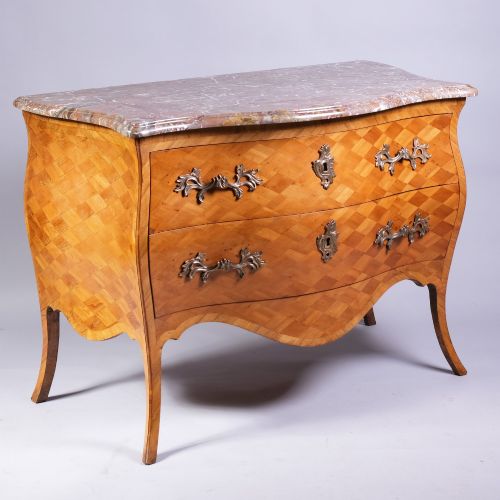
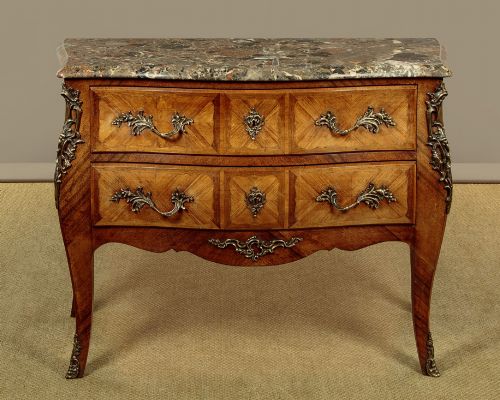
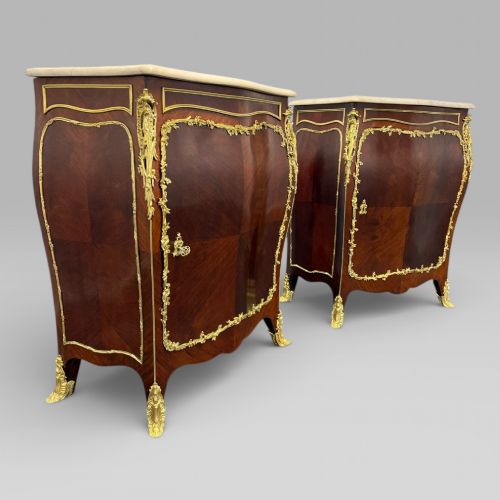
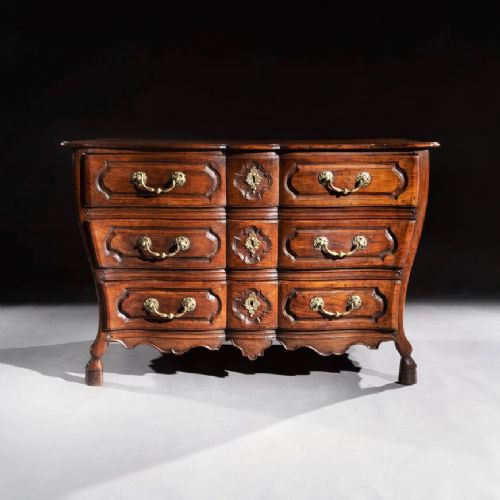
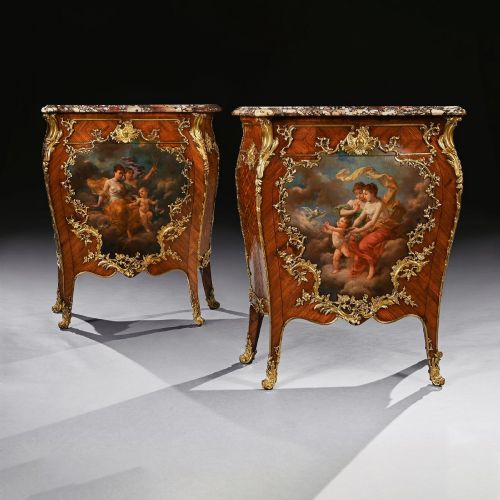
These louis xv bombe commode examples bring curving French elegance and rich marquetry into a room, offering both presence and storage.
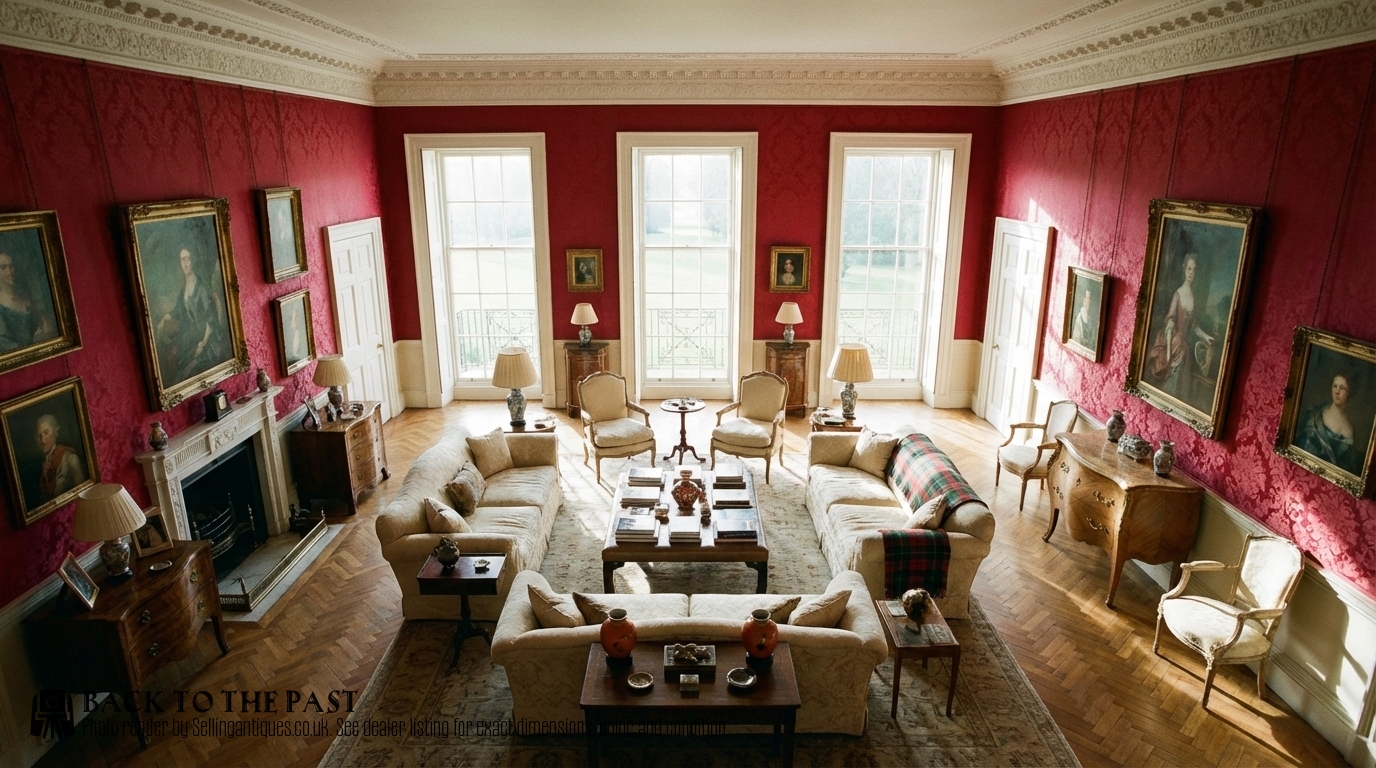
Louis XV Bombe Commode
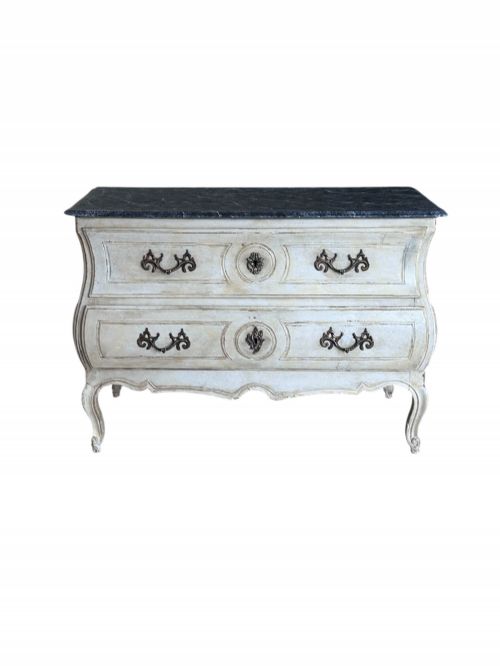
A louis xv bombe commode presents a distinctive swelling profile, often topped with marble and finished with gilt mounts. These pieces function primarily as statement chests of drawers in formal rooms or bedrooms.
The pieces on this page span the eighteenth and nineteenth centuries alongside later revival pieces from the early twentieth century. Most examples appear in French styles including Louis XV, Louis XV Revival, and French Provincial forms.
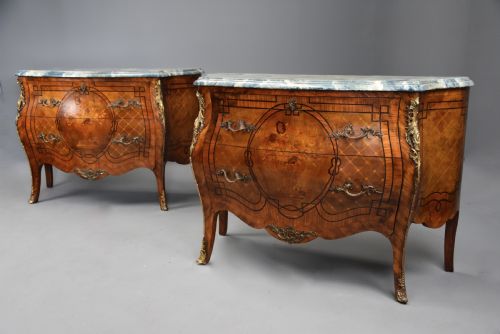
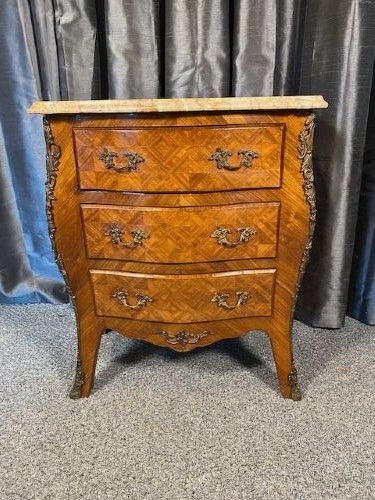
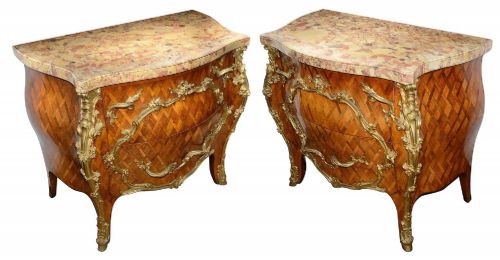
Forms include both single chests and pairs of cabinets with distinct serpentine fronts and curved sides. Buyers meet everything from compact petite commodes to larger scale chests of drawers.
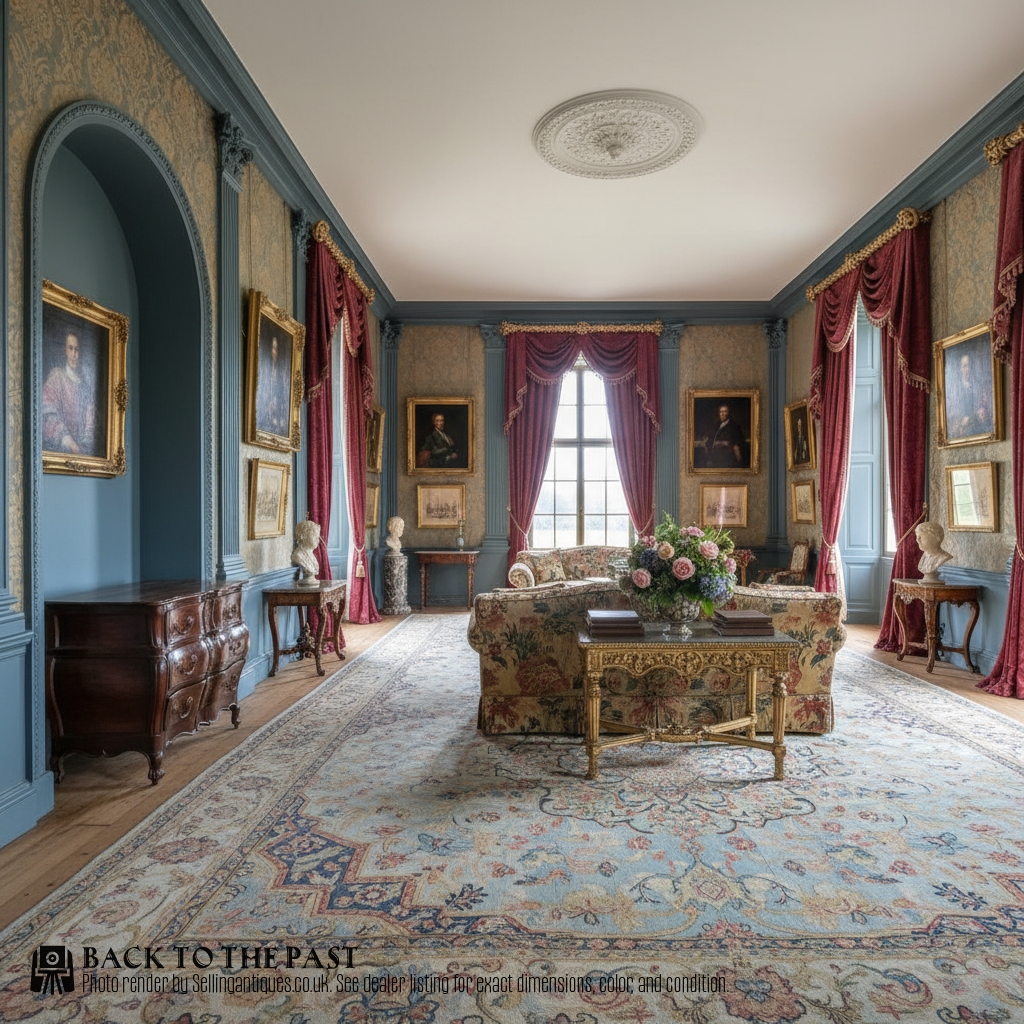
Materials and Construction
Cabinet makers utilised choice hardwoods such as kingwood, walnut, tulipwood, and burr elm over sturdy oak carcases. Veneers are laid to create geometric patterns or floral marquetry across the swelling surfaces.
Surfaces frequently feature shaped marble tops fitted precisely to the contours of the timber. Ormolu, brass, and gilt metal mounts accent the corners, handles, and aprons.
Retail Price Guide 2026
Typical UK retail prices for louis xv bombe commode, calculated from the Sellingantiques database of over a million retail prices indexed since 2003. This retail price guide relies exclusively on Sellingantiques data; no external sources or auction records are used, so the figures do not describe the wider market.
Listings feature eighteenth and nineteenth-century examples alongside 1910 and 1920 revival pieces, incorporating kingwood, walnut, marble, and ormolu.
Assessing Quality
The fluidity of the bombe curvature dictates the sculptural success of the piece, alongside the crispness of the gilt bronze or ormolu mounts. Finer examples display harmonious grain selection in the kingwood or walnut veneers.
Construction details such as drawer linings in oak and the precision of the marble top fit separate accomplished cabinet work from standard production.
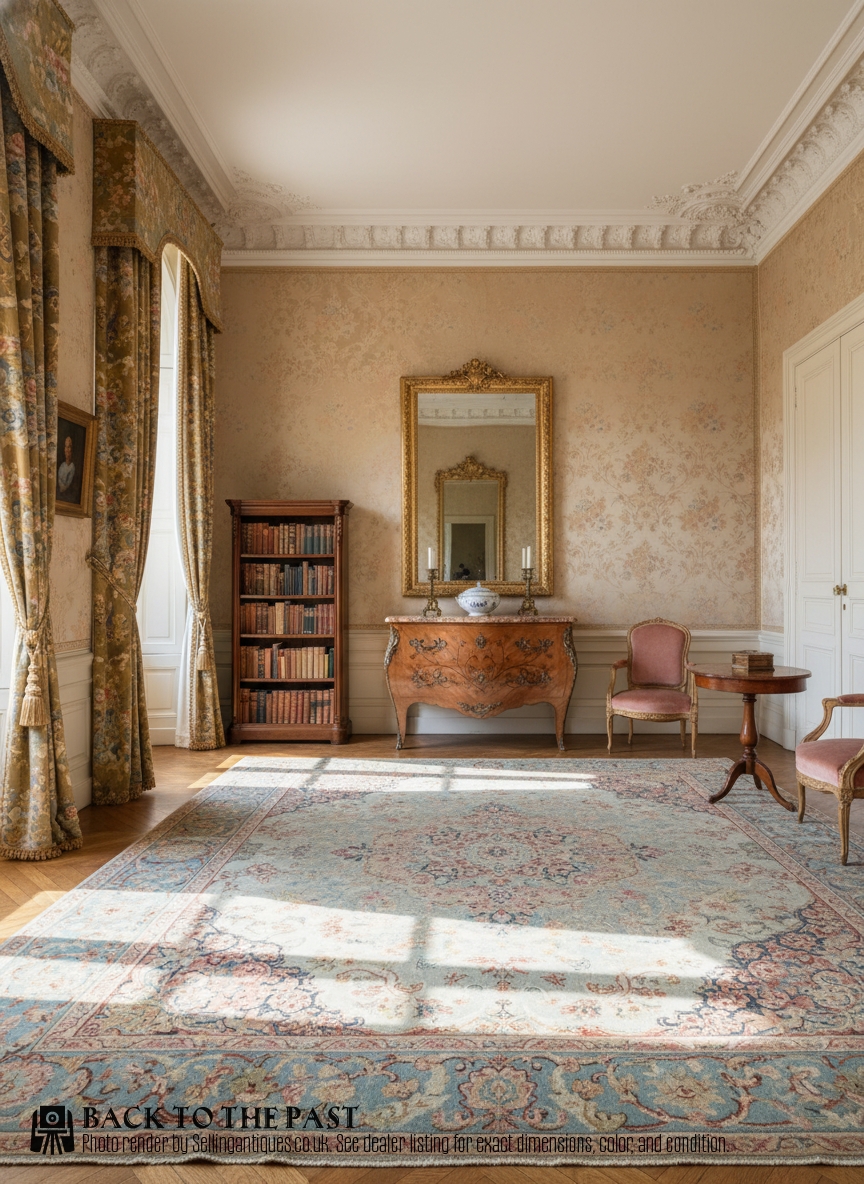
E. Kahn
The Louis XV Bombe Commode Glossary
- Bombe
- A swelling, outward-curving profile characteristic of baroque and rococo furniture forms. This convex shaping requires advanced cabinet making techniques.
- Kingwood
- A dense, richly figured Brazilian wood prized for its distinct dark violet and brown striping. Makers utilised it extensively for decorative veneering.
- Ormolu
- Gilded bronze mounts applied to furniture edges, feet, and handles. The quality of the chasing defines the refinement of the metalwork.
- Marquetry
- The art of applying decorative pieces of veneer to a structure to form intricate designs. Craftsmen often arranged contrasting timbers to depict floral or geometric motifs.
Frequently Asked Questions
What is a bombe commode?
A bombe commode is a chest of drawers characterised by its distinct outward-swelling sides and front. Originating in France, these pieces combine sculptural wood shaping with decorative mounts.
Cabinet makers used the form to display fine wood veneers and elaborate hardware. They serve as prominent storage furniture in traditional interiors.
How do I date a commode?
Dating relies on examining the timber construction, secondary woods used in drawer linings, and the style of the metal mounts. Eighteenth-century examples show hand-cut joinery and period-specific timber choices.
Later nineteenth-century and revival pieces often incorporate machine-cut elements or slightly different casting techniques in the ormolu. Comparing the carcass construction to established periods clarifies the age.
Are marble tops original?
Many period commodes feature fitted marble tops designed to follow the exact serpentine and swelling contours of the wooden carcase. These slabs added weight, luxury, and a durable surface to the furniture.
While some tops are replaced, period examples usually show appropriate wear and edge profiling that match the age of the base.
Where should I place a commode?
These pieces suit living rooms, halls, or large bedrooms where their curved profile and decorative veneers can be viewed without obstruction. Their finished sides allow them to anchor a prominent wall space.
Avoid placing them in direct sunlight or near heat sources to protect the delicate wood veneers and polished finishes.