

French Marquetry Commode
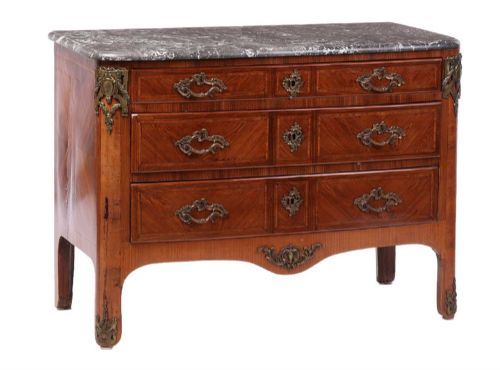
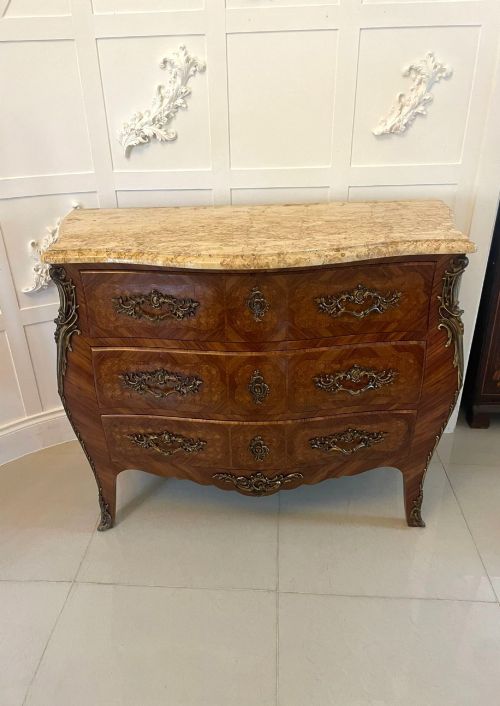
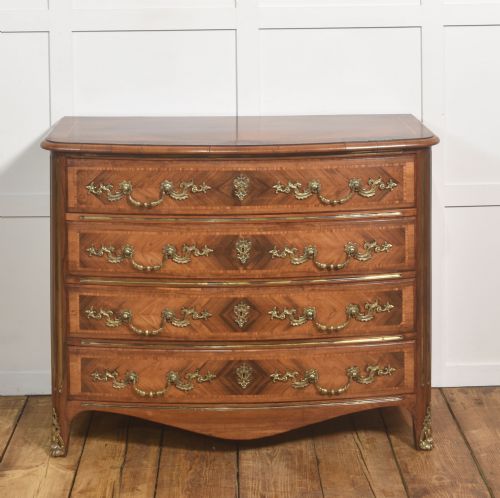
A french marquetry commode brings intricate floral wood patterns and heavy marble tops into a room, offering both display surface and deep drawer storage.
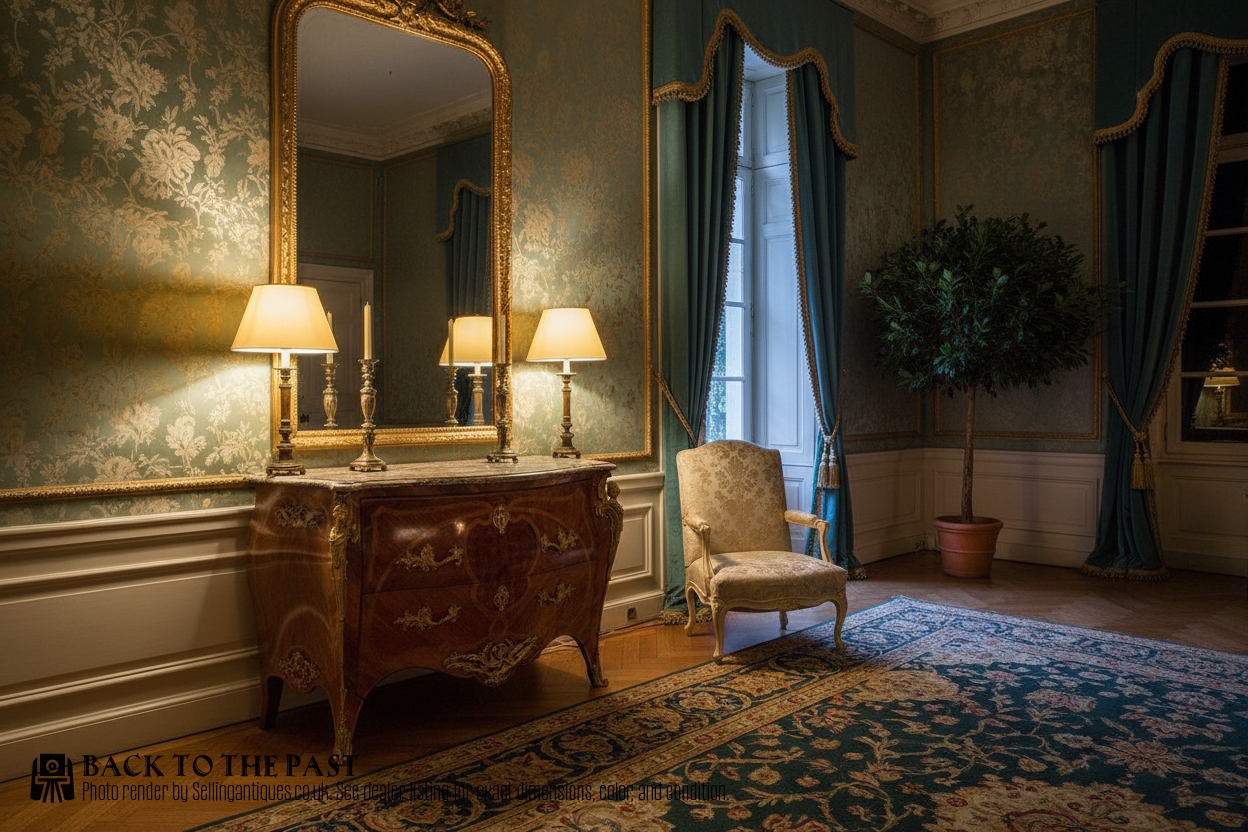
French Marquetry Commode
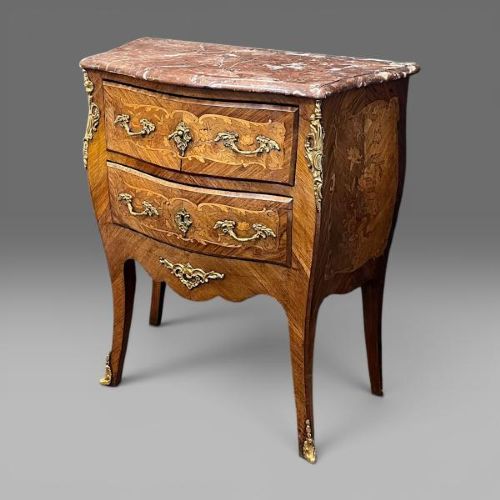
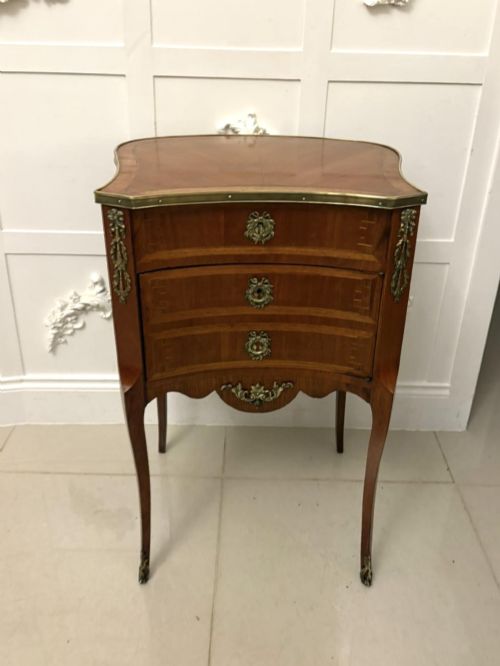
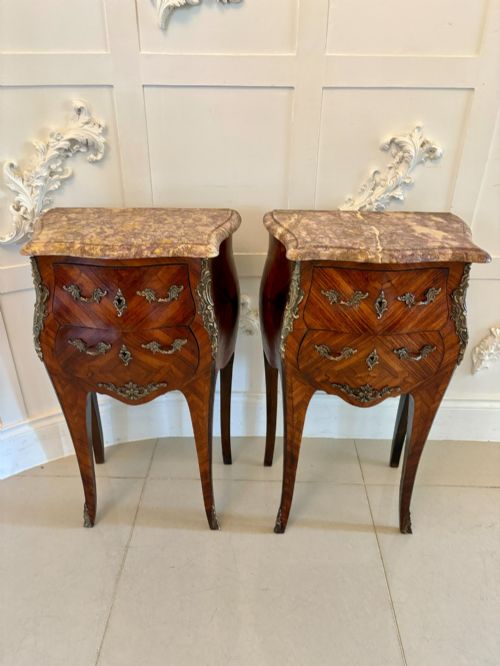
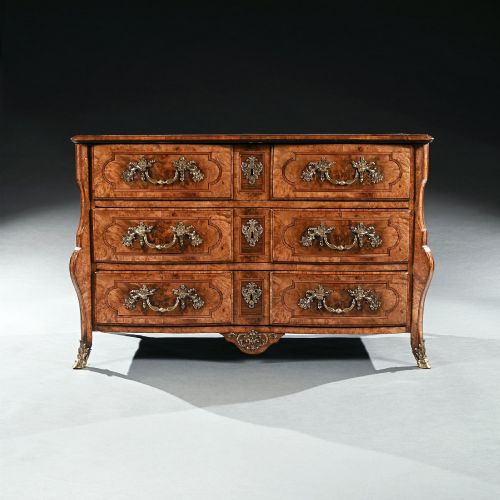
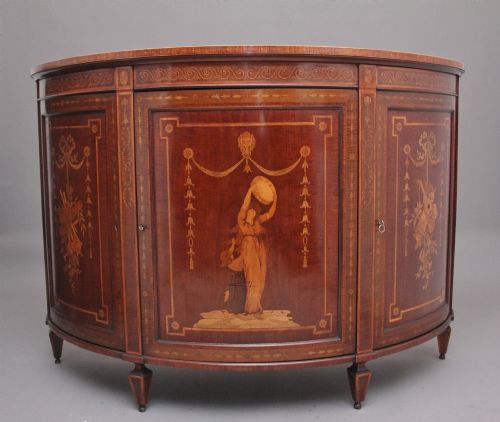
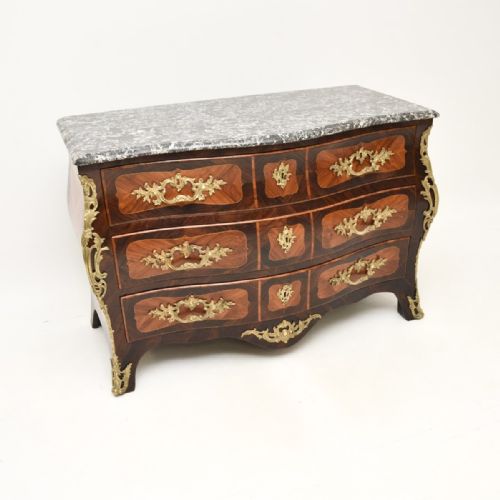
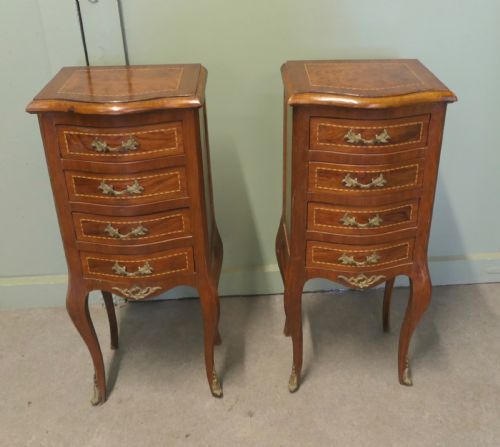
A french marquetry commode functions primarily as a decorative chest of drawers or low cabinet, developed through the eighteenth century and revived extensively during the nineteenth century. Buyers encounter forms ranging from generous serpentine chests to petite bedside cabinets and demi-lune consoles.
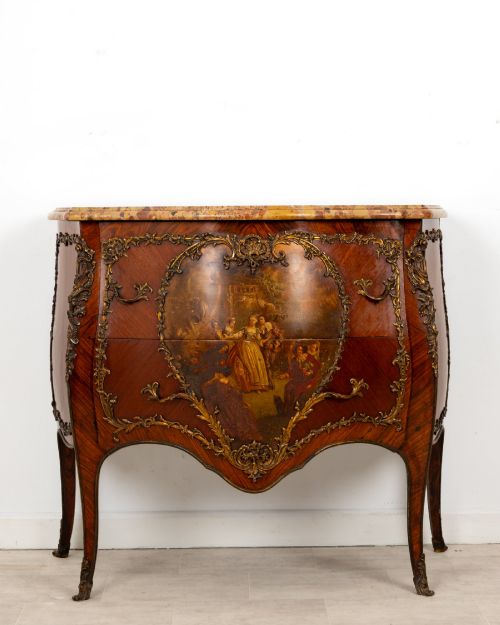
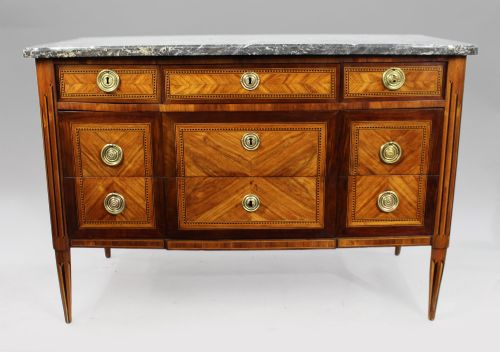
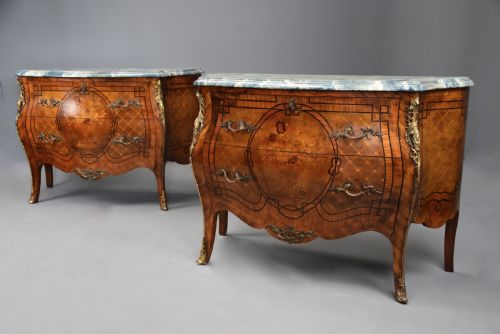
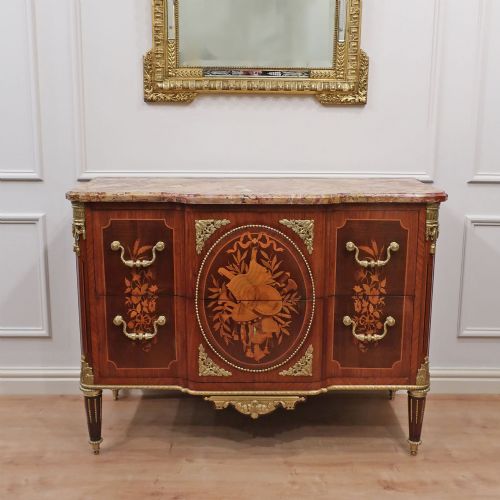
The aesthetic draws heavily on Louis XV and Louis XVI design vocabularies, showing either the curved lines of the Rococo movement or the straighter, more formal geometry of the later neoclassical period. Bombe profiles with swelling sides appear frequently alongside straight-fronted and bow-fronted variants.
Makers adapted these low storage units for drawing rooms and bedchambers alike, pairing functional drawer space with elaborate wood veneers. Pieces originating from the nineteenth-century revival periods match eighteenth-century prototypes in their use of distinct regional forms and classical motifs.
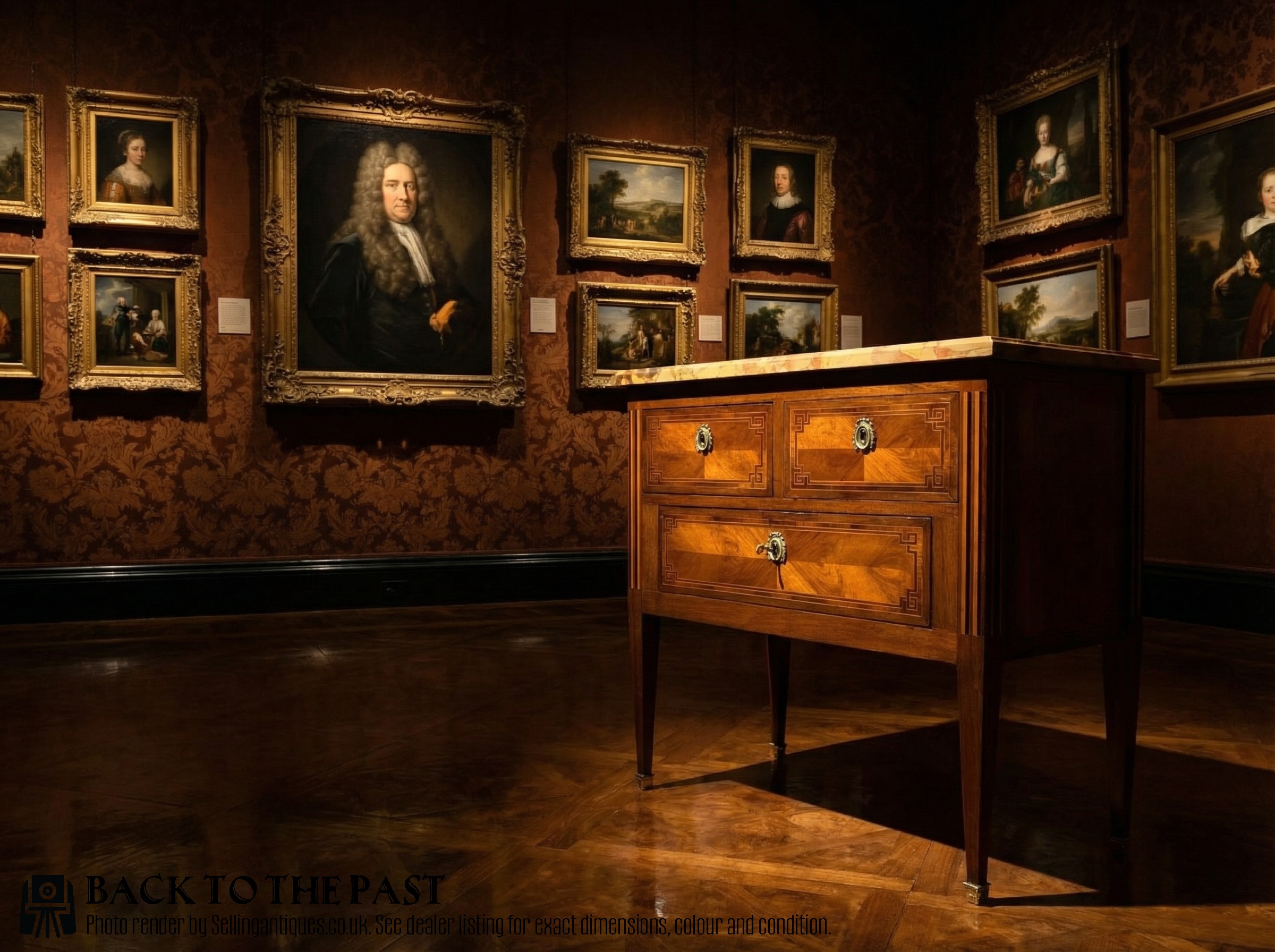
Materials and construction
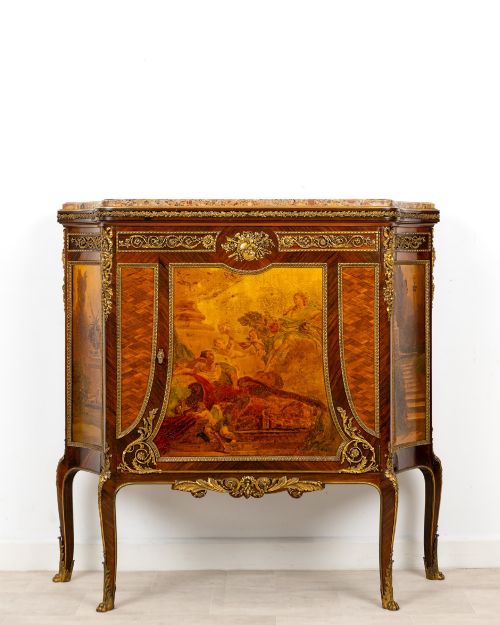
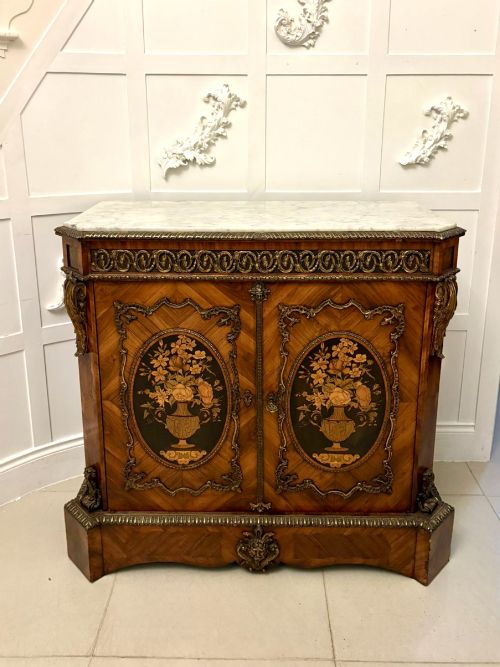
Carpenters built the carcases using foundational timbers like walnut or oak, then applied contrasting decorative veneers including kingwood, tulipwood, rosewood, and amboyna to create detailed pictorial or geometric marquetry patterns. Gilt bronze, ormolu, and brass mounts edge the drawers, corners, and apron scrolls.
Heavy marble slabs, often in white, grey, or rouge variants, sit directly on the upper surface of the commode to provide a cool, finished top. Vernis Martin finishes and hand-painted panels occasionally supplement the inlaid wood surfaces.
French Marquetry Commode Retail Price Guide 2026
Typical asking prices for french marquetry commode among the pieces listed under this phrase on Sellingantiques today, from the lower quarter to the upper quarter. They describe what is for sale here now, not the wider market.
Listings feature eighteenth-century originals alongside nineteenth-century revival pieces employing kingwood, rosewood, and ormolu mounts.
Distinctions in execution
The standard of a french marquetry commode rests upon the crispness of the bronze mounts and the precision of the veneer cuts. Finer examples display seamless alignment where floral or geometric wood patterns cross drawer dividers and curved corners.
The weight and selection of the marble top, alongside the depth and fire-gilding of the ormolu mounts, separate standard production pieces from masterwork output. Superior carcases maintain rigid structural integrity within complex bombe or serpentine contours without warping.
Jacques Bircklé·Thomas Hache·Sormani
The French Marquetry Commode Glossary
- Marquetry
- The art of applying small pieces of wood veneer to a structure to form decorative patterns or pictures. Craftsmen selected various coloured timbers to create floral motifs across the drawer fronts.
- Ormolu
- Gilded bronze mounts applied to furniture edges and feet. These cast metal ornaments protect vulnerable corners and accentuate the serpentine lines of the commode.
- Bombe
- A swelling, outward-curving profile found on the sides and front of certain cabinets. This bulging shape requires specialised woodworking skill to fit the veneer accurately.
- Demi-lune
- A half-moon shape characteristic of console tables and specific cabinets designed to sit flat against a wall. These half-circle pieces often feature marble tops and inlaid friezes.
- Vernis Martin
- A simulated Japanese lacquer finish developed in France to imitate Asian screens. This glossy varnish technique appears on select panels alongside wood veneers.
French Marquetry Commode: Frequently Asked Questions
What is a french marquetry commode?
A french marquetry commode is a decorative chest of drawers or low cabinet ornamented with patterned wood veneers. They typically feature contrasting timbers arranged in floral or geometric designs.
These pieces were originally designed for elite European interiors and combine substantial storage capacity with ornamental display surfaces.
How do I identify Louis XV style?
Louis XV pieces exhibit asymmetrical curves, cabriole legs, and flowing rococo bronze mounts. The overall silhouette avoids straight lines in favour of organic, swelling contours.
Marquetry on these examples frequently depicts naturalistic floral sprays rather than strict geometric repeats.
Where should I place a commode?
These cabinets suit living rooms, hallways, and grand bedchambers as statement storage units. The marble top provides a durable surface for lamps, vases, or decorative objects.
Due to their finished backs and sides, certain models work well positioned against interior walls or within alcoves.
How do I tell an 18th century piece apart from a 19th century revival?
Eighteenth-century originals display hand-cut secondary timbers and authentic period construction marks appropriate to their specific decade. Nineteenth-century revival pieces often utilise machine-sawn elements while closely copying earlier Louis XV or Louis XVI designs.
Examining the internal drawer construction and the wear patterns on the oak or walnut carcase helps clarify the exact manufacturing period.