

Antique Marble Top Drawers
These antique marble top drawers bring stone and timber together, offering solid utility and surface resilience.
Identifying antique marble top drawers
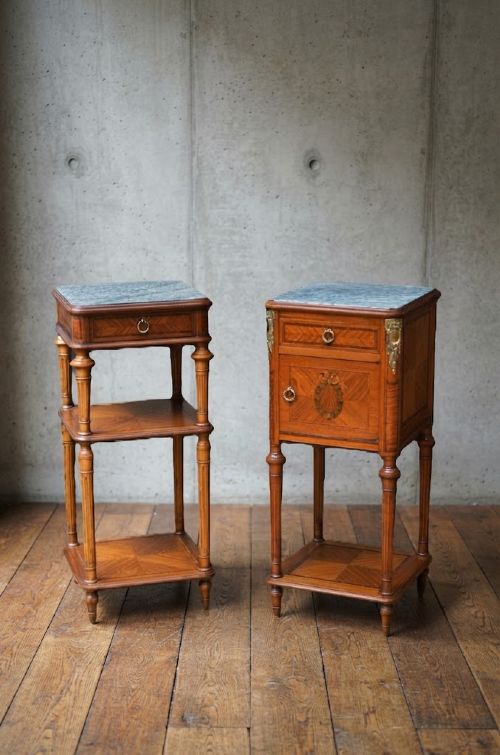
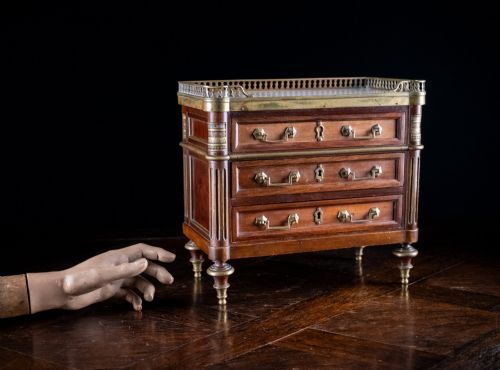
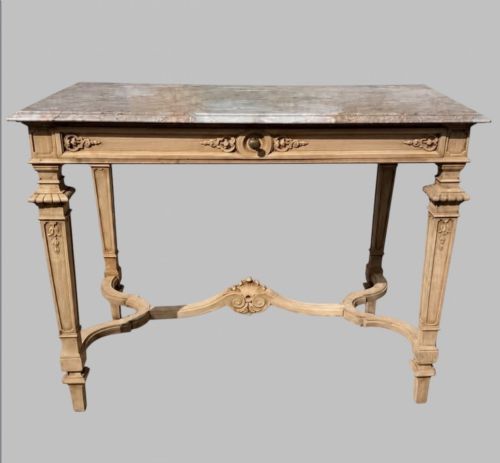
When buyers search for antique marble top drawers, they encounter case pieces designed for storage topped with fitted stone slabs. The selection here centres on French commodes and English chests of drawers spanning the eighteenth, nineteenth and twentieth centuries.
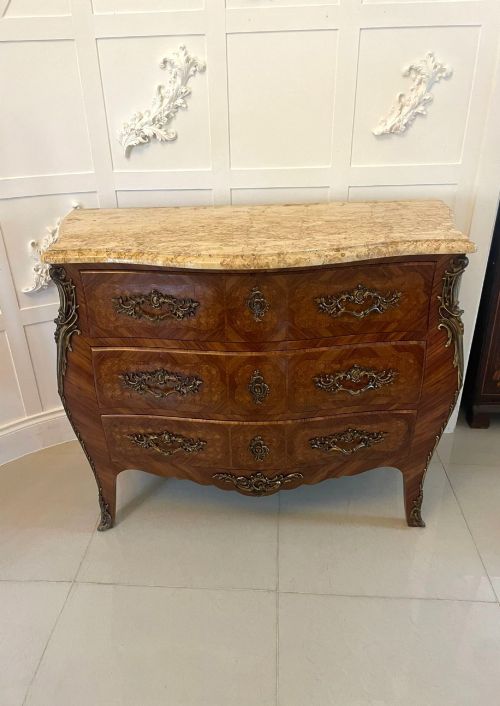
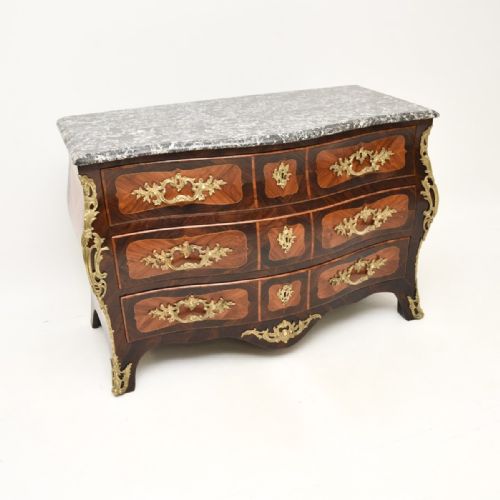
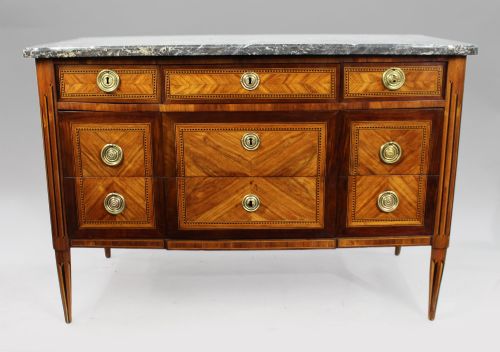
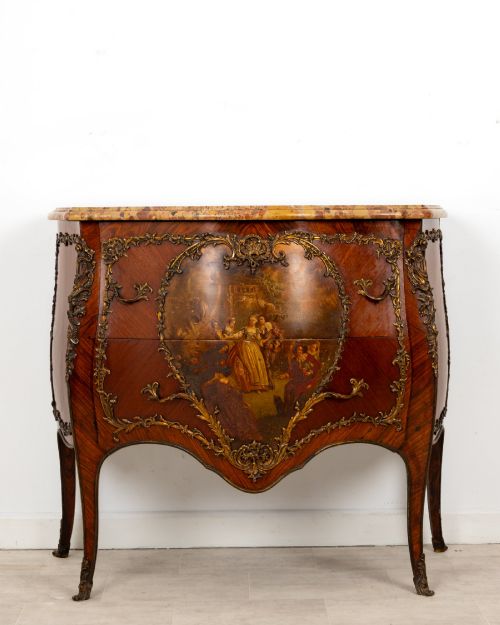
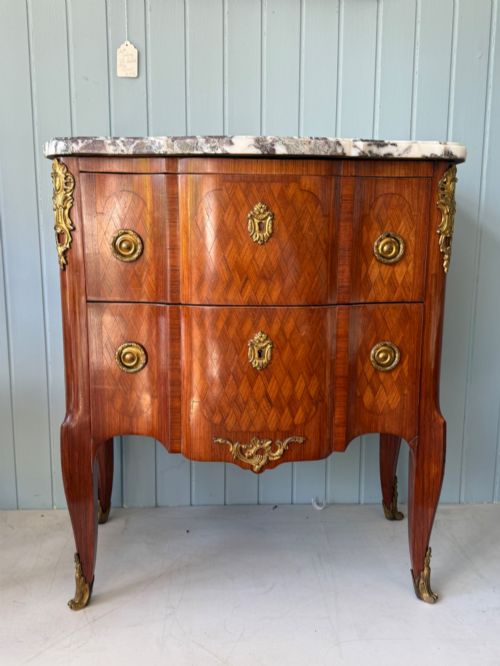
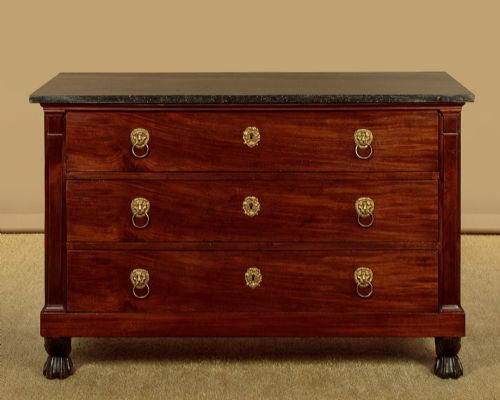
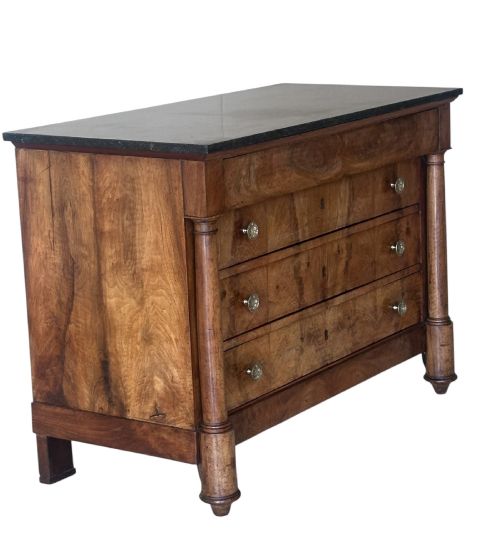
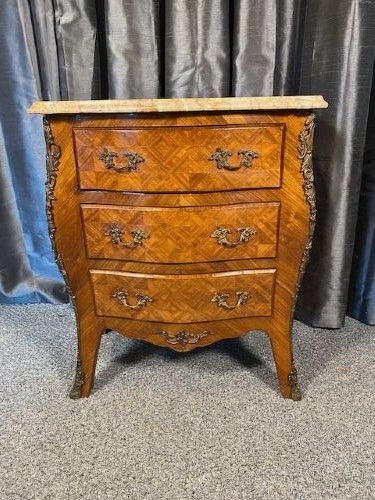
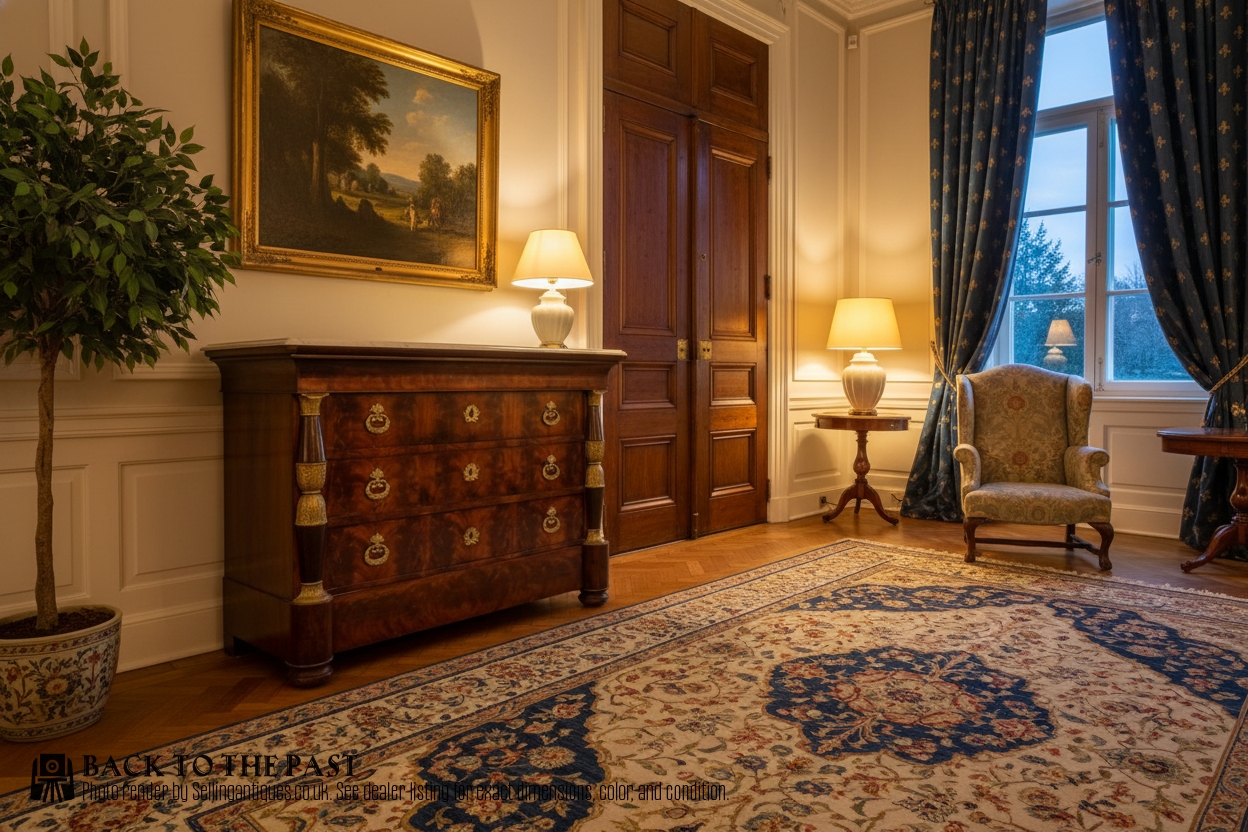
The version most commonly met on this page is the French commode, often housing several functional drawers beneath a heavy marble slab. These pieces appear in forms ranging from nineteenth century mahogany and walnut to eighteenth century kingwood.
Beyond standard chests, the records show dressing tables and specialised commodes incorporating grey marble and verde alpi stone. Styles span from Victorian and Edwardian iterations to continental French provincial, Louis XV, Louis XVI, Regence and Empire designs.
Materials and construction methods
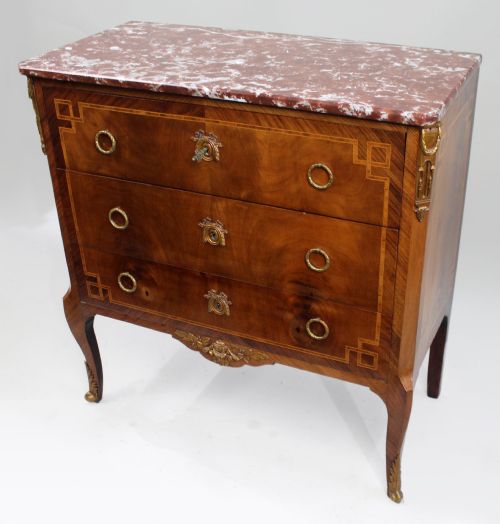
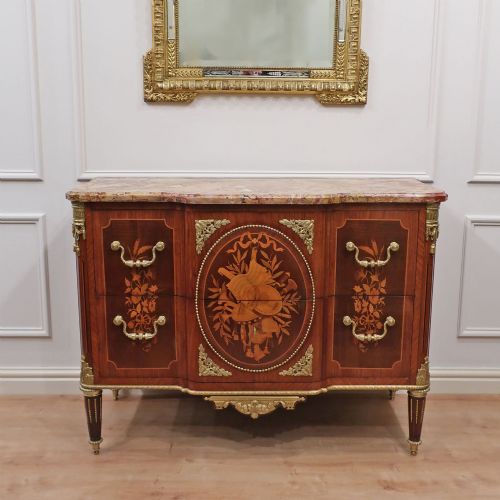
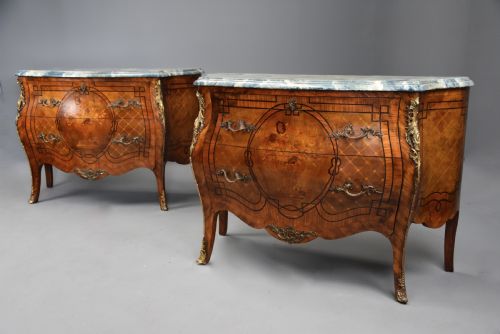
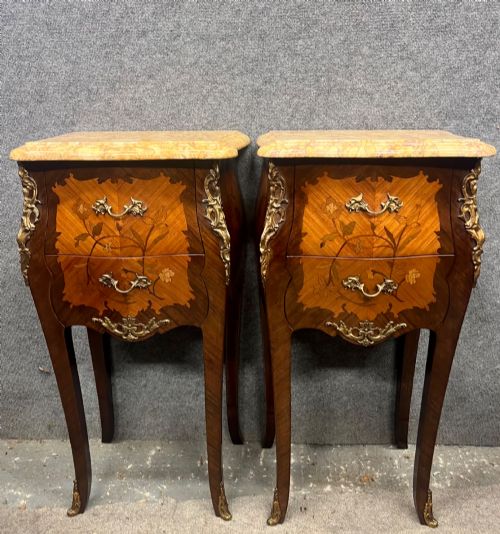
Cabinet makers constructed the carcasses of these pieces from timbers such as mahogany, oak, walnut, bleached walnut and flame mahogany. Veneers of kingwood were frequently applied over core woods, alongside decorative marquetry and parquetry geometric patterns.
Mounts cast in brass and ormolu decorate the corners, handles and aprons of continental commodes, secured directly to the wooden structure. The stone slabs rest upon the timber frames, shaped with bevelled or moulded edges to fit the contours of each individual piece.
Retail Price Guide 2026
Typical UK retail prices for marble top drawers, calculated from the Sellingantiques database of over a million retail prices indexed since 2003. This retail price guide relies exclusively on Sellingantiques data; no external sources or auction records are used, so the figures do not describe the wider market.
Some nineteenth century French commodes carry marble tops heavy enough to require four people just to lift the stone slab safely.
Determinants of quality
Quality rests in the precision of the timber work and the selection of the stone slab. Pieces at the upper end utilise figured kingwood, intricate marquetry inlay, and heavy ormolu mounts rather than plain brass.
The integration between the stone top and the wooden carcass dictates structural success. Superior examples feature thick marble slabs cut specifically to the profile of the chest, whereas simpler versions carry standard rectangular stone tops.
The Antique Marble Top Drawers Glossary
- Commode
- A low chest of drawers, frequently referencing continental European forms from the eighteenth and nineteenth centuries. These pieces typically incorporate decorative veneers and stone surfaces.
- Ormolu
- Gilded bronze used for decorative mounts and hardware on furniture. This material appears frequently on French commodes.
- Marquetry
- The art of applying pieces of veneer to a structure to form decorative patterns and pictures. Makers utilised various exotic timbers to achieve tonal contrast.
- Parquetry
- A geometric mosaic of wood pieces used for decorative floors and furniture surfaces. It appears on the drawer fronts and sides of select commodes.
- Verde Alpi
- A dark green marble with white veining used for decorative furniture tops. This specific stone appears on nineteenth century French pieces.
Frequently Asked Questions
What are antique marble top drawers?
These are storage chests and commodes fitted with stone slabs on their upper surfaces. They combine timber cabinetry with a durable, smooth stone working surface.
Craftsmen across Britain and France produced these pieces for domestic use, utilising stones like grey marble and verde alpi paired with mahogany, walnut or kingwood.
How were marble top chests used?
These pieces served primarily for bedroom storage, holding garments and linens within the drawer compartments. The stone surface provided a cool, wipeable platform.
In period settings, the heavy top supported washbasins, dressing items or decorative objects without sustaining water or heat damage from daily use.
How do I live with a marble top chest?
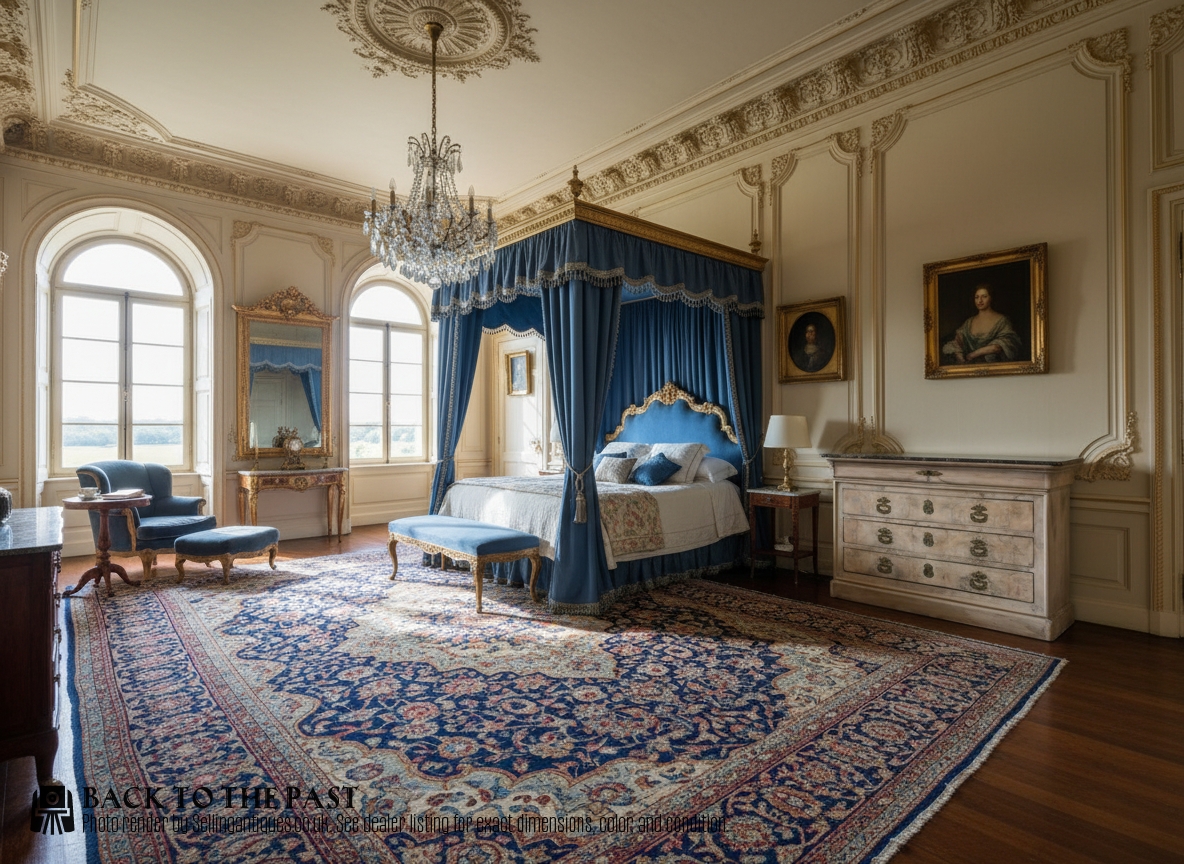
Placing these pieces requires attention to weight and floor stability due to the heavy stone slab resting on the timber base. They anchor bedroom and living spaces effectively.
Maintenance involves cleaning the stone with appropriate gentle solutions and keeping wooden surfaces polished with traditional waxes to preserve the timber grain.
How do I tell periods apart?
Dating relies on observing changes in timber choice, hardware style, and carcass construction methods across centuries. Eighteenth century pieces often show intricate kingwood marquetry.
Nineteenth century Victorian and Edwardian examples shift toward flame mahogany, burr walnut, and simpler structural lines while retaining the characteristic stone top.