



Parquetry Storage Cabinet
A parquetry storage cabinet brings geometric French design and rich timber into a room, offering both surface display and hidden depth.
What the pieces are
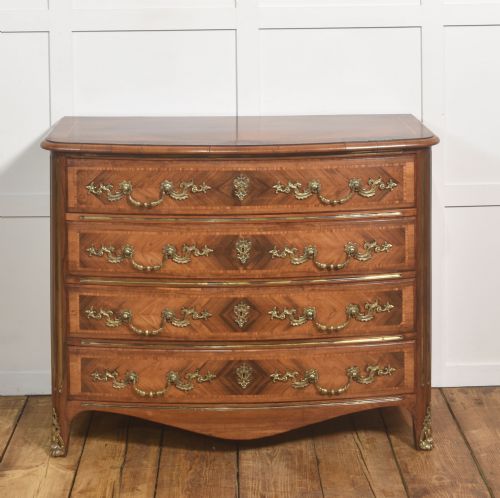
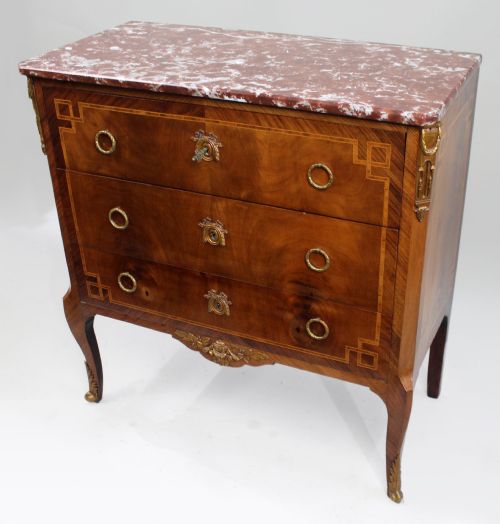
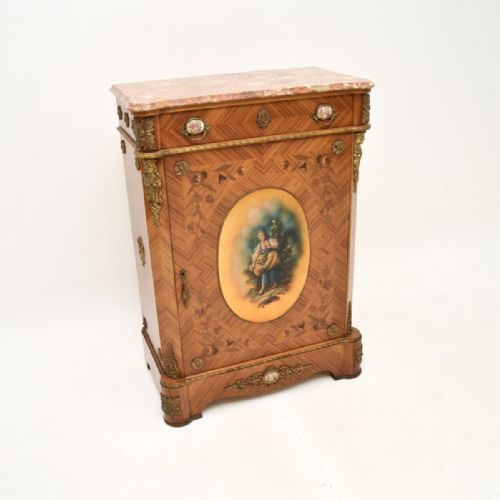
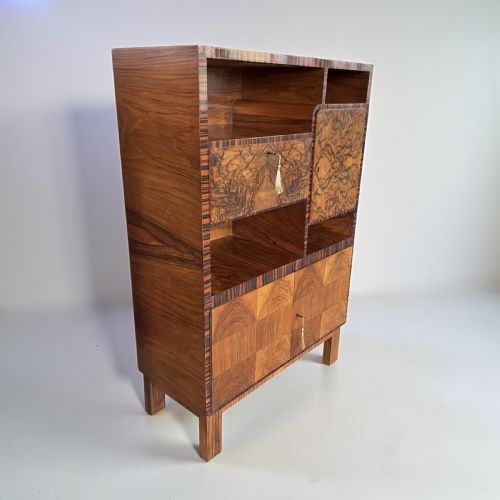
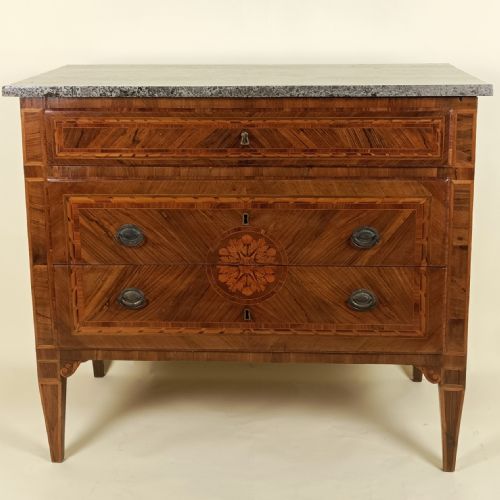
A parquetry storage cabinet usually takes the form of a commode, a side cabinet, or a cabinet on stand. These pieces emerge primarily from the nineteenth century, drawing heavily on French Louis XV and Louis XVI revival aesthetics.
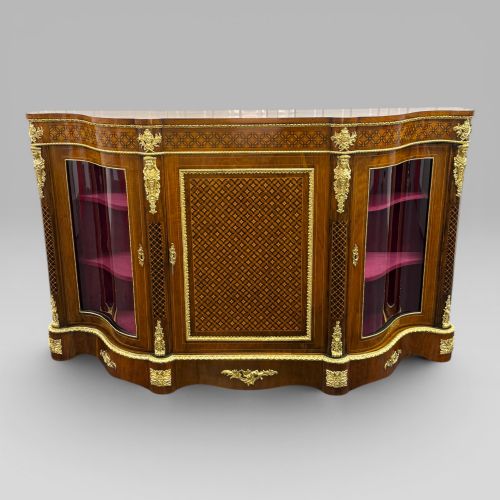
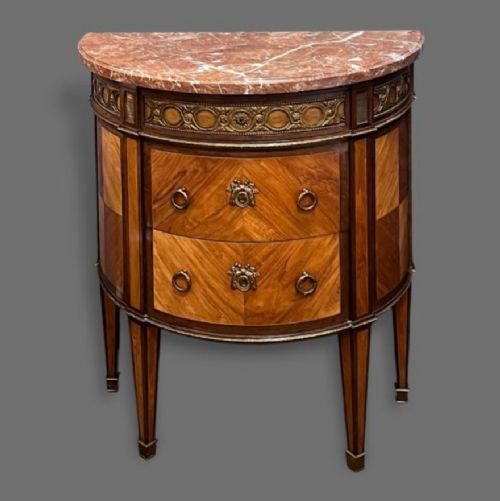
The buyer meets variations ranging from marble-topped commodes to side cabinets framed in gilt bronze. Each item balances geometric wood veneers with classical mounts, maintaining the functional storage core expected of a cabinet.
How they were made
Maker workshops construct these cabinets using dense timbers such as kingwood and rosewood. Artisans slice these woods into thin veneers to form intricate geometric parquetry patterns across the main surfaces.
Craftsmen finish the structures with shaped marble tops and mount them with cast or gilt bronze and ormolu. These metal enrichments accent the corners, legs, and aprons to frame the timber work.
Retail Price Guide 2026
Typical UK retail prices for parquetry storage cabinet, calculated from the Sellingantiques database of over a million retail prices indexed since 2003. This retail price guide relies exclusively on Sellingantiques data; no external sources or auction records are used, so the figures do not describe the wider market.
Cabinet makers carefully arranged wood grains so that geometric parquetry patterns appear to shift in the light.
What varies in quality
Quality rests in the precision of the timber matching and the crispness of the bronze mounts. Finer cabinets display seamless continuity in their geometric veneers across doors and drawers.
The weight and detail of the ormolu or gilt bronze ornamentation separate standard production from master workshop output. Superior pieces integrate their mounts precisely into the structural curves of the timber.
Paul Sormani·Zweiner
The Parquetry Storage Cabinet Glossary
- Parquetry
- A geometric mosaic of wood veneer arranged in repeating patterns like cubes or chequers. This technique decorates the primary faces of the cabinet.
- Ormolu
- Gilded brass or bronze applied to furniture mounts and feet. It provides a bright metallic contrast to dark kingwood and rosewood.
- Commode
- A low standing cabinet featuring drawers or doors, commonly topped with marble. These pieces served practical storage functions in grand rooms.
- Kingwood
- A dense, richly grained timber frequently used in nineteenth-century French cabinet making. Its contrasting dark and light tones suit intricate veneering.
Frequently Asked Questions
What is a parquetry storage cabinet?
A parquetry storage cabinet is a decorative wooden furniture piece featuring geometric veneer patterns. These cabinets typically date from the nineteenth century and follow French revival styles.
They combine practical enclosed shelving or drawers with ornate surface decoration, often finished with marble tops and bronze mounts.
How do I style a French cabinet?
These cabinets work well as focal points in living rooms or hallways where their timber patterns can be appreciated. The flat top surface provides space for lamps or decorative objects.
Keep surrounding furniture simpler to let the geometric veneer and bronze details stand out without visual clutter.
Are these cabinets purely decorative?
Despite their ornate appearance with gilt bronze and exotic woods, these pieces were designed for functional storage. The internal spaces accommodate household items or tableware.
Cabinets on stands and commodes offer enclosed compartments while presenting a refined exterior to the room.
How do I identify nineteenth-century pieces?
Nineteenth-century pieces often emulate earlier Louis XV and Louis XVI periods through revival designs. Look for construction methods and timber choices typical of that era, such as kingwood and rosewood veneers.
Maker signatures or attribution to workshops like Paul Sormani also point firmly to the nineteenth-century production context.