
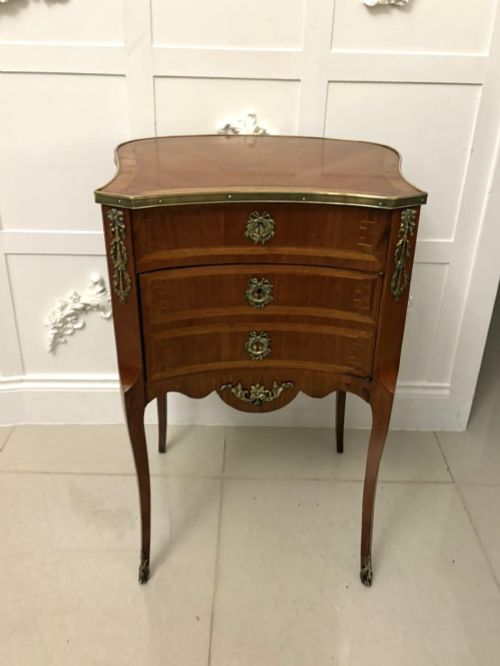
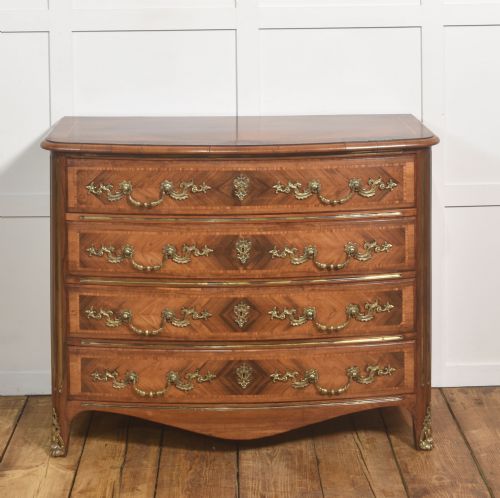
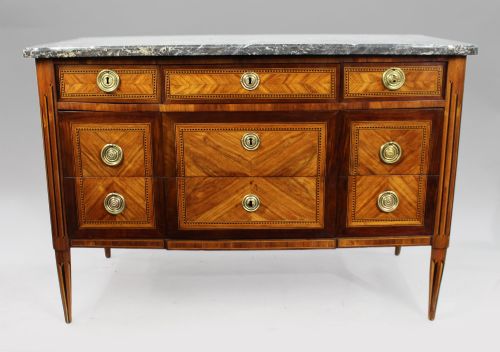
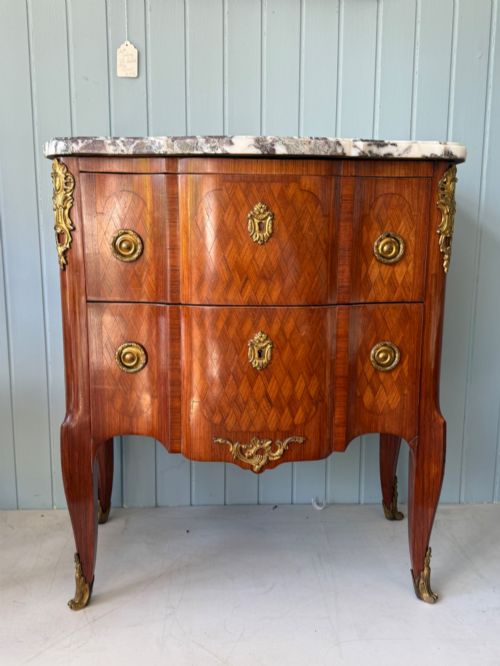

Walnut Parquetry Commode
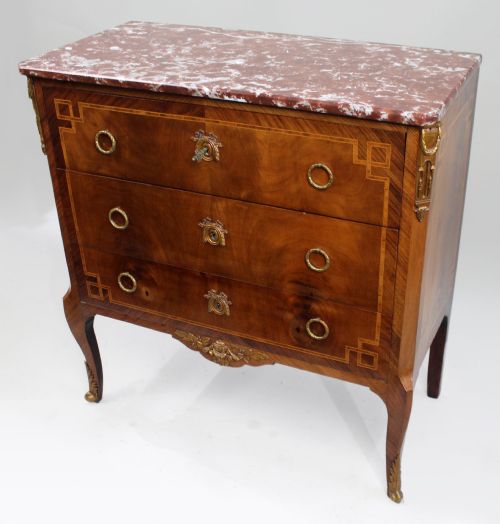
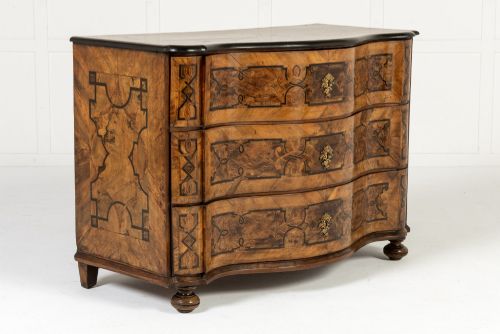
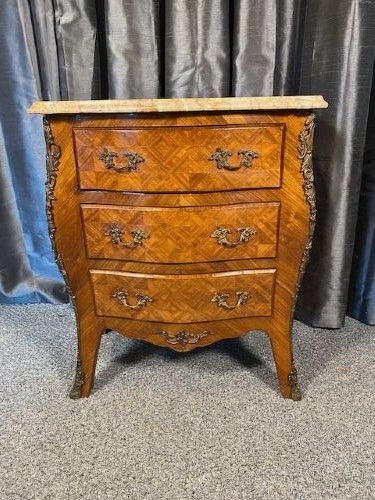
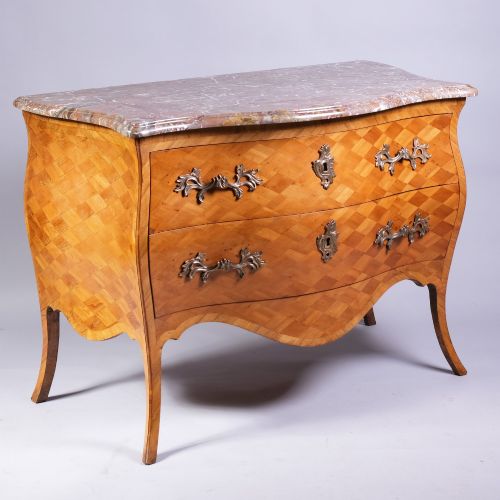
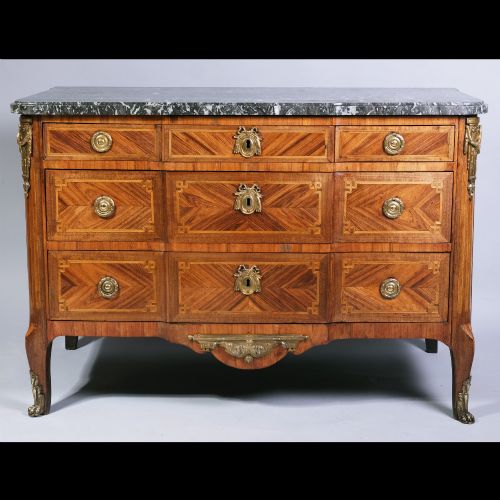
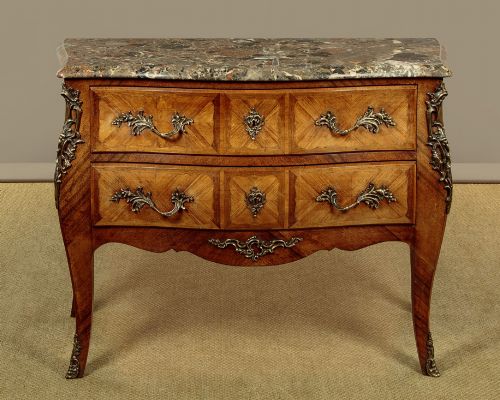
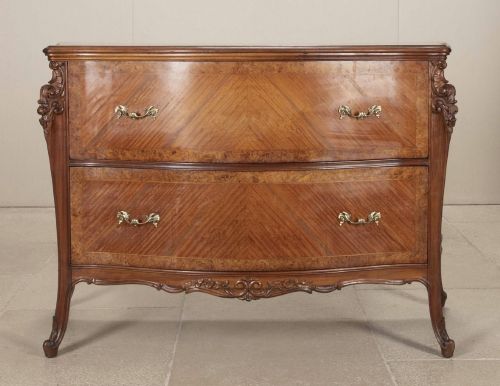
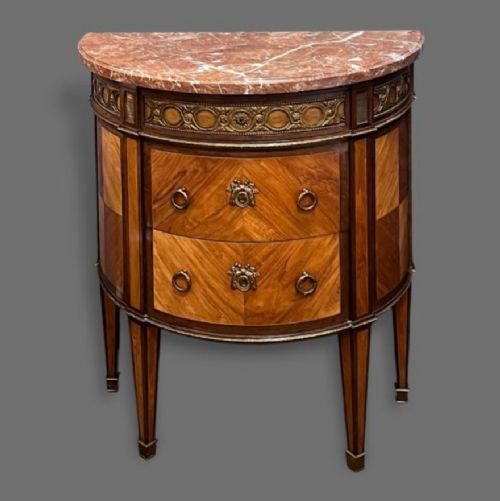
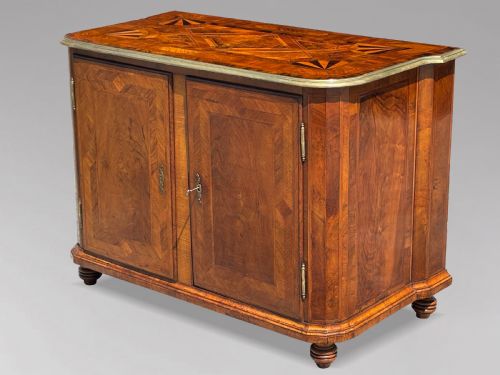
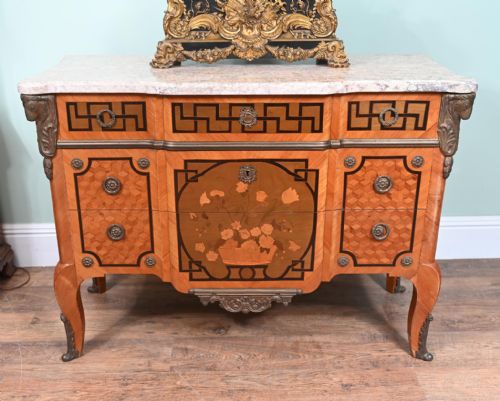
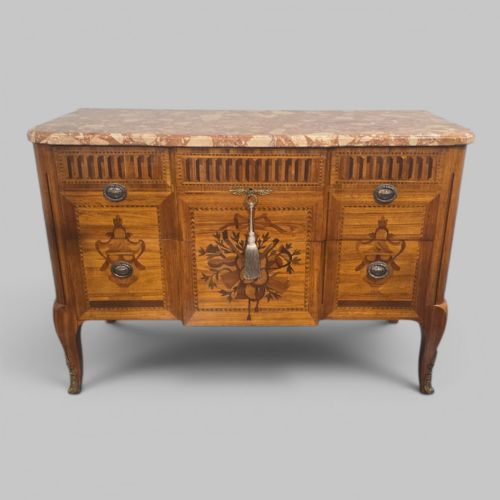
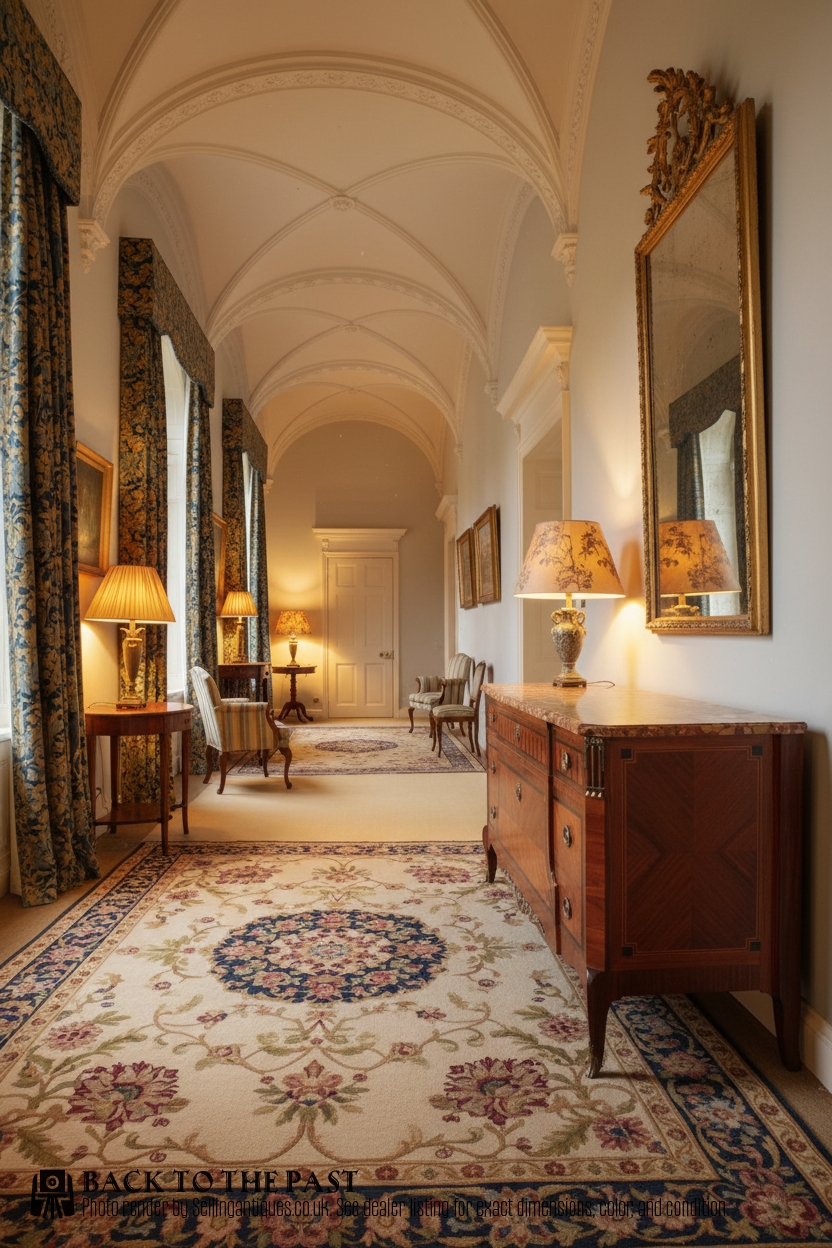
These walnut parquetry commodes bring geometric timber work and marble tops to a room, offering both surface display and deep drawer storage.
What a walnut parquetry commode is
A walnut parquetry commode functions as a decorative chest of drawers designed for formal living spaces and bedrooms. These pieces provide wide storage capacities behind fronts arranged in geometric patterns.
The versions met on this page span from the eighteenth century through to early twentieth century examples dated around nineteen ten. Origins include French, Italian and German workshops operating across different stylistic periods.
Forms range from serpentine shapes with shaped marble tops to streamlined early Art Deco three drawer formats. Each walnut parquetry commode combines cabinetry with decorative wood veneers.
Styles represented across these listings include French Rococo, French Neoclassical, and early French Deco. The structural framework relies on walnut carcasses decorated with contrasting wood inlays.
How they were made
Cabinetmakers constructed the primary carcasses from solid walnut before applying thin slices of timber veneers to create the geometric parquetry patterns. Materials such as kingwood, fruitwood, and walnut form the intricate surface layouts.
Mounts and accents utilise ormolu, gilt metal, and brass to highlight corners, handles, and aprons. Tops feature heavy slabs of marble or grey marble fitted precisely to the timber frames.
Listings feature walnut combined with grey marble, ormolu, and kingwood across eighteenth century and nineteen ten periods.
What varies in quality
The refinement of the timber work defines the upper tiers of these chests, visible in the precision of the parquetry geometry and the choice of contrasting veneers like kingwood and fruitwood. Lesser examples rely on simpler surface arrangements with less disciplined alignment.
Integration of the stone tops separates standard production from finer pieces, where grey marble or shaped marble slabs follow the curves of the serpentine carcasses rather than sitting on rigid rectangular frames. Metal mounts in ormolu or brass display sharper chisel work on superior commissions.
The Walnut Parquetry Commode Glossary
- Parquetry
- Geometric mosaic woodwork formed by small veneer pieces laid down in repeating patterns. This technique decorates the drawer fronts and tops of these commodes.
- Commode
- A decorative chest of drawers developed in France during the seventeenth century. These items typically feature wide proportions and substantial drawer space.
- Ormolu
- Gilt bronze ornamentation applied to furniture mounts. This material provides metallic contrast against the dark walnut timbers.
- Serpentine
- A furniture contour featuring a double-curved edge that flows outward then inward. This shape appears frequently on eighteenth century marble top chests.
Frequently Asked Questions
Where should I place a commode?
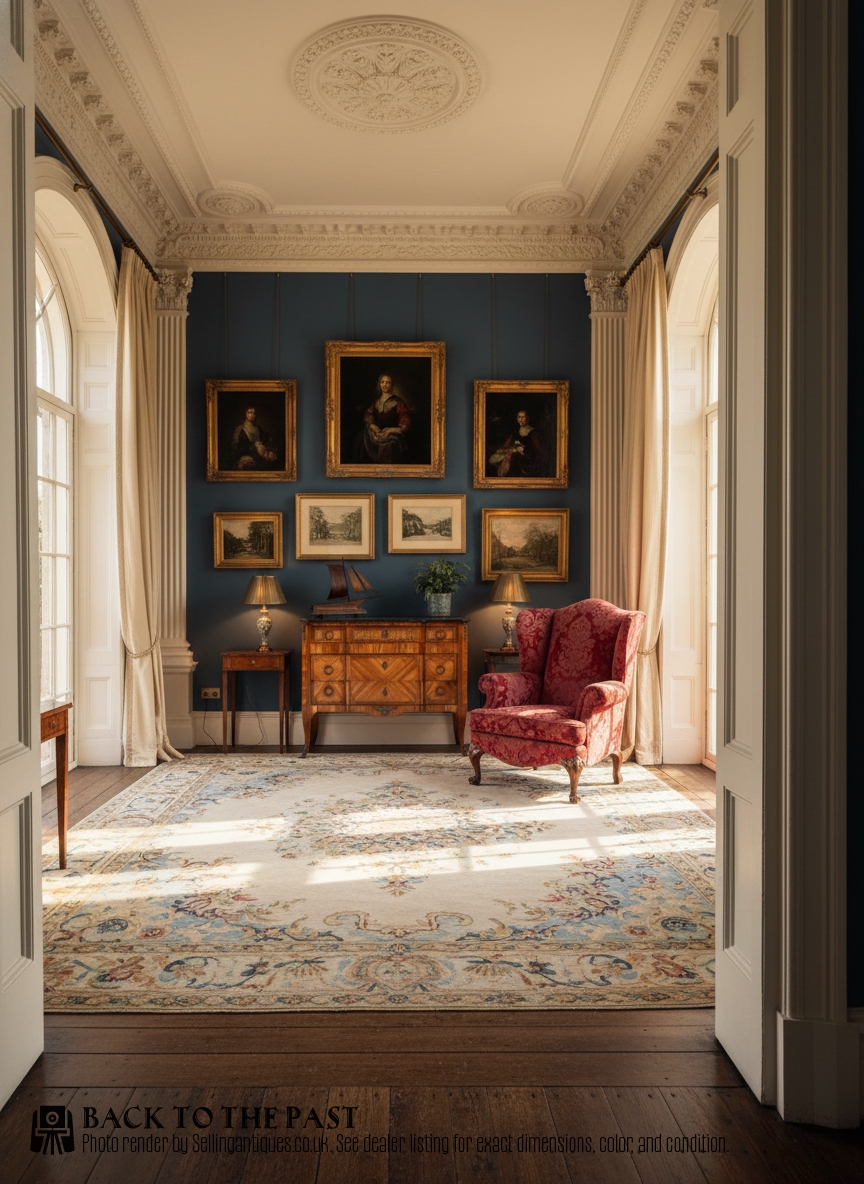
These chests suit hallways, living rooms, and bedrooms where surface space and storage are both required.
The marble tops provide a durable platform for lamps and objects while the drawers hold linens or household items.
How do I clean marble tops?
Use a soft cloth dampened with warm water and mild soap to wipe the stone surface.
Avoid acidic cleaners or vinegar that can etch the polished marble finish.
Are these chests heavy?
The combination of solid timber carcasses and thick marble slabs makes these pieces substantial in weight.
Two people are typically required to lift and position them safely within a room.
What is the difference between parquetry and marquetry?
Parquetry uses geometric wood tiles to create repeating patterns like cubes or chevrons.
Marquetry employs pictorial designs depicting flowers, scenes, or scrolls using varied veneer cuts.