
Antique Parquetry Commode
When you seek an antique parquetry commode, you are looking for a low cabinet built for storage, defined by geometric wood veneers and stone tops.
Antique Parquetry Commode
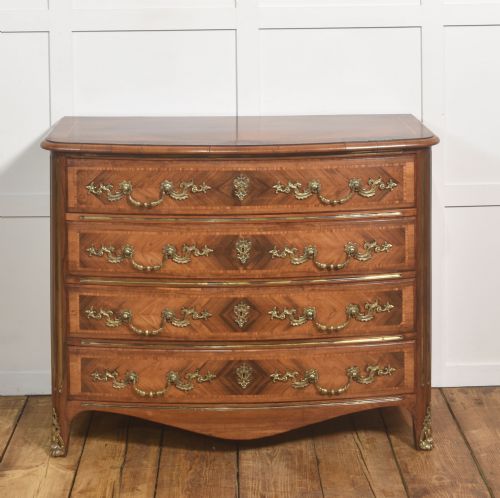
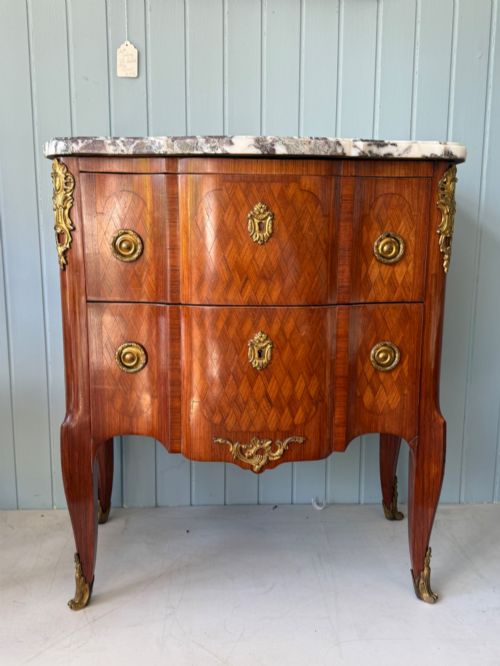
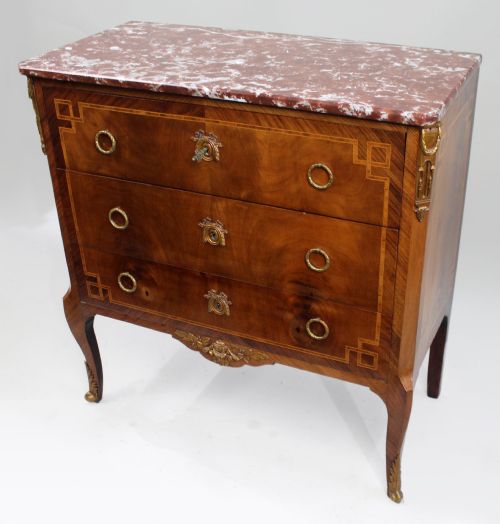
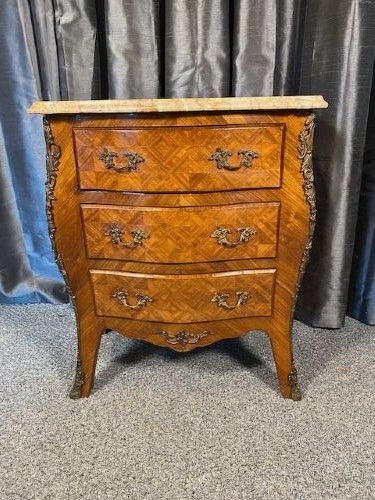
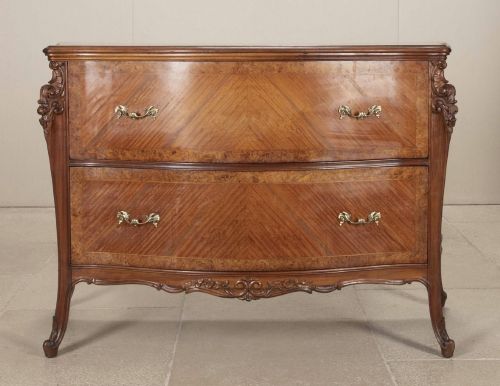
An antique parquetry commode is a low chest of drawers or storage cabinet, typically finished with geometric wood veneer patterns across the front and sides. These pieces often arrive from French workshops, with styles spanning the 18th century through to later revival periods.
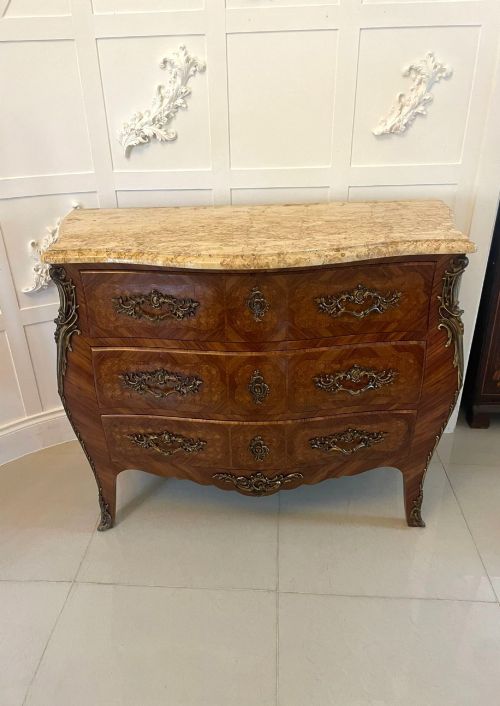
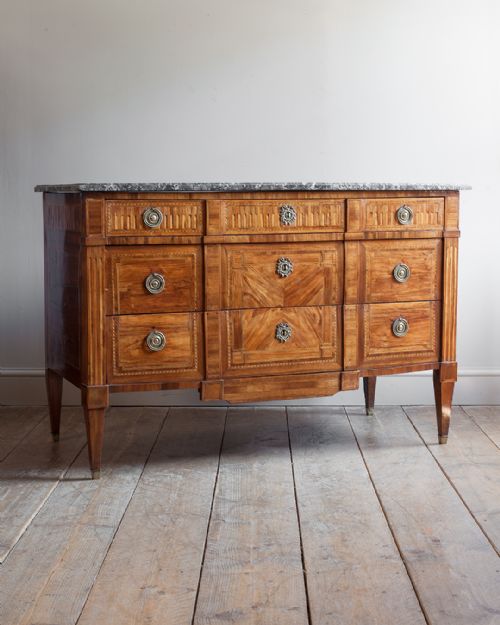
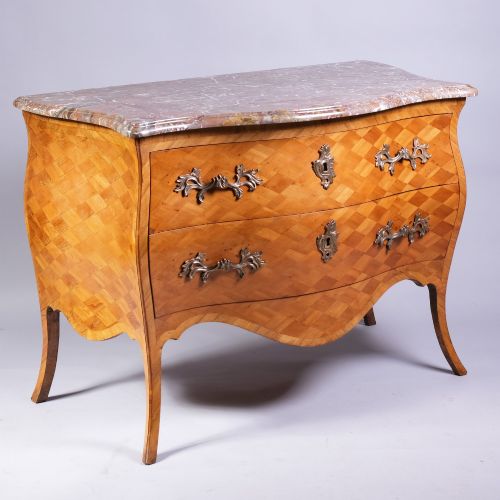
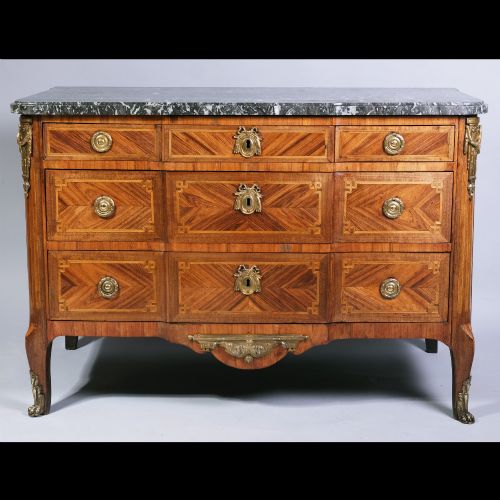
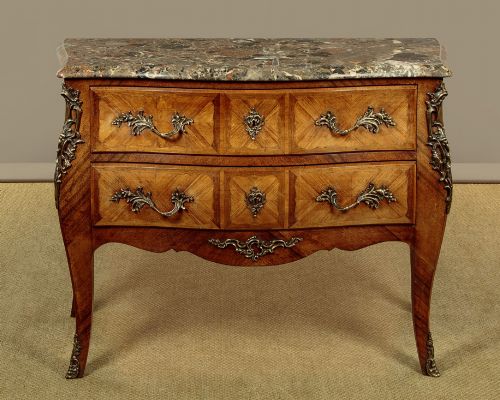
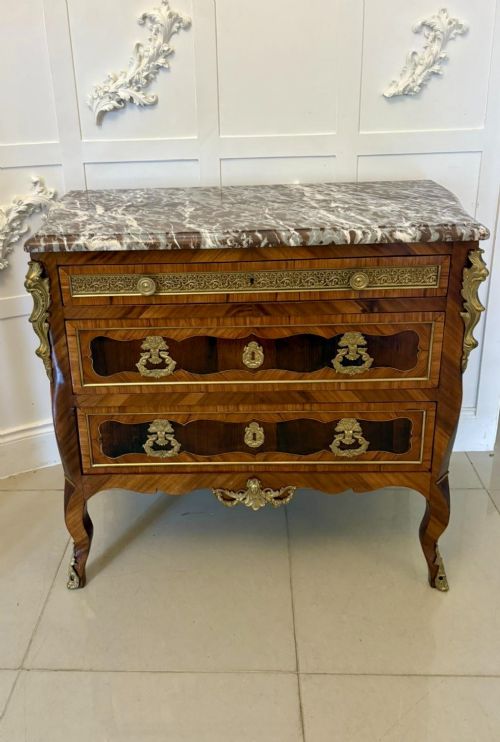
The version you are most likely to meet on this page is a French design from the 19th century or the late 19th-century revival eras, frequently styled after Louis XV or Louis XVI aesthetics. They commonly take the form of serpentine or bombé chests fitted with heavy stone slabs.
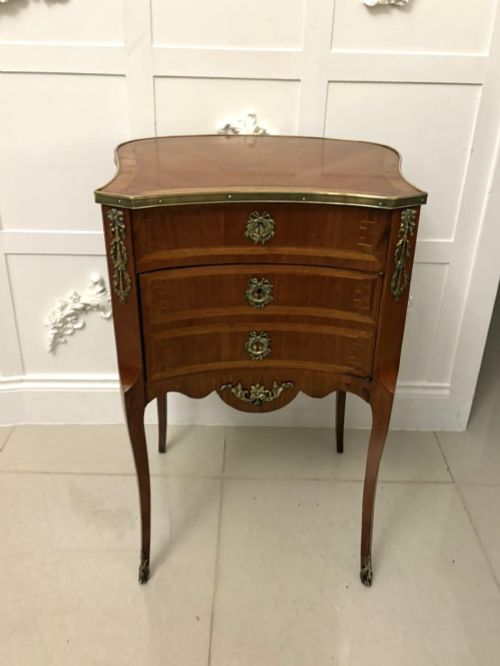
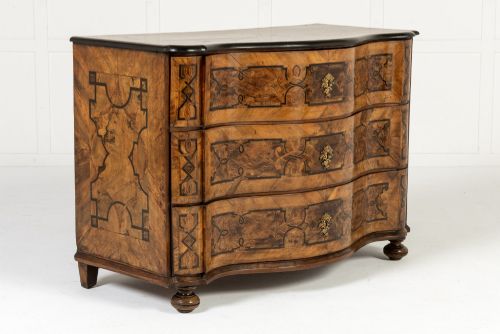
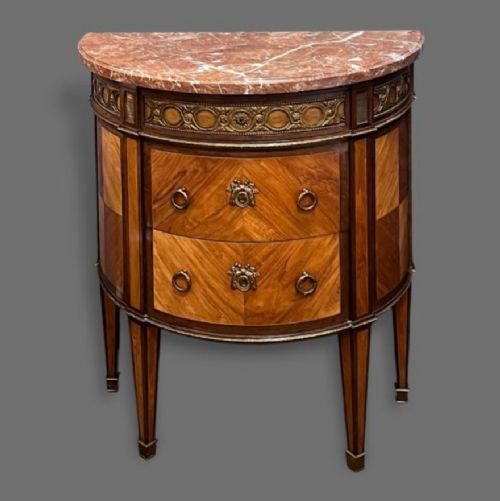
Beyond the main chests of drawers, the category includes smaller bedside cabinets and side cabinets sharing the same veneered construction. Their origins stretch across France, Sweden, Italy, Germany, and England, each bringing regional interpretations to the form.
How They Were Made
Cabinet makers constructed these pieces using carcases of native timbers like walnut, oak, or fruitwood, onto which thin slices of decorative veneers were glued in geometric arrangements. Woods such as kingwood, tulipwood, satinwood, and burr walnut provided contrasting natural colours and grain patterns.
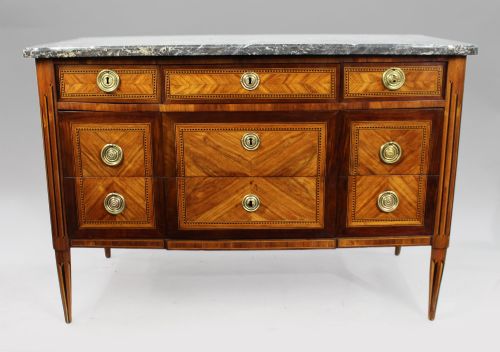
Heavy marble tops, including rouge and scagliola varieties, sat directly upon the wooden frames of the upper surfaces. Gilt bronze and ormolu mounts were cast and chased to edge the drawers, corners, and feet, protecting vulnerable edges while adding decorative highlights.
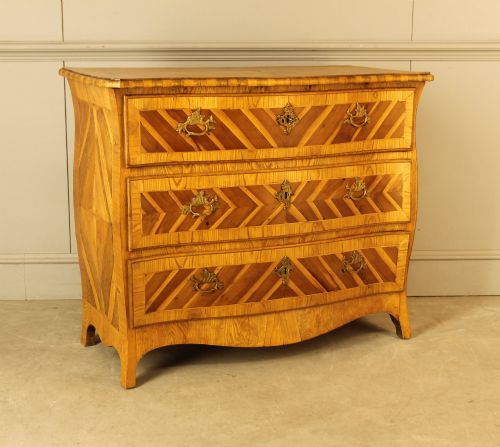
Sweden contributes a distinct northern warmth to the lineup, offering pale-toned parquetry commodes that brighten up heavy classical forms.
What Varies in Quality
The precision of the veneer work dictates the standing of the piece, with tighter geometric alignment and richer timber selection marking out superior examples. Makers who used expensive exotic woods like kingwood and rosewood achieved subtler tonal contrasts than those relying on simpler fruitwoods.
The execution of the cast bronze or ormolu mounts separates standard output from exceptional work, as sharper chiselling and heavier gilding reflect greater workshop investment. Original marble tops that fit the contours of the carcase precisely indicate higher manufacturing standards.
Sormani
The Antique Parquetry Commode Glossary
- Parquetry
- Wood veneers arranged in geometric patterns such as cubes, lozenges, or chevrons across the surface of a furniture piece. This technique creates a textured, architectural facade using the natural tones of different timbers.
- Marquetry
- Inlay work using various coloured woods to form pictorial scenes, floral sprays, or scrolling designs. It differs from parquetry by depicting organic subjects rather than repeating geometric grids.
- Ormolu
- Gilt bronze mounts applied to the angles, feet, and handles of fine furniture. The technique involves coating cast bronze with a mercury and gold amalgam before firing.
- Bombé
- A swelling, outward-curving contour found on the front and sides of certain cabinets. This bulging profile requires advanced woodworking skill to maintain structural integrity.
- Serpentine
- A shaped furniture front featuring a concave centre flanked by two convex ends, or the reverse. The undulating line mimics natural movement across the width of the chest.
Antique Parquetry Commode: Frequently Asked Questions
What is an antique parquetry commode?
An antique parquetry commode is a decorative low storage cabinet featuring geometric wood veneers across its frame. These pieces function primarily as chests of drawers or side cabinets.
Originating largely from 18th and 19th-century European cabinet makers, they combine practical storage with sophisticated surface decoration often paired with stone tops.
How do I tell Louis XV and Louis XVI styles apart?
Louis XV style pieces are characterised by flowing, asymmetrical curves, bombé profiles, and rococo organic motifs. Ormolu mounts on these items emphasise natural, fluid lines.
Louis XVI style furniture moves towards straight lines, symmetry, and neoclassical restraint, often featuring fluted legs and geometric parquetry patterns instead of sweeping curves.
Where were these commodes used originally?
These commodes were placed principally in principal reception rooms, salons, and formal bedrooms of grand residences. They served both as display surfaces and as practical storage for personal items.
Smaller bedside cabinets functioned alongside sleeping quarters, holding chamber items while matching the primary furniture of the room.
How do I care for a marble top commode?
Marble tops require gentle cleaning with soft cloths and neutral pH solutions to avoid etching the polished stone surface. Acidic liquids like wine or citrus should be wiped away immediately.
maintain the wooden parquetry beneath by applying appropriate wax polishes sparingly, keeping the furniture away from direct heat sources and strong sunlight.