



Fruitwood Commode
A fruitwood commode brings warm timber tones and provincial elegance to a room, offering practical storage with a distinct historical character.

Fruitwood Commode
When you search for a fruitwood commode, you encounter a variety of timber storage chests originating mainly from French, Italian, and English workshops. These pieces range from early seventeenth-century examples down to the nineteenth century, including regional expressions like French provincial designs and Italian serpentine or bombe forms.
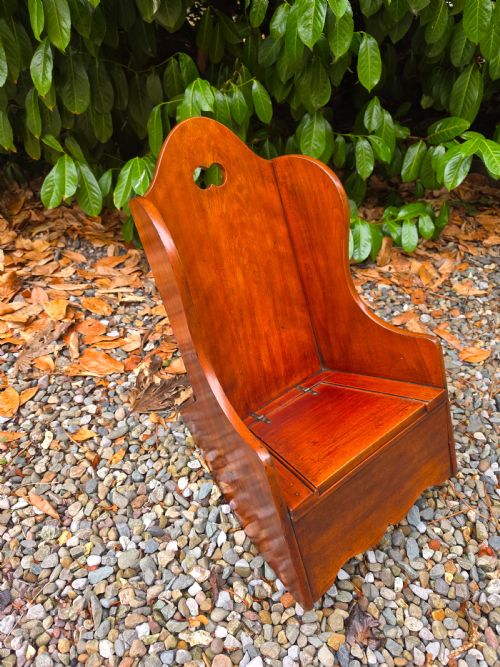
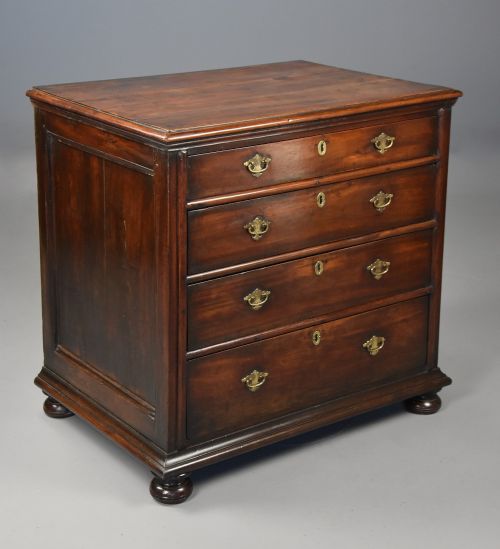
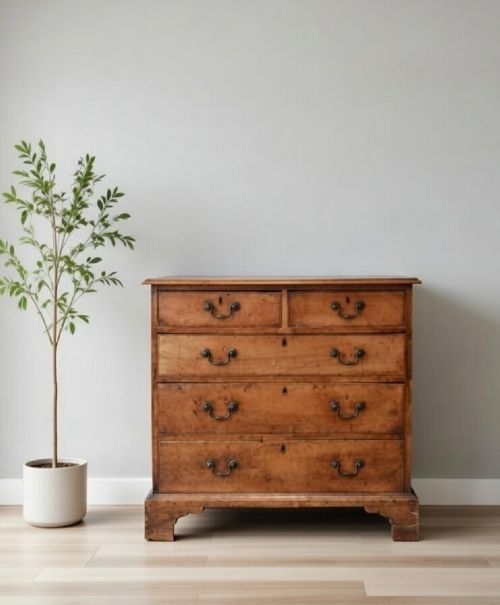
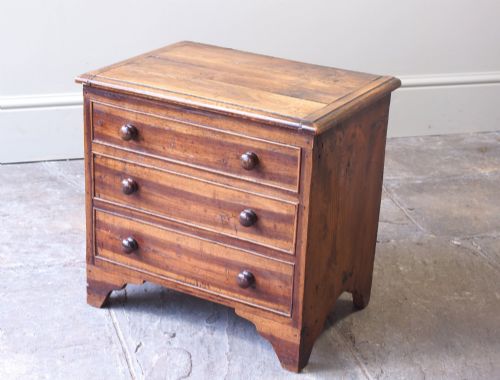
The objects take the form of chests of drawers, close stools, and small commodes, frequently constructed with fruitwood bodies alongside walnut, olive-wood, and plumwood. Alongside continental commodes, the selection includes related regional forms such as Georgian childs potty rockers and small drawer chests.
You are most likely to meet eighteenth-century French and Italian commodes featuring fruitwood construction, sometimes paired with marble tops, wood inlay, or brass mounts. These pieces combine utilitarian drawer storage with decorative curves and veneered surfaces.
What varies in quality
Quality in these pieces rests upon the selection of timber figure, the crispness of the serpentine or bombe shaping, and the integration of decorative wood inlay. Superior examples display rich natural colour in the fruitwood and harmonious grain patterns across the drawer fronts.
The finesse of the joinery in curved frames and the original preservation of marble tops and brass elements separate standard regional chests from finer cabinetwork.
One unexpected variant on this page is a Georgian childs potty rocker, proving that miniature seating required just as much cabinetry skill as a grand commode.
The Fruitwood Commode Glossary
- Bombe
- A swelling, outward-curving chest profile popular in eighteenth-century continental cabinetmaking. This curved form requires advanced woodworking skill to execute properly.
- Serpentine
- A furniture front curving inward centrally and outward at the ends in a continuous wave line. This contour adds movement and visual interest to the piece.
- Parquetry
- Geometric wood inlay patterns arranged to form decorative designs across a surface. Makers utilised contrasting timbers to achieve striking visual effects.
- Close stool
- An enclosed piece of furniture designed to house a chamber pot, often disguised as a small cabinet or chest. These items reflect domestic arrangements of earlier centuries.
Fruitwood Commode: Frequently Asked Questions
What is a fruitwood commode?
A fruitwood commode is a drawer chest constructed using timbers derived from fruit-bearing trees such as pear, apple, or cherry, often enriched with walnut or plumwood.
These pieces function primarily as decorative storage chests for bedrooms and living spaces across various historical periods.
How were these commodes used?
They served as practical bedroom or parlour furniture for storing clothing, linens, and personal possessions.
Their polished tops also provided a surface for displaying household objects and decorative items.
How do I live with one?
Place the commode away from direct heat sources and strong sunlight to protect the fruitwood timbers and any delicate wood inlay.
Maintain stable humidity levels in the room to preserve the timber and structural joints.
How do I tell periods apart?
Early pieces from the seventeenth century often show simpler structural lines or joined construction, while eighteenth-century examples favour Rococo curves and complex bombe or serpentine profiles.
Nineteenth-century items frequently exhibit revival styling and standardised hardware.