
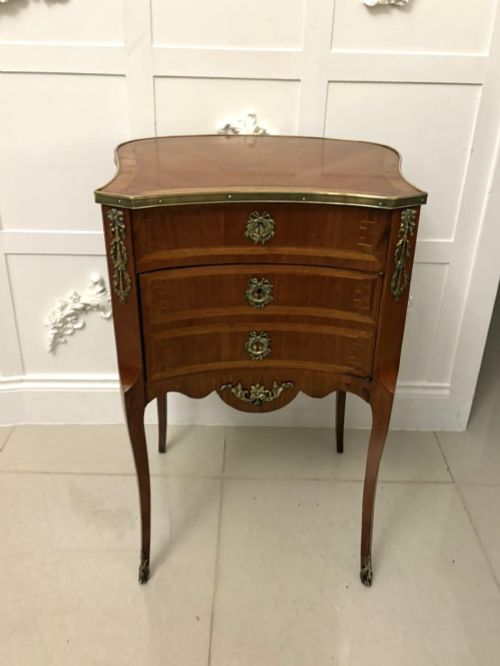
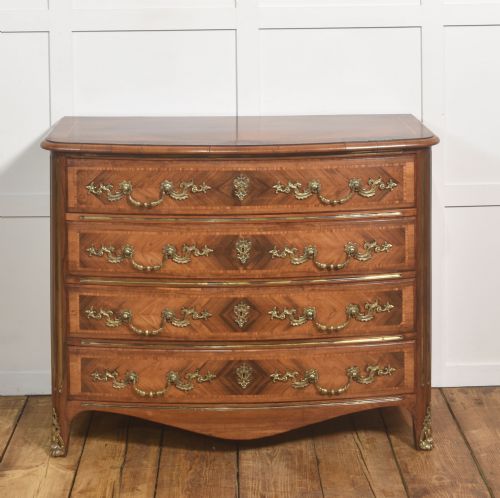
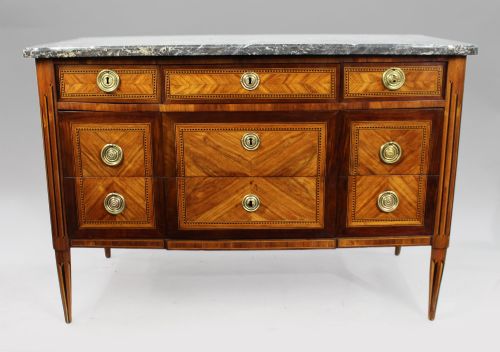
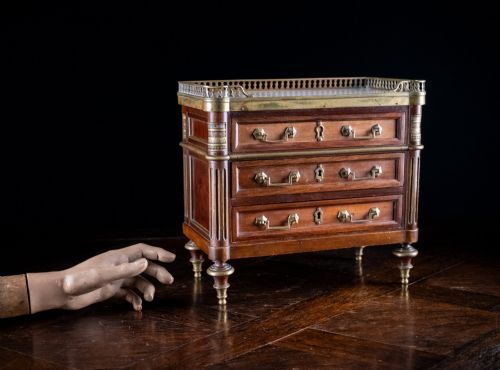
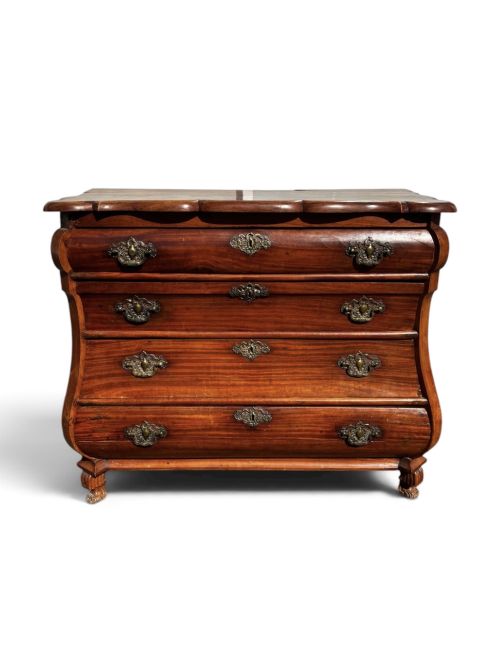
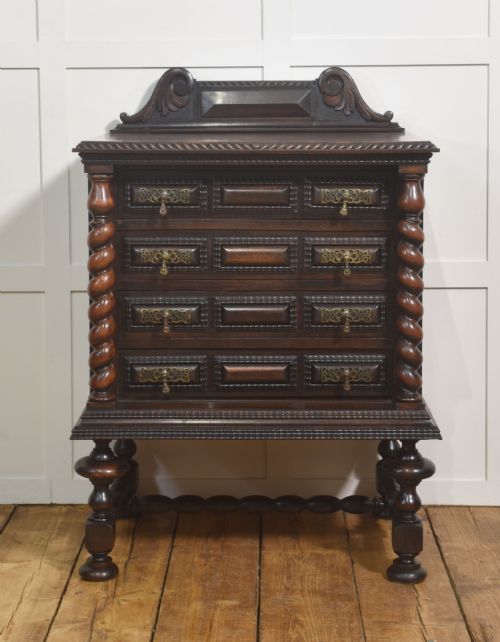
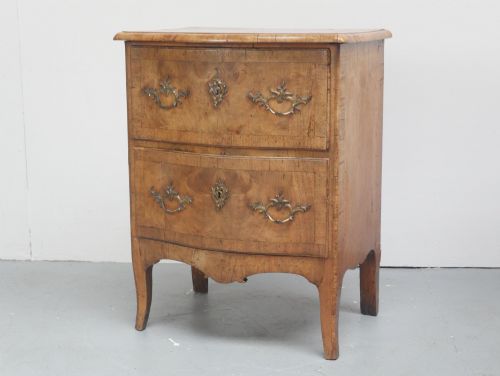
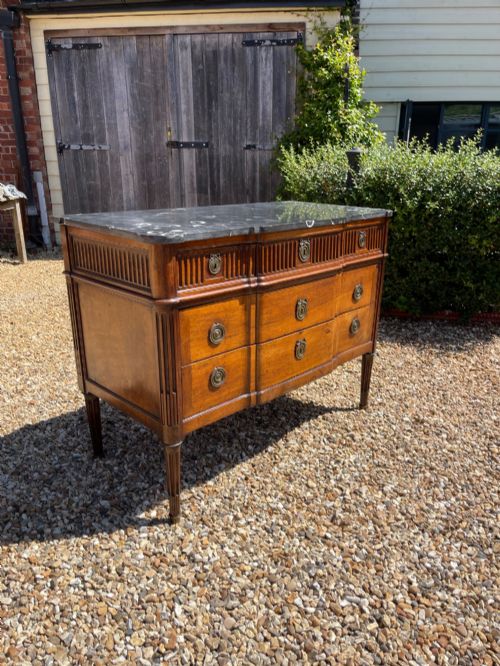
Brass Mount Chest Drawers
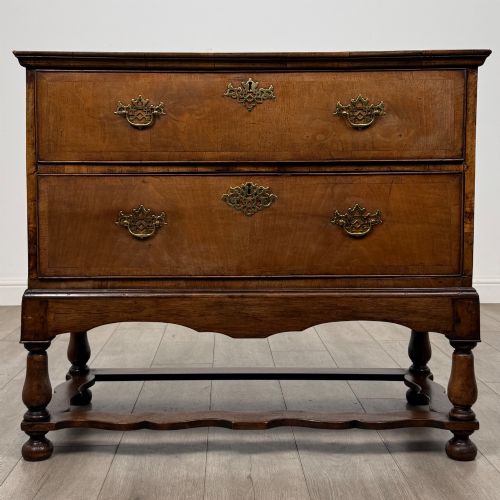
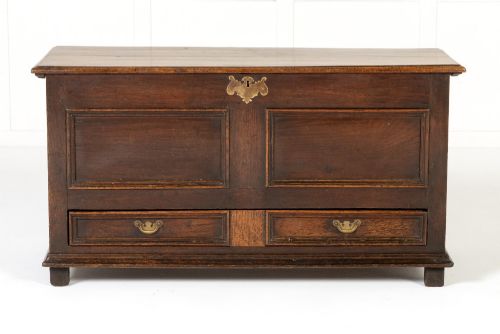
A brass mount chest drawers combines solid timber with cast metal hardware, offering practical storage alongside decorative weight.
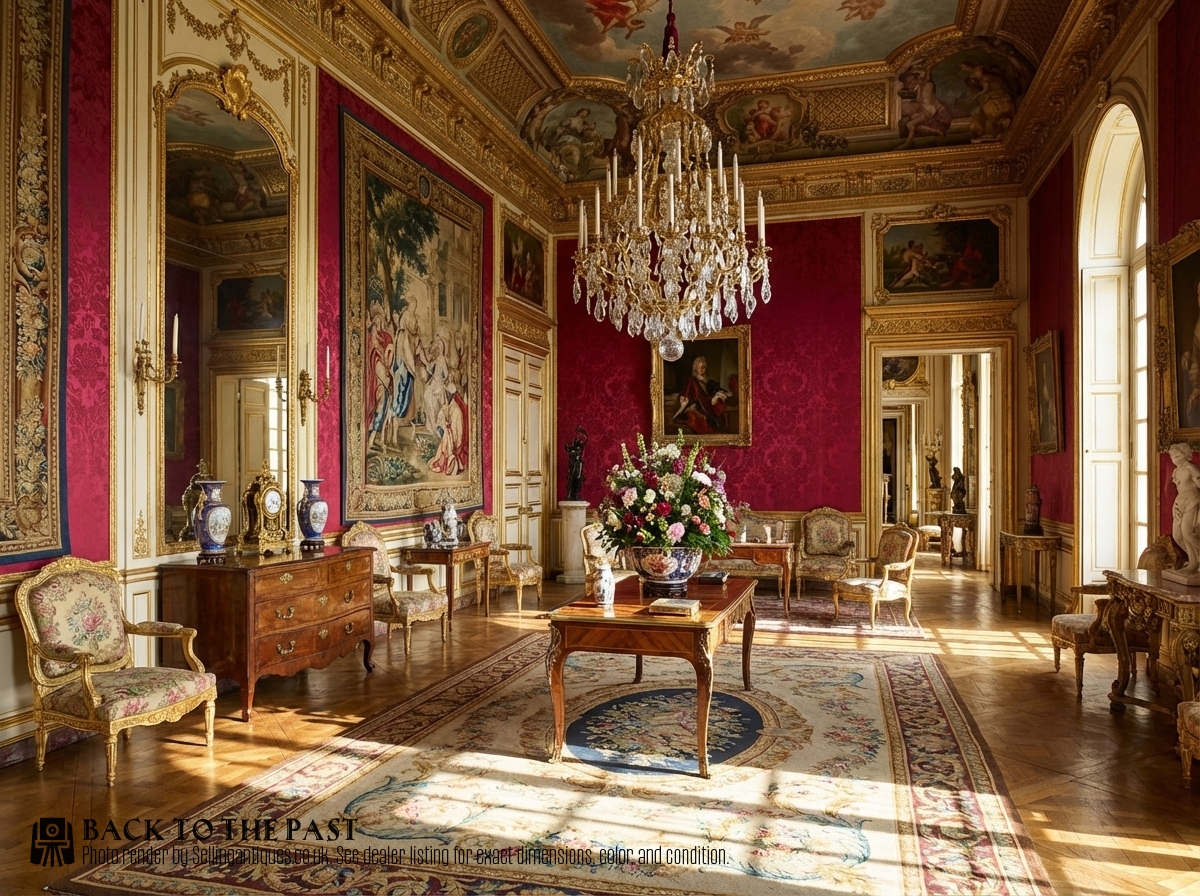
Brass Mount Chest Drawers
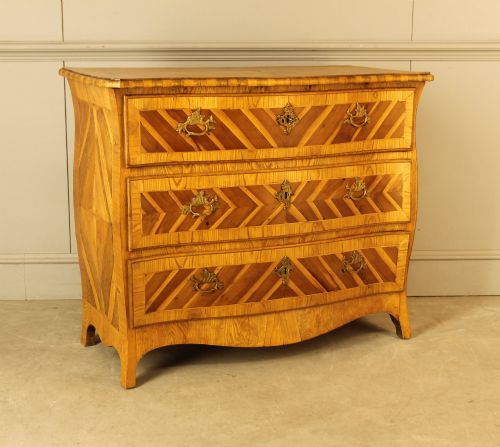
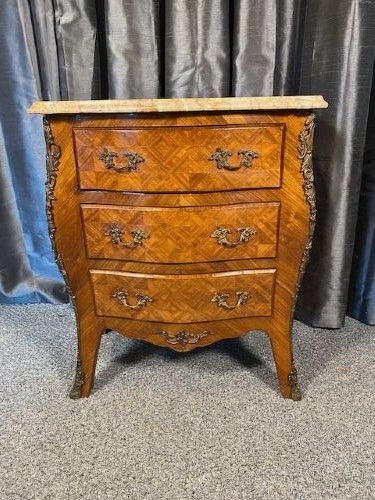
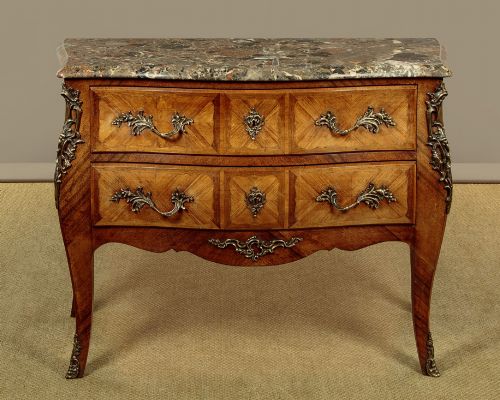
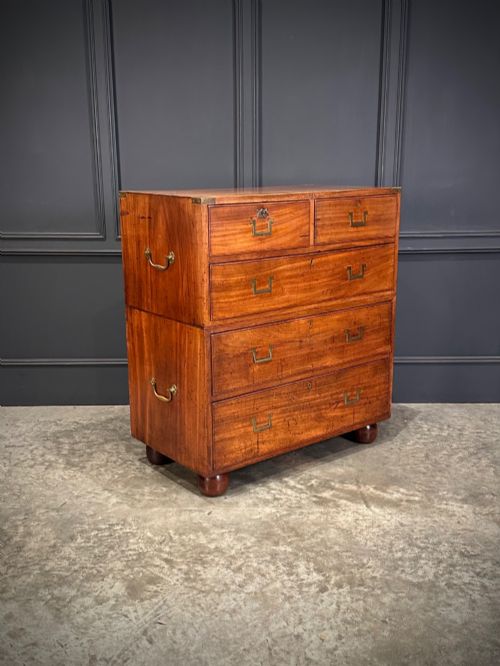
A brass mount chest drawers appears across various historical periods, ranging from eighteenth-century Continental commodes to nineteenth-century campaign furniture. The most common examples on this page are French commodes and English military chests.
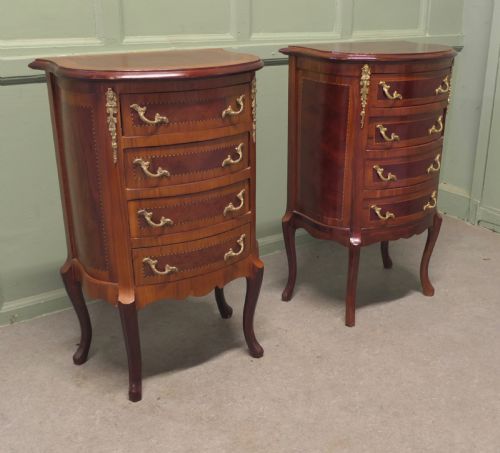
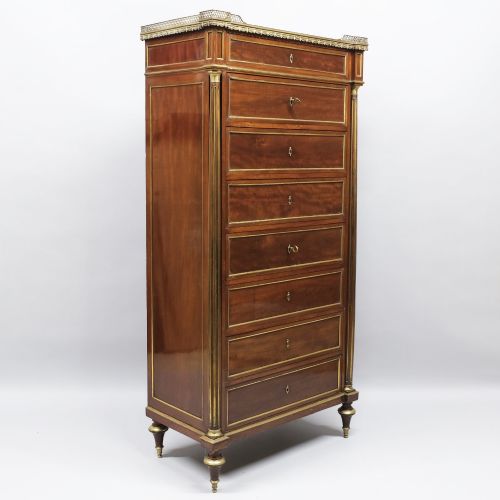
The phrase encompasses multiple formats, including serpentine chests of drawers, upright semainiers, and compact bedside cabinets. These storage pieces utilise timbers such as mahogany, walnut, oak, and exotic veneers.
Origins span across English, French, Swedish, Dutch, and Portuguese workshops. Makers applied brass handles, escutcheons, corners, and mounts to protect edges and accent the timber grain.
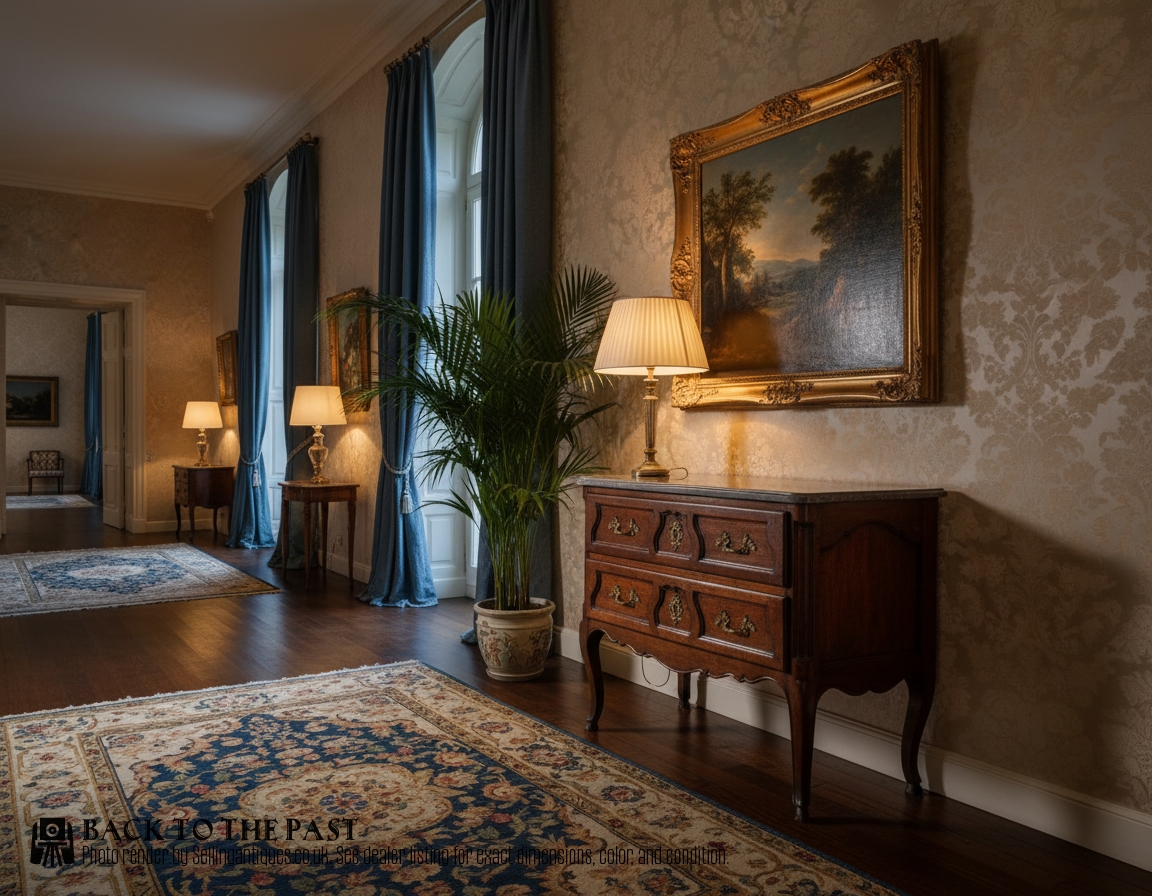
Materials and construction methods
Cabinetmakers constructed carcass frames from dense hardwoods like mahogany, teak, and oak, often applying decorative veneers such as kingwood, rosewood, and walnut to the drawer fronts and sides. Timber selection dictated the structural stability and colour of each piece.
Mounts, handles, and corner brackets cast in brass or ormolu were secured to the timber using pins or screws. These metal additions reinforced vulnerable corners on campaign furniture and provided decorative contrast on formal commodes.
The inventory records campaign chests built in teak and camphor wood alongside French commodes veneered in kingwood and rosewood.
Factors that separate examples
Quality rests upon the precision of the cabinetwork and the crispness of the brass castings. Hand-chased mounts and tight dovetail joinery indicate higher workshop standards.
The integration of secondary materials, such as inset marble tops or intricate parquetry and marquetry patterns, separates standard utility storage from formal decorative furniture.
Army & Navy
The Brass Mount Chest Drawers Glossary
- Commode
- A low French chest of drawers originating in the seventeenth century. These pieces frequently feature marble tops and decorative mounts.
- Campaign chest
- A modular chest of drawers built in sections with recessed brass handles for military transport. Teak and mahogany were standard timbers.
- Semainier
- A tall, narrow chest of drawers traditionally designed with seven drawers, one for each day of the week. They often include brass mounts framing the vertical bank.
- Escutcheon
- A protective brass plate surrounding a keyhole. This hardware prevents timber wear from repeated key use.
- Ormolu
- Gilt bronze applied as decorative mounts on furniture. The technique involves treating metal with gold amalgam.
Brass Mount Chest Drawers: Frequently Asked Questions
What is a brass mount chest drawers?
A brass mount chest drawers is a storage cabinet fitted with metal handles, key escutcheons, or structural corner brackets. These pieces range from formal European commodes to utilitarian military chests.
Cabinetmakers integrated brass to reinforce high-wear areas and provide visual contrast against timbers like mahogany, walnut, and oak.
How do I date a campaign chest?
Dating relies on timber types, construction details, and hardware styles. Nineteenth-century examples often utilise teak or mahogany with flush brass corners.
Divided carcasses designed to stack securely indicate travel utility, whereas integrated feet point toward domestic production.
Are marble tops original to commodes?
Marble tops frequently accompany French and Continental commodes from the eighteenth and nineteenth centuries. Heavy stone slabs provided durable, stain-resistant surfaces for washing or display.
Sanded edges and fitted rebates underneath confirm whether the stone matches the age of the timber carcass.
How do I care for antique timber?
Maintain stable indoor humidity levels and keep wooden furniture away from direct heat sources to prevent timber shrinkage or veneer lifting. Periodic application of natural wax preserves the polish.
Avoid abrasive cleaners on both the polished wood surfaces and the cast brass mounts.